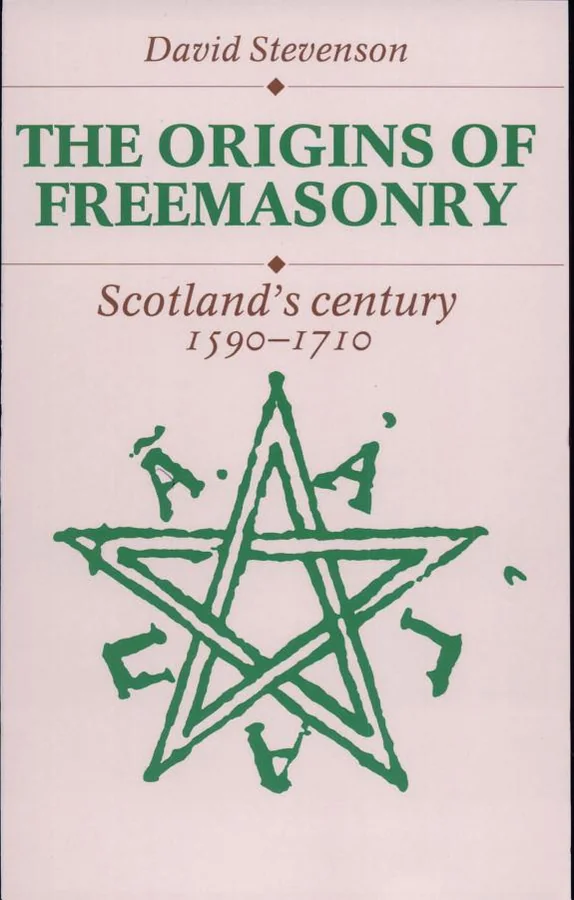
The Origins of Freemasonry
 82
82

The Origins of Freemasonry
Stevenson's rigorous examination of Freemasonry's genesis is a welcome corrective to more hagiographic accounts. He masterfully dissects the evidence, particularly regarding the transition from operative guilds to speculative lodges, highlighting the scant concrete proof for a unified origin point around 1700. The strength of the book lies in its detailed scholarship and its willingness to confront ambiguity. Its primary limitation, however, is that its dense academic style may prove a barrier for casual readers, and its extensive focus on specific historical minutiae can sometimes obscure the broader appeal of Masonic ideals. A particularly illuminating passage details the early lodge minutes and their often-unreliable nature as historical sources. It stands as a crucial, albeit demanding, contribution to understanding the movement's early days.
📝 Description
82
David Stevenson's 1990 book revises understandings of Freemasonry's emergence.
Stevenson's "The Origins of Freemasonry" challenges common views on the brotherhood's beginnings, first published in 1990. He examines the intellectual and social climate that allowed Masonic lodges to grow, questioning the idea that Freemasonry started solely in England around 1700. The book is for serious students of Freemasonry, historians of secret societies, and those interested in early modern European thought.
This work emerged during a time of increased academic focus on the Enlightenment and related social movements. Stevenson carefully tracks Freemasonry's quick spread across Europe in the mid-eighteenth century. This era saw the rise of rationalist ideas and the creation of groups focused on self-improvement and mutual aid. The book engages with historical debates about Masonic origins, which had previously relied on internal accounts and less critical historical records.
This book situates Freemasonry within the broader context of Enlightenment societies and their engagement with ideas of reason, self-improvement, and mutual support. It examines how these societies, including Masonic lodges, developed from earlier guild structures and responded to the intellectual currents of the period. Stevenson's work considers the historical development of ritualistic and fraternal organizations, placing them within the social and intellectual milieu of 18th-century Europe.
💡 Why Read This Book?
• Gain a critical perspective on the commonly accepted timeline of Freemasonry's formation, moving beyond the 1717 date for the "Premier Grand Lodge" and understanding the scholarly debates surrounding its earlier roots. • Understand the specific socio-cultural factors in mid-18th century Britain and Europe, such as the Enlightenment's emphasis on reason and fraternity, that facilitated Freemasonry's astonishing spread. • Appreciate the challenges of historical reconstruction when dealing with secret societies, as exemplified by Stevenson's analysis of early lodge records and the interpretation of ritualistic development.
⭐ Reader Reviews
Honest opinions from readers who have explored this book.
❓ Frequently Asked Questions
When did Freemasonry officially begin, according to David Stevenson's research?
Stevenson's work challenges the prevailing assumption of a singular origin around 1700 in England, suggesting a more complex and debated emergence, questioning the sole importance of the 1717 "Premier Grand Lodge."
What was the main historical debate Stevenson addressed?
The central debate concerns the precise origins and early development of Freemasonry, moving beyond traditional narratives to explore the intellectual and social conditions that led to its formation and rapid expansion.
How did Freemasonry spread across Europe in the 18th century?
The book details Freemasonry's astonishing sweep across Europe in the mid-eighteenth century, analyzing the societal conditions and fraternal ideals that facilitated its dissemination beyond Britain.
What kind of evidence does Stevenson use to support his arguments?
Stevenson relies on careful examination of historical documents, early lodge records, and the intellectual currents of the period to support his arguments about Freemasonry's origins.
Is this book suitable for someone new to Freemasonry history?
While comprehensive, the book's academic rigor and focus on historiographical debate might be more suited to those with some prior knowledge or a keen interest in detailed historical inquiry.
What does Stevenson say about the ideals of Freemasonry?
The book touches upon the ideals of fraternity, equality, toleration, and reason that bound together the brotherhood, exploring how these concepts were articulated and practiced in its formative years.
🔮 Key Themes & Symbolism
The Grand Lodge of England
Stevenson scrutinizes the foundational role and historical narrative surrounding the "Premier Grand Lodge" established in London in 1717. He questions the extent to which this body truly represented a singular origin point for all of Freemasonry, or if it was more a consolidation of existing practices. The work examines the records and influences that led to its formation and its subsequent impact on the perception of Masonic beginnings.
Operative vs. Speculative Masonry
A central theme is the transition from operative guilds, composed of stonemasons and other manual laborers, to speculative Freemasonry, which embraced men from various professions and focused on philosophical and moral ideals. Stevenson explores the evidence for this shift, considering how operative traditions and symbols were adapted and reinterpreted within the new speculative framework.
Enlightenment Ideals
The book situates the rise of Freemasonry within the broader intellectual field of the Enlightenment. It connects the society's emphasis on reason, tolerance, equality, and fraternity to the philosophical currents of the era. Stevenson investigates how these ideals were not merely espoused but actively practiced and disseminated through Masonic lodges across Europe.
Theories of Origin
Stevenson systematically addresses and critiques various theories regarding Freemasonry's origins, from direct descent from the Knights Templar to more grounded historical developments. He prioritizes documentary evidence and scholarly analysis, challenging myths and popular assumptions with rigorous historical methodology, particularly concerning the period before 1717.
💬 Memorable Quotes
Direct passages from the work, attributed to the author.
“The prevailing assumption has been that it emerged in England around 1700, but David Stevenson...”
— This foundational statement from the original blurb signals the book's core thesis: a critical re-examination of the commonly accepted timeline and location for Freemasonry's inception.
“a brotherhood of men bound together by secret initiatives, rituals and modes of identification”
— This phrase captures the essential structure and practices of Freemasonry as described by Stevenson, highlighting the internal mechanisms that fostered cohesion and shared identity among its members.
“with ideals of fraternity, equality, toleration and reason.”
— These core tenets represent the philosophical underpinnings of the Masonic movement, reflecting the influence of Enlightenment thought and providing the ethical framework for the brotherhood's activities.
“Freemasonry swept across Europe in the mid-eighteenth century in astonishing fashion”
— This highlights the rapid and widespread adoption of Freemasonry across the continent, underscoring its significant social and cultural impact during the period Stevenson investigates.
“yet its origins are still hotly debated today.”
— This points to the ongoing scholarly discussion and lack of definitive consensus on Freemasonry's earliest beginnings, setting the stage for Stevenson's own contribution to the debate.
🌙 Esoteric Significance
Tradition
While not strictly adhering to a single esoteric lineage, Stevenson's work engages with the historical development of a society that became deeply intertwined with Western esoteric traditions. Freemasonry, particularly in its later developments, absorbed and synthesized elements from Hermeticism, Kabbalah, and Rosicrucianism, offering a framework for personal development and philosophical exploration that resonated with these currents.
Symbolism
The book implicitly addresses the symbolic language of Freemasonry, which draws heavily on operative stonemasonry. Symbols such as the square, compasses, and the working tools carry allegorical meanings related to morality, order, and the construction of a spiritual temple. Stevenson's analysis of the transition from operative to speculative Masonry illuminates how these symbols acquired deeper, esoteric interpretations.
Modern Relevance
Contemporary practitioners of Western Esotericism, including various Masonic Rites and related fraternal orders, continue to draw upon the historical understanding of their origins. Stevenson's research provides a critical lens through which to examine the historical claims and symbolic evolution of these traditions, informing modern interpretations of Masonic philosophy and ritual.
👥 Who Should Read This Book
• Historians of European social and intellectual history seeking to understand the proliferation of fraternal organizations during the Enlightenment. • Freemasons and students of Masonic ritual and philosophy looking for a scholarly, evidence-based account of their order's early development. • Researchers of secret societies and clandestine movements interested in the organizational structures and ideological underpinnings of groups that operated outside mainstream institutions.
📜 Historical Context
David Stevenson's "The Origins of Freemasonry" emerged in 1990, a period when scholarly interest in fraternal orders and the Enlightenment was robust. The mid-eighteenth century, its primary focus, saw Freemasonry's dramatic expansion across Europe, establishing lodges in major cities and influencing intellectual salons. Stevenson's work directly engaged with earlier historiography, particularly the foundational accounts by Masonic writers and the more critical, though sometimes limited, analyses of scholars like Douglas Knoop and G.P. Jones. His meticulous research challenged the established narrative that centered solely on the formation of the Grand Lodge of England in 1717, proposing a more diffuse and complex set of origins. This scholarly intervention contributed to a broader reassessment of early modern social networks and the dissemination of ideas, placing Masonic development within the context of evolving social structures and the intellectual ferment of the Age of Reason.
📔 Journal Prompts
The mid-eighteenth century European sweep of Freemasonry.
The symbolic transformation from operative to speculative guilds.
Stevenson's critique of the 1717 Grand Lodge narrative.
The connection between Enlightenment ideals and Masonic tenets.
Evidence for the 'hotly debated' nature of Masonic origins.
🗂️ Glossary
Speculative Freemasonry
A form of Freemasonry that evolved from operative guilds, focusing on philosophical, moral, and allegorical teachings rather than the literal practice of stonemasonry.
Operative Masonry
The historical practice of stonemasonry, associated with guilds of craftsmen who built cathedrals and other structures, from which speculative Freemasonry is believed to have derived.
Premier Grand Lodge
The first officially constituted Grand Lodge of Freemasons in England, formed in London in 1717, which played a significant role in standardizing Masonic practices.
Enlightenment
An 18th-century intellectual and philosophical movement emphasizing reason, individualism, skepticism, and the pursuit of knowledge, which heavily influenced Western thought and social structures.
Fraternity
A sense of kinship and mutual support among a group of people, a core ideal emphasized within the brotherhood of Freemasonry.
Rituals
Formal, ceremonial acts or procedures, often symbolic, that are central to Masonic practice and serve to convey moral and philosophical lessons.
Modes of Identification
Secret signs, grips, or passwords used by Freemasons to recognize fellow members, contributing to the society's sense of exclusivity and shared identity.
This book appears in 1 collection
🔮 Readers Also Liked
Browse all →






From the “Freemasonry” Collection
View all →



More Free Freemasonry & Secret Societies Books
View all →