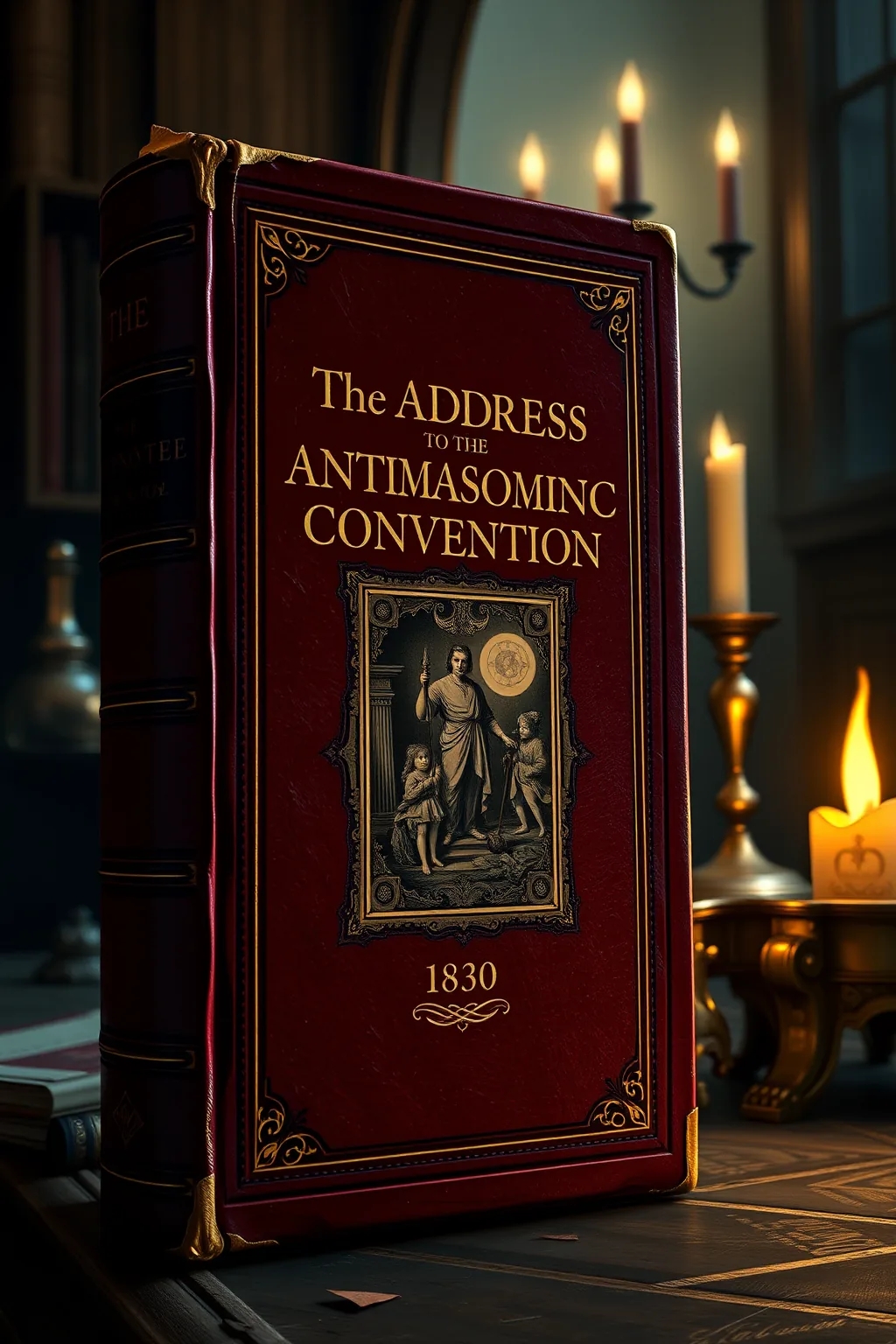
The Address To The National Antimasonic Convention 1830
 71
71

The Address To The National Antimasonic Convention 1830


By Balthazar Finch (Senior Critic, Occult Philosophy) — This extraordinary 'Address' offers a rare glimpse into the esoteric anxieties of early 19th-century America, framing the Antimasonic movement not as simple populism, but as a profound reaction against perceived clandestine control. The anonymous author wields language like a ceremonial blade, dissecting the 'mysteries' of Freemasonry with an alchemist’s precision, revealing its potential for both fraternal bonds and absolute power. Its strength lies in its prescient understanding of how secret societies can shape public discourse and political outcomes through veiled influence. Essential reading for scholars of Western esotericism, political occultism, and anyone seeking to understand the enduring power of the unseen in shaping human affairs.
📝 Description
71
The 1830 Address to the National Antimasonic Convention critiqued secret society influence on early American governance.
This anonymous address, delivered to the National Antimasonic Convention in 1830, argues that secret societies exerted undue influence over the nascent United States government. The author details suspicions of hidden hierarchies and secret oaths, suggesting these organizations operated not for benign purposes but for the acquisition and maintenance of power. The text describes a charged atmosphere where the nation was seen as contending with unseen forces, a covert conflict for the republic's very character.
Far from a simple historical record, the address functions as a potent call to awareness for individuals attuned to the less visible forces shaping societal events. It invites the reader, particularly those interested in hidden truths or the esoteric aspects of social structures, to consider the enduring impact of clandestine groups on human history. The work's core argument rests on the ongoing conflict between openness and concealment, and between individual freedom and centralized control, a debate that continues to resonate.
The address emerges from a period of intense public suspicion regarding Freemasonry and other fraternal orders, often viewed through an occult or conspiratorial lens. Such anxieties tapped into broader esoteric traditions that questioned the transparency of power structures and perceived hidden knowledge as a tool of control. The text reflects a common belief that secret groups wielded symbolic language and rituals to maintain their influence, operating outside the purview of ordinary citizens and potentially manipulating societal direction.
💡 Why Read This Book?
This address is a vital key for unlocking the symbolic language of power struggles within early American history. It offers a potent perspective on the historical influence of secret societies and invites contemplation on their enduring impact. Ideal for seekers of hidden knowledge, scholars of esoteric movements, and practitioners interested in the occult underpinnings of societal structures.
⭐ Reader Reviews
Honest opinions from readers who have explored this book.
❓ Frequently Asked Questions
What is the primary concern of this address?
The address primarily concerns the perceived threat of Freemasonry to democratic principles and individual liberty, highlighting fears of its secretive influence on political and social institutions.
Who is the intended audience?
The intended audience includes citizens wary of hidden power structures, scholars of secret societies, and individuals interested in the historical interplay between esoteric organizations and public life.
Is this text a primary source document?
Yes, this address is a primary source document, reflecting the sentiments and anxieties of a specific faction during the Antimasonic movement of 1830.
Does the address offer solutions or just criticisms?
While primarily critical, the address implicitly calls for vigilance and transparency, urging the public to understand and counter the perceived secretive influence of Freemasonry.
What historical period does this document illuminate?
This document illuminates the early 19th century in America, a period marked by significant social and political upheaval, including the rise of popular movements against established institutions like Freemasonry.
🔮 Key Themes & Symbolism
The Shadow of Secrecy
This theme explores the inherent suspicion and fear surrounding clandestine organizations, particularly Freemasonry, during a formative period of American history. It looks at the notion that 'secrets' held by a select few can wield disproportionate power, shaping public discourse and political destinies from the unseen. The text probes the psychological impact of perceived hidden knowledge and the anxieties it breeds in a society striving for transparency and individual autonomy, suggesting that true liberty requires vigilance against those who operate beyond the public gaze.
Symbolism and Dominion
The address scrutinizes the symbolic language and rituals employed by secret societies, positing that these are not merely decorative but instrumental in establishing and maintaining hierarchical control. It suggests that esoteric symbols, when wielded within closed circles, can foster a sense of exclusive knowledge and shared purpose that transcends ordinary societal bonds, potentially leading to a form of 'occult' dominion over the uninitiated. This theme invites readers to consider how symbolic systems can be used to consolidate power and influence, both historically and in contemporary contexts.
The Republic's Esoteric Fault Lines
This theme examines the perceived vulnerabilities within the fabric of the nascent American republic, specifically its susceptibility to infiltration and manipulation by well-organized, secretive groups. The address frames the Antimasonic sentiment as a necessary defense mechanism, a collective awakening to the potential for 'esoteric fault lines' that could undermine democratic ideals. It highlights the critical juncture where public trust meets private agendas, urging a continuous examination of the unseen forces that may seek to shape the nation's trajectory from behind veiled doors.
💬 Memorable Quotes
Direct passages from the work, attributed to the author.
“Light is the enemy of shadows, and truth the bane of artifice.”
— This aphorism underscores the text's advocacy for transparency and honesty, positioning open knowledge as the antidote to deceptive practices and concealed agendas.
“Oaths whispered in darkness bind the actions of men in the light.”
— This highlights the perceived far-reaching and binding influence of commitments made within secret societies, suggesting their impact extends beyond the private sphere into public life.
“When the many are governed by the few, liberty is a fragile bloom.”
— This poignant statement articulates the fear of an oligarchical structure, emphasizing the vulnerability of freedom when decision-making power is concentrated in the hands of an exclusive, unseen group.
“The symbols they bear are keys to a dominion we must understand.”
— This calls for an active engagement with the iconography of secret societies, urging the reader to decipher their meaning as a means of comprehending and potentially resisting their influence.
💡 Key Ideas
Editorial paraphrase of the work's core concepts — not direct quotes.
The veil of secrecy conceals a formidable power.
This quote captures the core apprehension of the text: that hidden knowledge and clandestine operations, like a veil, obscure a potent force capable of influencing societal outcomes.
🌙 Esoteric Significance
Tradition
While not explicitly aligning with a single esoteric tradition, this address taps into the broader vein of Western esotericism that views power structures through a lens of hidden influence and symbolic manipulation. It speaks to traditions concerned with societal occultism, the investigation of secret societies, and the potential for hidden knowledge to shape historical events. The text's critical stance towards Freemasonry positions it within a discourse that has long examined the esoteric dimensions of power and social organization.
Symbolism
The address implicitly engages with the concept of symbolism as a tool of both inclusion and exclusion. It views the symbols of Freemasonry not merely as decorative emblems but as carriers of specific, guarded meanings that foster a sense of elite understanding and collective purpose. The text suggests that these symbols are part of a larger arcane language, used to signify membership, reinforce oaths, and potentially project an aura of authority or mystery that can influence the uninitiated, thereby serving as a mechanism for maintaining a perceived secret dominion.
Modern Relevance
In an age still grappling with information control, the influence of powerful lobbies, and the pervasive nature of digital anonymity, the 'Address' offers a timeless cautionary tale. Its exploration of how secretive groups can shape public perception and political outcomes remains acutely relevant. The text encourages a critical examination of power dynamics, reminding us that vigilance against unseen influences and a commitment to transparency are perpetual necessities for maintaining a healthy society, echoing the ancient wisdom that true freedom requires an understanding of the forces that seek to bind it.
👥 Who Should Read This Book
This address is indispensable for scholars of American history, particularly those focusing on the early republic and the development of social movements. Practitioners of occult studies and researchers of Western esotericism will find it a crucial primary source for understanding historical anxieties surrounding secret societies. Seekers of hidden knowledge and those interested in the philosophical underpinnings of power structures will appreciate its incisive critique. Even the casual reader concerned with societal transparency and the potential for hidden influence will find compelling arguments within its pages, making it relevant to anyone questioning the unseen forces that shape our world.
📜 Historical Context
The 'Address To The National Antimasonic Convention 1830' emerges from a tempestuous period in American history, the Age of Jacksonian Democracy, characterized by fervent populism, widespread distrust of established elites, and a burgeoning awareness of social movements. The early 19th century saw a significant rise in fraternal organizations, most notably Freemasonry, which had gained considerable influence in political and social spheres. This prominence, however, bred suspicion. The Morgan Affair of 1826—the alleged abduction and murder of William Morgan, a freemason who threatened to expose lodge secrets—ignited widespread outrage and fueled the Antimasonic movement. This address is a direct product of that era's anxieties, reflecting a deep-seated fear that secret societies were undermining the principles of republicanism, creating a 'state within a state,' and wielding undue power through veiled oaths and exclusive knowledge.
📔 Journal Prompts
Reflect on historical instances where secrecy in organizations has been perceived as a threat to public good. How do these instances compare to the fears expressed in this address?
Consider the role of symbolism in contemporary society. Are there modern 'symbols' of power or influence that operate similarly to those discussed in the text?
Analyze the author's rhetoric. What techniques are used to persuade the audience and evoke a sense of alarm regarding Freemasonry?
How might the anxieties surrounding secret societies in 1830 be mirrored or transformed in the digital age of information and misinformation?
Explore the balance between the right to privacy and the public's right to know when it comes to influential organizations. Where do you draw the line?
🗂️ Glossary
Antimasonry
A political and social movement in the United States during the 1820s and 1830s that opposed Freemasonry, viewing it as a threat to democratic institutions and republican values due to its secretive nature.
Esotericism
A broad category of spiritual or mystical traditions and practices that are usually secret or hidden, intended for or understood by only a small number of people with specialized knowledge or initiation.
Clandestine
Kept secret or done secretively, especially because illicit or requiring the consent of the law; proceeding in an open or declared manner.
Arcane
Understood by few; mysterious or secret. Often refers to knowledge that is esoteric or confined to a select group.
Dominion
Sovereignty or control. In an esoteric context, it can refer to a form of power or influence exerted through hidden means or knowledge.
This book appears in 2 collections
🔮 Readers Also Liked
Browse all →


From the “Secret Societies” Collection
View all →

![Proofs Of A Conspiracy [Against All The Religions And Governments Of Europe, Carried On In The Secret Meetings Of Freemasons, Illuminati And Reading Societies].pdf (PDFy mirror)](/img/thumb/proofs-of-a-conspiracy-against-all-the-religions-and-governments-of-europe-carried-on-in-the-secret-meetings-of-freemasons-illuminati-and-reading-societies-pdf-pdfy-mirror.webp)
More Free Freemasonry & Secret Societies Books
View all →