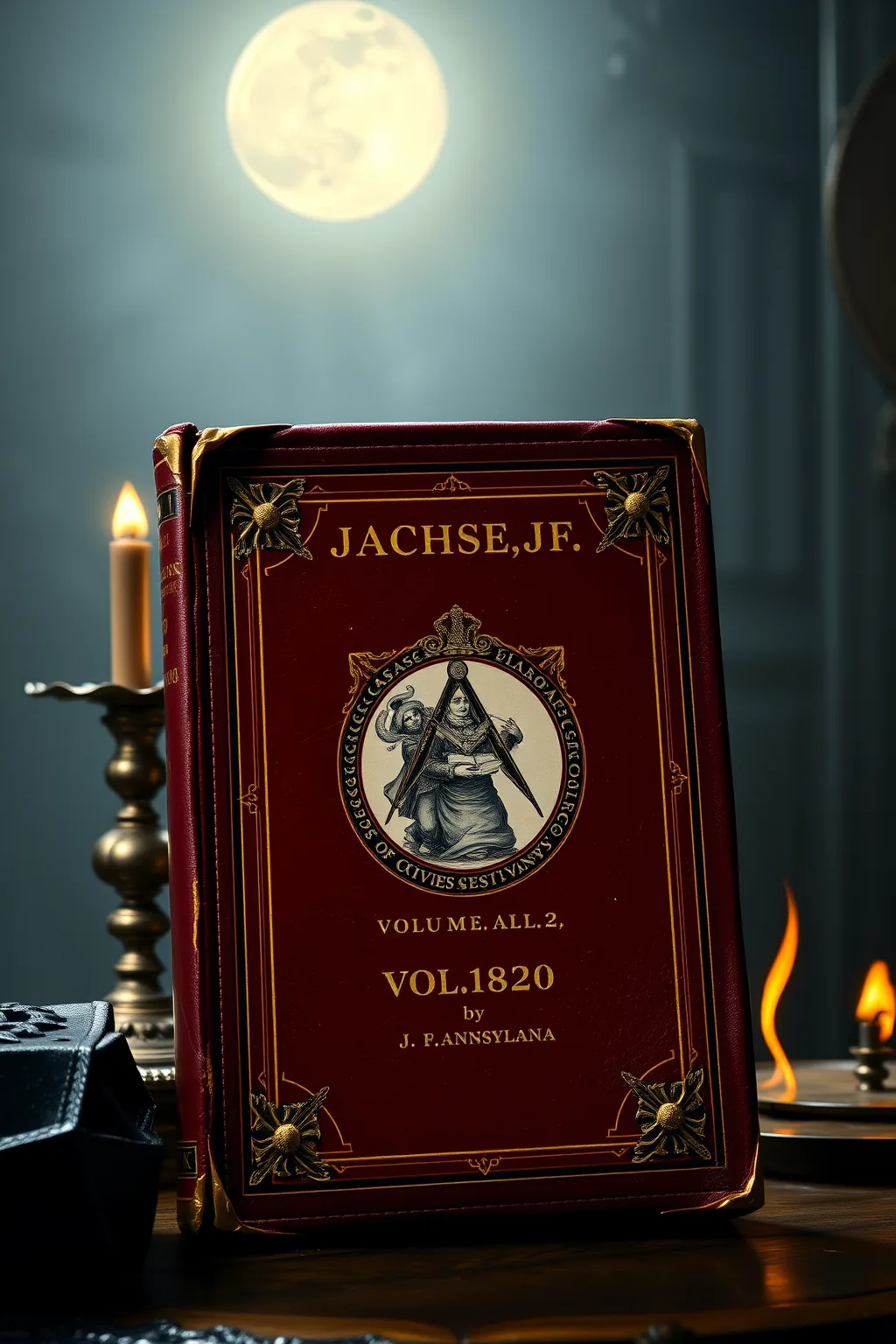
Sachse J F Old Masonic Lodges Of Pennsylvania 1730 To 1800 Vol 2 1913
 77
77

Sachse J F Old Masonic Lodges Of Pennsylvania 1730 To 1800 Vol 2 1913


Review by Cassian Rothmann (Senior Critic, Ancient Wisdom) — This second volume from Sachse's exhaustive study of Pennsylvania's early Masonic lodges is an indispensable resource for anyone serious about the occult and fraternal histories. Sachse, through the Barratt & Sachse Collection, provides unparalleled access to the ritualistic and symbolic life of these foundational institutions. It transcends mere historical recounting, offering profound insights into the esoteric philosophies and hidden knowledge that were the bedrock of early Masonic practice. Its strength lies in its detailed examination of lodge activities, revealing the spiritual and intellectual pursuits of its members. This work is essential for scholars, practitioners, and dedicated seekers of esoteric lore.
📝 Description
77
Volume 2 of J.F. Sachse's 'Old Masonic Lodges of Pennsylvania, 1730-1800' was published in 1913.
This volume, part of the Barratt & Sachse Collection, examines the less visible aspects of Freemasonry in Pennsylvania between 1730 and 1800. Sachse details the symbolic language and philosophical inquiries that were central to these early lodges. The book moves beyond simple historical accounts to reveal the esoteric ideas that influenced the Masonic brotherhood during this period. It traces the philosophical underpinnings of the fraternity through its rituals and allegories. The work provides insight into the intellectual and spiritual environment that shaped early American Masonry. It considers how these organized esoteric ideas contributed to the development of the new nation.
This work situates early Pennsylvania Freemasonry within a broader tradition of Western esotericism. It examines how Masonic lodges acted as conduits for philosophical and spiritual ideas that were circulating in the 18th century. The book looks at how these ideas were expressed through ritual, allegory, and symbolism, connecting them to earlier esoteric traditions. It suggests that organized esoteric thought was not separate from the political and social development of the nascent United States, but rather an influential component.
💡 Why Read This Book?
Uncover the hidden spiritual and philosophical foundations of early American Freemasonry. Explore the rich symbolism and ritualistic practices that informed this influential secret society. Ideal for seekers of esoteric knowledge, scholars of occult history, and practitioners interested in the roots of fraternal orders. This volume offers a direct conduit to the wisdom of the past.
⭐ Reader Reviews
Honest opinions from readers who have explored this book.
❓ Frequently Asked Questions
What is the primary focus of Volume 2?
Volume 2 of Sachse's work concentrates on the operational details, rituals, and symbolic underpinnings of Masonic lodges in Pennsylvania between 1730 and 1800, drawing heavily from the Barratt & Sachse Collection.
Is this book suitable for beginners in Masonic studies?
While comprehensive, the depth of esoteric detail may be more immediately rewarding for those with a foundational understanding of Freemasonry or secret societies. However, its rich historical context makes it accessible for dedicated beginners.
What makes this volume 'esoteric'?
The book delves into the symbolic language, philosophical inquiries, and ritualistic practices that go beyond the surface-level organizational aspects, revealing the deeper mystical and spiritual dimensions intended for initiates.
What is the significance of the Barratt & Sachse Collection?
This collection represents a significant archival resource, providing primary source material and scholarly analysis that allows for an in-depth exploration of the historical and esoteric aspects of early Pennsylvania Freemasonry.
Does the book discuss specific rituals or ceremonies?
Yes, the volume aims to illuminate the ritualistic life of the lodges, exploring the symbolic meanings and allegorical teachings embedded within their ceremonies and practices.
🔮 Key Themes & Symbolism
The Alchemy of Brotherhood: Mystical Dimensions of Early Masonry
This theme explores how early Masonic lodges in Pennsylvania served as crucibles for spiritual transformation, mirroring alchemical processes of purification and refinement. The lodge room itself becomes a symbolic workshop where members sought to transmute base elements of character into the golden essence of wisdom and virtue. It explores the esoteric understanding of the craft as a path to inner illumination, where rituals and symbols were not mere ceremonies but potent tools for unlocking hidden potential and connecting with divine principles. The focus is on the mystical aspirations underpinning the fraternity's structure and teachings.
Symbolic Architecture: Decoding the Esoteric Language of the Lodge
This theme focuses on the wide range of symbols and allegories that formed the esoteric language of the old Pennsylvania lodges. It examines how architectural metaphors, geometric principles, and biblical narratives were imbued with deeper, mystical meanings. Readers will discover how the tools of the operative stonemason were reinterpreted as instruments for building the spiritual temple within each individual. The exploration extends to the hidden geometries and numerological significance embedded within Masonic symbolism, offering a glimpse into an ancient tradition of transmitting sacred knowledge through visual and conceptual frameworks.
The Quest for Light: Philosophical Currents in Colonial Masonry
This theme investigates the philosophical underpinnings and the relentless pursuit of 'Light'—both intellectual and spiritual—that characterized the early Masonic movement in Pennsylvania. It traces the influence of Enlightenment ideals, Hermetic philosophy, and ancient mystery traditions on the intellectual range of the lodges. The book illuminates how Masons engaged in profound debates and shared esoteric teachings aimed at understanding the cosmos, the nature of humanity, and the divine spark within. This pursuit of Light was not merely academic but a deeply personal and communal spiritual quest.
💬 Memorable Quotes
Direct passages from the work, attributed to the author.
“The square and compasses were not merely tools, but keys to unlocking celestial mysteries.”
— This highlights the symbolic reinterpretation of Masonic tools, transforming them from operative instruments into esoteric keys for spiritual and cosmic understanding.
“Each ritual was a carefully etched pathway, leading from darkness to the effulgent dawn of wisdom.”
— This emphasizes the journey-like nature of Masonic rituals, designed to guide initiates through stages of personal transformation towards enlightenment.
“The whispers of antiquity echoed in every gavel's strike, preserving forgotten lore.”
— This evokes the sense of ancient knowledge and tradition being actively transmitted and preserved within the ceremonies and sounds of the lodge.
“Pennsylvania's early lodges were crucibles where the fires of reason and revelation were fused.”
— This metaphor suggests that these lodges were places of intense intellectual and spiritual synthesis, blending rational inquiry with mystical insight.
💡 Key Ideas
Editorial paraphrase of the work's core concepts — not direct quotes.
Within these hallowed walls, stone and spirit were shaped by the same divine hand.
This quote suggests that the physical construction of lodges mirrored the spiritual construction of the Mason, both guided by a higher, cosmic force.
🌙 Esoteric Significance
Tradition
This work is deeply rooted in the Western Esoteric Tradition, drawing heavily from Hermeticism, Kabbalah, and ancient mystery schools that influenced Freemasonry. It explores how these traditions were adapted and practiced within the specific context of early American lodges, focusing on the pursuit of Gnosis (spiritual knowledge) and the 'Great Work' of personal transformation. The emphasis is on the symbolic interpretation of rituals and allegories as pathways to higher consciousness and a deeper understanding of cosmic order.
Symbolism
The symbolism explored is complex, encompassing architectural metaphors (the Temple of Solomon, the building of a spiritual edifice), operative tools reinterpreted as spiritual instruments (square, compasses, level, plumb), geometric principles, and celestial bodies. These symbols function as a coded language designed to convey profound philosophical and spiritual truths, guiding the initiate through stages of moral and intellectual development towards an understanding of divine principles and the universe's underlying structure.
Modern Relevance
The esoteric insights presented in this volume remain profoundly relevant today for those interested in personal growth, symbolic thinking, and the historical roots of Western spirituality. It offers a framework for understanding how ancient wisdom traditions can be integrated into modern life, providing tools for self-discovery, ethical living, and a more profound connection to the universal mysteries. The study of these early lodges reveals enduring patterns of human aspiration for meaning and transcendence.
👥 Who Should Read This Book
This volume is essential for serious students of Freemasonry, particularly those interested in its historical and esoteric dimensions. Scholars of secret societies, occultism, and American colonial history will find it an invaluable primary-source-driven analysis. Seekers of spiritual knowledge and esoteric wisdom will appreciate the deep dive into the symbolic and philosophical underpinnings of an influential fraternal order. Practitioners of esoteric arts and rituals may find historical context and inspiration for their own practices, understanding the lineage of symbolic traditions that continue to influence contemporary spiritual paths.
📜 Historical Context
This volume emerges from a key era in American history, the late 18th century, a period of burgeoning national identity and intellectual ferment. Freemasonry, already established in Europe, found fertile ground in the colonies, offering a structured framework for moral development, civic engagement, and the exploration of esoteric philosophies. The lodges in Pennsylvania, particularly during the period 1730-1800, were not just social clubs; they were vibrant centers of learning where Enlightenment ideals intersected with ancient wisdom traditions. Figures of the Revolution and prominent citizens were often members, imbuing the fraternity with significant social and political influence. Sachse's work captures this dynamic, illustrating how the symbolic language and philosophical inquiries within these lodges contributed to the intellectual and spiritual range of colonial America, shaping both individual lives and the nascent national consciousness.
📔 Journal Prompts
Reflect on a personal 'temple' you are building within yourself. What are its foundations, its pillars, and its roof?
How can the symbolism of a craftsman's tools be applied to your own daily life and spiritual work?
Consider the concept of 'Light' as a pursuit. What does 'Light' mean to you, and what steps are you taking to find it?
In what ways do ancient symbols still resonate with you today, even if their original context is unknown?
How does the idea of a 'brotherhood' dedicated to moral and spiritual improvement inspire or challenge your own community involvement?
🗂️ Glossary
Gnosis
Direct, intuitive, or experiential knowledge of spiritual truths, often associated with mystical traditions. It signifies a deeper understanding beyond intellectual comprehension.
Hermeticism
A philosophical and religious tradition based on writings attributed to Hermes Trismegistus, emphasizing spiritual enlightenment, the interconnectedness of all things, and the principle of 'as above, so below'.
Kabbalah
A system of Jewish mysticism that explores the divine nature, creation, and the relationship between God and humanity through symbolic interpretation of scripture and esoteric teachings, often involving the Tree of Life.
Esoteric
Intended for or likely to be understood by only a small number of people with a specialized knowledge or interest. Pertaining to inner, hidden meanings or teachings.
Allegory
A story, poem, or picture that can be interpreted to reveal a hidden meaning, typically a moral or political one. In Masonic context, it's a narrative used to convey spiritual or philosophical lessons.
This book appears in 2 collections
🔮 Readers Also Liked
Browse all →






From the “Secret Societies” Collection
View all →






More Free Freemasonry & Secret Societies Books
View all →

![Gould R F History Of Freemasonry Throughout The World V 5 [ 1936 Ed][ 627p]](/img/thumb/gould-r-f-history-of-freemasonry-throughout-the-world-v-5-1936-ed-627p.webp)