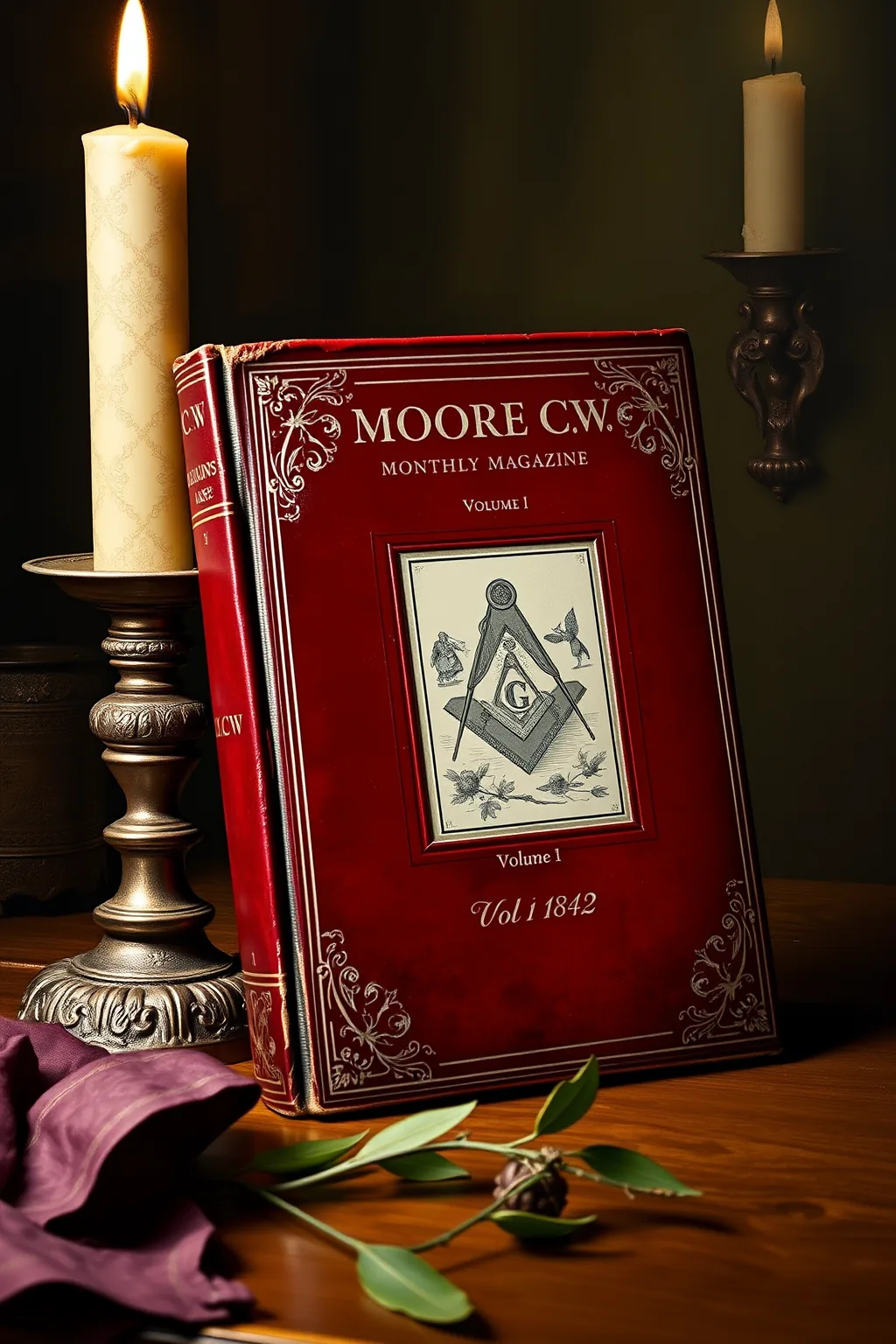
Moore C W The Freemasons Monthly Magazine Vol I 1842
 84
84

Moore C W The Freemasons Monthly Magazine Vol I 1842


Review by Alaric Kestrel (Metaphysical Studies Reviewer) — This inaugural volume of The Freemasons' Monthly Magazine offers an invaluable glimpse into the intellectual landscape of mid-19th century Masonry. It transcends simple lodge proceedings, delving into the philosophical and symbolic dimensions that have long captivated esoteric thinkers. The articles, though rooted in their time, reveal enduring insights into moral philosophy, the search for truth, and the allegorical language of the Craft. Its strength lies in its earnest exploration of Masonic principles as a path to self-discovery and societal betterment. This is essential reading for serious students of Freemasonry, occult history, and those interested in the evolution of fraternal orders as vehicles for spiritual and intellectual development. A cornerstone for any esoteric library.
📝 Description
84
The Freemasons' Monthly Magazine, Volume I, appeared in 1842, offering early insights into Masonic philosophy.
This first volume of The Freemasons' Monthly Magazine, published in 1842, presents a collection of essays and discussions focused on the philosophical and ethical dimensions of Freemasonry. It moves beyond the practical aspects of ritual to examine the deeper meanings embedded within Masonic symbolism and its historical context. The writers engage in earnest scholarship, aiming to illuminate the principles that underpin the fraternity.
The content invites readers to consider the underlying structures of Masonic thought and their connections to broader human experience. It is geared towards those with a serious interest in Freemasonry, including practitioners seeking historical perspective and students of fraternal organizations. The magazine frames Freemasonry as a system rich in enduring philosophy and personal development, acting as a guide to understanding its symbolic language.
Published in 1842, this volume emerges from a period where fraternal organizations were actively developing and articulating their symbolic and philosophical systems. It reflects an engagement with esoteric traditions that sought to convey moral and spiritual truths through allegory and ritual. The essays likely draw upon Enlightenment thought and earlier Hermetic influences, common in the intellectual currents of the time, aiming to present Freemasonry as a system of moral and spiritual instruction.
💡 Why Read This Book?
Uncover the foundational philosophical discourse of 19th-century Freemasonry. This volume offers profound insights into Masonic symbolism, ethics, and the pursuit of hidden knowledge. Ideal for serious practitioners, historical researchers, and seekers of esoteric wisdom who wish to understand the intellectual bedrock of this ancient fraternity.
⭐ Reader Reviews
Honest opinions from readers who have explored this book.
❓ Frequently Asked Questions
What is the primary focus of this magazine's first volume?
The primary focus is on exploring the philosophical, ethical, and symbolic dimensions of Freemasonry, offering a scholarly yet accessible look at its principles and teachings from the mid-19th century.
Is this book suitable for beginners in Freemasonry?
While it offers foundational knowledge, its depth and historical context are best appreciated by those with some existing familiarity with Masonic concepts or a keen interest in its historical and philosophical underpinnings.
What kind of symbolism is discussed?
The volume likely touches upon common Masonic symbols such as the square, compasses, plumb line, and level, interpreting them through a philosophical and moral lens relevant to the era's Masonic thought.
Does it contain rituals or secret teachings?
This volume is more focused on philosophical discourse and historical commentary rather than the direct exposition of rituals. It provides context and interpretation of the symbolic language used within Masonic practice.
What is the historical significance of this publication?
As the first volume, it marks a crucial point in the formalization and dissemination of Masonic intellectual traditions in the 19th century, offering a window into the prevailing thought and discourse of the time.
🔮 Key Themes & Symbolism
The Architect and the Grand Design
This volume studies the concept of a Supreme Architect and the perceived cosmic order that Freemasonry seeks to understand and emulate. It explores how Masonic teachings serve as allegorical tools for comprehending universal laws, divine intelligence, and humanity's place within a divinely ordered universe. The discussions often combine together philosophical reasoning with symbolic interpretation, inviting the reader to contemplate the interconnectedness of all things and the underlying principles that govern existence. It's a journey into seeing the mundane world as a reflection of a grander, more profound reality.
Brotherhood as a Path to Enlightenment
Beyond mere social fraternity, this magazine presents brotherhood as a transformative force, a crucible for moral and spiritual development. It examines how the bonds of Masonry foster self-discipline, mutual respect, and the pursuit of virtue, acting as a structured pathway toward personal enlightenment. The articles explore the allegorical journey of the initiate, emphasizing the internal work required to shed ignorance and embrace wisdom. This theme highlights the idea that collective growth and individual betterment are intrinsically linked within the Masonic framework, offering a model for societal harmony rooted in ethical practice.
Symbolism as a Universal Language
The core of esoteric Masonic study lies in its body of symbols, and this volume serves as an early interpreter of this visual lexicon. It unpacks the deeper meanings embedded in common Masonic implements and allegories, revealing them not as mere decorative elements but as potent keys to unlocking profound truths about life, death, and the human condition. The discussions aim to demonstrate how these symbols transcend cultural boundaries, offering a universal language that can guide the seeker towards higher understanding and spiritual awakening, bridging the gap between the material and the metaphysical.
💬 Memorable Quotes
Direct passages from the work, attributed to the author.
“The trowel spreads the cement of brotherly love.”
— This aphorism highlights the Masonic emphasis on unity and harmony within the fraternity, suggesting that love and fraternity are the essential binding agents that hold the brotherhood together, fostering a cohesive and supportive community.
“Seek, and ye shall find; knock, and it shall be opened unto you.”
— A timeless biblical injunction, here applied to the Masonic quest for knowledge and spiritual truth, emphasizing the active role the seeker must play in their own enlightenment and the reward for persistent effort and sincere inquiry.
“The rough ashlar must be hewn and polished.”
— This iconic Masonic metaphor signifies the process of self-improvement and refinement. The 'rough ashlar' represents the uninitiated or uncultivated individual, while the 'polished ashlar' symbolizes the perfected man, shaped through education, discipline, and moral development.
“Labor is the duty of all men.”
— Reflecting the dignity of work and contribution, this statement emphasizes the active, engaged role expected of Masons, viewing honest labor not only as a means of sustenance but as a fundamental aspect of a virtuous and purposeful life.
💡 Key Ideas
Editorial paraphrase of the work's core concepts — not direct quotes.
Wisdom is the principal thing; therefore get wisdom.
This quote underscores the paramount importance of intellectual and spiritual wisdom within the Masonic framework, positioning it as the ultimate goal and the most valuable acquisition for any dedicated Mason on their path of growth.
🌙 Esoteric Significance
Tradition
This volume is deeply rooted in the Western Esoteric Tradition, particularly within the context of Freemasonry. It draws upon Hermeticism, Neoplatonism, and Kabbalistic thought, which have historically influenced Masonic symbolism and philosophy. The emphasis on a divine Architect, the pursuit of hidden knowledge, and the allegorical interpretation of rituals align with the core tenets of these esoteric systems, presenting Freemasonry as a structured path for spiritual and intellectual ascent.
Symbolism
The text is rich with explorations of Masonic symbolism, interpreting tools like the square, compasses, level, and plumb line not just as operative craft instruments, but as allegorical representations of moral virtues and cosmic principles. It studies the symbolic meaning of light and darkness, the journey of the initiate, and the architectural metaphors used to describe the ideal human character and the universal order, offering keys to understanding the deeper, often concealed, layers of meaning within Masonic teachings.
Modern Relevance
Despite its 19th-century origins, the philosophical inquiries and symbolic interpretations presented in this volume retain significant relevance. The emphasis on brotherhood, self-improvement, ethical conduct, and the search for truth are perennial human aspirations. For contemporary seekers of esoteric knowledge, it offers a historical lens into the evolution of Masonic thought and provides foundational insights into symbolic language and philosophical frameworks that continue to inform various spiritual and philosophical disciplines today.
👥 Who Should Read This Book
This volume is a reference for several distinct groups. For **Masonic practitioners**, it offers invaluable historical context and a deeper understanding of the philosophical underpinnings of their fraternity, enriching their personal practice. **Scholars of secret societies and esoteric history** will find it an essential primary source for understanding 19th-century Masonic discourse and its intellectual currents. **Seekers of hidden knowledge** and those interested in Western Esotericism will discover profound allegorical interpretations and philosophical explorations that connect Masonic symbolism to broader spiritual traditions. **Practitioners of contemplative arts** may also find resonance in its themes of self-refinement and the pursuit of wisdom through structured symbolism.
📜 Historical Context
Published in 1842, The Freemasons' Monthly Magazine Vol I emerged during a period of significant intellectual and societal ferment in Britain and America. The Victorian era was characterized by a growing interest in history, antiquarianism, and the exploration of ancient traditions. Freemasonry, having established itself as a prominent fraternal organization, was often seen as a keeper of ancient wisdom and a repository of moral philosophy. This magazine reflects the era's desire to codify, discuss, and disseminate Masonic principles and history, moving beyond purely ritualistic aspects to engage with its philosophical underpinnings. It served as a platform for educated Masons to share their interpretations of symbolism, explore the fraternity's historical roots, and debate its ethical and societal role, contributing to the ongoing evolution and popular understanding of Freemasonry.
📔 Journal Prompts
Reflect on the concept of the 'Supreme Architect' as presented in the volume. How does this concept inform your understanding of the universe and your place within it?
Consider the Masonic ideal of brotherhood. What does true brotherhood mean to you, and how can its principles be applied beyond formal organizations?
Analyze a specific Masonic symbol discussed in the text. What are its layers of meaning, and how can its allegorical significance be integrated into your daily life?
The volume discusses the 'rough ashlar' and 'polished ashlar.' Describe your own journey of personal refinement and the 'hewing' and 'polishing' you are currently undergoing.
How does the pursuit of 'wisdom' as described in this text compare to your personal definition and pursuit of knowledge and understanding?
🗂️ Glossary
Ashlar
In Masonic symbolism, an ashlar is a stone, either rough or smooth, representing the state of man. The rough ashlar symbolizes the unrefined individual, while the polished ashlar represents the person who has undergone moral and intellectual development through Masonic teachings.
Perennial Wisdom
The concept that there exists a universal, unchanging spiritual truth or body of knowledge that underlies all major religious and philosophical traditions throughout history. Esoteric traditions often seek to access or understand this fundamental wisdom.
Allegory
A story, poem, or picture that can be interpreted to reveal a hidden meaning, typically a moral or political one. In Freemasonry, rituals and symbols are often understood as allegorical representations of spiritual truths and moral lessons.
Hermeticism
A philosophical and religious tradition based on the teachings attributed to Hermes Trismegistus. It emphasizes divine knowledge, the interconnectedness of all things, and the principle of 'as above, so below,' often influencing esoteric thought and practices.
Initiate
A person who has undergone a ritual or process of admission into a particular society, order, or religious sect. In esoteric traditions, initiation often signifies a spiritual awakening or a step towards higher knowledge and understanding.
This book appears in 2 collections
🔮 Readers Also Liked
Browse all →


![The Freemasons' quarterly (magazine and) review [afterw.] The Freemasons' monthly magazine](/img/thumb/the-freemasons-quarterly-magazine-and-review-afterw-the-freemasons-monthly-magazine-freemasons-magazine-ia.webp)



From the “Secret Societies” Collection
View all →![John Todd [Illuminati And Witchcraft Exposed].pdf (PDFy mirror)](/img/thumb/john-todd-illuminati-and-witchcraft-exposed-pdf-pdfy-mirror.webp)



More Free Freemasonry & Secret Societies Books
View all →