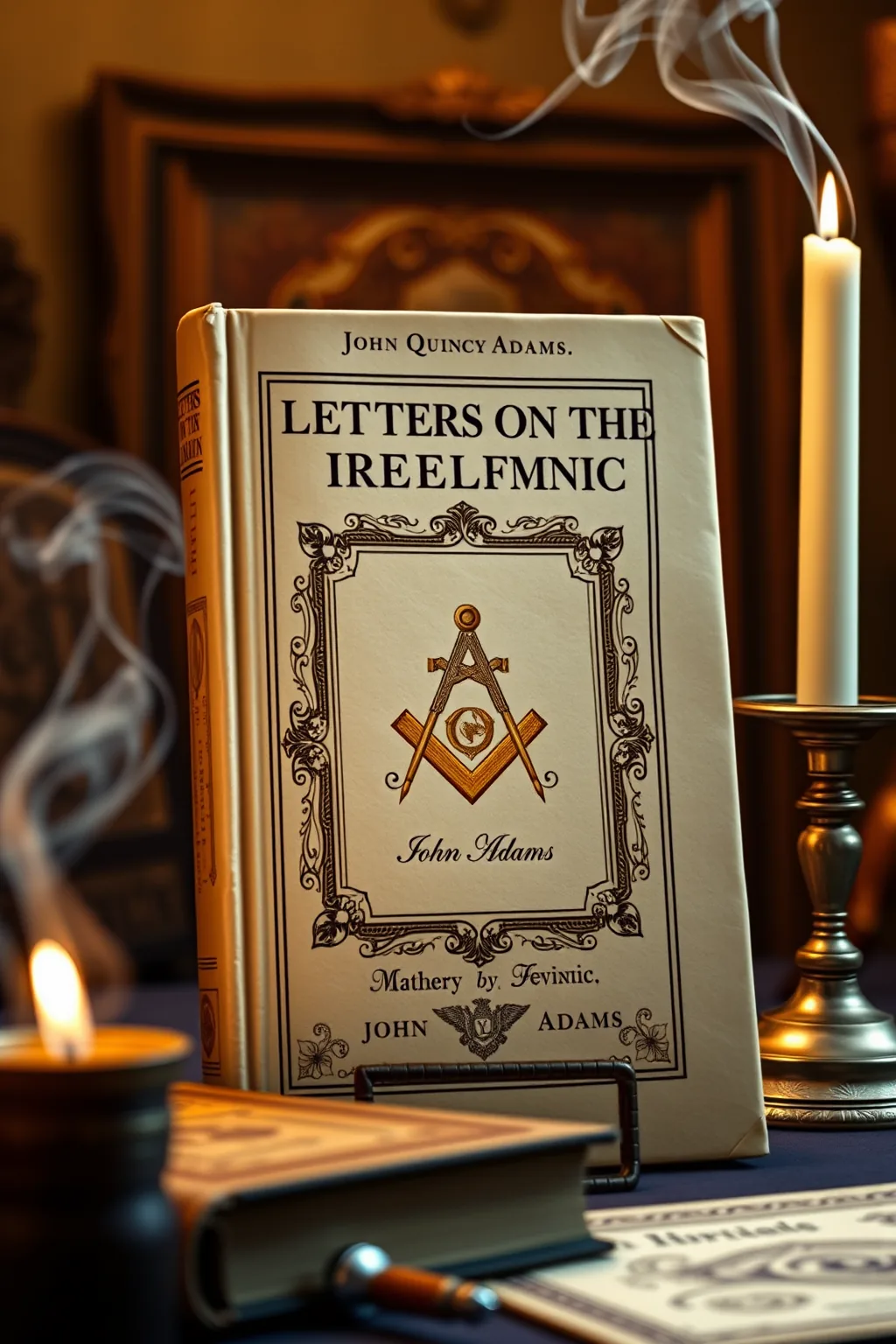
Letters on the Masonic Institution
 76
76

Letters on the Masonic Institution


Sophia Crane, Associate Editor — John Quincy Adams’ "Letters on the Masonic Institution" remains a cornerstone for understanding the public discourse surrounding Freemasonry in its formative American years. Far from a simple exposé, Adams delves into the philosophical and ethical dimensions of the Craft, offering profound insights into the nature of oaths, societal obligations, and the potential for both light and shadow within such powerful institutions. His measured yet critical examination provides a valuable lens for scholars and practitioners alike, urging a deeper contemplation of Masonic principles and their societal resonance. This work is essential for anyone seeking an informed, historical perspective on Freemasonry's intricate tapestry.
📝 Description
76
In 1831, John Quincy Adams wrote private letters questioning Freemasonry's influence.
John Quincy Adams' "Letters on the Masonic Institution" were written in 1831 as a series of private correspondences. Adams, a former President of the United States, examined the Masonic fraternity from an outsider's viewpoint. He focused on the rituals, oaths, and core beliefs that defined the organization. His writings also explored the symbolic meanings embedded within Masonic practices. Adams considered how these symbols might affect individual understanding and the structure of society.
These letters offer a historical perspective on Freemasonry during a period of public scrutiny. Adams' analysis touches upon the nature of commitments made within fraternities and the broader societal roles such organizations can play. The collection invites reflection on the use of symbols in spiritual and social contexts. It provides a specific historical look at a prominent figure's engagement with a secretive society, examining its perceived impact on public and private life.
These letters engage with the historical context of Freemasonry, a fraternal order with roots in stonemason guilds that developed distinct ritualistic and symbolic systems. Adams' inquiry touches on the public perception and private workings of such groups, which often attracted individuals interested in moral, philosophical, and sometimes spiritual development through shared symbolism and degrees of initiation. The book examines the tension between the secrecy of fraternal orders and their perceived role within the wider community, a recurring theme in the study of esoteric traditions.
💡 Why Read This Book?
Unravel the historical controversies and philosophical underpinnings of Freemasonry through the discerning eye of a U.S. President. This book is essential for seekers of esoteric knowledge, scholars of secret societies, and practitioners interested in the historical evolution of Masonic thought. Gain a unique perspective on symbolic language and its societal implications.
⭐ Reader Reviews
Honest opinions from readers who have explored this book.
❓ Frequently Asked Questions
What is the primary focus of Adams' letters regarding Freemasonry?
Adams' letters primarily focus on a critical examination of the Masonic institution's oaths, rituals, and perceived influence on public life, exploring its philosophical underpinnings and societal impact.
Is this book an endorsement or a condemnation of Freemasonry?
Adams presents a complex and nuanced perspective, offering both critique and thoughtful consideration of Masonic principles, rather than a simple endorsement or condemnation. It invites readers to form their own conclusions.
Who was John Quincy Adams?
John Quincy Adams was the sixth President of the United States, a distinguished diplomat, and a prominent figure in early American history, known for his intellect and moral rigor.
What kind of symbolism is discussed in the book?
The book touches upon the symbolic language inherent in Masonic rituals and teachings, exploring allegorical meanings and their potential interpretations within a philosophical and societal context.
Is this book suitable for someone new to Freemasonry studies?
Yes, while Adams' perspective is historical and critical, his clear prose and focus on fundamental principles make it an accessible starting point for understanding the historical discourse surrounding Freemasonry.
🔮 Key Themes & Symbolism
The Nature of Oaths and Societal Obligation
Adams critically examines the wide implications of solemn oaths, particularly those taken within secret societies like Freemasonry. He probes the ethical field of binding oneself to vows that may supersede civic duty or personal conscience, questioning the balance between fraternity and broader societal responsibilities. This theme explores the philosophical weight of commitment and the potential for such pledges to shape individual actions and influence institutional behavior, inviting contemplation on the ethics of loyalty and the boundaries of private associations.
Symbolism and Allegorical Interpretation
Beyond a surface-level critique, Adams engages with the collection of symbolism embedded within Masonic rituals and teachings. He explores how these allegorical representations serve to impart moral lessons and philosophical insights, acting as a 'language' for conveying esoteric knowledge. The letters encourage readers to look beyond the literal, to discern the deeper meanings encoded in Masonic practices, and to understand how such symbolic systems can foster a sense of shared understanding and spiritual progression among initiates.
The Influence of Fraternal Societies on Public Life
A central concern for Adams is the intricate relationship between secretive fraternal organizations and the broader currents of civil society and governance. His letters scrutinize the potential for Freemasonry's internal structures and allegiances to impact public discourse, political decisions, and the equitable administration of justice. This theme encourages a critical assessment of power dynamics, transparency, and the role of such societies in shaping the social and political fabric of a nation, prompting reflection on the ideals of public service versus private association.
💬 Memorable Quotes
Direct passages from the work, attributed to the author.
“Secret societies have a peculiar tendency to foster a spirit of exclusiveness.”
— Adams points to the inherent nature of secret groups to create an 'in-group' and 'out-group' dynamic, potentially leading to a separation from wider societal concerns.
“Symbolism is the language of the soul.”
— This profound statement suggests that symbolic representation transcends literal understanding, offering a direct pathway to spiritual and philosophical truths.
“The strength of an institution lies in its principles, not its secrecy.”
— Adams posits that true societal value and lasting impact stem from adherence to sound ethical and philosophical tenets, rather than the concealment of practices.
“Enlightenment is a perpetual pursuit.”
— This reflects a belief in the ongoing journey of self-discovery and the continuous quest for knowledge and wisdom, a core tenet across many esoteric traditions.
💡 Key Ideas
Editorial paraphrase of the work's core concepts — not direct quotes.
The obligations of a Mason are sacred.
This quote highlights the profound seriousness with which Masonic vows are regarded, emphasizing their binding nature and the moral weight they carry for initiates.
🌙 Esoteric Significance
Tradition
While Adams critically engages with Freemasonry, his work indirectly illuminates the broader Western esoteric tradition. By dissecting Masonic symbolism and ritual, he touches upon themes common to Hermeticism, Kabbalah, and Gnosticism—namely, the pursuit of hidden knowledge, the use of allegory for spiritual instruction, and the concept of initiation as a transformative process. His letters provide a historical lens through which to view the practical application of these ancient wisdom streams within a structured, fraternal context.
Symbolism
Adams' analysis of Masonic symbolism explores the archetypal imagery and allegorical narratives employed to convey moral and philosophical truths. He discusses how symbols like the compass, square, and plumb line, while seemingly mundane tools, are imbued with deeper meanings related to morality, virtue, and the construction of a righteous life. His work encourages a contemplative approach to these emblems, recognizing them not just as signs, but as keys to unlocking profound spiritual and ethical insights relevant to personal growth and societal harmony.
Modern Relevance
In an age still fascinated by hidden structures and collective meaning-making, Adams' "Letters" offer enduring relevance. His critical examination of oaths, secrecy, and institutional influence prompts contemporary reflection on the ethics of membership in any organization, be it professional, religious, or fraternal. Furthermore, his engagement with symbolism encourages a deeper appreciation for the power of metaphor and allegory in conveying complex ideas, urging readers to seek meaning beyond the superficial in their own lives and in the world around them.
👥 Who Should Read This Book
This profound collection is a must-read for serious students of Western esotericism, particularly those interested in the history and philosophy of Freemasonry. Scholars of secret societies and early American history will find Adams' critical perspective invaluable. Seekers drawn to the intersection of morality, symbolism, and societal structure will discover a rich intellectual landscape. Practitioners of esoteric traditions may find Adams' analysis of ritual and allegory informative, offering a historical counterpoint to contemporary practices and fostering a deeper understanding of the Craft's enduring appeal.
📜 Historical Context
Penned in the early 19th century, John Quincy Adams' "Letters on the Masonic Institution" emerged during a period of intense public scrutiny and debate surrounding Freemasonry in the United States. Following the mysterious disappearance of William Morgan in 1826, an event widely attributed to anti-Masonic sentiment, public apprehension about the fraternity's influence and secrecy reached a fever pitch. Adams, a former President and a figure of immense moral authority, entered this charged atmosphere with his measured, yet critical, correspondence. His writings reflect the broader anxieties of the era regarding secret societies, their potential for corruption, and their impact on democratic ideals. This context is crucial for understanding the work's significance as a contemporary commentary on a powerful, yet controversial, institution.
📔 Journal Prompts
What personal oaths or commitments do I hold, and how do they shape my actions and identity?
How does symbolism manifest in my daily life, and what deeper meanings might these symbols convey?
In what ways can private associations (like clubs or fraternities) positively or negatively influence public life?
What does 'hidden knowledge' mean to me, and what are the ethical considerations surrounding its pursuit and dissemination?
How can I strive for 'enlightenment' in my own life, and what practices might facilitate this journey?
🗂️ Glossary
Fraternity
A fraternal order or society, characterized by brotherhood, mutual support, and often shared rituals and principles, such as Freemasonry.
Allegory
A story, poem, or picture that can be interpreted to reveal a hidden meaning, typically a moral or political one. In esoteric contexts, it's a primary vehicle for transmitting wisdom.
Esoteric
Intended for or likely to be understood by only a small number of people with a specialized knowledge or interest; relating to hidden or secret knowledge.
Initiation
A ritual or ceremony marking entrance into a particular society or group, often involving symbolic acts and the imparting of specific knowledge or oaths.
Tenets
The main principles or beliefs of a religion or philosophy; the core doctrines that guide the practice and understanding of a group.
This book appears in 2 collections
🔮 Readers Also Liked
Browse all →







From the “Secret Societies” Collection
View all →




More Free Freemasonry & Secret Societies Books
View all →