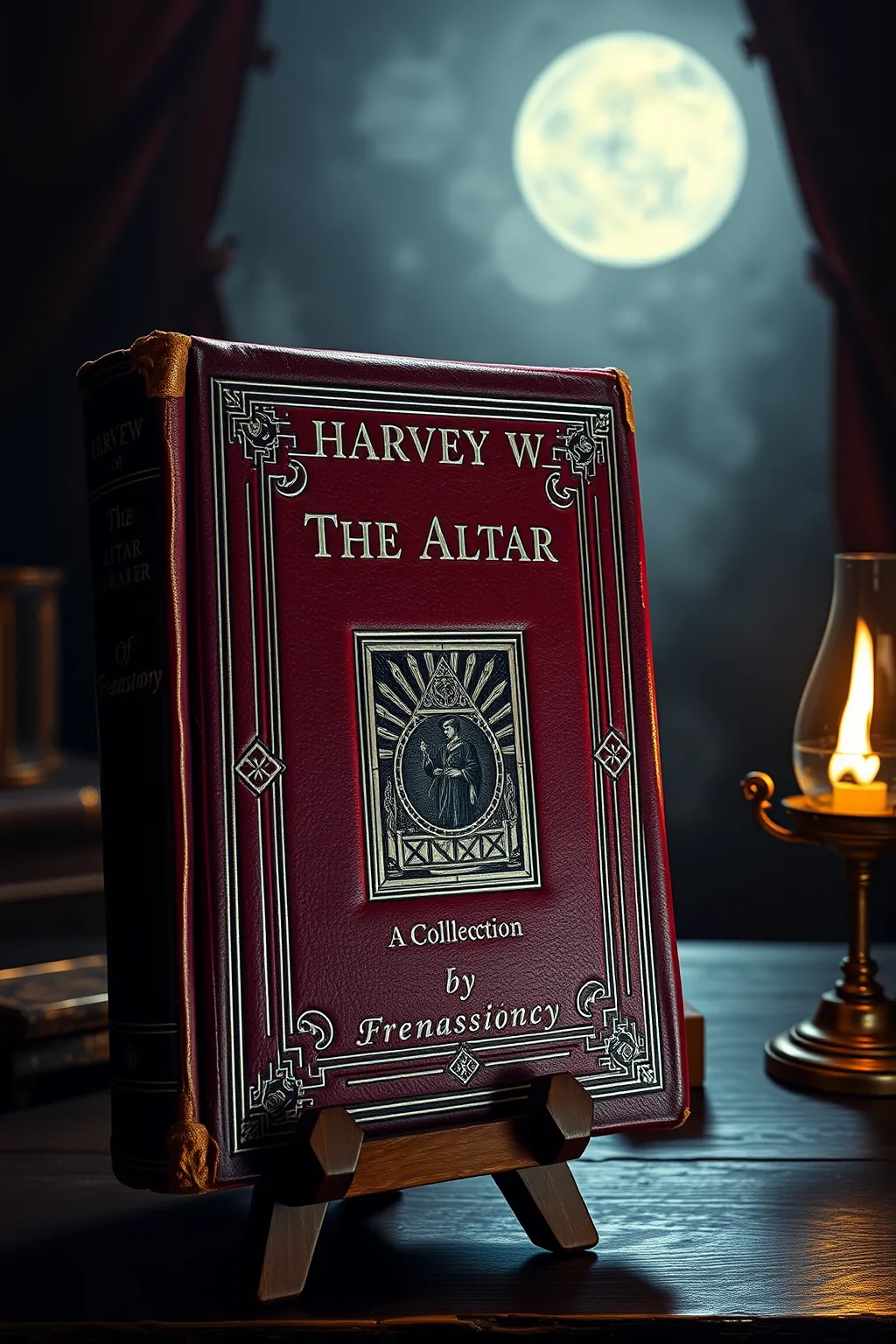
Harvey W The Altar Of Freemasonry
 77
77

Harvey W The Altar Of Freemasonry


Ophelia Vance, Mystical Literature Reviewer: 'The Altar of Freemasonry' is a cornerstone for anyone seeking the profound, mystical dimensions of Masonic thought. Harvey W masterfully unpacks the symbolic language, revealing not just the structure of lodges, but the very architecture of the soul. This text offers rare insights into the alchemical transformations and spiritual initiations at the core of Freemasonry. Its strength lies in its ability to bridge the historical with the deeply personal, making it an indispensable read for advanced students and seasoned practitioners yearning for a more profound connection to the Craft's hidden wisdom. A truly illuminating journey into the sacred.
📝 Description
77
'The Altar of Freemasonry' presents a detailed look at Masonic ritual and symbolism.
This text from the Harvey W Collection examines the esoteric aspects of Freemasonry. It focuses on the hidden knowledge and symbolism within Masonic rituals. The work aims to illuminate the philosophical and mystical ideas that underpin the fraternity. It is written for those interested in Masonic initiation and personal development, suggesting a path for self-discovery. The book discusses universal principles and concepts that go beyond everyday experience.
The author invites earnest seekers, practitioners, and scholars to engage with these ideas. The writing encourages a thoughtful approach to understanding the fraternity's deeper meanings. It presents Masonic symbolism not just as historical elements but as keys to spiritual insight. The text seeks to foster a greater comprehension of the fraternity's teachings for dedicated individuals.
This work fits within the broader tradition of Western esotericism that often analyzes fraternal organizations for their mystical and philosophical content. Like other texts from this sphere, it seeks to uncover deeper meanings in established structures and practices. It treats Masonic symbolism as a system of spiritual knowledge, akin to how Kabbalah or Hermeticism are studied for their hidden doctrines. The focus is on unlocking a symbolic language that relates to personal transformation and universal truths.
💡 Why Read This Book?
Uncover the profound spiritual and philosophical mysteries woven into the fabric of Freemasonry. This book is essential for seekers of ancient wisdom, scholars of secret societies, and practitioners aiming to deepen their understanding of Masonic symbolism and its transformative power. Explore the hidden allegories and esoteric teachings that have guided initiates for centuries, enriching your personal journey of self-discovery and enlightenment.
⭐ Reader Reviews
Honest opinions from readers who have explored this book.
❓ Frequently Asked Questions
What is the primary focus of 'The Altar of Freemasonry'?
The book's primary focus is on the esoteric and mystical aspects of Freemasonry, delving into its hidden symbolism, philosophical underpinnings, and spiritual dimensions rather than its purely historical or organizational elements.
Who is the author, Harvey W?
The author is identified as 'Harvey W,' part of the Harvey W Collection, suggesting a significant but perhaps pseudonymously or collectively authored work within that specific archival context.
Is this book suitable for beginners in Freemasonry?
While accessible, the book is best suited for those with some foundational knowledge or a keen interest in the deeper, symbolic meanings within Freemasonry. It offers a more advanced perspective.
What kind of 'hidden knowledge' is discussed?
The 'hidden knowledge' refers to the allegorical interpretations, philosophical concepts, and spiritual lessons embedded within Masonic rituals and symbols, often related to self-improvement and universal truths.
Can I find this book for free online?
As part of the Esoteric Library's curated collection, this text is made available for your study and exploration, often in digital formats that allow for free online access to its profound content.
🔮 Key Themes & Symbolism
The Mystical Architecture of the Lodge
This theme explores the lodge not merely as a physical space, but as a sacred geometric construct designed to facilitate spiritual ascent. It explores how the arrangement of furniture, the placement of symbols, and the very dimensions of the room are intended to mirror the cosmos and the inner universe of the initiate. The discussion highlights the lodge as a crucible for transformation, where profane space is consecrated and elevated, preparing the mind and spirit for the reception of divine light and profound truths. The focus is on the lodge as a microcosm, a symbolic representation of the greater spiritual realities.
Allegory and the Unveiling of Truth
Central to the text is the concept of allegory as the primary vehicle for conveying Masonic truths. This theme examines how rituals, degrees, and symbols are not meant to be taken literally but serve as potent metaphors that unlock deeper philosophical and spiritual insights. The book guides the reader through the art of deciphering these allegorical layers, revealing the progressive stages of understanding that lead from the superficial to the profound. It emphasizes that true Masonic knowledge is not taught, but rather discovered through contemplation and the application of symbolic interpretation to one's life.
The Alchemical Journey of the Initiate
This theme frames the Masonic path as an internal alchemical process, akin to the ancient art of transforming base metals into gold. The initiate's journey through the degrees is presented as a series of symbolic purifications, dissolutions, and congealments of the self. The book explores how Masonic practices aim to refine the character, transmute passions, and elevate the spirit towards a state of enlightenment and spiritual perfection. The focus is on the inner work, the 'Great Work' of self-mastery and the realization of one's divine potential, mirroring the transformative principles of Hermetic alchemy.
💬 Memorable Quotes
Direct passages from the work, attributed to the author.
“Light is not found, but unveiled.”
— This highlights the concept of inherent wisdom. The book posits that spiritual truth is not an external acquisition but a revelation of what already exists within the seeker, brought to light through proper understanding and practice.
“The square guides the hand, the compass guides the heart.”
— This succinctly contrasts external morality and ethical conduct (the square) with inner spiritual guidance and aspiration (the compass), suggesting a balance required for a virtuous life and spiritual progress.
“Initiation is the death of ignorance and the birth of awareness.”
— This powerful statement defines initiation as a profound transformative process. It marks a definitive shedding of illusion and darkness, leading to a new, enlightened state of consciousness and understanding.
💡 Key Ideas
Editorial paraphrase of the work's core concepts — not direct quotes.
The true temple is built not of stone, but of the soul.
This quote emphasizes the internal, spiritual nature of Masonic worship and self-improvement. It suggests that external structures are mere representations of the inner sanctuary of consciousness where true enlightenment is sought and achieved.
Symbolism is the language of the divine.
This quote underscores the importance of symbols in understanding esoteric truths. It suggests that the deepest meanings and divine principles are communicated through symbolic representation, requiring interpretation to grasp their essence.
🌙 Esoteric Significance
Tradition
This work is deeply rooted in the Western Esoteric Tradition, particularly within the framework of Hermeticism and Rosicrucianism, which heavily influenced early Masonic speculative thought. It draws parallels with alchemical processes and Neoplatonic concepts of emanation and spiritual ascent, viewing Masonic degrees as stages in a journey of soul purification and enlightenment, aiming to achieve a state of divine union or self-realization.
Symbolism
The text meticulously dissects Masonic symbols, interpreting them through an esoteric lens. Key symbols like the square, compass, tracing board, and the various tools of operative masonry are recontextualized as allegorical representations of moral virtues, cosmic principles, and stages of spiritual transformation. The emphasis is on understanding the deeper, hidden meanings that unlock the philosophical and mystical dimensions of Masonic ritual, moving beyond their literal or operative meanings.
Modern Relevance
In a world often characterized by superficiality and material pursuits, 'The Altar of Freemasonry' offers a compelling counter-narrative focused on introspection, self-mastery, and the pursuit of higher knowledge. Its insights into symbolic language and allegorical interpretation provide valuable tools for navigating complex ideas and fostering critical thinking. For contemporary seekers, it remains a powerful guide to understanding the timeless quest for meaning, ethical conduct, and spiritual growth, demonstrating that ancient wisdom can still illuminate the path to personal fulfillment.
👥 Who Should Read This Book
This volume is a profound resource for seasoned Freemasons seeking to deepen their understanding of the philosophical and esoteric underpinnings of their craft. It will also deeply resonate with scholars of Western Esotericism, comparative religion, and secret societies, offering a rich primary source for analysis. Spiritual seekers and occult practitioners interested in the history and symbolic language of ancient orders will find invaluable insights. Beginners curious about the mystical dimensions of Freemasonry might find it a challenging but ultimately rewarding exploration into the deeper currents of this venerable tradition.
📜 Historical Context
Emerging from an era of burgeoning intellectual curiosity and a romantic fascination with ancient wisdom, 'The Altar of Freemasonry' likely reflects the late 18th or early 19th century's engagement with esoteric philosophies. This period saw a proliferation of Masonic writings that sought to systematize, interpret, and often spiritualize the fraternity's rituals and teachings. Influenced by Hermeticism, Kabbalah, and Neoplatonism, these texts aimed to present Freemasonry not just as a social organization, but as a profound system of spiritual development and moral instruction. The 'Harvey W Collection' itself suggests an archival effort to preserve such valuable, often privately circulated, treatises that contributed to the body of Masonic thought during a time when its influence was expanding globally, shaping the discourse on secret societies and their role in society.
📔 Journal Prompts
Reflect on a personal 'altar' – a place or practice that holds sacred significance for your inner growth. How does it mirror the concept of a spiritual temple?
Consider a Masonic symbol (e.g., the square, compass, letter G). How can its esoteric meaning be applied to a challenge you are currently facing in your life?
What does the concept of 'unveiling light' mean to you? In what areas of your life do you feel you need to "unveil" more truth?
Describe a personal 'initiation' or transformative experience you have undergone. What aspects of your old self 'died,' and what new awareness was 'born'?
How can the principles of alchemical transformation be applied to refining your own character and spiritual development?
🗂️ Glossary
Esoteric
Relating to or accessible only by a small number of people with a specialized knowledge or interest, often concerning spiritual or mystical truths.
Allegory
A story, poem, or picture that can be interpreted to reveal a hidden meaning, typically a moral or political one. In this context, it refers to the symbolic representation of deeper truths within Masonic ritual.
Hermeticism
A religious, philosophical, and esoteric tradition based on the purported teachings of Hermes Trismegistus. It emphasizes the unity of all things and the potential for human spiritual transformation and enlightenment.
Initiation
A ceremony or ritual of admission and bonding into a group, society, or religious order, often involving symbolic acts that represent a transition to a new status or level of understanding.
Symbolism
The use of symbols to represent ideas or qualities. In this text, it refers to the rich system of visual and ritualistic symbols used in Freemasonry to convey profound philosophical and spiritual concepts.
This book appears in 2 collections
🔮 Readers Also Liked
Browse all →








From the “Secret Societies” Collection
View all →




More Free Freemasonry & Secret Societies Books
View all →