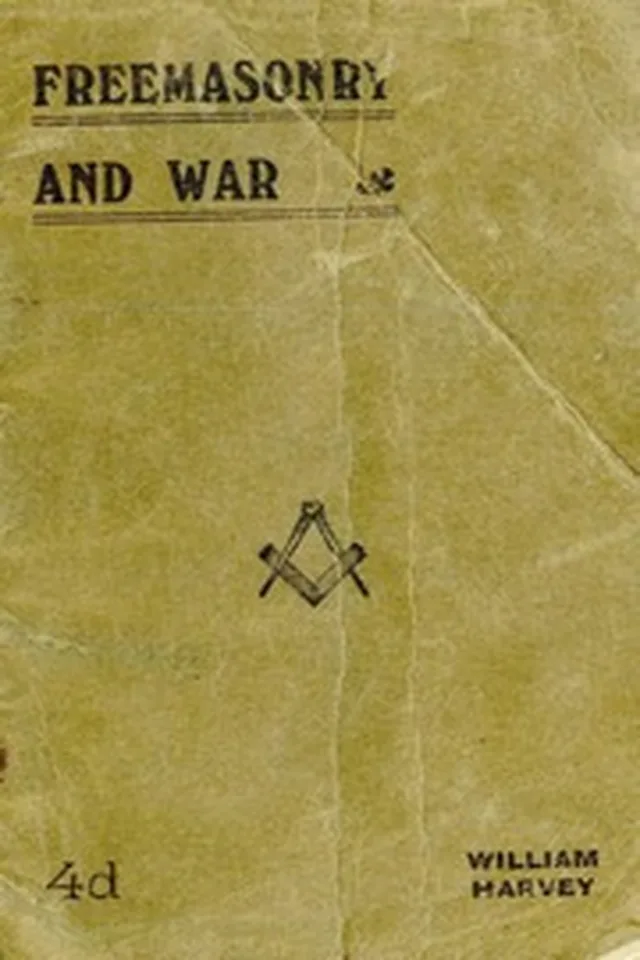
Harvey W Freemasonry And War
 76
76

Harvey W Freemasonry And War

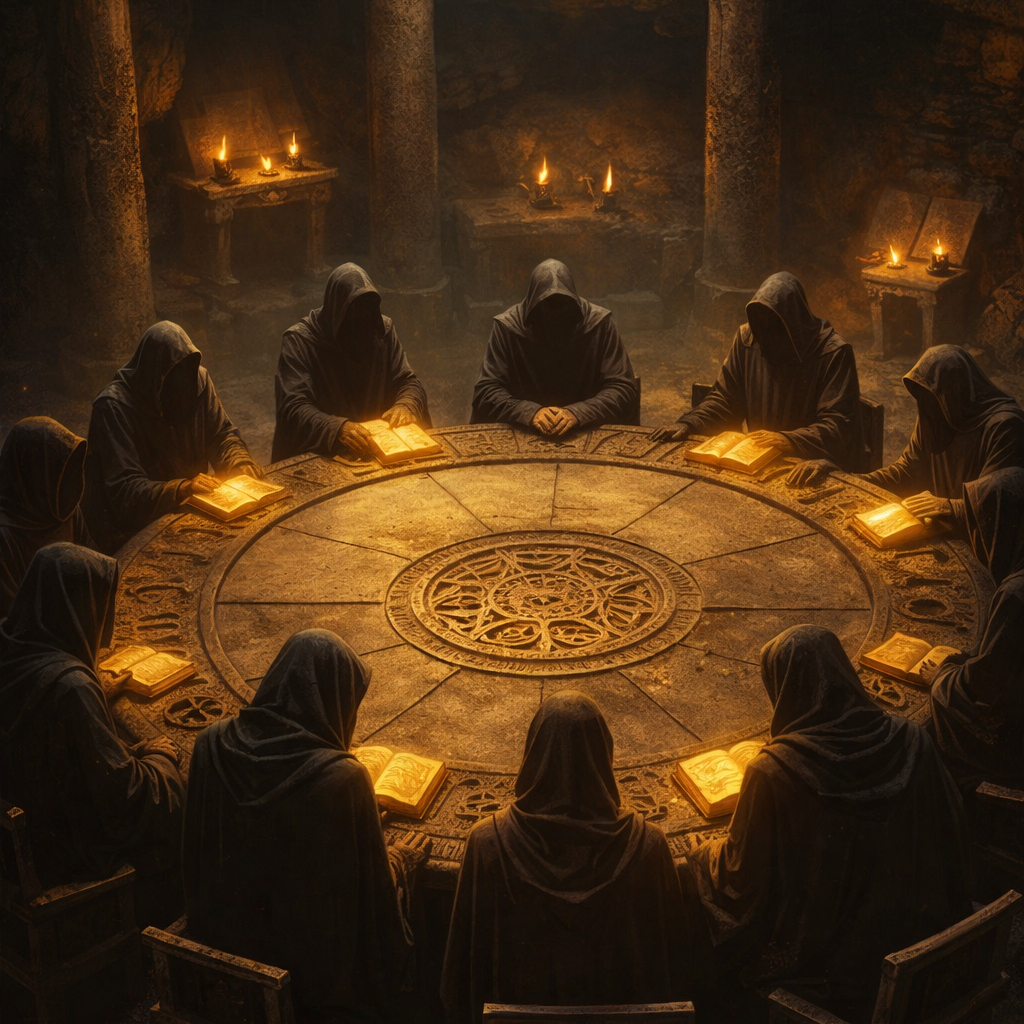

Aurelia Blackwood (Occult Philosophy Critic) — This volume, emerging from the hallowed halls of the William Harvey Collection, offers a rare glimpse into the complex relationship between Freemasonry and the martial spirit. The anonymous author masterfully navigates the labyrinthine pathways of Masonic symbolism as it pertains to conflict, revealing hidden correspondences and esoteric interpretations often overlooked. Its strength lies in its ability to connect the practical realities of war with the abstract principles of Masonic philosophy. This is essential reading for serious students of esotericism, occult history, and those seeking to understand the deeper currents that have shaped fraternal organizations and their engagement with the world. A truly illuminating text for the dedicated practitioner and the curious scholar alike.
📝 Description
76
This 1909 book examines Freemasonry's role during periods of war.
Published in 1909, "Freemasonry and War" investigates the connections between Masonic practices and military conflict. The text looks at the symbology, rituals, and philosophical ideas that influenced Masonic members during times of war. It goes beyond simple history, aiming to show how concepts like brotherhood, wisdom, and enlightenment were used or hidden during wartime. The book creates an atmosphere of discovery, guiding readers through historical Masonic settings and secret agreements.
This work is aimed at those interested in esoteric knowledge, scholars of secret societies, and practitioners seeking to understand the balance between order and chaos. It gives a distinct perspective for reconsidering history and the ongoing search for spiritual understanding, even in difficult circumstances. The book's importance is in how it examines the testing and transformation of universal principles through worldly conflict.
This book fits within the broader study of Western Esotericism, specifically concerning fraternal orders and their philosophical interpretations. It touches upon traditions that seek hidden meanings in established structures and historical events. The text aligns with esoteric interests in secret knowledge, symbolic language, and the exploration of consciousness through ritual and belief systems. It aims to uncover the less visible aspects of human institutions and their connection to deeper currents of thought, particularly when faced with societal upheaval like war.
💡 Why Read This Book?
Uncover the esoteric meaning behind Masonic involvement in historical conflicts. Explore hidden symbology and philosophical connections between brotherhood and warfare. Ideal for seekers of arcane knowledge, scholars of secret societies, and Freemasons wishing to deepen their understanding of their tradition's historical and spiritual dimensions. Gain a unique perspective on order amidst chaos.
⭐ Reader Reviews
Honest opinions from readers who have explored this book.
❓ Frequently Asked Questions
Is this book about military history or Masonic history?
This book bridges both, focusing on the esoteric and philosophical intersections between Freemasonry and the context of warfare, rather than a purely military account.
Who is the author, Harvey W?
The author is listed as 'Unknown' within the William Harvey Collection, adding to the mystique and focus on the content rather than a singular personality.
What esoteric themes are explored?
The book delves into Masonic symbolism, ritualistic applications, hidden knowledge, and the philosophical interpretation of order and brotherhood in times of conflict.
Is prior knowledge of Freemasonry required?
While prior knowledge is beneficial for deeper appreciation, the book is written to be accessible to dedicated seekers interested in esoteric traditions and their historical manifestations.
Where does this book fit within the William Harvey Collection?
It is a significant contribution to the collection's focus on the esoteric, mystical, and philosophical aspects of secret societies and their historical impact.
🔮 Key Themes & Symbolism
The Architect's Compass in Conflict
This theme explores how the fundamental tools and symbols of Freemasonry, such as the square, compass, and plumb line, are reinterpreted and applied within the context of war. It examines the symbolic representation of order, precision, and ethical conduct as guiding principles for brethren engaged in martial endeavors, suggesting a hidden framework for maintaining spiritual integrity amidst the chaos of battle. The text probes how these symbols transcend their literal meaning to represent internal states of discipline and external structures of righteous action, even when facing the ultimate test of fraternity and life itself.
Brotherhood Under the Gavel of Mars
Here, the core Masonic tenet of brotherhood is scrutinized through the lens of warfare. The book investigates how fraternal bonds were maintained, tested, and perhaps even forged anew in the crucible of conflict. It examines the potential for secret societies to provide solace, mutual aid, and a shared sense of purpose for those separated from their families and societal norms. The exploration suggests that the 'temple' of brotherhood is not confined to tranquil lodge rooms but can extend to the very battlefields, creating a hidden network of support and spiritual resilience.
The Unseen Hand: Esoteric Influences on Wartime Decisions
This critical theme examines the possibility of esoteric philosophies and hidden knowledge influencing strategic decisions and the conduct of war. It speculates on how Masonic principles of wisdom, justice, and tempered action might have subtly guided leaders or shaped outcomes. The text probes the idea that beyond overt declarations of strategy, there might have existed a parallel current of spiritual guidance or philosophical underpinnings influencing the actions of those initiated into such mysteries, offering a more nuanced understanding of historical events.
💬 Memorable Quotes
Direct passages from the work, attributed to the author.
“Within the shadowed halls, the light of order perseveres against the encroaching dark.”
— This speaks to the resilience of Masonic ideals of order, knowledge, and spiritual illumination, suggesting their capacity to provide a clear source of hope and guidance even during periods of profound societal upheaval and conflict.
“War is but a test of the foundation; the true edifice is built within.”
— This profound statement emphasizes the internal spiritual development and moral fortitude fostered by Freemasonry, suggesting that outward conflicts are ultimately secondary to the inner work of self-cultivation and spiritual strength.
“The brethren's bond, a silent cipher, transcending the clash of steel.”
— This illustrates the powerful and often unseen strength of Masonic fraternity, implying that the shared oaths and spiritual connection between members create a resilient network that can withstand even the most violent of separations.
💡 Key Ideas
Editorial paraphrase of the work's core concepts — not direct quotes.
The square guides the hand, the compass the heart, even when the drum beats the rhythm of war.
This quote highlights the enduring influence of Masonic principles on the moral and ethical conduct of brethren, suggesting that their inner compasses remain calibrated towards righteousness regardless of external circumstances.
To build anew, one must first understand the ruins and the secrets they hold.
This quote implies that true progress and reconstruction, both societal and spiritual, require a deep understanding of past conflicts, their causes, and the hidden knowledge or lessons they contain.
🌙 Esoteric Significance
Tradition
This text is deeply rooted in the Western Esoteric Tradition, specifically within the framework of Freemasonry as a modern mystery school. It draws upon Hermeticism, Kabbalah, and Neoplatonism, viewing Masonic rituals and symbols as allegorical keys to spiritual awakening and cosmic understanding. The work posits Freemasonry not just as a fraternal organization, but as a vehicle for transmitting ancient wisdom aimed at the perfection of man and his reintegration into the divine order, even when confronted by the forces of chaos and destruction inherent in warfare.
Symbolism
The book meticulously deciphers the collection of Masonic symbolism as it pertains to war. Beyond the literal tools of stonemasonry, it explores symbols of light and darkness, the celestial canopy, architectural blueprints, and the allegory of the Temple of Solomon, reinterpreting them through the lens of conflict. It investigates how these visual and conceptual signifiers represent the inner struggle against passion, the external fight for order, and the symbolic construction of a spiritual fortress within the soul, even amidst the physical devastation of war.
Modern Relevance
In an age still grappling with conflict and societal division, the esoteric insights offered here remain profoundly relevant. The book's exploration of maintaining inner order, upholding brotherhood, and seeking wisdom amidst chaos provides timeless guidance. It encourages a deeper understanding of how universal principles can be applied to navigate modern challenges, fostering resilience and ethical conduct. For contemporary seekers, it offers a path to integrating spiritual ideals into practical life, demonstrating that the pursuit of light and order is an ongoing endeavor, regardless of external circumstances.
👥 Who Should Read This Book
This volume is essential for **Freemasons** seeking a profound, esoteric understanding of their tradition's engagement with historical realities. **Scholars of secret societies and occult history** will find it an invaluable resource for its nuanced analysis and unique perspective. **Spiritual seekers and practitioners of esoteric arts** will benefit from its exploration of universal themes of order, brotherhood, and inner discipline tested by external conflict. Even **curious individuals** interested in the intersection of philosophy, history, and hidden knowledge will discover a compelling and thought-provoking narrative within these pages.
📜 Historical Context
This work emerges from an era where secret societies, particularly Freemasonry, held significant sway in societal and political landscapes. The late 19th and early 20th centuries, a period often marked by global tensions and burgeoning industrial warfare, saw Freemasonry grappling with its role in a rapidly changing world. The author, drawing from the esteemed William Harvey Collection, likely reflects on a time when Masonic lodges served as important social and intellectual hubs, offering a counterpoint to the often brutal realities of conflict. This period witnessed both the expansion of Masonic influence across continents and its engagement with nationalistic sentiments, making the exploration of its relationship with war particularly poignant. The context suggests an attempt to reconcile the ideals of peace, harmony, and brotherhood with the unavoidable realities of human conflict, seeking esoteric justifications or guiding principles.
📔 Journal Prompts
Reflect on a time you witnessed or experienced conflict. How did you maintain your inner 'order' or principles?
Consider the Masonic symbols of the square and compass. How can these guide your actions in challenging relationships or negotiations?
What does 'brotherhood' mean to you beyond familial ties? How can this concept be applied in times of societal unrest?
If war is a 'test of the foundation,' what are the essential 'building blocks' of your spiritual or personal foundation?
How can the pursuit of 'light' and 'wisdom' serve as a counter-force to the 'darkness' of ignorance or destructive impulses in the world today?
🗂️ Glossary
Esoteric
Relating to or accessible only by a select group of people with a specialized knowledge or interest, often pertaining to mystical or spiritual matters.
Symbolism
The use of symbols to represent ideas and qualities, often in a mystical or allegorical context, conveying deeper meanings beyond the literal.
Ritual
A set of actions performed in a prescribed order, often religious or solemn, serving to mark significant events or convey symbolic meaning, particularly within secret societies.
Arcane Knowledge
Secret or mysterious knowledge, often ancient or esoteric, that is not readily available to the general public.
Mystery School
An ancient tradition of teaching and initiation focused on spiritual enlightenment and the transmission of hidden wisdom, of which Freemasonry is often considered a modern manifestation.
This book appears in 2 collections
🔮 Readers Also Liked
Browse all →

![The Freemasons' quarterly (magazine and) review [afterw.] The Freemasons ...](/img/thumb/the-freemasons-quarterly-magazine-and-review-afterw-the-freemasons-freemasons-magazine.webp)




From the “Secret Societies” Collection
View all →



More Free Freemasonry & Secret Societies Books
View all →