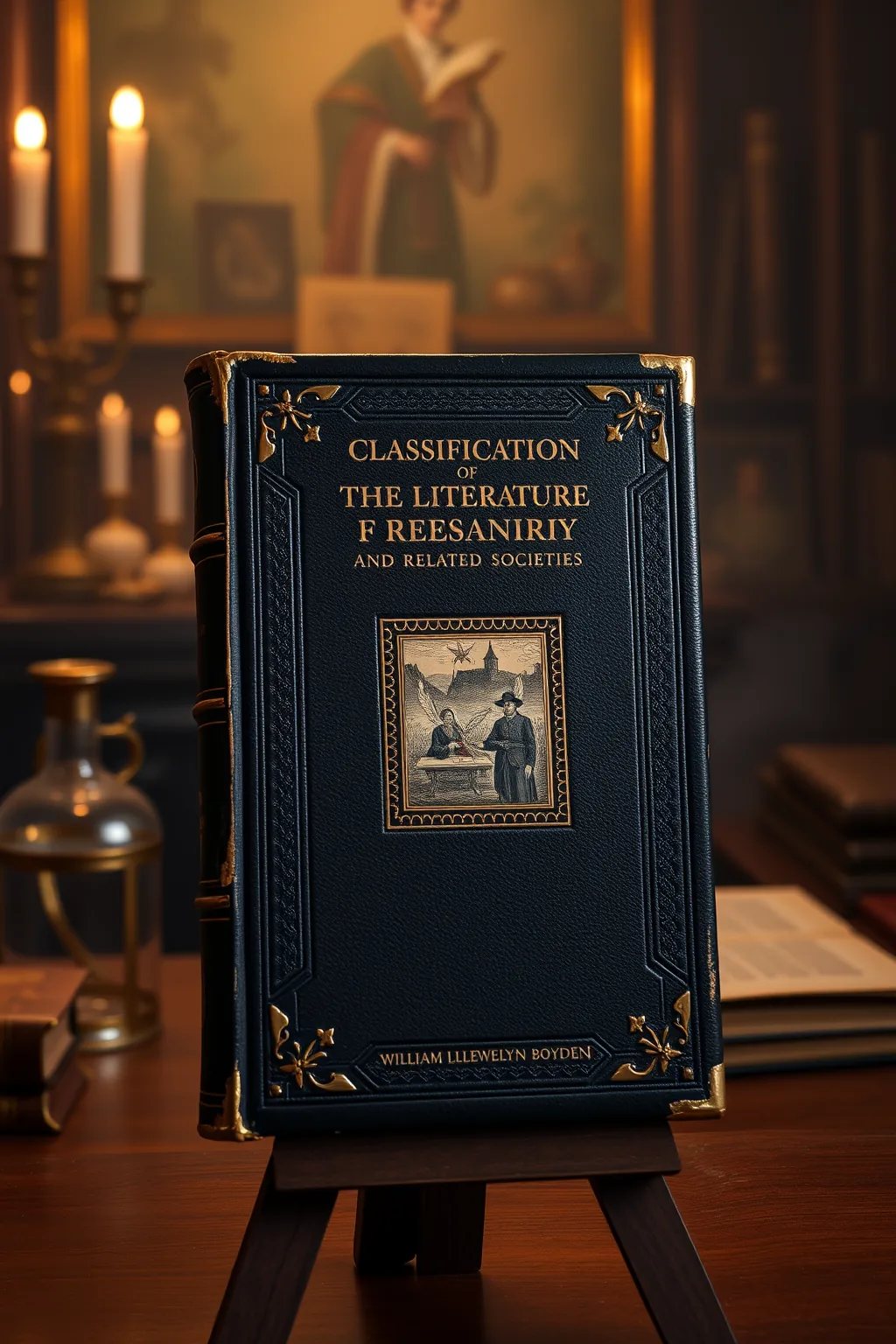
Classification of the Literature of Freemasonry and Related Societies
 82
82

Classification of the Literature of Freemasonry and Related Societies


William Llewellyn Boyden's 'Classification of the Literature of Freemasonry and Related Societies' stands as a monumental achievement for any serious student of occult history and comparative esotericism. Boyden's erudition shines through, offering a systematic and deeply insightful framework for understanding the vast and often inscrutable body of literature produced by Freemasonry and its allied fraternal orders. The work meticulously dissects thematic elements, tracing the lineage of ideas and symbols across centuries. Its strength lies in its clarity and comprehensive scope, providing an invaluable resource for deciphering the philosophical and mystical underpinnings often obscured by popular misconception. This is essential reading for scholars, practitioners, and anyone seeking to comprehend the esoteric currents within these ancient societies.
📝 Description
82
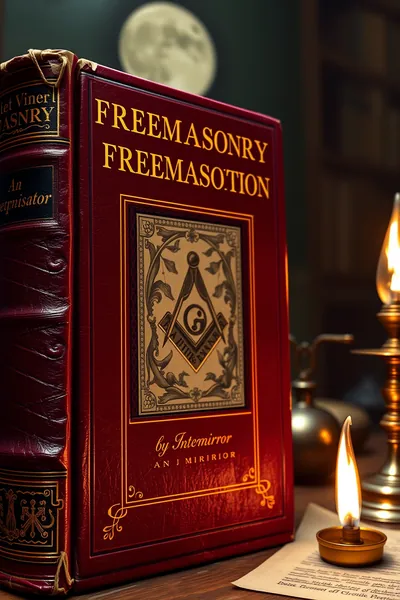
William Llewellyn Boyden published 'Classification of the Literature of Freemasonry and Related Societies' in 1914.
William Llewellyn Boyden's 1914 work, 'Classification of the Literature of Freemasonry and Related Societies,' is a systematic attempt to organize the vast body of writings associated with Freemasonry and similar fraternal organizations. It moves beyond a simple listing of texts, aiming instead to map the intellectual and symbolic structures within this literature. Boyden sought to reveal the connections between different traditions and the evolution of their ideas. The book is organized by subject matter and type of publication, offering a framework for understanding the historical development and internal logic of Masonic thought. It covers a range of topics, from the philosophical underpinnings of the craft to the rituals and symbolism employed by various groups. This classification provides a valuable resource for those studying the history and literature of Western esotericism.
This book falls within the tradition of scholarly attempts to catalog and understand esoteric literature, specifically focusing on Freemasonry and related fraternal orders. Such classifications are important for tracing the lineage of ideas, identifying key texts, and understanding the internal coherence of these traditions. Boyden's work, published in the early 20th century, reflects a period of increased academic interest in esoteric movements, seeking to bring order to a field often characterized by secrecy and diverse interpretations. It aids in contextualizing Masonic symbolism and ritual within the broader history of Western esotericism.
💡 Why Read This Book?
Unravel the intricate tapestry of Freemasonry's hidden knowledge. This book offers a systematic guide to its esoteric literature, revealing profound symbolism and philosophical depth. Ideal for seekers of arcane wisdom, scholars of secret societies, and practitioners aiming to deepen their understanding of ritual and tradition. Discover the intellectual lineage of Western esotericism.
⭐ Reader Reviews
Honest opinions from readers who have explored this book.
❓ Frequently Asked Questions
What is the primary purpose of this classification?
The primary purpose is to systematically organize and illuminate the vast and diverse body of literature associated with Freemasonry and related esoteric societies, revealing their interconnectedness and underlying philosophical currents.
Who is the intended audience for this book?
The book is intended for serious students, scholars, practitioners, and enthusiasts of Freemasonry, occultism, secret societies, and comparative esotericism who seek a deeper, more structured understanding of this specialized literary field.
Does this book require prior knowledge of Freemasonry?
While prior knowledge is beneficial, Boyden's clear and systematic approach makes the work accessible to dedicated newcomers. It serves as an excellent foundational text for those beginning their study of Masonic literature and its esoteric aspects.
What kind of 'related societies' are discussed?
The book likely covers literature from various fraternal, chivalric, and philosophical orders that share historical or thematic links with Freemasonry, often exploring common esoteric principles and symbolic languages.
Is this book a practical guide to Masonic rituals?
No, this book is primarily an academic and esoteric classification of the literature. It provides context and understanding of the philosophical and symbolic foundations, rather than a practical manual for performing rituals.
🔮 Key Themes & Symbolism
The Esoteric Architecture of Freemasonry
This theme studies how Freemasonry, through its literature, constructs a symbolic architecture for spiritual and philosophical exploration. Boyden's classification helps to map the foundational texts that detail this architecture, revealing how allegories, rituals, and operative symbolism are employed to guide the initiate through stages of self-discovery and enlightenment. It highlights the inherent mystical dimensions, suggesting that the 'building' of the temple is a metaphor for the inner work of transforming consciousness and understanding the divine order.
Symbolic Language and Hidden Meanings
Central to Freemasonry and related societies is a rich, often multi-layered, symbolic language. This theme focuses on how Boyden's work categorizes and illuminates these symbols, differentiating between their exoteric (public) and esoteric (hidden) interpretations. The classification serves as a guide to understanding the philosophical and spiritual concepts embedded within common Masonic imagery, such as the square, compass, and the rough and perfect ashlar, and how these symbols connect to broader metaphysical principles and ancient wisdom traditions.
Comparative Esotericism and Brotherhood
Boyden's classification implicitly explores the connections between Masonic literature and other esoteric traditions, revealing shared concerns with universal truths and the nature of spiritual brotherhood. This theme examines how the literature of Freemasonry and its 'related societies' reflects a common lineage of mystical thought, emphasizing the importance of community, moral development, and the pursuit of wisdom through shared experience. It positions Masonic literature within the larger context of Western esotericism, highlighting its unique contributions to this ongoing dialogue.
💬 Memorable Quotes
Direct passages from the work, attributed to the author.
“The greatest truths are often veiled in the simplest forms.”
— This suggests that profound spiritual or philosophical insights can be found within everyday symbols or practices, requiring careful observation and contemplation to reveal their deeper meaning.
“Within the lodge, the profane world recedes.”
— This points to the transformative nature of Masonic ritual and gathering, creating a sacred space where worldly concerns are set aside for introspection and spiritual work.
“The edifice of wisdom is built stone by symbolic stone.”
— This metaphor emphasizes the gradual, cumulative process of acquiring knowledge and understanding within esoteric traditions, built through the careful study and integration of symbolic elements.
“Brotherhood is the crucible of shared ascent.”
— This highlights the importance of communal support and shared endeavor in the spiritual journey, suggesting that collective effort can accelerate individual progress towards higher consciousness.
“To know the craft is to know thyself.”
— This classic Masonic tenet links the external practices and symbols of the fraternity to the internal work of self-knowledge and spiritual development.
🌙 Esoteric Significance
Tradition
This work is deeply embedded within the Western Esoteric Tradition, particularly as it pertains to Hermeticism, Kabbalah, and philosophical Masonry. It maps the literature that serves as a conduit for these ancient streams of wisdom, highlighting their integration into fraternal orders. The classification reveals how these traditions use symbolic language and allegorical narratives to convey complex metaphysical concepts about cosmology, the nature of God, and the path to spiritual illumination.
Symbolism
The classification is a guide to the rich symbolic language of Freemasonry and related societies. It implicitly underscores how symbols like architectural tools, geometric figures, and biblical narratives function not merely as decorative elements but as vehicles for profound esoteric meaning. Boyden's work helps to decode these symbols, revealing their connections to concepts of creation, moral rectitude, the divine spark within humanity, and the journey of the soul towards perfection.
Modern Relevance
In an age often characterized by superficiality, Boyden's work offers a pathway to understanding the enduring relevance of structured philosophical inquiry and symbolic depth. It provides context for contemporary discussions on consciousness, ethics, and communal spiritual practice. For modern seekers, it serves as a gateway to the rich intellectual heritage of esoteric brotherhoods, offering timeless insights into self-improvement, ethical living, and the search for universal truths that transcend temporal and cultural boundaries.
👥 Who Should Read This Book
This indispensable volume is a rich source for a diverse readership. **Seekers of esoteric knowledge** will find it a crucial map to work through the vast range of Masonic and occult literature. **Scholars of secret societies and comparative religion** will benefit immensely from its systematic organization and detailed analysis, providing a solid academic foundation. **Practitioners of Western esotericism**, including Masons, will gain deeper insights into the philosophical and symbolic underpinnings of their craft. **Enthusiasts of intellectual history** will appreciate its contribution to understanding the development of esoteric thought. It is a foundational text for anyone serious about comprehending the hidden currents of Western spiritual traditions.
📜 Historical Context
Published during a period of burgeoning interest in comparative religion, occultism, and the historical roots of fraternal organizations, William Llewellyn Boyden's work emerged from an intellectual climate deeply fascinated by secret societies and their purported repositories of ancient wisdom. The late 19th and early 20th centuries saw a surge in scholarly and amateur investigations into Hermeticism, Kabbalah, Rosicrucianism, and Freemasonry, driven by a desire to find universal patterns and spiritual truths beyond established dogma. Boyden's meticulous classification reflects this era's academic rigor applied to esoteric subjects, aiming to bring order to a complex and often fragmented field of literature. His work served as a vital bridge, connecting the philosophical underpinnings of these societies to a wider intellectual audience, solidifying their place in the study of Western esoteric traditions.
📔 Journal Prompts
How does the classification of Masonic literature reveal underlying philosophical unity across different societies?
Reflect on a symbol discussed in Boyden's work; what personal esoteric meaning can you derive from it?
Consider the concept of 'hidden knowledge' presented. How does this relate to your own spiritual or intellectual pursuits?
In what ways does the literature of Freemasonry act as a 'crucible' for personal transformation?
How can the principles of esoteric brotherhood, as suggested by this literature, be applied in contemporary society?
🗂️ Glossary
Esotericism
A broad category of mystical or supernatural beliefs, as distinct from exoteric religion. It refers to teachings or practices intended for or understood by only a small number of people with specialized knowledge.
Hermeticism
A religious, philosophical, and esoteric tradition based primarily upon writings attributed to Hermes Trismegistus. It emphasizes the unity of all things and the possibility of spiritual ascent.
Kabbalah
A system of Jewish mysticism and esoteric interpretation of the Torah, focusing on the divine nature, creation, and the path of spiritual ascent through symbolic understanding.
Allegory
A story, poem, or picture that can be interpreted to reveal a hidden meaning, typically a moral or political one. In esoteric traditions, it's a primary mode of conveying spiritual truths.
Initiation
A ritual or ceremony that marks a person's entry into a society, order, or religious group, often involving symbolic teachings and the imparting of secret knowledge.
This book appears in 2 collections
🔮 Readers Also Liked
Browse all →



From the “Secret Societies” Collection
View all →




More Free Freemasonry & Secret Societies Books
View all →