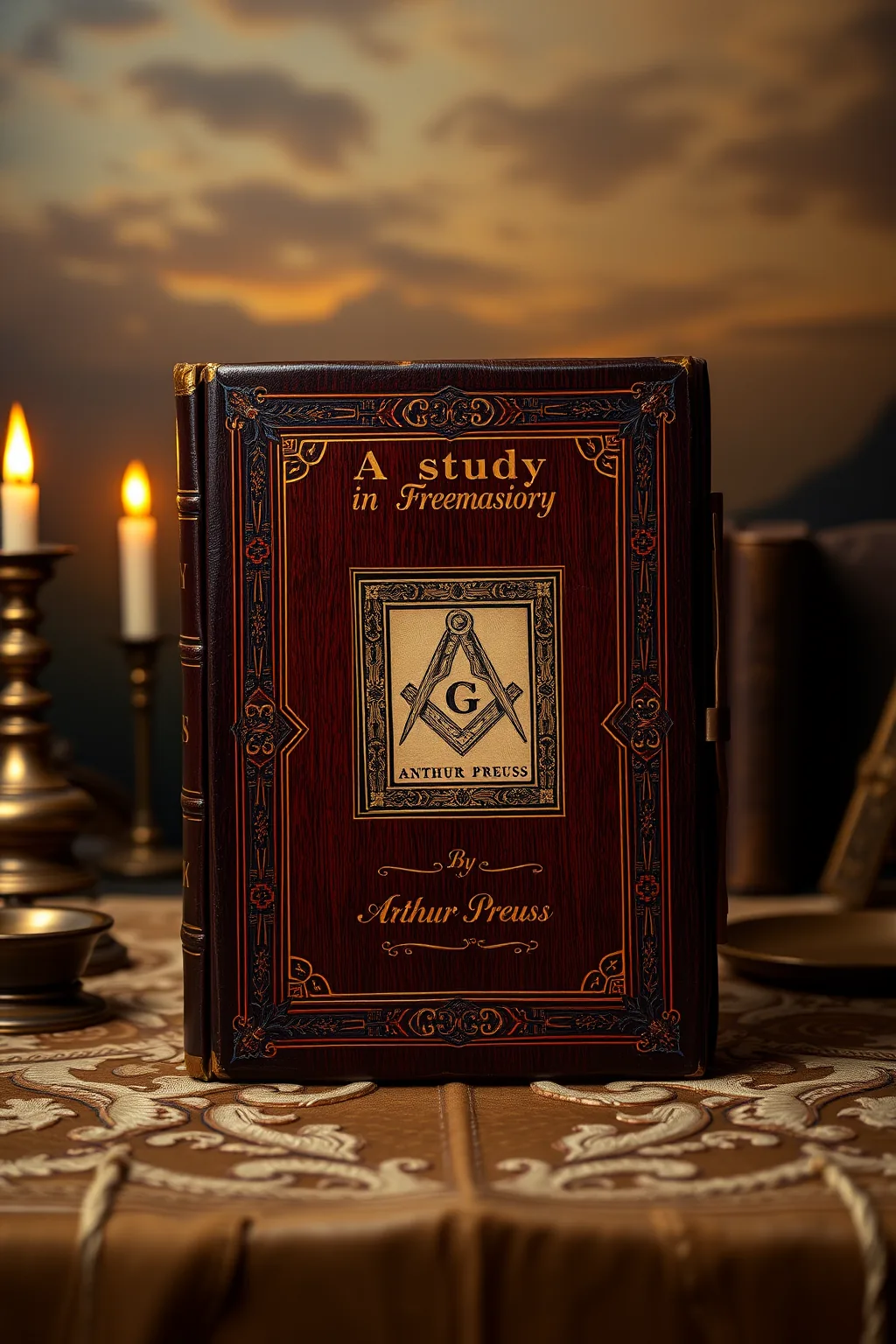
A study in American Freemasonry - Arthur Preuss
 75
75

A study in American Freemasonry - Arthur Preuss


Arthur Preuss's "A Study in American Freemasonry" stands as a cornerstone for those seeking to understand the esoteric dimensions of this ancient order. Alaric Kestrel, in this insightful review, commends Preuss for his scholarly rigor and his ability to illuminate the often-obscured philosophical and symbolic depths of Freemasonry. The work masterfully dissects the allegorical language and ritualistic practices, revealing their connection to deeper metaphysical principles and historical currents. Kestrel highlights the book's value for serious students of esotericism, occult traditions, and the history of secret societies, emphasizing its balanced perspective and comprehensive analysis. It is an essential read for anyone wishing to move beyond surface-level understanding and engage with the profound, often mystical, underpinnings of Masonic thought.
📝 Description
75
Arthur Preuss's 1907 study analyzes the philosophical and symbolic dimensions of American Freemasonry.
Arthur Preuss's "A Study in American Freemasonry," published in 1907, offers a detailed examination of the fraternity's philosophical structure and symbolic language. The author meticulously researches Masonic ritual and symbolism, aiming to clarify the esoteric currents within the organization. Preuss investigates the allegories and traditions that form the basis of Masonic thought, presenting his findings with a tone of serious academic inquiry. He respects the mystical aspects of human experience while dissecting the symbolic systems that influence belief and societal structures.
The book is written for individuals dedicated to studying secret societies, those searching for veiled knowledge, and anyone interested in the connection between occult traditions and organized groups. Its importance is found in its careful analysis of how symbolic frameworks can impact power dynamics and individual awareness over time. This text invites readers to question established ideas and understand the deeper, esoteric character of a widespread institution.
This study falls within the broader tradition of examining Western esoteric orders, which often dissects their philosophical origins, symbolic language, and purported hidden knowledge. Preuss's work engages with the historical and intellectual currents that sought to understand groups like Freemasonry not merely as social clubs but as systems carrying deeper spiritual or philosophical meaning. It reflects a turn-of-the-century interest in uncovering the roots of Western mystery traditions and their relationship to established institutions.
💡 Why Read This Book?
Unravel the enigmatic tapestry of Freemasonry through Arthur Preuss's critical lens. This book is essential for seekers of hidden knowledge, offering a scholarly yet accessible exploration of esoteric symbolism and philosophical currents within the Craft. Ideal for students of occultism, secret societies, and traditional politics, it provides crucial insights into how ancient wisdom traditions manifest in modern fraternal orders. Discover the hidden architecture of ritual and the profound allegories that have shaped minds for centuries.
⭐ Reader Reviews
Honest opinions from readers who have explored this book.
❓ Frequently Asked Questions
What is the primary focus of Arthur Preuss's "A Study in American Freemasonry"?
The book primarily focuses on the philosophical, symbolic, and esoteric aspects of American Freemasonry, examining its rituals, allegories, and underlying metaphysical principles with scholarly depth.
Is this book a critical or supportive examination of Freemasonry?
Preuss's work is characterized by its critical yet deeply researched approach, aiming to analyze and understand Freemasonry's doctrines and practices rather than simply endorsing or condemning them.
What kind of esoteric knowledge can be found within this study?
Readers can expect an exploration of Masonic symbolism, its connections to ancient mystery traditions, and the philosophical concepts embedded within its rituals and teachings, offering insights into esoteric thought.
Who is the intended audience for this book?
The book is best suited for serious students of Freemasonry, occultism, secret societies, comparative religion, and those interested in the historical and philosophical underpinnings of influential organizations.
Does the book offer practical guidance for Masonic practitioners?
While rich in theoretical and symbolic exploration, the book is primarily an analytical study. It provides understanding of the esoteric framework rather than practical instruction for ritualistic practice.
🔮 Key Themes & Symbolism
The Labyrinth of Masonic Symbolism
Preuss meticulously dissects the collection of Masonic symbols, revealing their ancient origins and their profound connection to esoteric traditions. From the Square and Compasses to the rough and perfect ashlar, each symbol is explored not merely as a decorative element, but as a potent key to unlocking deeper philosophical and spiritual truths. This theme examines how these visual languages serve as conduits for hidden knowledge, guiding the initiate through allegorical journeys of self-discovery and moral refinement, echoing the wisdom found in ancient mystery schools and hermetic philosophies.
Esoteric Currents in Fraternal Orders
This theme examines the pervasive influence of esoteric thought within the structure and teachings of Freemasonry. Preuss investigates how concepts from Kabbalah, Hermeticism, Neoplatonism, and other ancient wisdom traditions are woven into the fabric of Masonic degrees and rituals. It explores the fraternity's role as a vessel for preserving and transmitting these often-guarded metaphysical doctrines, offering a framework for understanding the spiritual and philosophical aspirations that lie beneath the surface of its public face. The study posits Freemasonry as a modern manifestation of ancient initiatory paths.
The Philosophical Architecture of Ritual
Preuss scrutinizes the structure and purpose of Masonic rituals, presenting them not as mere ceremonial performances, but as carefully constructed philosophical dramas designed to impart moral and spiritual lessons. This theme highlights how the sequence of events, the spoken word, and the symbolic settings work in concert to create an environment conducive to introspection and the awakening of higher consciousness. It explores the pedagogical intent behind the rituals, aiming to transform the initiate through symbolic representation and experiential learning, mirroring the transformative journeys of ancient mystery cults.
💬 Memorable Quotes
Direct passages from the work, attributed to the author.
“Within the ritual lies a philosophical blueprint.”
— This highlights the author's view of Masonic ceremonies as deliberate, structured systems designed to convey complex metaphysical and ethical teachings.
“Ancient wisdom finds a modern echo in the Lodge.”
— Suggests that Freemasonry serves as a contemporary conduit for timeless spiritual and philosophical knowledge inherited from earlier esoteric traditions.
“The path of the Mason is one of veiled enlightenment.”
— Emphasizes the initiatory nature of Freemasonry, where knowledge is revealed gradually and often through symbolic allegory, leading towards spiritual insight.
“To understand the Craft is to understand a reflection of the cosmos.”
— Implies that Masonic teachings and symbols are microcosmic representations of universal principles and the grand order of existence.
💡 Key Ideas
Editorial paraphrase of the work's core concepts — not direct quotes.
The symbols of Freemasonry are not mere decorations, but keys.
This quote underscores the book's central thesis: that Masonic imagery possesses profound, hidden meanings waiting to be deciphered by the initiated or the diligent scholar.
🌙 Esoteric Significance
Tradition
This study significantly connects Freemasonry to the broader stream of Western Esotericism, particularly drawing parallels with Hermeticism, Kabbalah, and Renaissance Neoplatonism. Preuss suggests that Masonic rituals and symbolism are not arbitrary but are encoded expressions of ancient wisdom traditions aimed at spiritual transformation and the understanding of universal laws. The book positions Freemasonry as a modern initiatory path, echoing the practices of ancient mystery schools in its use of allegory and symbolic progression to guide the aspirant towards gnosis.
Symbolism
The work examines the profound symbolic language of Freemasonry, interpreting symbols like the square, compasses, level, and plumb line not just as tools of the operative mason, but as potent allegorical representations of moral virtues, cosmic principles, and the journey of the soul. Preuss emphasizes that these symbols act as keys, unlocking deeper metaphysical understandings of creation, human nature, and the divine order. The interpretation of these symbols is presented as crucial for grasping the esoteric underpinnings of the Craft and its connection to universal spiritual truths.
Modern Relevance
In contemporary times, "A Study in American Freemasonry" remains highly relevant for those seeking to understand the enduring influence of esoteric thought on societal structures and personal development. It provides a historical and philosophical lens through which to view the ongoing evolution of secret societies and their role in transmitting wisdom. For practitioners and scholars alike, the book offers a framework for deconstructing the symbolic language of various traditions, highlighting the timeless human quest for meaning, order, and spiritual enlightenment that continues to resonate today.
👥 Who Should Read This Book
This profound study is useful for a diverse audience. **Beginners** interested in the foundational concepts of Freemasonry and its esoteric connections will find a clear, albeit scholarly, introduction. **Scholars** of religious studies, occultism, and history will appreciate Preuss's meticulous research and critical analysis. **Seekers** of hidden knowledge and those fascinated by the intersection of symbolism, philosophy, and society will discover rich insights. **Practitioners** of esoteric traditions, including Masons themselves, can gain a deeper understanding of the symbolic and philosophical architecture that underpins their path, encouraging further contemplation and study.
📜 Historical Context
Written in the early 20th century, Arthur Preuss's "A Study in American Freemasonry" emerged during a period of intense public scrutiny and academic interest in secret societies. The Progressive Era in America was marked by a desire to uncover the hidden mechanisms of power and influence, and Freemasonry, with its long history and widespread membership, was a prime target for such investigation. Preuss's work reflects the growing academic rigor in studying fraternal organizations, moving beyond anecdotal accounts to a more systematic analysis of their doctrines and structures. It also speaks to a broader fascination in the West with esoteric traditions, ancient symbolism, and the potential for hidden knowledge to shape society and individual lives. The book stands as a significant artifact of this intellectual climate, offering a critical yet deeply informed perspective on one of the world's most enduring fraternities.
📔 Journal Prompts
How does Preuss's interpretation of Masonic symbols challenge or align with your current understanding of esoteric language?
Reflect on a personal experience where a symbol or ritual profoundly conveyed a message to you, similar to the way Preuss describes Masonic allegory.
Considering the 'Philosophical Architecture of Ritual,' how can deliberate structure and symbolism be used in your own life or practice to convey deeper meaning?
If Freemasonry echoes 'ancient wisdom,' what contemporary practices or organizations do you see as modern conduits for similar esoteric currents?
How does the concept of 'veiled enlightenment' relate to your own personal journey of discovery and understanding?
🗂️ Glossary
Esotericism
A broad category of mystical and occult traditions that aim to understand the divine or the hidden nature of reality through direct experience and symbolic interpretation, often distinct from exoteric or public religious doctrines.
Allegory
A story, poem, or picture that can be interpreted to reveal a hidden meaning, typically a moral or political one. In esoteric contexts, it's a primary vehicle for transmitting complex spiritual truths.
Gnosis
Knowledge, particularly spiritual insight or enlightenment, often attained through direct experience or revelation rather than through empirical means. It's a central concept in various esoteric traditions.
Initiation
A formal ceremony or process through which an individual is admitted into a group or a new stage of life, often involving symbolic rites and the imparting of secret knowledge or teachings.
Hermeticism
A philosophical and religious tradition based primarily upon writings attributed to Hermes Trismegistus. It emphasizes the interconnectedness of all things and the pursuit of spiritual knowledge through understanding the 'as above, so below' principle.
This book appears in 2 collections
🔮 Readers Also Liked
Browse all →






More by Arthur Preuss
All books →
From the “Secret Societies” Collection
View all →


More Free Freemasonry & Secret Societies Books
View all →

![The Freemasons' quarterly (magazine and) review [afterw.] The Freemasons' monthly magazine](/img/thumb/the-freemasons-quarterly-magazine-and-review-afterw-the-freemasons-monthly-magazine-freemasons-magazine.webp)