The Story of Burnt Njal
 78
78

The Story of Burnt Njal


Ophelia Vance, Mystical Literature Reviewer — George Webbe Dasent's rendition of 'The Story of Burnt Njal' is an indispensable cornerstone for any serious student of Germanic lore and proto-esoteric thought. Beyond its historical significance, the saga offers profound insights into ancient concepts of fate, cosmic balance, and the spiritual weight of oaths. The prophetic visions of Njal and the doomed trajectory of Gunnar serve as potent archetypes, demonstrating the inexorable pull of destiny and the consequences of challenging it. Its meticulous portrayal of law and custom, interwoven with moments of stark violence and quiet contemplation, reveals a worldview where the earthly and the divine are intimately connected. Essential reading for scholars of mythology, comparative religion, and anyone drawn to the deep, often hidden, currents of human spiritual experience.
📝 Description
78
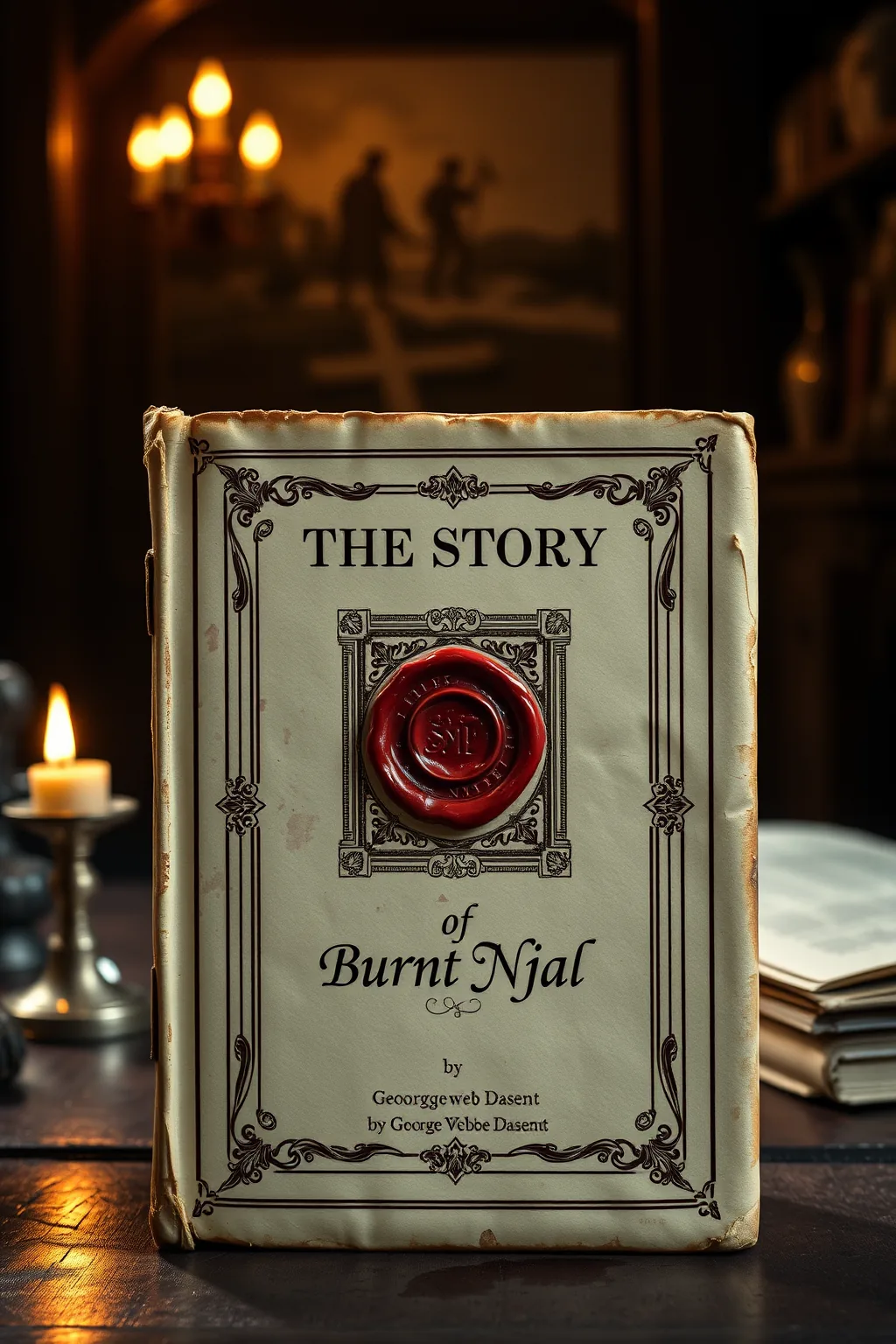
George Webbe Dasent translated The Story of Burnt Njal in 1861, revealing a foundational Icelandic saga.
The Story of Burnt Njal recounts a generations-long blood feud within an Icelandic family. It contrasts the wisdom of the seer Njal with the pride of Gunnar. The narrative details conflicts and societal customs, showing how small disputes can lead to large consequences. The book examines ancient Germanic legal traditions and the spiritual beliefs of the time. It explores themes of fate and human choice in a dramatic setting.
Dasent's translation makes this complex saga accessible. It details the legalistic frameworks and social norms of medieval Iceland. The story illustrates the power of narrative to reflect on the human condition. Readers encounter the interplay between destiny and individual action.
This saga belongs to the tradition of Old Norse literature, which often reflects a worldview where fate, or 'wyrd,' plays a significant role in human affairs. The characters' lives are depicted as being shaped by ancient customs, legal codes, and a sense of inevitable destiny. The seer Njal's pronouncements and the unfolding events suggest a connection between foresight and the predetermined course of actions. This resonates with esoteric interests in understanding the underlying patterns and forces that govern existence, beyond simple historical accounts.
✍️ Author
George Webbe Dasent
Sir George Webbe Dasent, D. C.
💡 Why Read This Book?
Unravel the intricate tapestry of fate, law, and ancestral vengeance in this foundational Icelandic saga. Ideal for seekers of ancient wisdom, scholars of mythology, and practitioners interested in the spiritual underpinnings of societal structures. 'The Story of Burnt Njal' offers profound lessons on honor, consequence, and the enduring power of narrative to illuminate the human condition.
⭐ Reader Reviews
Honest opinions from readers who have explored this book.
❓ Frequently Asked Questions
What is the primary esoteric theme in 'The Story of Burnt Njal'?
The primary esoteric theme revolves around the concept of fate (wyrd) and the intricate, often inescapable, web of consequences that bind individuals and families across generations. It explores how actions, oaths, and inherited feuds are seen as elements within a larger, predetermined cosmic order.
Who was George Webbe Dasent and why is his translation important?
George Webbe Dasent was a prominent scholar and translator who significantly contributed to the introduction of Norse sagas to the English-speaking world in the 19th century. His translation is valued for its scholarly rigor and its ability to capture the spirit and tone of the original Old Norse text, making it accessible yet faithful to its profound themes.
Does the saga contain elements of prophecy or divination?
Yes, the character of Njal is renowned for his wisdom and prophetic abilities. His dreams and pronouncements often foreshadow future events, highlighting a worldview where the spiritual and the mundane are deeply intertwined, and the future holds discernible patterns.
How does the saga relate to ancient legal traditions?
The saga provides a remarkably detailed and vivid depiction of early Icelandic law and legal proceedings. It showcases the complex system of arbitration, law-making, and dispute resolution, offering invaluable insights into the practical application of justice and social order in a pre-modern society.
Is 'The Story of Burnt Njal' a historical document or a work of fiction?
'The Story of Burnt Njal' is considered an Icelandic family saga, a genre that blends historical elements, legendary figures, and epic narrative. While rooted in historical context and societal norms, it functions as a literary work designed to explore universal themes of human nature and destiny.
🔮 Key Themes & Symbolism
The Inexorable March of Fate (Wyrd)
This saga is a profound meditation on the concept of 'wyrd,' the ancient Germanic idea of fate or destiny. The characters are often depicted as being caught in the currents of events beyond their immediate control, with their actions and choices seemingly preordained to fulfill a larger, often tragic, pattern. The narrative emphasizes how ancestral feuds, sworn oaths, and character flaws contribute to an inevitable unfolding of events, suggesting a universe where the threads of destiny are intricately woven, and attempts to deviate from them often lead to greater peril.
The Dual Nature of Law and Vengeance
The saga meticulously details the complex legal system of early Iceland, showcasing its strengths and limitations. It highlights how societal order is maintained through intricate laws, arbitration, and communal consensus. However, it also illustrates the powerful, often destructive, pull of personal vengeance. The narrative explores the tension between the desire for justice through legal means and the primal urge for retribution, demonstrating how the pursuit of vengeance, even when legally sanctioned, can spiral into widespread destruction and moral compromise.
The Wisdom of Foresight and the Peril of Pride
A central dynamic is the contrast between Njal's profound wisdom and prophetic foresight and Gunnar's noble but ultimately fatal pride. Njal, the wise counselor, often foresees the calamitous path ahead but struggles to avert it, highlighting the limitations of knowledge against the tide of human passion and fate. Gunnar, a warrior of immense prowess and honor, embodies the tragic hero whose pride prevents him from making the choices that could save him and his kin. This theme underscores the enduring human struggle between the intellect and the ego, and the profound consequences of each.
💬 Memorable Quotes
Direct passages from the work, attributed to the author.
“It is a hard thing to get out of a quarrel once you are in it.”
— This highlights the escalating nature of feuds and disputes. Once a conflict begins, the momentum of anger, honor, and obligation makes it incredibly difficult to de-escalate or escape the escalating cycle of violence and reprisal.
“Wisdom is not to be bought with money.”
— This aphorism emphasizes the intrinsic value of true understanding and foresight, suggesting that genuine wisdom, like that possessed by Njal, comes from experience, insight, and perhaps divine connection, rather than material wealth.
“He shall have his will who has the most strength.”
— This reflects the underlying reality of power dynamics within the saga. Despite the legal frameworks, brute force and the ability to command loyalty often determine the outcome of disputes, revealing the harsh pragmatism that underlies the social order.
“It is ill to be poor.”
— This simple statement underscores the socio-economic realities of the time. Poverty could severely limit one's agency, legal recourse, and ability to protect oneself and one's family, making it a significant vulnerability in a society often driven by power and influence.
💡 Key Ideas
Editorial paraphrase of the work's core concepts — not direct quotes.
Many a man is the worse for his own renown.
This quote speaks to the double-edged sword of reputation. While renown can bring honor and respect, it can also create expectations and pressures that lead to pride, rash decisions, and ultimately, downfall, as seen in the character of Gunnar.
🌙 Esoteric Significance
Tradition
The saga is deeply rooted in the pre-Christian Norse spiritual tradition, which encompassed concepts of fate (wyrd), the interconnectedness of all things, and the influence of supernatural forces. While the saga was written after Iceland's conversion to Christianity, it retains many pagan worldview elements. The prophetic dreams, the belief in the power of oaths, and the cyclical nature of feuds suggest a cosmology where destiny is a potent, observable force, and the veil between the material and spiritual realms is thin.
Symbolism
Key symbols include fire, representing both destruction (the burning of Njal's homestead) and purification; blood, symbolizing lineage, vengeance, and life force; and the law itself, representing order and the human attempt to impose structure on chaos. Dreams and visions are potent symbolic tools, acting as conduits for divine or fated messages, while the range of Iceland, with its harsh beauty and elemental power, serves as a symbolic backdrop to the human drama, mirroring the internal struggles of the characters.
Modern Relevance
In an age often characterized by rapid change and perceived lack of control, the saga's exploration of fate and consequence resonates deeply. It offers a timeless study of human nature, the dynamics of conflict resolution, and the enduring power of narrative. For modern practitioners and seekers, it provides a rich source of archetypal characters and situations, offering insights into the interplay of free will and destiny, the psychological impact of inherited trauma, and the universal human desire for justice and meaning in a complex world.
👥 Who Should Read This Book
This saga is a rich source for a diverse readership. **Beginners** to mythology and historical literature will find a gripping narrative filled with compelling characters and a vivid depiction of a unique culture. **Scholars** of Norse history, law, and literature will appreciate its detailed portrayal of 10th-century Icelandic society and its legal traditions. **Seekers** of ancient wisdom and spiritual insights will be drawn to its profound explorations of fate, honor, and the human condition. **Practitioners** interested in comparative mythology, folklore, and the archetypal patterns of human conflict and resolution will discover a body of themes and symbolism. It is a text that rewards deep reading and contemplation, offering layers of meaning for every level of engagement.
📜 Historical Context
The Story of Burnt Njal is set in the 10th and 11th centuries in Iceland, a period known as the Saga Age. This era was characterized by the establishment of the Althing, one of the world's oldest parliamentary institutions, and a complex legal system based on oral tradition and customary law. Iceland was a relatively new society, populated by Norse settlers and their descendants, who brought with them their own cultural traditions, legal frameworks, and belief systems. The sagas, written primarily in the 12th and 13th centuries, reflect this society's values, its preoccupation with honor, kinship, and the consequences of actions, as well as its complex relationship with Christianity, which was gradually replacing the old Norse paganism. The detailed descriptions of legal proceedings, social customs, and kinship structures offer invaluable insights into the lives and minds of these early settlers, providing a window into a world where fate, law, and personal agency were constantly in tension.
📔 Journal Prompts
Reflect on a time when pride or honor influenced a significant decision in your life. How did it unfold?
Consider the concept of fate. To what extent do you believe your life is predetermined, and to what extent is it shaped by your choices?
Analyze the balance between law and vengeance in the saga. How does this tension manifest in modern society?
Imagine you are Njal, foreseeing a tragic event. What would be your internal struggle between advising caution and accepting inevitability?
How does the stark Icelandic landscape in the saga mirror the emotional or spiritual journey of the characters?
🗂️ Glossary
Wyrd
An Old English and Germanic concept referring to fate, destiny, or the predetermined course of events. It suggests a powerful, impersonal force that shapes human lives and the cosmos, often seen as an inescapable aspect of existence.
Althing
The national parliament of Iceland, established in 930 AD. It was a significant institution for law-making, dispute resolution, and maintaining social order in early Icelandic society, as depicted in the saga.
Blood-feud
A prolonged and often violent conflict between families or kin groups, typically initiated by an offense such as murder and perpetuated through cycles of retaliation and vengeance. It was a significant social phenomenon in early medieval societies.
Hreppr
A local administrative and social unit in medieval Iceland, akin to a parish or township. These units played a role in local governance, mutual support, and the administration of law within their territories.
Goði
A chieftain or pagan priest in Old Norse society. Goðar held significant political and religious authority, presiding over local assemblies and acting as judges and arbitrators, playing a central role in the saga's narrative.
This book appears in 1 collection
🔮 Readers Also Liked
Browse all →








More by George Webbe Dasent
All books →
From the “Transcendental Meditation” Collection
View all →






More Free Esoteric History & Biography Books
View all →