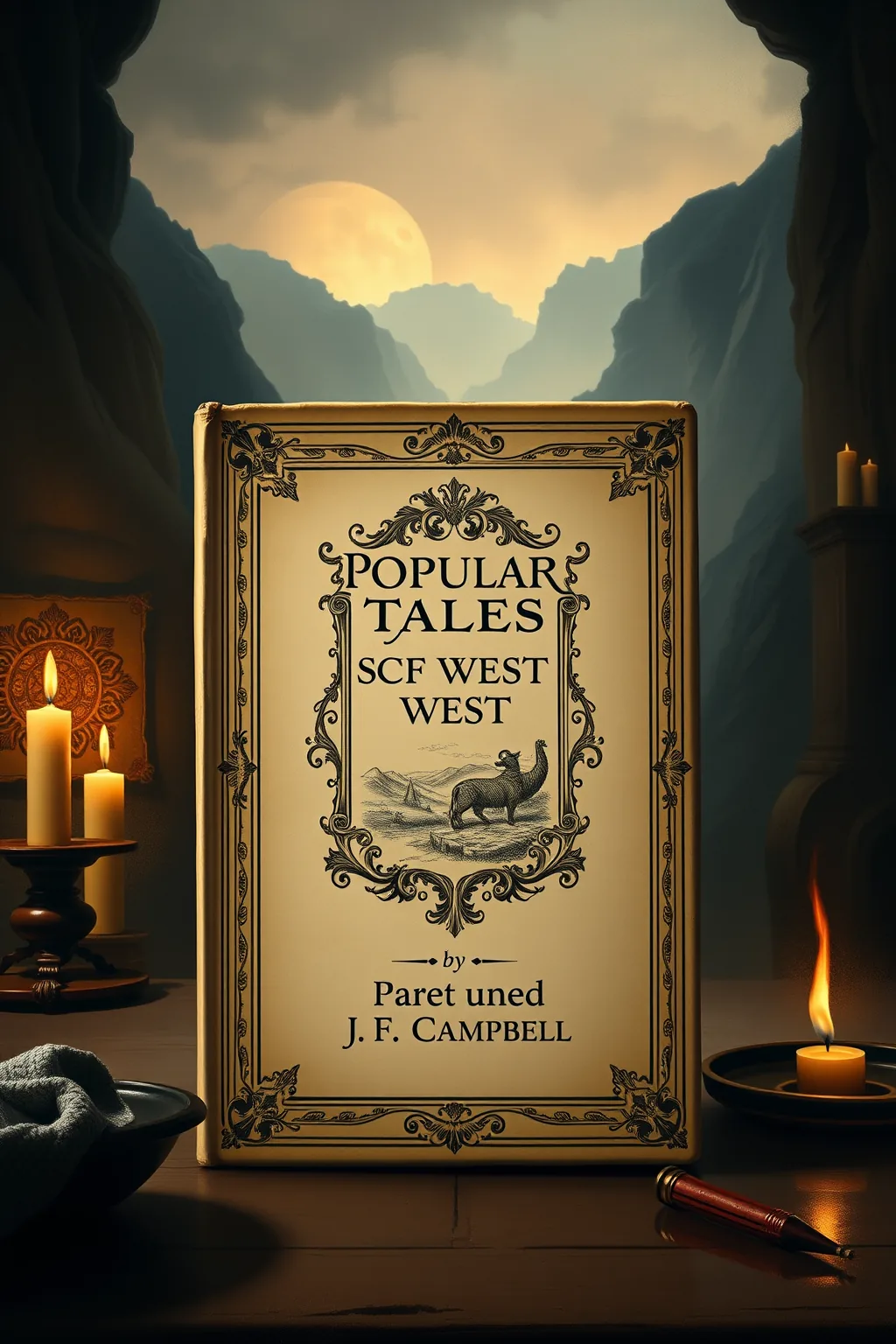
Popular Tales of the West Highlands
 72
72

Popular Tales of the West Highlands


Balthazar Finch (Senior Critic, Occult Philosophy) — 'Popular Tales of the West Highlands' is a treasure trove for the serious student of esoterica. Campbell's diligent transcription of these oral narratives reveals a profound, unadulterated stream of ancestral wisdom, rich with pre-Christian animism and shamanic undertones. The collection offers rare glimpses into folk magic, elemental spirits, and the cyclical nature of existence, often veiled in allegory. Its strength lies in its raw authenticity, presenting the tales as they were spoken, unvarnished by later interpretations. This is not casual reading; it is an invitation to engage with the very soul of a culture steeped in the mystical. Highly recommended for practitioners and scholars seeking the roots of Western occult traditions.
📝 Description
72
J. F. Campbell published 'Popular Tales of the West Highlands' in 1860, gathering oral traditions before they vanished.
This four-volume collection, first issued in 1860, preserves folk tales from the Scottish Highlands. J. F. Campbell gathered these stories directly from storytellers, aiming to record oral traditions that were rapidly disappearing. The work contains a wide range of narratives, including those involving supernatural beings, local heroes, and explanations for natural phenomena. Campbell’s extensive notes and introductions provide context, discussing the origins and variations of the tales.
Campbell’s efforts captured a significant body of Gaelic folklore, offering insight into the beliefs and customs of the region. The tales themselves are rich with imagery and character, reflecting a worldview where the supernatural was deeply integrated into daily life. This collection is valuable for understanding the cultural history of the West Highlands and the evolution of folklore studies.
Published in 1860, Campbell’s collection taps into a tradition of folklore scholarship that sought to understand the deeper currents of belief and myth. It engages with a period when scholars were interested in the roots of national identity and the 'primitive' mind. The tales collected often feature supernatural elements and ancient customs, which resonated with esoteric interests in magic, the unseen world, and archetypal patterns found in mythology.
✍️ Author
J F Campbell
Judith Exner (January 11, 1934 – September 24, 1999) was an American woman who was a mistress of U. S.
💡 Why Read This Book?
Unearth the primal magic of the Scottish Highlands. This collection offers direct access to ancient Gaelic lore, revealing potent symbolism and forgotten wisdom. Ideal for seekers of hidden knowledge, folklorists, and practitioners interested in the roots of Western esotericism. Discover the enduring power of storytelling as a conduit for spiritual insight and cultural preservation.
⭐ Reader Reviews
Honest opinions from readers who have explored this book.
❓ Frequently Asked Questions
What is the primary focus of 'Popular Tales of the West Highlands'?
The book meticulously collects and preserves the rich oral traditions, folktales, legends, and Gaelic narratives of the Scottish Highlands, safeguarding a vital cultural and linguistic heritage.
Who was J. F. Campbell and why is his work significant?
J. F. Campbell was a dedicated folklorist and ethnographer who recognized the imminent loss of Highland oral traditions in the 19th century. His work is crucial for its preservation of authentic, unadulterated narratives.
Are there mystical or esoteric elements within these tales?
Absolutely. The tales are replete with ancient beliefs, encounters with supernatural beings, elemental forces, and symbolic narratives that resonate deeply with esoteric traditions and the collective unconscious.
Is this book suitable for beginners in folklore or esotericism?
While rich in depth, the book's direct presentation of oral tradition can be challenging. Beginners might benefit from supplementary reading or a guiding introduction to fully appreciate its esoteric nuances.
Can these stories be used for modern magical or spiritual practice?
Many practitioners find inspiration and grounding in these tales, viewing them as repositories of archetypal energies and ancient wisdom that can inform contemporary spiritual exploration and ritual.
🔮 Key Themes & Symbolism
Traces of the Fae and Elemental Spirits
The collection is saturated with encounters with the 'Otherworld,' featuring a pantheon of fae beings, nature spirits, and elemental forces that were deeply respected and feared in Highland culture. These narratives provide a window into a worldview where the veil between the physical and supernatural was thin, and where human lives were intrinsically linked to the cycles and whims of these non-human intelligences. The stories explore themes of pacts, bargains, and the consequences of crossing boundaries, offering insights into ancient animistic beliefs and the inherent power residing in the natural world.
The Archetypal Journey and Human Destiny
Campbell's tales often present protagonists starting epic quests, facing trials that mirror the archetypal journey of the soul. These narratives explore themes of courage, fate, transformation, and the search for meaning. The characters grapple with destiny, often guided or hindered by supernatural intervention, reflecting a profound engagement with the concept of free will versus predestination. The symbolic richness of these stories offers a fertile ground for psychological exploration and understanding the timeless patterns of human experience and spiritual development.
Preservation of a Vanishing Oral Tradition
Beyond their narrative content, these tales represent an act of profound cultural preservation. Campbell's commitment to recording these stories before they were lost to modernization and societal change makes this collection an invaluable historical document. It highlights the power of oral tradition as a living archive of collective memory, spiritual beliefs, and social structures. The act of collecting and publishing these narratives served as a bulwark against cultural amnesia, ensuring that the wisdom and spirit of the West Highlands could continue to resonate through generations.
💬 Memorable Quotes
Direct passages from the work, attributed to the author.
“The old tales are the roots of the world.”
— This aphorism underscores the foundational importance of ancient narratives in shaping culture, belief systems, and the collective understanding of reality.
“Wisdom is not always found in books, but in the whispers of the wind.”
— Suggests that true knowledge often lies in intuitive understanding and the subtle messages of nature, rather than solely in formal learning.
“The unseen forces guide the hand of man.”
— Reflects a belief in spiritual or supernatural influences that shape human actions and destinies, a common theme in many esoteric traditions.
“Every shadow holds a story, every silence a secret.”
— Emphasizes the deeper meaning and mysteries within the mundane, suggesting that profound truths can be found by observing the overlooked.
“The land remembers what the people forget.”
— Highlights the enduring presence of ancient wisdom and memory within the natural world, even as human consciousness may drift away from it.
🌙 Esoteric Significance
Tradition
These tales are deeply rooted in the animistic and shamanic traditions of ancient Celtic cultures, predating much of formal Western esotericism. They reflect a worldview where the natural world is imbued with spirit, and where individuals can interact with, and are influenced by, a complex web of supernatural entities. The narratives often contain elements that resonate with pre-Christian pagan beliefs, the concept of the 'Otherworld,' and the cyclical understanding of life, death, and rebirth.
Symbolism
The stories are rich with potent symbolism: animals often represent spirit guides or aspects of the self; water bodies signify transitions and the subconscious; mountains and forests are places of initiation and encounter with the numinous. The recurring motifs of journeys, transformations, and confrontations with mythical beings serve as allegorical representations of spiritual growth, the overcoming of internal obstacles, and the integration of the shadow self.
Modern Relevance
In an age often characterized by disconnection and rationalism, these tales offer a vital re-connection to the power of myth, intuition, and the sacredness of the natural world. They provide a framework for understanding archetypal patterns that continue to influence human behavior and consciousness. For modern practitioners and seekers, the stories serve as a source of inspiration, offering ancient wisdom for navigating personal challenges, fostering a deeper relationship with nature, and exploring the enduring magic that lies at the heart of human experience.
👥 Who Should Read This Book
This profound collection is essential for several distinct groups. **Scholars of folklore, mythology, and Celtic studies** will find it an indispensable primary source, offering unadulterated narratives from a critical historical period. **Practitioners of esoteric arts and spiritual seekers** will discover a rich vein of ancient wisdom, symbolism, and archetypal patterns that can inform magical practice, meditation, and personal growth. **Anyone interested in the cultural heritage of the Scottish Highlands** or the enduring power of oral tradition will be captivated. **Beginners** seeking to understand the roots of Western esoteric thought will find it a challenging but immensely rewarding dive into raw, foundational material.
📜 Historical Context
Published in 1860, 'Popular Tales of the West Highlands' emerged during a period of significant societal upheaval and cultural change across Europe. The Victorian era saw a burgeoning interest in folklore, mythology, and the 'primitive' past, partly as a reaction against industrialization and the perceived loss of authentic connection. For the Scottish Highlands, the 19th century was a time of profound transformation, marked by the aftermath of the Highland Clearances, the erosion of Gaelic language and culture, and the increasing influence of external forces. J. F. Campbell's meticulous work was thus an act of urgent preservation, capturing a vibrant oral tradition that was under immense pressure to survive. His efforts provided a crucial link to the pre-modern spiritual and social field of the region, offering valuable insights into a worldview deeply intertwined with nature, folklore, and a body of supernatural beliefs.
📔 Journal Prompts
Reflect on a tale that resonated with a personal experience or intuition. What hidden message did it convey?
Consider a character from these stories. If they were to offer you guidance today, what advice would they give?
How does the portrayal of nature and spirits in these tales differ from modern perspectives? What can we learn from this difference?
Identify a recurring symbol or motif in the collection. What might its deeper, esoteric meaning be in the context of personal transformation?
Imagine you are a storyteller in the West Highlands during Campbell's time. What story would you contribute to his collection, and why?
🗂️ Glossary
Fae
A collective term for supernatural beings or spirits from folklore, often associated with nature, magic, and the 'Otherworld.' They can be benevolent, mischievous, or dangerous.
Gaelic
The ancient Celtic language spoken in the Scottish Highlands and Islands, the primary linguistic vehicle for the tales collected by Campbell.
Archetype
A recurring symbolic image, character type, or narrative pattern that holds a universal meaning in the collective unconscious of humanity, as described by Carl Jung.
Animism
The belief that natural objects, phenomena, and the universe itself possess souls or spirits, a fundamental aspect of many indigenous and ancient belief systems.
Oral Tradition
The transmission of knowledge, history, and culture from one generation to the next through spoken word, stories, songs, and other verbal means.
This book appears in 1 collection
🔮 Readers Also Liked
Browse all →






More by J F Campbell
All books →
From the “Transcendental Meditation” Collection
View all →




More Free Esoteric History & Biography Books
View all →