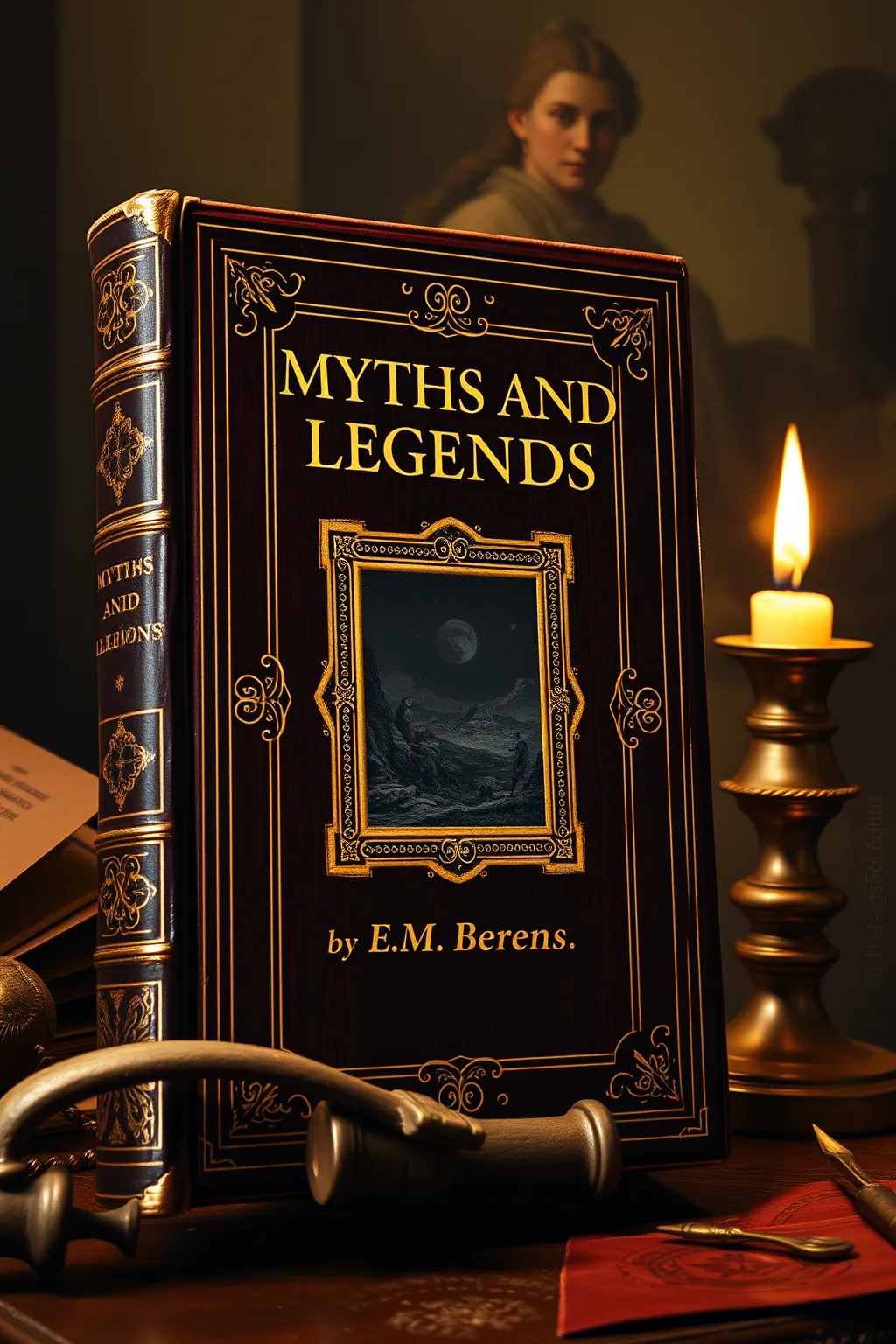
Myths and Legends of Ancient Greece and Rome
 79
79

Myths and Legends of Ancient Greece and Rome


Evander Ashcroft (Alchemy & Hermeticism Editor) — "Myths and Legends of Ancient Greece and Rome" by E. M. Berens is a foundational text for any serious student of esoteric history. Published in 1884, it possesses a clarity and depth that belies its age, presenting the intricate pantheon and epic sagas with an eye for their underlying symbolic and philosophical import. Berens doesn't just recount stories; he illuminates the archetypal forces and cosmic principles encoded within them. This work is particularly valuable for its ability to bridge the gap between classical scholarship and esoteric inquiry, offering insights that resonate with Hermetic, Gnostic, and Pythagorean traditions. An essential read for seekers of ancient wisdom.
📝 Description
79
E. M. Berens published "Myths and Legends of Ancient Greece and Rome" in 1884.
This 1884 book examines the myths and legends of ancient Greece and Rome. Berens moves beyond simple retellings to analyze the symbolic meaning and esoteric ideas present in these classical stories. The work covers the myths of gods like the Olympians, the adventures of heroes, and the creation stories that provided ancient peoples with philosophical understanding and spiritual direction.
Berens interprets the recurring patterns and alchemical elements within these narratives. He suggests they are not just simple stories but offer insights into universal truths and the human mind. The book serves as a resource for those interested in ancient wisdom, the origins of Western esoteric thought, and the lasting impact of myth as a source of hidden knowledge. It invites readers to consider an age where the divine and mortal were closely connected, and each myth contained information about the world's beginning, fate, and the continuous cycle of life.
Published in 1884, E. M. Berens' work emerged during a period of renewed interest in classical antiquity and its spiritual dimensions. It aligns with esoteric traditions that sought deeper, symbolic meanings within ancient texts and myths, viewing them as repositories of hidden knowledge. The book's focus on archetypes and alchemical undertones connects it to broader currents in Western esotericism that interpreted classical mythology through lenses such as Hermeticism, Neoplatonism, and later occult traditions. It presents these myths not as historical accounts but as allegories reflecting universal laws and psychological states.
✍️ Author

E M Berens
Richard Berens (born April 21, 1988) is an American former competition swimmer, two-time Olympic gold medalist, world champion, and current world record-holder. As a member of the U.
💡 Why Read This Book?
Explore the symbolic language and hidden spiritual truths embedded within the foundational myths of Western civilization. This book offers a clear yet profound introduction to the esoteric underpinnings of Greek and Roman mythology, making ancient wisdom accessible to seekers, students of the occult, and anyone drawn to the timeless power of legend.
⭐ Reader Reviews
Honest opinions from readers who have explored this book.
❓ Frequently Asked Questions
What is the primary focus of this book?
The book provides a comprehensive overview of Greek and Roman myths and legends, emphasizing their symbolic meanings and philosophical significance, rather than just historical accounts.
Is this book suitable for beginners in mythology?
Yes, E. M. Berens intended this work as an accessible introduction, presenting complex narratives in a clear and engaging manner for general readers and students alike.
Does the book delve into esoteric or occult interpretations?
While not explicitly an occult text, the book's approach often reveals the deeper, symbolic, and philosophical layers of myths, which are central to many esoteric traditions.
What is the historical period covered?
The book covers the mythological and legendary periods of ancient Greece and Rome, spanning from the earliest creation myths to the heroic ages and the establishment of divine pantheons.
What is the author's style like?
E. M. Berens employs a clear, informative, and engaging writing style, making the rich tapestry of ancient myths both understandable and captivating for a wide audience.
🔮 Key Themes & Symbolism
The Divine Pantheons and Their Archetypes
This theme explores the intricate hierarchical structures of the Greek and Roman pantheons, examining the archetypal significance of each deity. Beyond their narrative roles, the gods and goddesses embody fundamental aspects of the human experience and cosmic forces. Their interactions, conflicts, and domains represent the universal principles of creation, destruction, love, wisdom, and order, offering a blueprint for understanding the soul's journey and the interconnectedness of all things. Understanding these archetypes provides keys to unlocking personal inner landscapes and the collective unconscious.
Heroic Quests and the Alchemical Journey
The epic journeys of heroes like Heracles, Odysseus, and Aeneas are presented not merely as tales of valor, but as profound allegories for the spiritual quest. These narratives mirror the alchemical process of transformation, where the hero faces trials, confronts inner demons, and undergoes purification to achieve enlightenment or a higher state of being. The descent into the underworld, the slaying of monsters, and the retrieval of sacred objects all symbolize the arduous but ultimately rewarding path of individuation and the attainment of hidden knowledge, reflecting the soul's perennial search for meaning and wholeness.
Cosmogony, Creation, and Universal Order
This theme examines the ancient cosmogonical narratives, exploring how the Greeks and Romans conceptualized the origins of the universe, humanity, and the divine order. These creation myths are rich with symbolic imagery, representing the emergence of form from chaos, the establishment of natural laws, and the fundamental relationship between the mortal and the immortal realms. They offer clear insights into ancient philosophies regarding destiny, free will, and the underlying structure of reality, serving as early attempts to map the cosmos and humanity's place within its grand design.
💬 Memorable Quotes
Direct passages from the work, attributed to the author.
“Mythology is the poetry of the universe.”
— This highlights the profound, imaginative, and symbolic nature of myths, positioning them as expressions of universal truths and the creative force behind existence.
“In every hero's journey, there is a reflection of our own.”
— This points to the archetypal nature of heroic narratives, suggesting that the challenges and triumphs of mythical figures resonate with the inner struggles and aspirations of every individual.
“The ancient world saw divinity woven into the fabric of existence.”
— This emphasizes the pervasive spiritual worldview of antiquity, where the sacred was not separate but integral to the natural world and human experience.
“Understanding the myths is to understand the soul.”
— This asserts the deep psychological and spiritual significance of myths, positioning them as keys to unlocking self-knowledge and understanding the human condition.
💡 Key Ideas
Editorial paraphrase of the work's core concepts — not direct quotes.
The gods themselves are not exempt from the universal law of change.
This quote suggests that even divine beings are subject to flux, implying a dynamic and interconnected cosmos where nothing is static, a concept resonant with alchemical principles.
🌙 Esoteric Significance
Tradition
This work serves as a crucial entry point into the esoteric traditions of the West, particularly Hermeticism, Neoplatonism, and Gnosticism. The symbolic language, archetypal figures, and cosmogonical narratives of Greek and Roman myths were extensively studied and reinterpreted by practitioners and philosophers within these traditions. Berens' book, by presenting these myths clearly, implicitly offers the raw material for understanding the symbolic systems that undergird these esoteric paths, revealing how ancient peoples encoded profound spiritual and philosophical knowledge within their stories.
Symbolism
The myths are rich with potent symbolism. The Olympian gods represent cosmic forces and psychological states; the labors of heroes symbolize the soul's purification and individuation; the underworld signifies the descent into the unconscious or the mysteries of death and rebirth; and celestial bodies often represent divine intelligences or destiny. These symbols are not merely decorative but integral to the transmission of wisdom, acting as keys that unlock deeper layers of meaning concerning the nature of reality, the human condition, and the path to spiritual realization.
Modern Relevance
In an age often characterized by secularism and fragmented understanding, these ancient myths offer a powerful lens through which to view enduring human experiences and universal archetypes. They provide a common symbolic language that can foster connection, insight, and a sense of continuity with the past. For modern seekers, practitioners of various spiritual paths, and those interested in depth psychology, these narratives continue to offer profound wisdom, guidance, and a framework for understanding the complexities of life, consciousness, and the perennial quest for meaning.
👥 Who Should Read This Book
This book is a treasure for a wide spectrum of readers. **Beginners** seeking an accessible yet profound introduction to classical mythology will find Berens' clear prose invaluable. **Scholars and students** of classics will appreciate its comprehensive coverage and foundational insights. **Seekers of esoteric knowledge** will discover the rich symbolic and philosophical underpinnings of Western esoteric traditions. **Practitioners** in fields like Jungian psychology, comparative religion, and contemporary paganism will find fertile ground for understanding archetypes and ancient spiritual frameworks. Ultimately, anyone drawn to the timeless power of myth and legend will find this a deeply rewarding read.
📜 Historical Context
Published in 1884, "Myths and Legends of Ancient Greece and Rome" emerged during a period of renewed interest in classical antiquity and a burgeoning engagement with psychological and spiritual theories. The late Victorian era saw scholars and mystics alike re-examining ancient texts for deeper meaning, often seeking universal truths and ancient wisdom that seemed lost in the industrializing modern world. This book reflects that zeitgeist, presenting classical mythology not just as historical artifact but as a living source of philosophical and psychological insight. It bridges the gap between academic study and the growing esoteric movements, offering a foundational text for those exploring the roots of Western thought and spirituality, aligning with a broader cultural desire to connect with timeless archetypes and foundational narratives.
📔 Journal Prompts
Which Olympian deity most speaks to your current life challenges, and why?
Reflect on a personal 'heroic quest' you have undertaken. What were your trials, and what did you learn?
How does the concept of fate or destiny, as depicted in these myths, relate to your own life experiences?
Consider the creation myths. What do they reveal about humanity's ancient relationship with the cosmos?
Identify a symbol from a Greek or Roman myth that holds personal meaning for you, and explore its significance.
🗂️ Glossary
Olympian Gods
The principal deities of the Greek pantheon, said to reside on Mount Olympus, including Zeus, Hera, Poseidon, Hades, and their kin. They represent fundamental forces and aspects of existence.
Heroic Age
A legendary period in Greek mythology characterized by the deeds of great heroes and demigods, such as Heracles, Perseus, and the Argonauts, often involving epic quests and divine intervention.
Cosmogony
The branch of astronomy or mythology concerned with the origin and development of the universe. Ancient myths often provide elaborate cosmogonical narratives.
Archetype
In mythology and psychology, a primordial, universal pattern of imagery or a recurring symbol that represents fundamental human experiences and motivations.
Pantheon
The collective body of gods and goddesses belonging to a particular mythology or religion; the temple dedicated to all gods.
This book appears in 1 collection
🔮 Readers Also Liked
Browse all →








From the “Transcendental Meditation” Collection
View all →

![CIA Reading Room cia-rdp78t05439a000400230090-7: MENSURATION OF THE [ ]-BUKHARA CANAL, USSR](/img/thumb/cia-reading-room-cia-rdp78t05439a000400230090-7-mensuration-of-the-bukhara-canal-ussr-cia-reading-room.webp)





More Free Esoteric History & Biography Books
View all →