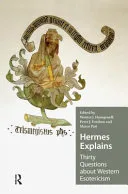
Hermes Explains
 75
75

Hermes Explains
The academic engagement with Western esotericism often struggles to escape the shadow of sensationalism or dismissive skepticism. Hermes Explains, stemming from the University of Amsterdam's dedicated center, offers a welcome corrective. Its strength lies in its direct confrontation of misconceptions that plague the field, presenting scholarly findings without recourse to the mystical jargon that can alienate newcomers. The authors meticulously unpack the historical and philosophical dimensions of subjects like Gnosticism and Hermeticism, grounding them in verifiable scholarship. A limitation, perhaps inherent to its academic origins, is that some essays may presuppose a degree of familiarity with intellectual history, occasionally making for dense reading. However, the section discussing the academic reception of esoteric studies, particularly the challenges faced by scholars, is particularly illuminating. It serves as a vital resource for serious inquiry into these often-misunderstood traditions.
📝 Description
75
### What It Is Hermes Explains is a collection of essays originating from the Centre for History of Hermetic Philosophy and Related Currents at the University of Amsterdam. It addresses pervasive misunderstandings about Western esotericism, aiming to clarify the academic study of this field for a broader audience. The volume consolidates two decades of research, presenting a scholarly yet accessible overview of key areas within esoteric traditions.
### Who It's For This book is intended for anyone interested in understanding Western esotericism beyond popular myth and superficial interpretation. It serves scholars, students, and curious general readers seeking to engage with the academic discourse surrounding occultism, magic, alchemy, and related philosophical currents. It is particularly valuable for those encountering the field for the first time or seeking to correct existing misconceptions.
### Historical Context The study of Western esotericism as a distinct academic discipline gained significant traction in the late 20th century. Institutions like the University of Amsterdam, through its Centre for History of Hermetic Philosophy and Related Currents founded in 1999, have been pivotal in legitimizing this field. This volume, first published in 2019, emerges from this environment, directly responding to the challenges of prejudice and misrepresentation that have historically plagued the study of esoteric subjects.
### Key Concepts The work tackles concepts fundamental to understanding esoteric traditions, such as Gnosticism, Kabbalah, Hermeticism, and alchemy. It examines the historical development of these ideas, their philosophical underpinnings, and their place within broader intellectual history. The essays also address methodological issues in studying esotericism, including how to approach esoteric texts and practices without imposing anachronistic biases or dismissive attitudes.
💡 Why Read This Book?
• Gain clarity on the academic study of Western esotericism, understanding its scholarly methodologies and historical trajectory since its formalization around 1999. • Learn about specific esoteric traditions like Gnosticism and Hermeticism, moving beyond popular notions to their philosophical and historical underpinnings as presented by experts. • Appreciate the challenges and biases confronting the academic study of occultism, understanding why a dedicated field and works like this are necessary for accurate scholarship.
⭐ Reader Reviews
Honest opinions from readers who have explored this book.
❓ Frequently Asked Questions
What is the Centre for History of Hermetic Philosophy and Related Currents?
It is a research institute at the University of Amsterdam, established in 1999, dedicated to the academic study of Western esotericism and its associated philosophical and religious currents.
When was Hermes Explains first published?
The book was first published in 2019, celebrating twenty years of research from the Centre for History of Hermetic Philosophy.
What are some of the main subjects covered in Hermes Explains?
The book addresses subjects such as Gnosticism, Kabbalah, Hermeticism, alchemy, magic, and the academic methodologies used to study these esoteric traditions.
Does the book explain esoteric practices?
While the book focuses on the historical and philosophical study of esotericism, it explains the concepts and traditions behind these practices, offering context for their development and study.
Who are the authors of Hermes Explains?
The authors are Wouter J. Hanegraaff, Peter J. Forshaw, and Marco Pasi, all associated with the Centre for History of Hermetic Philosophy and Related Currents.
What is the main goal of Hermes Explains?
Its primary goal is to demystify the academic study of Western esotericism, counter common misconceptions, and present scholarly research to a wider audience.
🔮 Key Themes & Symbolism
Academic Study of Esotericism
This theme centers on the necessity and methodology of studying Western esotericism as a legitimate academic field. The book confronts common prejudices and misconceptions that have historically hindered scholarly inquiry. It highlights the establishment of dedicated research centers, like the one at the University of Amsterdam since 1999, as crucial steps in legitimizing this area of study and presenting its complex traditions with scholarly rigor.
Historical Roots of Esoteric Traditions
The volume delves into the historical development of key esoteric currents, including Gnosticism, Hermeticism, and Kabbalah. It traces the evolution of their core ideas and practices through centuries, situating them within broader intellectual and cultural contexts. By examining primary sources and historical scholarship, the book aims to provide a more accurate understanding of these traditions' origins and transformations.
Countering Misconceptions
A significant focus is placed on addressing and rectifying widespread misunderstandings surrounding Western esotericism. This involves debunking sensationalized popular notions and demonstrating how academic research offers a more nuanced perspective. The essays challenge simplistic categorizations and biases, advocating for a critical yet open-minded approach to esoteric phenomena and their study.
Hermetic Philosophy and Related Currents
The book specifically explores the legacy of Hermetic philosophy and other related currents that form the bedrock of Western esotericism. It examines how figures and texts associated with Hermes Trismegistus have influenced subsequent philosophical, mystical, and alchemical traditions. The work clarifies the complex interconnections and developments within this specific lineage.
💬 Memorable Quotes
“The study of Western esotericism is surrounded by many misunderstandings.”
— This core assertion highlights the book's primary objective: to clarify and correct the often-inaccurate perceptions that plague the academic and popular understanding of esoteric traditions.
“The Centre for History of Hermetic Philosophy and Related Currents has been at the forefront of international scholarship.”
— This statement emphasizes the academic credibility and pioneering role of the institution behind the book, underscoring the scholarly foundation of the presented research.
“Addressing misconceptions, biases, and prejudices is crucial for the field.”
— This points to the critical stance the book adopts, aiming to dismantle preconceived notions and biases that hinder a proper academic engagement with esoteric subjects.
“Academic research seeks to understand esoteric traditions objectively.”
— This interpretation underscores the book's commitment to scholarly methodology, differentiating its approach from purely devotional or dismissive perspectives on esotericism.
“The volume aims to make the modern study of Western esotericism known beyond specialist circles.”
— This indicates the book's intention to bridge the gap between academic discourse and a wider interested public, making complex research accessible.
🌙 Esoteric Significance
Tradition
This work firmly situates itself within the academic study of Western esotericism, with a particular emphasis on Hermeticism and its related currents. It aligns with the scholarly lineage seeking to understand traditions stemming from figures like Hermes Trismegistus, Gnosticism, Kabbalah, and alchemy. The book departs from traditional esoteric interpretations by focusing on historical context and intellectual development rather than prescribing practice.
Symbolism
While the book's focus is academic, it implicitly engages with symbols central to Western esotericism. Concepts like the *prima materia* in alchemy represent primordial substance, while the divine spark in Gnosticism signifies an imprisoned spiritual essence. The Hermetic axiom 'As Above, So Below' symbolizes the interconnectedness of the macrocosm and microcosm, a foundational principle explored through historical texts.
Modern Relevance
Contemporary thinkers and practitioners in fields ranging from comparative religion to depth psychology often draw upon the historical and philosophical frameworks illuminated by works like Hermes Explains. It informs modern occultists, New Age practitioners, and scholars interested in alternative spiritualities by providing a critical and historically grounded understanding of the traditions they engage with or study.
👥 Who Should Read This Book
• Students of comparative religion and intellectual history seeking to understand the academic approach to esoteric traditions. • Researchers and scholars in philosophy and religious studies needing to contextualize Hermeticism, Gnosticism, and Kabbalah within historical scholarship. • Curious general readers who wish to move beyond popular stereotypes and gain a more informed perspective on Western esotericism and its study.
📜 Historical Context
The late 20th and early 21st centuries witnessed a significant push for the academic legitimization of Western esotericism. Prior to this, such studies were often relegated to the fringes of religious studies or philosophy departments, frequently viewed with suspicion or dismissed as pseudoscience. The establishment of dedicated research centers, such as the Centre for History of Hermetic Philosophy and Related Currents at the University of Amsterdam in 1999, marked a pivotal shift. This volume, published in 2019, emerges from this milieu, directly confronting the legacy of misrepresentation. It operates within an intellectual landscape shaped by scholars like Frances Yates, who began re-evaluating Hermeticism's role in the Renaissance, and responds to ongoing debates about the boundaries of religious and philosophical studies. The work implicitly argues against the reductionist tendencies seen in some rationalist critiques of occultism.
📔 Journal Prompts
Reflect on the academic challenges presented to the study of Hermeticism.
Consider the historical trajectory of Gnosticism as discussed in the text.
Analyze the concept of 'misconceptions' within esoteric studies.
Explore the significance of the Centre for History of Hermetic Philosophy and Related Currents.
Evaluate the impact of Kabbalah's historical development on Western thought.
🗂️ Glossary
Western Esotericism
A broad term encompassing diverse philosophical and spiritual traditions that originated in Europe and the Mediterranean, often characterized by secret knowledge, mystical insights, and magical practices.
Hermeticism
A religious and philosophical tradition based on writings attributed to Hermes Trismegistus, a legendary Hellenistic figure. It emphasizes divine wisdom, cosmology, and the interconnectedness of all things.
Gnosticism
An ancient religious movement characterized by a dualistic worldview, the belief in a hidden divine knowledge (gnosis), and the concept of a flawed creator god distinct from the true, transcendent deity.
Kabbalah
A system of Jewish mysticism that explores the nature of God and the universe through esoteric interpretations of scripture, often involving complex symbolism and meditative practices.
Alchemy
An ancient practice combining chemistry, metallurgy, philosophy, and mysticism, often focused on the transmutation of base metals into gold and the search for an elixir of life.
Centre for History of Hermetic Philosophy and Related Currents
A specific academic research institute at the University of Amsterdam, founded in 1999, dedicated to the scholarly study of Western esoteric traditions.
Prima Materia
In alchemy, the fundamental, undifferentiated substance from which all things are created; the starting point for alchemical transformation.