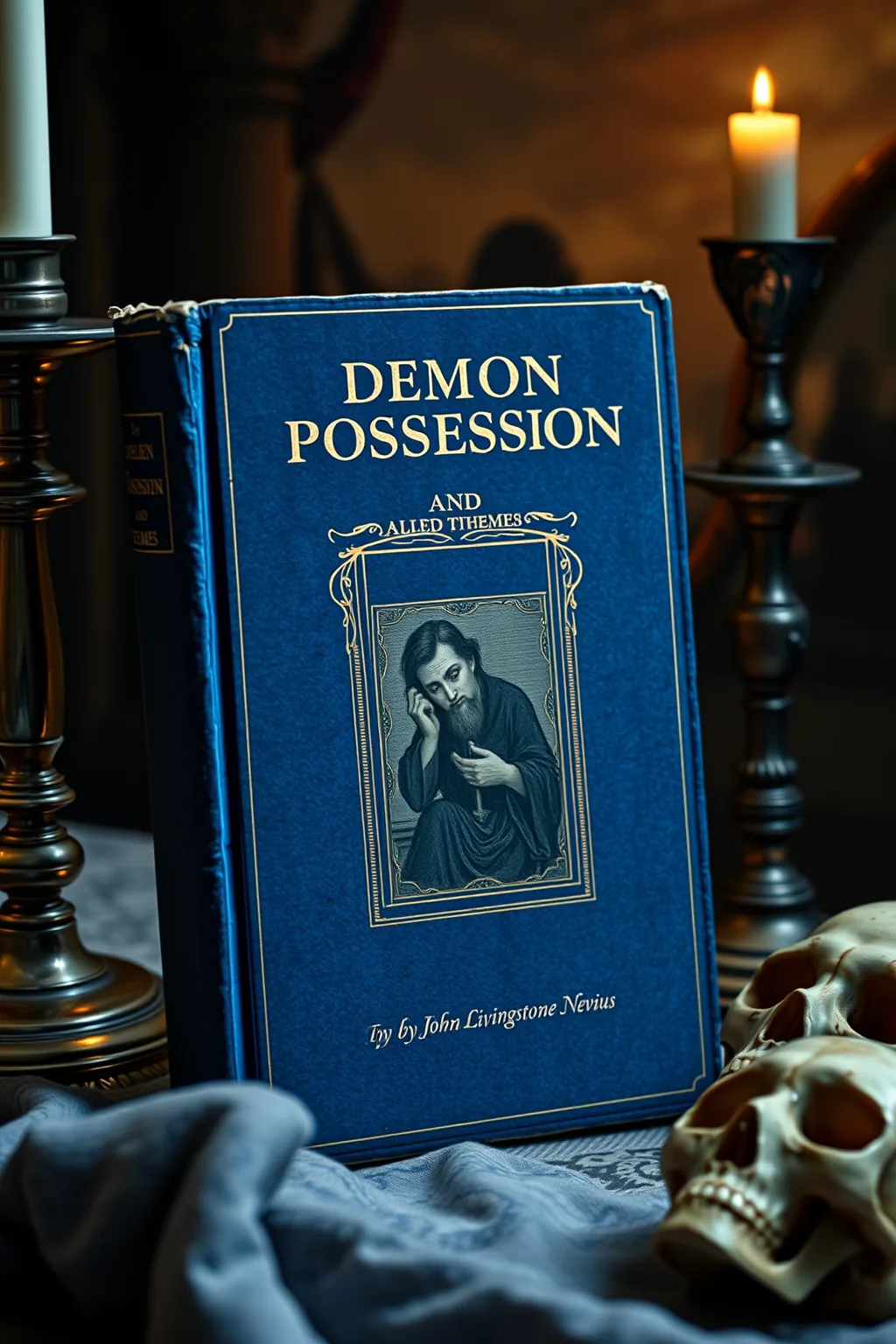
Demon Possession and Allied Themes
 83
83

Demon Possession and Allied Themes


Lorelei Sage (Contemplative Literature Editor) — John Livingstone Nevius's 'Demon Possession and Allied Themes' is an indispensable cornerstone for anyone investigating the esoteric dimensions of human experience. Nevius’s inductive methodology, grounded in direct observation from his missionary tenure in China, provides an unparalleled ethnographic and psychological exploration of spirit possession. This work is not merely a historical curiosity but a vital resource for understanding persistent global beliefs about the supernatural. Its strength lies in its dispassionate yet deeply empathetic analysis, illuminating the intricate dance between cultural narratives and profound subjective realities. An essential read for scholars of comparative religion, parapsychology, and those drawn to the mysteries of the human psyche.
📝 Description
83
John Livingstone Nevius's 1894 book examines demon possession based on his China missionary experiences.
Published in 1894, John Livingstone Nevius's 'Demon Possession and Allied Themes' stems directly from his lengthy missionary service in 19th-century China. The work moves beyond simple reporting to analyze spiritual phenomena as observed across diverse cultures and time periods. Nevius carefully details his findings on possession, exorcism, and the connection between the physical world and unseen forces.
Through careful observation and a sympathetic approach, the book reveals insights into consciousness, subtle energies affecting human lives, and humanity's consistent interest in both demonic and divine aspects. It invites readers to consider their views on mental states and spiritual matters. The text balances academic investigation with a sense of wonder when confronting the mysterious, encouraging readers to re-evaluate their understanding of what is considered normal and spiritual.
Nevius's work fits within a late 19th-century surge of interest in spiritualism and the occult, often viewed through a lens of comparative religion and anthropology. While many contemporaries sought evidence for disembodied spirits or psychic powers, Nevius grounded his analysis in extensive fieldwork, attempting to understand alleged demonic influence from the perspective of those experiencing it. His approach, while empirical for its time, engages with phenomena that lie outside mainstream scientific or religious explanations, placing it in conversation with traditions that investigate altered states of consciousness and non-material causality.
✍️ Author
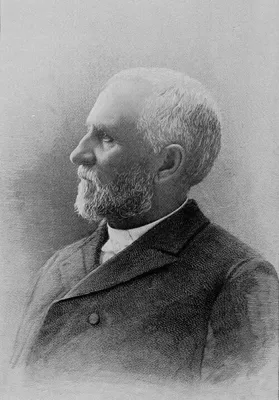
John Livingstone Nevius
John Livingston Nevius (4 March 1829 – 19 October 1893) was an American Protestant missionary in China for forty years, appointed by the American Presbyterian Mission; his ideas on mission organization were also very important in the spread of the church in…
💡 Why Read This Book?
Uncover timeless truths about the human psyche and its interaction with the unseen. This book offers a rare, empirically grounded exploration of spirit possession, vital for seekers of esoteric knowledge, scholars of comparative religion, and practitioners interested in historical approaches to altered states and spiritual influence. It challenges conventional wisdom, providing rich insights into belief systems and the enduring power of the supernatural across cultures.
⭐ Reader Reviews
Honest opinions from readers who have explored this book.
❓ Frequently Asked Questions
What is the primary focus of 'Demon Possession and Allied Themes'?
The book offers an inductive study of demon possession and related phenomena, examining these experiences from a cross-cultural perspective, particularly drawing on the author's extensive observations in China.
Who was John Livingstone Nevius?
Nevius was an American Protestant missionary who served in China. His extensive fieldwork and interactions with local populations provided him with unique insights into spiritual beliefs and practices.
What makes this book 'esoteric'?
Its esoteric nature stems from its deep dive into phenomena often considered outside mainstream science and religion, exploring the spiritual, psychological, and cultural dimensions of possession and the unseen world.
Is the book's approach biased?
While written from a missionary perspective, Nevius strives for an inductive and observational approach, attempting to understand phenomena rather than solely dismiss them, offering a nuanced portrayal.
What is the 'inductive study' aspect?
It means the book builds its conclusions from specific observations and evidence gathered, rather than starting with a preconceived theory. Nevius presents case studies and analyses them.
🔮 Key Themes & Symbolism
The Nature of Possession
This theme studies the core of Nevius's investigation: the phenomenon of spirit possession as observed across different cultures, particularly in 19th-century China. It examines the characteristics, manifestations, and perceived causes of possession, exploring how it was understood and experienced by individuals and communities. The book seeks to move beyond simplistic explanations, offering a detailed, inductive analysis of the subjective and objective elements involved, and questioning the boundaries between psychological states and external spiritual influence. It highlights the lasting impact such beliefs had on societal structures and individual lives, urging readers to consider the universality of these experiences.
Cultural Perspectives on the Supernatural
Nevius's work is a body of work woven with diverse cultural understandings of the supernatural. He meticulously documents how different societies interpret and interact with phenomena like spirit possession, exorcism, and the influence of unseen forces. The book emphasizes that these beliefs are not isolated incidents but integral parts of complex worldviews, deeply interwoven with religious, social, and psychological frameworks. By contrasting and comparing these perspectives, Nevius sheds light on the common human yearning to explain the inexplicable and the varied ways in which cultures construct meaning around spiritual experiences, offering a valuable comparative study for anthropologists and theologians alike.
The Interplay of Mind and Spirit
A central tenet of Nevius's exploration is the intricate relationship between the human mind and perceived spiritual forces. The book grapples with questions of whether manifestations attributed to possession are purely psychological, the result of external spiritual entities, or a complex interplay of both. Nevius presents evidence that challenges purely materialistic explanations, suggesting that the mind can be profoundly susceptible to influences that lie beyond the purely physical. This theme invites contemplation on consciousness, belief, and the potential for the unseen to shape our inner and outer realities, resonating with contemporary discussions in parapsychology and transpersonal psychology.
💬 Memorable Quotes
Direct passages from the work, attributed to the author.
“Belief is the key that unlocks the door to the unseen.”
— This highlights the power of human belief systems in shaping perception and potentially influencing or interacting with spiritual realities.
“The phenomena of our own times reflect the ancient battles of the soul.”
— Nevius suggests that contemporary experiences of possession are traces of timeless spiritual struggles, linking the present to the ancient wisdom traditions.
“Observation is the first step towards understanding the hidden.”
— This emphasizes Nevius's methodological approach, advocating for empirical study as the path to unraveling mysteries that lie beyond superficial understanding.
“The world of spirits is not a fiction, but a sphere of influence.”
— This assertion frames the spirit world not as a mere story, but as an active, influential domain that can impact human existence.
💡 Key Ideas
Editorial paraphrase of the work's core concepts — not direct quotes.
The supernatural is not a phantom of the imagination, but a reality.
This quote underscores Nevius's conviction that phenomena like spirit possession are not mere delusions but possess an objective reality, worthy of serious investigation.
🌙 Esoteric Significance
Tradition
While Nevius's work is framed within a Protestant missionary context, its inductive methodology and deep engagement with phenomena often relegated to folklore grant it significant esoteric resonance. It aligns with traditions that explore the hidden dimensions of human experience and the subtle energies that govern existence. The book's focus on empirical observation of 'otherworldly' phenomena bridges the gap between objective inquiry and subjective spiritual realities, echoing the spirit of early parapsychology and occult investigations that sought to validate and understand the unseen.
Symbolism
The central 'symbol' explored is the human being as a vessel or interface for spiritual forces. Possession itself can be seen as a potent symbol of the struggle between free will and external influence, the conscious and the unconscious, or the divine and the demonic. Nevius's detailed accounts of exorcism rites and the language used by those believed to be possessed often carry layers of symbolic meaning related to purification, spiritual warfare, and the reclaiming of one's inner sovereignty, reflecting ancient archetypal narratives.
Modern Relevance
In an age increasingly dominated by materialistic explanations, Nevius's work serves as a potent reminder of the enduring power of spiritual beliefs and the potential existence of forces that elude conventional scientific understanding. His inductive approach to phenomena like possession offers a valuable framework for contemporary discussions in fields such as transpersonal psychology, consciousness studies, and comparative mythology. The book encourages a more open-minded and nuanced exploration of subjective experiences that may have wide implications for mental and spiritual well-being.
👥 Who Should Read This Book
This book is essential for scholars of comparative religion, anthropology, and the history of psychology seeking empirical accounts of spiritual phenomena. Esoteric practitioners and occultists will find valuable historical context and case studies for understanding possession and spiritual influence. Seekers of hidden knowledge and those interested in the psychological and spiritual dimensions of human experience will discover a profound and challenging read. Beginners in esoteric studies can approach it as a foundational text, while seasoned practitioners will appreciate its rigorous, observational approach to often-taboo subjects.
📜 Historical Context
Published in 1894, 'Demon Possession and Allied Themes' emerged from a fascinating confluence of late Victorian intellectualism and global missionary endeavors. The era was marked by intense scrutiny of religious beliefs, the burgeoning fields of psychology and anthropology, and a public fascination with the occult and spiritualism. Nevius's work, deeply rooted in his experiences in China, offers a unique window into how Western missionaries grappled with indigenous spiritual systems, often interpreting them through a framework of Christian theology while simultaneously documenting their complex realities. The book reflects a period when the boundaries between science, religion, and the supernatural were actively being debated and redefined, making it a significant contribution to the understanding of comparative spiritual practices and the evolving human perception of reality.
📔 Journal Prompts
Reflect on a personal experience that felt influenced by something beyond your immediate control. How might Nevius's framework apply?
Compare and contrast the descriptions of possession in Nevius's work with contemporary accounts or fictional portrayals. What are the commonalities and differences?
Consider the role of belief in shaping one's reality. How might a strong belief in spiritual influence alter an individual's perception and behavior?
Nevius emphasizes an inductive approach. How can you apply this method to understanding a complex personal or societal issue?
Explore the concept of 'allied themes' to possession. What other phenomena might be related, and how could they be studied inductively?
🗂️ Glossary
Inductive Study
A research method that involves drawing broad generalizations from specific observations and data. Nevius uses this to build his understanding of possession from case studies.
Spirit Possession
The belief that a supernatural entity, such as a demon or spirit, has taken control of an individual's body, influencing their thoughts, actions, and personality.
Exorcism
A ritual or practice performed to expel an evil spirit or entity from a person or place, often involving prayers, incantations, and symbolic actions.
Phenomena
Observable facts or events, especially ones that are unusual or difficult to explain, that are central to Nevius's investigation.
Subtle Energies
Hypothetical forms of energy that are not detectable by conventional scientific instruments but are believed to influence the physical and spiritual realms.
This book appears in 3 collections
🔮 Readers Also Liked
Browse all →









From the “Transcendental Meditation” Collection
View all →







More Free Esoteric History & Biography Books
View all →