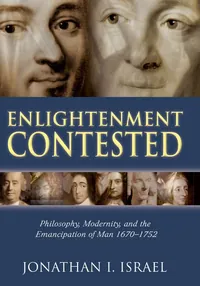
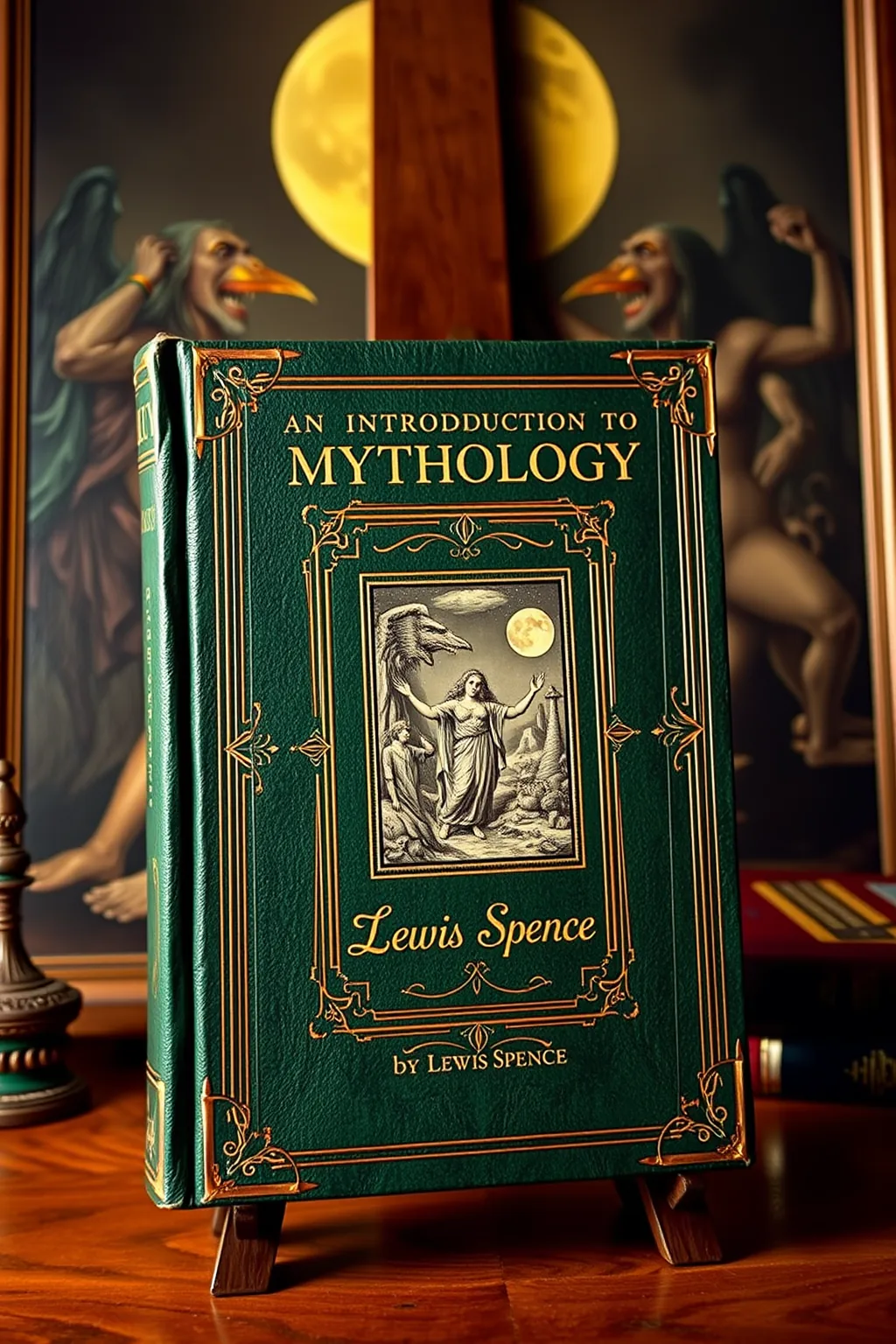
An Introduction to Mythology
 78
78

An Introduction to Mythology



Lewis Spence's 'An Introduction to Mythology' stands as a cornerstone for students of esoteric thought and comparative religion. Published in 1921, it offers a remarkably comprehensive yet accessible survey of global myths, delving into their origins and the ritualistic practices they underpinned. Spence's scholarly rigor is evident, but it is his keen insight into the psychological and spiritual functions of myth that truly resonates. He illuminates how these ancient narratives served as early cosmologies and proto-scientific frameworks, providing a blueprint for understanding the universe and humanity's role within it. This work is indispensable for anyone seeking to grasp the foundational symbolism and archetypal patterns that continue to influence our collective unconscious and spiritual development.
📝 Description
78
Lewis Spence's 'An Introduction to Mythology' was first published in 1921.
Lewis Spence's 1921 volume examines how myths have shaped human societies and belief systems. He analyzes primordial narratives, folklore, and rituals to understand ancient perceptions of the divine and the cosmos. The book details how early peoples sought meaning through creation myths and religious thought. Spence discusses the symbolic language embedded in myths and the archetypal forces that appear in these stories. He argues that myth is a fundamental way humans understand existence, going beyond simple storytelling.
The work invites readers to look beyond ordinary perceptions and consider the enduring mysteries of the human spirit. It connects ancient spiritual inquiry with its echoes in the modern mind. Spence's research traces the roots of religious ideas and their persistent influence. The book aims to illuminate the esoteric foundations of human reality by dissecting these ancient narratives.
Published in the early 20th century, a period of renewed interest in comparative mythology and esoteric traditions, Spence's work positions itself within a scholarly yet accessible exploration of these subjects. It engages with the idea that myths reveal deeper psychological and spiritual truths, aligning with currents of thought influenced by figures like Carl Jung, though predating his major publications on archetypes. The book considers myth not just as historical artifact but as a living expression of humanity's search for meaning and connection to unseen forces.
✍️ Author
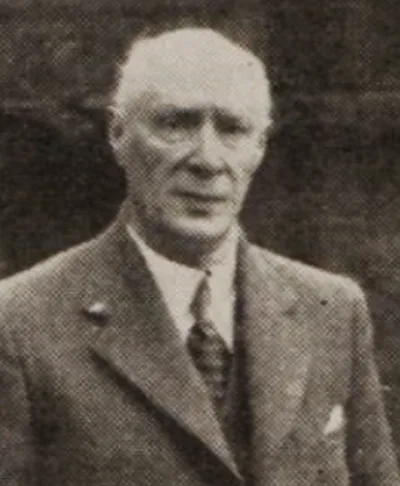
Lewis Spence
Scottish journalist, poet, author, folklorist and occult scholar.
Occultist
💡 Why Read This Book?
Uncover the deep symbolic language of humanity's oldest narratives. 'An Introduction to Mythology' provides a scholarly yet accessible gateway into the origins of religious thought and the psychological underpinnings of myth. Ideal for seekers of ancient wisdom, students of comparative religion, and practitioners looking to understand the archetypal forces that shape our world. Discover the proto-science and proto-spirituality embedded in myth.
⭐ Reader Reviews
Honest opinions from readers who have explored this book.
❓ Frequently Asked Questions
What is the primary focus of Lewis Spence's 'An Introduction to Mythology'?
The book provides a scholarly survey of myth, folklore, ritual, and the origins of religious ideas, tracing their development across cultures and time, and exploring their function as proto-science and religion.
When was 'An Introduction to Mythology' first published?
It was first published in 1921.
Who is the intended audience for this book?
The book is suitable for academics, students of mythology and religion, and general readers interested in the origins of human belief systems and the esoteric underpinnings of culture.
Does Spence discuss specific mythologies in detail?
Yes, Spence covers a wide range of mythologies from various cultures, examining common themes and unique expressions of mythic thought.
What makes this book relevant from an esoteric perspective?
It delves into the symbolic language, archetypal patterns, and spiritual functions of myths, revealing them as vehicles for transmitting profound metaphysical and psychological truths.
🔮 Key Themes & Symbolism
The Genesis of Belief: Myth as Proto-Religion
This theme explores how early human societies constructed their understanding of the divine and the cosmos through narrative. Spence examines creation myths, the pantheons of early cultures, and the ritualistic practices that solidified these beliefs. It highlights how myth served not only as a form of worship but as the foundational framework for spiritual and moral order, providing answers to existential questions and forging communal identity through shared stories of the sacred.
Cosmology and the Archetypal Mind
Study the ancient blueprints of the universe as conceived by various cultures. Spence investigates how myths articulate cosmology, explaining the origins of the world, the celestial bodies, and the forces that govern existence. This section illuminates the recurring archetypal patterns – the hero's journey, the trickster, the divine feminine/masculine – that reside within the collective unconscious, demonstrating their universal presence and enduring power across disparate mythic traditions.
Ritual, Symbolism, and the Path of Transformation
This theme uncovers the profound connection between myth and ritual, examining how sacred actions reinforce and enact mythological narratives. Spence scrutinizes the symbolic language embedded in rituals, from initiation rites to seasonal festivals, revealing their role in personal and communal transformation. It underscores how these practices served as conduits for experiencing the divine, fostering spiritual growth, and maintaining the cosmic balance, offering a glimpse into ancient methods of spiritual cultivation.
💬 Memorable Quotes
Direct passages from the work, attributed to the author.
“The gods are but the shadows of our own souls.”
— Implying a psychological interpretation of deities, this suggests that divine figures represent projections of humanity's own inner qualities, desires, and archetypes.
“Ritual is the reenactment of the divine.”
— This highlights the purpose of ritual as a means to actively participate in and experience the sacred events or truths described in myths, connecting the mundane to the transcendent.
“Every myth is a universe in miniature.”
— This suggests that even the smallest myth contains within it the fundamental elements and complexities of existence, offering a complete worldview.
“The roots of religion are buried deep in the soil of human experience.”
— This posits that religious beliefs and practices are not arbitrary but arise organically from the fundamental experiences and needs of humanity throughout history.
💡 Key Ideas
Editorial paraphrase of the work's core concepts — not direct quotes.
Myth is the poetry of the primitive mind.
This quote suggests that myths represent the earliest and most profound expressions of human imagination and understanding, akin to artistic poetry but serving a fundamental explanatory purpose.
🌙 Esoteric Significance
Tradition
Spence's work aligns with the syncretic and comparative traditions within Western esotericism, drawing parallels between diverse mythologies to reveal universal archetypes and spiritual principles. It carries the Hermetic ideal of 'as above, so below,' suggesting that cosmic order is reflected in human narratives. His approach anticipates later psychological interpretations, particularly those influenced by Jungian archetypes, viewing myths as manifestations of the collective unconscious and pathways to self-knowledge.
Symbolism
The book is rich in the interpretation of potent symbols found across world mythologies. Spence examines recurring motifs like the serpent (representing primordial energy, transformation, or chaos), the tree of life (cosmic connection, knowledge, immortality), and the archetypal hero (the journey of the soul, overcoming obstacles). He reveals how these symbols function as a universal language, communicating complex spiritual and psychological truths that transcend literal meaning, acting as keys to unlocking deeper layers of consciousness.
Modern Relevance
In an age often characterized by fragmentation and secularism, Spence's exploration of mythology offers a vital connection to the enduring human need for meaning and transcendence. His work reminds us that the archetypal patterns and spiritual quests found in ancient myths are not relics of the past but are alive within our own psyches. Understanding these foundational narratives provides a framework for navigating personal challenges, fostering creativity, and re-enchanting the world with a deeper sense of purpose and interconnectedness.
👥 Who Should Read This Book
This foundational text is useful for a diverse readership. **Beginners** will find it an accessible and comprehensive entry point into the vast world of mythology, offering a clear overview of key concepts and global traditions. **Scholars** of religious studies, anthropology, and comparative literature will appreciate its rigorous scholarship and broad scope. **Seekers** of ancient wisdom and spiritual understanding will discover useful insights into the archetypal forces that shape human consciousness and the universal quest for meaning. **Practitioners** of esoteric arts can utilize its exploration of symbolism and ritual to deepen their understanding of foundational spiritual principles and their application.
📜 Historical Context
Published in 1921, 'An Introduction to Mythology' emerged during a fertile period for the study of folklore, anthropology, and comparative religion. The early 20th century saw a surge of interest in understanding the 'primitive' mind and the origins of human belief systems, influenced by figures like Frazer, Durkheim, and early psychoanalytic theories. Spence's work reflects this era's scholarly ambition to systematically categorize and analyze the vast array of global myths. It was a time when the lines between academic inquiry and esoteric exploration were often blurred, allowing for a more holistic approach to understanding the symbolic and spiritual dimensions of human culture, contributing to a broader intellectual landscape receptive to exploring the hidden currents of the human psyche.
📔 Journal Prompts
Reflect on a personal myth or recurring dream. How might it relate to universal archetypes discussed by Spence?
Choose a creation myth from the book and analyze its symbolic representation of the divine and the cosmos. What does it reveal about the values of that culture?
Consider a common ritual or tradition in your own life. How does it connect to the broader concept of myth and its role in community or personal transformation?
Spence discusses myth as a form of proto-science. How does this perspective challenge or expand your understanding of early human thought?
Identify a symbol that holds personal significance for you. Research its potential meanings across different mythologies using Spence's work as a starting point.
🗂️ Glossary
Archetype
A universal, inherited pattern of thought or image derived from the experience of the species and present in the individual's unconscious, influencing behavior and perception.
Cosmology
The study of the origin, evolution, and eventual fate of the universe. In mythology, it refers to the conceptual framework used by cultures to explain the structure and workings of the cosmos.
Folklore
The traditions, customs, beliefs, and stories of a community, passed down through generations, often orally, encompassing myths, legends, proverbs, and songs.
Myth
A traditional story, especially one concerning the early history of a people or explaining some natural or social phenomenon, and typically involving supernatural beings or events.
Ritual
A set of actions, often symbolic and ceremonial, performed in a prescribed order, typically associated with religious or magical practices and reinforcing communal beliefs or personal transformation.
This book appears in 1 collection
🔮 Readers Also Liked
Browse all →









More by Lewis Spence
All books →





From the “Transcendental Meditation” Collection
View all →




More Free Esoteric History & Biography Books
View all →