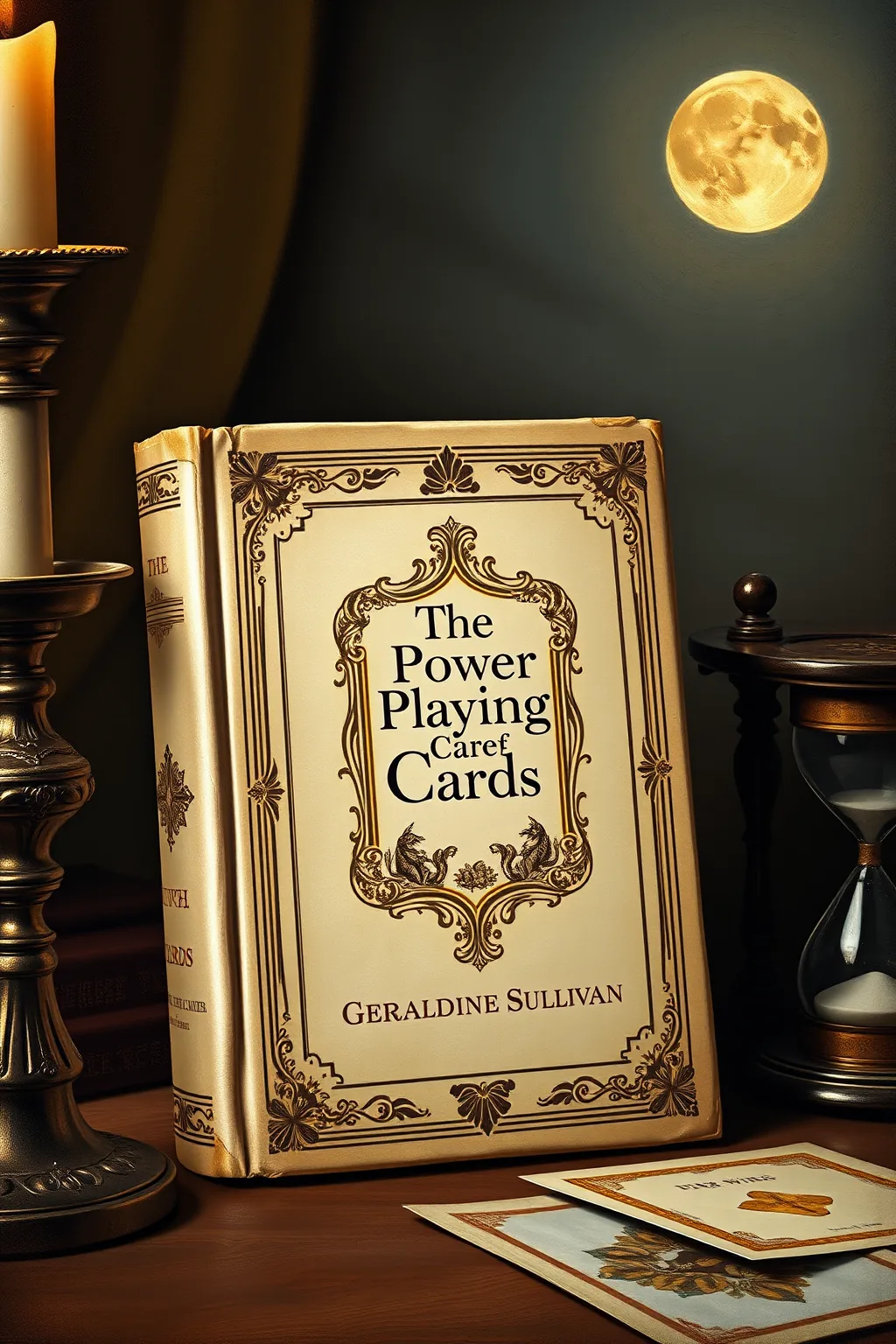
The power of playing cards
 71
71

The power of playing cards
Geraldine Sullivan and Saffi Crawford's "The Power of Playing Cards" offers a refreshingly grounded approach to a practice often shrouded in mystique. Unlike many contemporary works that lean heavily on flowery prose, this book presents its system with a clear, almost academic, precision. The strength lies in its systematic breakdown of each card's meaning, providing a robust framework for interpretation. However, the original blurb's absence is felt; the text could benefit from a clearer introductory statement of its unique philosophy. A particularly insightful section details the 'Court Cards' not just as people, but as archetypal energies influencing a situation, a concept that elevates the reading beyond simple prediction. While it may lack the poetic flair some readers seek, its utility as a practical divinatory tool is undeniable. It serves as a solid primer for those willing to engage with its structured methodology.
📝 Description
71
### What It Is "The Power of Playing Cards" is a foundational text exploring the esoteric dimensions of a common deck of cards. Published initially in 2008, this work moves beyond mere parlor tricks, presenting a system where each card carries a wealth of symbolic meaning and predictive potential. It outlines a method for divinatory practice, psychological insight, and even spiritual development, all derived from the familiar 52-card arrangement. The book functions as both a manual for learning a specific cartomantic system and a philosophical inquiry into the nature of symbolic language.
### Who It's For This book is suited for individuals interested in practical occultism who seek tangible tools for divination and self-discovery. It appeals to those who find traditional Tarot systems complex or wish to explore alternative frameworks. Readers who appreciate structured, symbolic languages and are willing to engage in diligent study will find "The Power of Playing Cards" rewarding. It is also beneficial for those interested in the history of divination practices and how common objects can be imbued with profound meaning.
### Historical Context The early 21st century saw a resurgence of interest in esoteric studies, with many authors revisiting and reinterpreting older traditions. "The Power of Playing Cards," first published in 2008, emerged during a period where digital resources began to democratize access to occult knowledge, yet a demand for clearly articulated, practical guides persisted. This work contributes to a lineage of cartomancy that predates Tarot, drawing parallels with older European card games that incorporated divinatory elements. It exists alongside contemporary explorations of oracle systems and symbolic languages, offering a specific, card-based approach.
### Key Concepts The book centers on the idea that playing cards are not random assortments but a coherent symbolic language. Key concepts include the mapping of card suits (Hearts, Diamonds, Clubs, Spades) to elemental and psychological domains, the numerical significance of each card from Ace to King, and the interpretation of card spreads or layouts. It presents a structured approach to forecasting events, understanding personality archetypes, and gaining insight into interpersonal dynamics through the lens of these 52 symbols. The work emphasizes the interconnectedness of the cards within a spread, suggesting a holistic rather than isolated reading.
💡 Why Read This Book?
• Learn a distinct cartomantic system that offers an alternative to Tarot, providing unique insights into personal challenges and future potentials, directly tied to the structured meanings of the 52 playing cards as presented in the book. • Gain practical skills in predictive divination and psychological assessment by understanding the elemental and numerical associations of each card, a core principle taught from the 2008 publication. • Explore a symbolic language that connects the mundane with the mystical, enabling you to interpret everyday occurrences through the lens of card symbolism, a key takeaway from the book's exploration of card spreads.
⭐ Reader Reviews
Honest opinions from readers who have explored this book.
❓ Frequently Asked Questions
What is the primary difference between this system and Tarot?
The Power of Playing Cards utilizes a standard 52-card deck, differing from Tarot's larger, more complex structure with Major and Minor Arcana. This book focuses on the inherent symbolism and numerology within the playing card system, offering a more streamlined approach to divination.
Who are the authors associated with 'The Power of Playing Cards'?
The book is authored by Geraldine Sullivan and Geri Sullivan, with contributions from Saffi Crawford. The initial publication date was 2008.
Can this book be used for psychological insight as well as prediction?
Yes, the book presents playing cards as a symbolic language that can illuminate personality archetypes and interpersonal dynamics, extending its utility beyond simple fortune-telling to self-understanding and relationship analysis.
What is the historical basis for using playing cards for divination?
While Tarot is more widely known, playing cards have a history of divinatory use, particularly in European traditions. This book taps into that lineage, presenting a structured system derived from their established symbolism and numerology.
Is prior knowledge of esoteric systems required to read this book?
No, the book is designed to be accessible to newcomers. It systematically explains the meanings of suits, numbers, and court cards, providing a comprehensive guide for those new to cartomancy.
What makes the 'Court Cards' significant in this system?
The Court Cards (King, Queen, Jack) are treated not merely as representations of people but as dynamic archetypes or energies that influence a situation. Their interpretation is key to understanding the forces at play in a reading.
🔮 Key Themes & Symbolism
Card Symbolism and Numerology
The core of the work lies in assigning profound symbolic weight to each playing card. Beyond their game-playing function, Hearts are linked to emotions and relationships, Diamonds to material matters and finances, Clubs to intellect and communication, and Spades to challenges and transformation. The numerical values from Ace (1) to Ten, and the Court Cards (Jack, Queen, King), further delineate specific energies, events, and personality types. This intricate system allows for nuanced readings by combining these layered meanings.
Divinatory Practice Framework
The book provides a structured methodology for using playing cards as a tool for divination. It moves past anecdotal interpretations to offer a coherent system for forecasting future events, understanding present circumstances, and gaining self-awareness. Specific card spreads and interpretation techniques are detailed, enabling readers to move from learning individual card meanings to synthesizing them into a meaningful narrative. The emphasis is on a practical, repeatable process.
Psychological Archetypes in Cards
Beyond predicting external events, "The Power of Playing Cards" explores the psychological dimensions of cartomancy. The Court Cards, in particular, are examined as archetypal figures representing different facets of the human psyche or roles played in life. This allows for a deeper exploration of personal motivations, internal conflicts, and relational dynamics. By mapping these archetypes, readers can gain insight into their own inner landscape and the psychological underpinnings of situations.
The Card Deck as a Microcosm
The entire 52-card deck is presented as a microcosm reflecting the complexities of life. The interplay between suits, numbers, and court figures creates a dynamic system capable of mirroring the ebb and flow of human experience. The book encourages readers to view the deck not as a random collection but as a coherent symbolic map of existence, where patterns and connections reveal deeper truths about the world and oneself.
💬 Memorable Quotes
“The suits represent distinct energetic fields: Hearts for love, Diamonds for wealth, Clubs for intellect, and Spades for action.”
— This statement distills the foundational symbolic mapping of the four suits, establishing the elemental and thematic basis for all subsequent interpretations within the deck.
“Court cards embody archetypal energies, personifying influences rather than just individuals.”
— This highlights a key interpretive principle, suggesting that figures like the King or Queen signify more than literal people, representing broader forces or personality traits at play.
“Numerology within the cards adds layers of meaning to their symbolic core.”
— This emphasizes the integrated approach, where the numerical value of a card (e.g., a 7) modifies or specifies the general meaning of its suit and rank.
“A card spread reveals the interconnectedness of forces shaping an event.”
— This points to the holistic nature of divination using the deck, where the meaning arises not just from individual cards but from their relationships and interactions within a layout.
“Playing cards offer a practical, accessible system for divination.”
— This underscores the book's aim to demystify cartomancy, presenting the playing card system as a tangible and learnable tool for insight.
🌙 Esoteric Significance
Tradition
This work fits within the Western Esoteric tradition, specifically drawing from the lineage of cartomancy and divination that has evolved alongside European folk magic and occultism. While not explicitly Hermetic or Kabbalistic in its core presentation, it shares with these traditions the principle of using symbolic systems to understand the macrocosm (the universe) through the microcosm (the deck of cards). It departs from some traditions by focusing solely on the playing card deck, offering a distinct methodology.
Symbolism
The primary symbols are the four suits (Hearts, Diamonds, Clubs, Spades), each representing fundamental aspects of life: emotion/love, material/finance, intellect/communication, and challenges/action, respectively. The numbers 1 through 10 carry progressive energies, while the Court Cards (Jack, Queen, King) represent archetypal figures or influential personalities. The combination of these elements creates a rich symbolic language capable of mapping diverse human experiences.
Modern Relevance
Contemporary practitioners interested in accessible, yet profound, divinatory tools often turn to systems like the one presented here. Its structured approach appeals to those seeking practical application in self-help, coaching, and personal development. Modern occultists and enthusiasts of symbolic languages find value in its systematic breakdown, which can be integrated into broader magical practices or used as a standalone method for gaining insight and clarity.
👥 Who Should Read This Book
• Aspiring diviners seeking a structured and accessible system to learn cartomancy, moving beyond basic fortune-telling to deeper symbolic interpretation. • Individuals interested in exploring alternative divination methods to Tarot, who appreciate a systematic approach grounded in the familiar playing card deck. • Practitioners of Western Esotericism looking to expand their toolkit with a practical system that bridges psychological insight and predictive analysis through symbolic language.
📜 Historical Context
The early 21st century, particularly the period leading up to and following 2008, was marked by a significant increase in the accessibility of esoteric knowledge, fueled by the burgeoning internet. "The Power of Playing Cards," by Geraldine Sullivan and Saffi Crawford, emerged within this context, offering a structured and practical approach to a form of divination often overshadowed by Tarot. While Tarot gained immense popularity through figures like A.E. Waite and Pamela Colman Smith in the early 20th century, playing card divination, or cartomancy, has its own deep roots stretching back centuries, with systems evolving from common European card games. This work can be seen as contributing to a broader revival of divinatory practices, existing alongside contemporary explorations in rune casting, oracle decks, and modern magical theory. It provides a counterpoint to more complex systems, offering a focused and systematic method derived from a universally recognized set of symbols.
📔 Journal Prompts
The symbolic meaning of the Ace of Spades within a reading.
Court card archetypes as reflections of personal inner states.
How the numerology of a specific card modifies its suit's core meaning.
The relationship between the Hearts and Diamonds suits in a personal spread.
Interpreting a sequence of three cards as a narrative arc.
🗂️ Glossary
Cartomancy
The practice of divination using a deck of cards, typically playing cards or Tarot cards. It involves interpreting the symbolism and arrangement of cards to gain insight into the past, present, or future.
Suits
The four divisions of a standard playing card deck: Hearts, Diamonds, Clubs, and Spades. In this system, each suit is associated with specific themes, elements, and areas of life.
Court Cards
The Jack, Queen, and King cards within a playing card deck. They are often interpreted as representing people, personalities, or archetypal energies influencing a situation.
Numerology
The study of the mystical or symbolic significance of numbers. In this context, the numerical value of each card (Ace through 10) contributes to its overall meaning and interpretation.
Card Spread
A specific arrangement or layout of cards used in divination. Different spreads are designed to address particular questions or explore various aspects of a situation.
Archetype
A universally understood symbol, character, or pattern of behavior. In the context of the book, Court Cards are often viewed as archetypal energies.
Divination
The practice of seeking knowledge of the future or the unknown by supernatural means. This book focuses on divination through playing cards.