The Heavenly Writing
 80
80

The Heavenly Writing
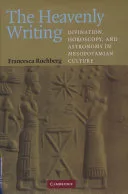
Francesca Rochberg's "The Heavenly Writing" offers a rigorous and essential account of Babylonian celestial sciences. The book's strength lies in its detailed exposition of how astronomical observation was interwoven with divination and the nascent practice of horoscopy, demonstrating a sophisticated intellectual tradition. Rochberg is particularly adept at showcasing the shift from generalized omen-reading to the creation of personal horoscopes, a pivotal development in the history of astrology. A limitation, perhaps inherent in its scholarly depth, is that the dense academic prose can be challenging for readers unfamiliar with cuneiform studies or ancient Mesopotamian history. The section detailing the development of specific cuneiform tablets used for astrological calculations, circa the 4th century BC, is a prime example of the book's meticulous scholarship. Rochberg’s work is a fundamental resource for understanding the intellectual roots of Western astronomy and astrology.
📝 Description
80
### What It Is Francesca Rochberg's "The Heavenly Writing" meticulously examines the intellectual landscape of ancient Mesopotamia, specifically the Babylonian engagement with celestial phenomena. Published originally in 2004, this scholarly work traces the sophisticated development of astronomical and astrological practices from the second and first millennia BC. It positions these activities not as mere superstition, but as integral components of Mesopotamian thought, science, and religion. The book focuses on the evolution of celestial divination and the emergence of horoscopy.
### Who It's For This volume is essential for scholars and serious students of ancient Near Eastern history, the history of science, and the origins of astrology and astronomy. It will appeal to those interested in Mesopotamian intellectual culture, cuneiform studies, and the philosophical underpinnings of early observational sciences. Readers seeking a deep, academic understanding of how ancient peoples interpreted the cosmos will find it invaluable.
### Historical Context The Babylonian mastery of celestial observation was renowned throughout the ancient world, influencing later Greek and Roman traditions. Rochberg situates this expertise within a complex Mesopotamian intellectual culture that spanned millennia, from early Sumerian periods through Babylonian and Assyrian dominance. The book navigates the transition from broad omens to precise horoscopic calculations, a significant shift in how the heavens were understood and applied to human affairs. This work engages with the scholarly debate surrounding the precise nature and function of Babylonian celestial science.
### Key Concepts "The Heavenly Writing" explores the intricate relationship between observation, interpretation, and prediction in Babylonian society. Central to its inquiry is the concept of celestial divination, where the movements of stars and planets were seen as divine messages. The book also details the development of horoscopy, the practice of charting celestial positions at the time of birth to understand individual destinies. Rochberg investigates the terminology and methodologies employed by Babylonian scholars, revealing a systematic approach to understanding the cosmos and its perceived influence on earthly events.
💡 Why Read This Book?
• Gain insight into the origins of personal astrology, tracing its development from Babylonian celestial divination practices documented on cuneiform tablets dating back to the second millennium BC. • Understand the intellectual framework of Mesopotamian scholars, learning how astronomical observations were integrated into a divinatory system of understanding divine will and human fate. • Appreciate the historical transition from general omens to precise horoscopic charts, a foundational shift in the history of Western astronomy and astrology, as explored through Rochberg's analysis.
⭐ Reader Reviews
Honest opinions from readers who have explored this book.
❓ Frequently Asked Questions
What is the primary focus of Francesca Rochberg's "The Heavenly Writing"?
The book primarily focuses on Babylonian celestial divination, horoscopy, and astronomy, examining their place within Mesopotamian intellectual culture from the second and first millennia BC.
When was "The Heavenly Writing" first published?
Francesca Rochberg's "The Heavenly Writing" was first published on September 27, 2004.
What historical period does "The Heavenly Writing" cover regarding Babylonian celestial practices?
The work covers Babylonian celestial practices from the second and first millennia BC, tracing their evolution and integration into Mesopotamian intellectual culture.
Does the book discuss the transition from astronomy to astrology?
Yes, it discusses the emergence of personal astrology and horoscopy from earlier forms of celestial divination and astronomical observation in Babylonia.
Who would benefit most from reading "The Heavenly Writing"?
Scholars and students of ancient Near Eastern history, the history of science, and the origins of astrology and astronomy will find this book particularly beneficial.
What are some key concepts explored in the book?
Key concepts include celestial divination, horoscopy, Mesopotamian intellectual culture, and the systematic approach to understanding celestial phenomena and their perceived influence.
🔮 Key Themes & Symbolism
Celestial Divination
This theme examines how Mesopotamians interpreted celestial phenomena as divine messages. Rochberg details the systematic observation of stars and planets, not for scientific prediction in the modern sense, but as omens revealing the will of the gods. The book traces the development of this practice from broad pronouncements to more specific interpretations, highlighting its central role in Babylonian religious and political life throughout the second and first millennia BC.
Emergence of Horoscopy
A significant focus is placed on the transition from general celestial divination to the development of personal horoscopes. Rochberg illustrates how Babylonian scholars began to chart the positions of celestial bodies at the precise moment of an individual's birth, believing these charts held keys to personal destiny. This shift marks a crucial step in the evolution of astrology as we understand it today.
Mesopotamian Intellectual Culture
The work situates celestial practices within the broader context of Mesopotamian intellectual life. It demonstrates that astronomy and astrology were not isolated pursuits but were deeply integrated with mathematics, medicine, and theology. Rochberg reveals a sophisticated scholarly tradition dedicated to understanding the cosmos, its perceived order, and its relationship to human affairs.
Cuneiform Tablets as Sources
Rochberg's analysis relies heavily on the interpretation of cuneiform tablets, the primary source material for understanding Babylonian knowledge. The book demonstrates how these ancient records, dating back to the second and first millennia BC, provide direct evidence of the astronomical observations, calculations, and divinatory interpretations developed by Babylonian scribes and scholars.
💬 Memorable Quotes
“The roots of both western astronomy and astrology are traceable in cuneiform tablets going back to the second and first millennia BC.”
— This statement underscores the foundational importance of Babylonian scholarship for subsequent celestial sciences in the West, highlighting the antiquity and depth of their astronomical and astrological systems.
“The Heavenly Writing discusses the place of Babylonian celestial divination, horoscopy, and astronomy in Mesopotamian intellectual culture.”
— This accurately summarizes the book's core objective: to situate these celestial practices not in isolation, but as integral components of the complex thought systems that defined ancient Mesopotamia.
“Focusing chiefly on celestial divination and horoscopes, it traces the emergence of personal astrology.”
— This points to the book's specific emphasis on the evolution of astrological practice, detailing the transformation from broader omens to the highly individualized horoscopes that became prominent.
“The expertise of the Babylonians in matters of the heavens was legendary.”
— This highlights the profound reputation ancient Babylonians held for their astronomical knowledge and predictive capabilities, a reputation that influenced neighboring cultures and subsequent scientific traditions.
“The book examines the relationship between observation, interpretation, and prediction in Babylonian society.”
— This paraphrase captures the methodological approach of the book, emphasizing how Babylonian scholars moved from observing celestial events to interpreting their meaning and predicting their influence.
🌙 Esoteric Significance
Tradition
While not strictly fitting into a single Western esoteric lineage like Hermeticism or Kabbalah, "The Heavenly Writing" speaks to the ancient roots of practices that later informed these traditions. Babylonian celestial divination represents an early form of correlating cosmic events with terrestrial outcomes, a fundamental tenet that echoes through many esoteric systems. Its significance lies in demonstrating a pre-philosophical, pre-scientific engagement with the cosmos as a source of meaning and guidance, a precursor to later divinatory arts.
Symbolism
The primary symbols are the celestial bodies themselves – the Sun, Moon, planets, and stars – understood not just as physical entities but as divine agents or messengers. Their movements, conjunctions, and appearances (ef. eclipses) were rich with symbolic meaning, interpreted as omens of royal successions, famines, or floods. The concept of the 'heavenly writing' itself is symbolic, portraying the cosmos as a text divinely authored and inscribed for human interpretation.
Modern Relevance
Contemporary astrology, despite its vast evolution, retains conceptual links to Babylonian horoscopy, particularly the idea that birth charts map individual destinies. Modern practitioners of esoteric arts, especially those interested in the historical origins of divination and planetary influence, draw on works like Rochberg's to understand the deep historical context of their practices. It informs fields like comparative religion and the history of consciousness studies.
👥 Who Should Read This Book
['• Students of the History of Science: Those seeking to understand the pre-modern development of astronomy and the very origins of predictive sciences, particularly in the ancient Near East.', '• Aspiring Astrologers and Diviners: Individuals interested in the historical and intellectual foundations of astrology, wishing to grasp how horoscopic practices first emerged from ancient Mesopotamian cultures.', '• Scholars of Ancient Near Eastern Civilizations: Researchers and students of Mesopotamian history, religion, and intellectual life who require a detailed analysis of celestial sciences within this context.']
📜 Historical Context
The Babylonian expertise in celestial matters, legendary even in antiquity, forms the backdrop for Francesca Rochberg's "The Heavenly Writing." Published in 2004, the book delves into a tradition stretching back to the second and first millennia BC. This era was characterized by a sophisticated intellectual culture where astronomy and astrology were deeply intertwined with religious and political life. Unlike the later Aristotelian cosmology developing in Greece, Babylonian thought viewed celestial phenomena primarily through the lens of divine communication and prognostication. Rochberg's work engages with scholars like Otto Neugebauer, who meticulously reconstructed Babylonian mathematical astronomy, but critically examines the extent to which these practices constituted 'science' in a modern sense, positioning them firmly within a divinatory framework. The reception of Babylonian astronomical data by Greek thinkers, such as Hipparchus, demonstrates the significant, though often transformed, influence of this tradition.
📔 Journal Prompts
The concept of celestial divination as divine communication.
The transition from general omens to personal horoscopes.
The role of cuneiform tablets in reconstructing Mesopotamian astronomical knowledge.
Babylonian understanding of the relationship between the cosmos and earthly events.
The legendary expertise of Babylonians in celestial matters.
🗂️ Glossary
Celestial Divination
The practice of interpreting celestial phenomena (e.g., the movements of planets, stars, eclipses) as omens or messages from the gods, revealing divine will and predicting future events on Earth.
Horoscopy
The practice of casting and interpreting astrological charts (horoscopes) based on the positions of celestial bodies at the precise time and place of an individual's birth to determine personality traits and forecast life events.
Mesopotamian Intellectual Culture
The complex system of knowledge, beliefs, practices, and scholarly traditions developed in ancient Mesopotamia, encompassing religion, mathematics, astronomy, literature, and law.
Cuneiform Tablets
Ancient clay tablets inscribed with wedge-shaped marks (cuneiform script), used by Mesopotamians for a variety of purposes, including recording astronomical observations, divinatory texts, and administrative documents.
Omens
Signs or indications believed to portend future events, particularly those derived from celestial observations in the Babylonian context.
Astronomy
The scientific study of celestial objects, space, and the physical universe as a whole, which in the Babylonian context was closely linked to divination and calendrical purposes.
First Millennium BC
The period from 1000 BC to 1 BC, a significant era for the development and standardization of Babylonian astronomical and astrological practices recorded on cuneiform tablets.

















![CIA Reading Room cia-rdp78t05439a000400230090-7: MENSURATION OF THE [ ]-BUKHARA CANAL, USSR](/img/thumb/cia-reading-room-cia-rdp78t05439a000400230090-7-mensuration-of-the-bukhara-canal-ussr-cia-reading-room.webp)