The divinity of Our Lord and Saviour Jesus Christ

 83
83

The divinity of Our Lord and Saviour Jesus Christ
Henry Parry Liddon’s exhaustive defense of Christ’s divinity, first appearing in 1889, is a formidable piece of theological argumentation. It confronts the rationalist critiques and liberal theological currents of the late Victorian era with unwavering conviction. Liddon’s exposition of the Nicene formulation is meticulous, drawing heavily on patristic sources and scriptural exegesis. A particular strength lies in his detailed engagement with philosophical objections, demonstrating a profound understanding of contemporary intellectual debates. However, the sheer density of the argument, while commendable for its thoroughness, can make the text challenging for readers unfamiliar with classical theology or 19th-century philosophical discourse. Liddon's chapter on the Logos, for instance, is a masterclass in tracing theological concepts, but its length and intricate detail require significant concentration. The work’s limitation is its inherent accessibility; it is a scholar's book, not a devotional primer. Yet, for those willing to engage, it provides an unassailable bulwark for orthodox Christology. Liddon's treatise remains a vital resource for understanding the historical defense of Christian doctrine.
📝 Description
83
### What It Is
The divinity of Our Lord and Saviour Jesus Christ is a significant theological treatise by Henry Parry Liddon, first published in 1889. It presents a robust defense of the Nicene Creed's affirmation of Christ's divine nature. Liddon systematically addresses philosophical objections and historical interpretations that challenged the orthodox understanding of Jesus's deity. The work engages with contemporary scientific and philosophical thought of the late 19th century, seeking to reconcile faith with reason. It is structured as a series of sermons or lectures, offering a detailed examination of scriptural evidence and patristic theology.
### Who It's For
This book is intended for theologians, clergy, and serious students of Christian doctrine who wish to understand the historical arguments for Christ's divinity. It will appeal to those interested in the intellectual currents of Victorian England and the debates surrounding Christian orthodoxy during that period. Readers seeking a comprehensive, scholarly defense of a central tenet of Christianity will find Liddon's detailed exegesis valuable. It is also for individuals exploring the history of Christian apologetics and the development of theological thought.
### Historical Context
Published in 1889, Liddon's work emerged during a period of intense intellectual ferment. The late 19th century saw the rise of historical criticism of the Bible and challenges to traditional religious beliefs from scientific naturalism and philosophical idealism. Thinkers like Charles Darwin had already published seminal works impacting religious thought. Liddon's treatise was a direct response to these pressures, aiming to shore up the foundations of Christian belief. The Oxford Movement, to which Liddon was associated, had already revitalized Anglo-Catholic theology, and this book represents a continuation of that intellectual tradition, defending traditional Christology against modern skepticism.
### Key Concepts
The central concept is the ontological and economic divinity of Jesus Christ, meaning His eternal Godhead and His role in the divine plan of salvation. Liddon explores the implications of Christ's miracles, resurrection, and redemptive work as evidence of His divine status. The work also examines the doctrine of the Incarnation, the union of the divine and human natures in Christ. Liddon addresses the Logos doctrine, tracing its development from Greek philosophy through to Christian theology, emphasizing its unique Christian interpretation. The concept of divine grace and its mediation through Christ is also a recurring theme, underscoring His role as the unique revealer of God.
✍️ Author
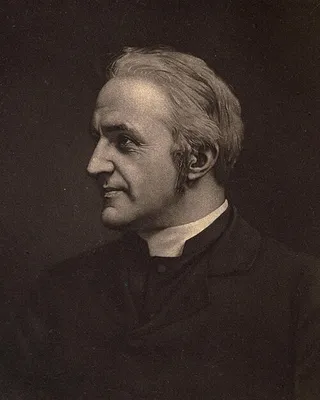
Henry Parry Liddon
Henry Parry Liddon (20 August 1829 – 9 September 1890), usually cited as H. P.
💡 Why Read This Book?
• Gain a detailed understanding of the Logos doctrine as articulated by Liddon, appreciating its roots in both classical philosophy and its unique Christian interpretation, a perspective not found in simpler theological texts. • Examine Liddon's specific arguments against 19th-century rationalism, learning how Victorian theologians countered scientific and philosophical challenges to core Christian tenets. • Appreciate the historical context of the Nicene Creed's affirmation of Christ's divinity through Liddon's rigorous defense, providing a deeper insight than contemporary devotional works.
⭐ Reader Reviews
Honest opinions from readers who have explored this book.
❓ Frequently Asked Questions
When was Henry Parry Liddon's 'The divinity of Our Lord and Saviour Jesus Christ' first published?
The work was first published in 1889. This places it firmly within the intellectual landscape of the late Victorian era, a time of significant scientific and philosophical challenges to traditional religious doctrines.
What is the primary theological argument presented in the book?
The book's primary argument is a comprehensive defense of the Nicene Creed's affirmation of Jesus Christ's divine nature. Liddon systematically addresses objections and presents scriptural and patristic evidence for Christ's eternal Godhead.
Who were Liddon's intellectual contemporaries or influences discussed in the book?
While not explicitly detailed in the book's core argument, Liddon was responding to the intellectual climate shaped by figures like Charles Darwin and engaging with philosophical trends of his era. He heavily references Church Fathers like Athanasius and Origen.
Is 'The divinity of Our Lord and Saviour Jesus Christ' considered a foundational text for any specific theological movement?
Yes, it is considered a significant text within Anglo-Catholic theology and the broader tradition of apologetics that sought to defend orthodox Christianity against the challenges of scientific naturalism and liberal theology in the late 19th century.
What is the 'Logos doctrine' as explained by Liddon?
Liddon expounds the Logos doctrine, referencing the Greek philosophical concept of a universal reason or divine principle, but emphasizes its Christian interpretation as the divine Word, Jesus Christ, through whom all things were made.
What kind of evidence does Liddon use to support his claims?
Liddon employs a combination of scriptural exegesis, detailed analysis of early Church Fathers (patristic theology), philosophical reasoning, and engagement with contemporary scientific and historical critiques to support his arguments for Christ's divinity.
🔮 Key Themes & Symbolism
Christological Orthodoxy
The central theme is the defense of orthodox Christology, specifically the doctrine of Christ's divine nature as articulated in the Nicene Creed. Liddon meticulously analyzes scripture and early Church writings to establish the eternal Godhead of Jesus Christ. He counters contemporary interpretations that sought to diminish His divine status, framing His divinity not merely as a functional role but as an inherent ontological reality, essential for His redemptive work and mediation between God and humanity. The work aims to demonstrate the historical continuity of this belief from the Apostolic age through the patristic era.
The Logos and Incarnation
Liddon dedicates significant attention to the doctrine of the Logos, tracing its philosophical antecedents in Greek thought and its profound transformation within Christian theology. He argues that the Christian Logos is not merely an abstract principle but the personal, divine Word, Jesus Christ, who became incarnate. This section explores the implications of the Incarnation—the union of the divine and human natures in one person—as the cornerstone of Christian salvation, emphasizing its unique role in bridging the gap between the divine and the human.
Apologetics Against Victorian Skepticism
The book functions as a significant apologetic work, directly addressing the intellectual challenges posed by 19th-century scientific naturalism, historical criticism, and philosophical skepticism. Liddon systematically refutes arguments that questioned Christ's divinity based on perceived scientific inconsistencies or historical doubts. He engages with the philosophical currents of his time, demonstrating how Christian doctrine, particularly the divinity of Christ, remains intellectually tenable and profoundly meaningful even in an age of burgeoning secularism and scientific advancement.
Patristic Authority and Scriptural Exegesis
A cornerstone of Liddon's argument rests upon the authority of the early Church Fathers and a rigorous exegesis of biblical texts. He extensively quotes and interprets passages from figures like Athanasius, Cyril of Alexandria, and John of Damascus, presenting them as faithful witnesses to the Apostolic faith. Similarly, he undertakes detailed analyses of New Testament passages, particularly the Gospels and Pauline epistles, to extract evidence supporting Christ's divine identity and salvific role, underscoring the historical and theological weight of these sources.
💬 Memorable Quotes
“The doctrine of the Incarnation is the absolute centre of the Christian religion.”
— This statement highlights Liddon's view that the belief in God becoming human in Jesus Christ is not just a peripheral tenet but the very core of Christian faith and practice, from which all other doctrines derive their meaning and significance.
“The Logos became flesh, not that the flesh was the Logos.”
— This phrasing clarifies the nature of the Incarnation, emphasizing that divinity assumed humanity, rather than humanity somehow becoming divine. It guards against potential misinterpretations of the union of natures in Christ.
“Miracles are not suspensions of the laws of nature, but exhibitions of higher laws.”
— Liddon uses this to frame supernatural events not as violations of reality, but as manifestations of divine power operating according to principles beyond current human understanding, thus supporting the divine agency of Christ.
“Our Lord's claims to Divinity are inextricably bound up with His character and work.”
— This interpretation suggests that Jesus's assertions of divinity cannot be separated from His ethical teachings, His miracles, and His redemptive mission; they are all part of a unified divine self-presentation.
“The testimony of the Church is the echo of the voice of God.”
— This reflects Liddon's high regard for the consensus of early Christian tradition, viewing the collective witness of the Church Fathers as a divinely guided confirmation of scriptural truth regarding Christ's divinity.
🌙 Esoteric Significance
Tradition
While primarily a work of orthodox Christian theology and apologetics, Liddon's deep engagement with the Logos doctrine and the metaphysical implications of the Incarnation touches upon themes resonant within esoteric traditions. The concept of a divine intermediary, the 'Word' through which creation occurs, echoes Neoplatonic and Hermetic ideas of emanation and divine mediation. Liddon's work, though strictly within the bounds of historical Christianity, offers a sophisticated articulation of these archetypal concepts that later esoteric thinkers, particularly within the Theosophical and New Age movements, would draw upon or reinterpret in their own cosmological frameworks.
Symbolism
The central symbol is the Logos, representing divine reason, creative power, and ultimate truth, uniquely embodied in Jesus Christ. The Incarnation itself is a profound symbol of the divine bridging the material world, a theme common in many esoteric systems where the spiritual seeks to manifest or redeem the physical. The Cross, though not a primary focus of Liddon's argument, implicitly symbolizes sacrifice, atonement, and the victory of spirit over material limitations, concepts frequently explored in esoteric thought regarding spiritual evolution and liberation.
Modern Relevance
Contemporary esoteric thinkers, particularly those exploring Christian esotericism or comparative mysticism, find value in Liddon's rigorous defense of the Logos and the Incarnation. His work provides a classical, deeply reasoned foundation for understanding divine manifestation and the unique role of Christ as a spiritual archetype. While modern esoteric interpretations might diverge significantly from Liddon's orthodox framework, his detailed exegesis of these core concepts offers a historical and theological anchor. Thinkers interested in the metaphysical underpinnings of religion and the nature of divine consciousness can find fertile ground in his arguments.
👥 Who Should Read This Book
• Students of comparative religion and theology seeking to understand the historical defense of core Christian doctrines, particularly Christ's divinity, against 19th-century intellectual challenges. • Scholars of Victorian intellectual history interested in the interplay between science, philosophy, and religious belief during a pivotal era of change. • Devout Christians and theologians looking for a comprehensive, scholarly exposition and defense of the Nicene Creed's Christology, grounded in scriptural and patristic authority.
📜 Historical Context
Published in 1889, Henry Parry Liddon's magnum opus arrived during a period of profound intellectual upheaval in Victorian England. The prestige of scientific naturalism, bolstered by Darwin's theories, and the rise of historical-critical methods applied to scripture, placed immense pressure on traditional Christian doctrines. This era saw prominent theologians and thinkers grappling with these challenges. Liddon's work can be seen as a direct theological counter-argument within the Anglo-Catholic tradition, which had already been revitalized by the Oxford Movement. His meticulous defense of Christ's divinity engaged with philosophical positivism and liberal theological interpretations that were gaining traction. While figures like Bishop John William Colenso were challenging Old Testament authenticity and others questioned Christ's unique divine status, Liddon stood as a bulwark of orthodox apologetics, drawing heavily on patristic authority, particularly the work of Athanasius, to reaffirm classical Christology against the tide of modern skepticism.
📔 Journal Prompts
The Logos doctrine's philosophical roots and Christian transformation.
Athanasius's arguments for Christ's divinity as presented by Liddon.
The implications of the Incarnation for the divine-human relationship.
Liddon's response to 19th-century scientific challenges to faith.
The concept of 'higher laws' in relation to miracles discussed by Liddon.
🗂️ Glossary
Logos
In Greek philosophy, a principle of reason and order governing the universe. In Christian theology, particularly as articulated by Liddon, it refers to the divine Word, Jesus Christ, understood as the eternal Son of God, the agent of creation and revelation.
Incarnation
The doctrine that the Son of God, Jesus Christ, assumed a human nature and became fully human while remaining fully divine. Liddon emphasizes this as the central mystery of Christianity.
Nicene Creed
A foundational statement of Christian faith, adopted by the First Council of Nicaea in 325 AD and later revised. It affirms the divinity of Jesus Christ, stating He is 'God from God, Light from Light, true God from true God, begotten, not made, consubstantial with the Father'.
Patristic Theology
The theological writings and doctrines of the early Church Fathers, typically from the 2nd to the 8th centuries. Liddon relies heavily on patristic sources to support his arguments for Christ's divinity.
Ontological Divinity
Refers to the essential, inherent, and eternal Godhead of Christ, as opposed to a functional divinity or a status granted by God. Liddon argues for Christ's ontological divinity.
Apologetics
The branch of Christian theology concerned with providing a reasoned defense of Christian beliefs, particularly against objections and criticisms from non-believers or opposing viewpoints.
Consubstantial
A term from the Nicene Creed (homoousios in Greek), meaning 'of the same substance' or 'of the same essence.' Liddon uses this to assert that Christ is of the same divine essence as God the Father.