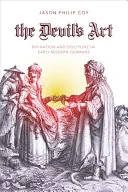
The Devil's Art
 82
82

The Devil's Art
Jason P. Coy's "The Devil's Art" offers a meticulously researched account of divination in early modern Germany, effectively countering simplistic notions of magic as purely clandestine. The author's strength lies in juxtaposing the mundanity of village life, where fortune-telling was commonplace, with the high-stakes theological condemnations. Coy reveals how practices like palmistry and horoscope casting were deeply embedded in community structures, serving practical needs. A particularly illuminating section details the prosecution records from Thuringia, demonstrating how accusations of "devil's art" could be weaponized in local disputes. While the academic rigor is commendable, the prose can occasionally become dense, potentially alienating readers less familiar with theological discourse. Nevertheless, the work provides a vital corrective to viewing pre-modern belief solely through the lens of demonology. "The Devil's Art" is an essential contribution to understanding the complex reality of popular magic and its suppression.
📝 Description
82
### What It Is Jason P. Coy's "The Devil's Art" reconstructs the vibrant and often precarious world of early modern German fortune-tellers. It moves beyond simple folklore to examine the intricate interplay between popular divinatory practices and the theological doctrines that sought to control or condemn them. The work scrutinizes archival records of prosecutions alongside contemporary religious discourse to reveal how villagers and authorities perceived and interacted with soothsayers. It highlights divination not as a fringe activity, but as an integrated aspect of daily life.
### Who It's For This book is for scholars of early modern European history, religious studies, and the history of magic and divination. It will appeal to those interested in the lived experience of ordinary people in pre-modern Germany and the complex relationship between popular belief and institutional theology. Readers seeking an academic yet accessible exploration of how magic, religion, and social control intersected will find "The Devil's Art" particularly valuable.
### Historical Context The work is situated in early modern Germany, a period marked by intense religious debate and the consolidation of state power, particularly following the Reformation. This era saw widespread suspicion of practices deemed superstitious or heretical. "The Devil's Art" specifically focuses on Thuringia, a region that, like much of Germany, experienced significant social and religious upheaval. The book contrasts the pervasive use of divination by common folk with the escalating condemnation from Protestant and Catholic authorities alike, who often conflated popular magic with witchcraft, a phenomenon closely examined by scholars like H.C. Erik Midelfort.
### Key Concepts "The Devil's Art" examines the concept of "popular divination" as a widespread, everyday practice, distinct from learned magic. It explores the theological arguments against divination, often framing it as an "art of the devil" that usurped divine providence. The book also investigates the legal and social mechanisms of prosecution, showing how accusations of practicing forbidden arts could arise from common village disputes or anxieties. The tension between the perceived utility of soothsayers in identifying thieves or predicting futures, and their condemnation as agents of evil, forms a central theme.
💡 Why Read This Book?
• Gain an understanding of "popular divination" as a functional, everyday practice in early modern Germany, moving beyond sensationalized portrayals of witchcraft. You will learn how practices like palm reading and horoscope casting were integrated into village life. • Explore the specific theological arguments used to condemn divination, such as the concept of the "art of the devil," as detailed in the book's examination of religious discourse. This offers insight into how religious authorities sought to control belief. • Discover the practical application of archival records from Thuringia, illustrating how accusations of forbidden arts were used in social and legal contexts. This provides concrete examples of how divination intersected with law and community dynamics.
⭐ Reader Reviews
Honest opinions from readers who have explored this book.
❓ Frequently Asked Questions
What period does "The Devil's Art" primarily cover?
The book focuses on the early modern period in Germany, specifically examining the practices and perceptions of fortune-tellers and divination from roughly the late 15th century through the 18th century, with a particular emphasis on archival records from Thuringia.
Who were the "wise women and men" mentioned in the book?
These were soothsayers, fortune-tellers, and diviners who were common figures in early modern German villages. They practiced various forms of divination, such as palmistry and astrology, to identify thieves, predict futures, and offer advice.
What is the significance of "Thuringia" in this study?
Thuringia is a central region in Germany where Jason P. Coy draws extensive archival records. Studying prosecutions for popular divination in this specific area allows for a detailed examination of how these practices were regulated and condemned at a local level.
How does "The Devil's Art" connect popular practices with theological discourse?
The book analyzes theological writings alongside legal and administrative documents. It explores how religious doctrines framed popular divination as the "art of the devil" while villagers continued to consult and utilize these practices for practical matters.
What does the book reveal about the prosecution of diviners?
It reveals that prosecutions for popular divination were not uncommon and were often intertwined with social disputes or anxieties about witchcraft. The work examines how accusations were made and what legal or religious justifications were employed.
Is "The Devil's Art" about witchcraft specifically?
While it touches upon the intersection of divination and witchcraft accusations, the book's primary focus is on the broader practice of fortune-telling and divination in everyday life, and the theological and legal responses to it, rather than solely on the phenomenon of witchcraft.
🔮 Key Themes & Symbolism
Popular Divination
The book meticulously reconstructs the pervasive nature of "popular divination" in early modern Germany, highlighting practices like palmistry, horoscope casting, and amulet use as integral to village life. It moves beyond viewing these as isolated superstitions, presenting them instead as functional tools villagers employed for practical problem-solving, such as identifying thieves or seeking guidance on future events. The work emphasizes that these were not secret rites but often visible, accepted components of community existence, challenging the notion that such arts were solely the domain of clandestine practitioners or perceived as inherently demonic by all.
Theological Condemnation
A central theme is the theological discourse that framed popular divination as the "art of the devil." "The Devil's Art" examines how Protestant and Catholic reformers alike viewed these practices as usurping divine providence and engaging with demonic forces. The book analyzes sermons, theological treatises, and polemical writings to illustrate the intellectual arguments used to condemn diviners and their clients. This intellectual framework provided the justification for legal persecution, portraying the soothsayers' perceived abilities as gifts from malevolent entities rather than genuine insight.
Social Control and Prosecution
The work delves into the mechanisms of social control employed in early modern Germany, with a specific focus on the prosecution of individuals for practicing forbidden arts. By analyzing archival records from Thuringia, Coy demonstrates how accusations of "devil's art" could be leveraged in local conflicts, anxieties, or attempts to enforce religious orthodoxy. This theme explores the tangible consequences for those accused, the legal processes involved, and how the condemnation of divination served broader aims of maintaining social and religious order.
The Enchanted World
Coy aims to bring to life the "enchanted world" of early modern German villagers, where the boundaries between the natural and supernatural were fluid. This theme encompasses how ordinary people navigated their lives with a belief in unseen forces, fortune-tellers, and the potential for divine or demonic intervention. The book illustrates how this worldview shaped daily decisions, social interactions, and the perception of events, creating a reality where divination held a significant, albeit often contested, place.
💬 Memorable Quotes
“Villagers regularly consulted these fortune-tellers and practiced divination in their everyday lives.”
— This statement underscores the book's central argument: divination was not a marginal activity but a common, integrated part of early modern German society, employed for practical needs and daily guidance.
“Theological discourse alongside archival records of prosecution for popular divination.”
— This highlights the dual methodology of the book, examining both the intellectual justifications for condemning divination and the concrete legal actions taken against its practitioners.
“Soothsayers known as wise women and men roamed the countryside.”
— This phrase paints a vivid picture of the itinerant nature of many diviners, presenting them as familiar, albeit potentially suspect, figures within the rural landscape of early modern Germany.
“Fixtures of village life, they identified thieves and witches, read palms, and cast horoscopes.”
— This details the specific services offered by these soothsayers, emphasizing their practical roles within the community and the diverse forms their divinatory arts took.
“The enchanted world.”
— This phrase encapsulates the book's ambition to convey the pre-modern worldview, where magic, spirits, and divine influence were perceived as active forces shaping daily existence and human destiny.
🌙 Esoteric Significance
Tradition
While not strictly adhering to a single esoteric lineage like Hermeticism or Kabbalah, "The Devil's Art" engages with the historical roots of Western magical and divinatory traditions. It situates popular forms of foresight and spiritual consultation within the broader context of European occultism, demonstrating how these practices, often demonized by mainstream religion, represented a persistent undercurrent of seeking knowledge beyond empirical means. The work implicitly connects to traditions that value intuition, celestial influence, and hidden knowledge, even as it focuses on their folk manifestations rather than their formalized magical systems.
Symbolism
The book implicitly touches upon symbols central to divination, such as the palm, the stars, and perhaps even the "devil's" iconography used in condemnations. The palm represents the intricate mapping of destiny and character written on the body, a microcosm of the universe. Celestial bodies, in horoscope casting, symbolize cosmic order and influence, suggesting a connection between the macrocosm and human affairs. The recurring motif of the "devil" itself functions symbolically, representing the ultimate condemnation and othering of practices that deviated from orthodox religious understanding, embodying the fear of forbidden knowledge.
Modern Relevance
Contemporary interest in divination, astrology, and folk magic echoes the historical practices explored in "The Devil's Art." Modern practitioners and scholars of occultism find relevance in understanding the historical roots and social contexts of these arts. Thinkers and communities exploring neo-paganism, witchcraft revival movements, and even secularized forms of astrology and intuition development can draw parallels to the persistence and adaptability of divination. The work informs discussions on the historical construction of "magic" and "superstition," relevant to modern critical occult studies and the ongoing dialogue between tradition and innovation in esoteric thought.
👥 Who Should Read This Book
• Academic historians and researchers specializing in early modern European history, religious studies, or the history of magic and divination will find the detailed archival analysis and theological exegesis invaluable for their scholarship. • Students of comparative religion and folklore seeking to understand the intersection of popular belief, religious doctrine, and social control in historical contexts will benefit from the book's nuanced approach. • Readers interested in the lived experiences of ordinary people in pre-modern societies, particularly concerning beliefs about fate, fortune, and the supernatural, will gain a rich, grounded perspective.
📜 Historical Context
Jason P. Coy's "The Devil's Art" is deeply rooted in the religious and social landscape of early modern Germany, a period stretching roughly from the late 15th to the 18th centuries. This era was characterized by the profound impact of the Reformation, leading to intense theological debates and a heightened concern with religious orthodoxy among both Protestant and Catholic authorities. The work specifically examines Thuringia, a region that, like much of the Holy Roman Empire, experienced significant social upheaval and religious flux. Popular divination, practiced widely by "wise women and men," existed in a complex relationship with the prevailing intellectual currents. While villagers saw these practices as useful for everyday concerns—identifying thieves or predicting harvests—religious reformers increasingly condemned them. Competing schools of thought emerged, with some theologians focusing on demonology and others on the nature of divine providence. Contemporaries like Martin Luther himself, though often seen as a reformer of popular piety, also voiced strong opinions against superstitious practices, aligning with the broader trend of intellectual and religious authorities seeking to police belief and behavior. The reception of such works often involved accusations and prosecutions, reflecting the era's anxieties about heresy and the supernatural.
📔 Journal Prompts
The concept of "popular divination" as presented in the book.
The theological arguments framing divination as the "art of the devil."
The specific archival records from Thuringia detailing prosecutions.
The role of "wise women and men" in early modern village life.
The tension between perceived utility and religious condemnation of soothsayers.
🗂️ Glossary
Popular Divination
Practices of fortune-telling and seeking knowledge of the future or hidden matters, engaged in by ordinary people as part of everyday life, as opposed to learned or ceremonial magic.
Soothsayers
Individuals who practiced divination, claiming to foretell future events or discover hidden knowledge through various methods, often consulted by villagers in early modern Germany.
Art of the Devil
A theological concept used to condemn practices like divination, framing them as deriving their power from malevolent demonic forces rather than natural or divine sources.
Theological Discourse
The formal discussion and argumentation concerning matters of religious doctrine, belief, and practice, as found in sermons, theological treatises, and church pronouncements.
Archival Records
Primary source documents preserved in archives, such as court proceedings, legal documents, administrative papers, and personal correspondence, used to reconstruct historical events and practices.
Thuringia
A diverse historical region in central Germany, used in the book as a specific geographical focus for examining prosecutions and practices related to popular divination.
Horoscope Casting
A form of divination that involves calculating and interpreting the positions of celestial bodies at a specific time (e.g., birth) to predict future events or understand personality traits.