The crook in the lot, or, The sovereignty and wisdom of God displayed in the afflictions of men

 77
77

The crook in the lot, or, The sovereignty and wisdom of God displayed in the afflictions of men
Thomas Boston's "The crook in the lot" offers a robust, if severe, theological framework for understanding suffering. Its primary strength lies in its unflinching commitment to divine sovereignty, presenting a God who is in absolute control, even when His actions appear harsh or inexplicable. This perspective, while challenging, can be profoundly stabilizing for those seeking an anchor in overwhelming circumstances. The work's limitation, however, is its relentless theological rigor, which can sometimes overshadow the lived, emotional reality of pain. A passage discussing "the crook" as a divinely appointed, unique burden for each soul, while theologically sound, might feel stark to a reader in the throes of acute grief. Boston’s insistence on the absolute wisdom of God in all afflictions is the bedrock of his argument, but it demands a significant degree of faith from the reader. The book ultimately provides a rigorous, if austere, theological edifice for confronting life's difficulties.
📝 Description
77
### What It Is
The crook in the lot, or, The sovereignty and wisdom of God displayed in the afflictions of men, first published in 1792, is a theological treatise by Thomas Boston. It examines the theological underpinnings of human suffering, asserting divine control and purpose even in the most challenging circumstances. The work aims to provide solace and understanding to those enduring hardship, framing affliction not as random misfortune but as an instrument of divine wisdom and sovereignty.
### Who It's For
This text is intended for individuals grappling with personal crises, loss, or existential doubt, seeking theological frameworks to comprehend their suffering. It speaks to those who find traditional explanations for hardship insufficient and desire a deeper understanding of divine providence. Readers interested in historical Christian theology, particularly within the Reformed tradition, will find its arguments and expositions of scripture relevant.
### Historical Context
Published in the late 18th century, Boston's work emerged during a period of significant religious and philosophical discourse in Great Britain. The Enlightenment's emphasis on reason and human agency coexisted with enduring Calvinistic traditions that stressed divine predestination and sovereignty. This book engaged with the ongoing theological debates about the problem of evil and the nature of God's relationship with a fallen world, offering a perspective that sought to affirm God's absolute control amidst human misery. It was part of a broader movement of devotional and theological writing aimed at strengthening the faith of believers during times of societal and personal upheaval.
### Key Concepts
The central concept is the "crook in the lot" – a metaphor for the specific, often peculiar, affliction that God assigns to each individual. Boston argues that these "crooks" are not accidental but divinely ordained, serving purposes of spiritual growth, humility, and conformity to Christ. The book emphasizes God's absolute sovereignty, His wise ordering of all events, and the believer's duty to submit trustingly to His will, even when it is incomprehensible. It also explores the idea of "sanctified affliction," where suffering, when rightly understood and embraced, leads to spiritual maturity and a deeper knowledge of God.
✍️ Author
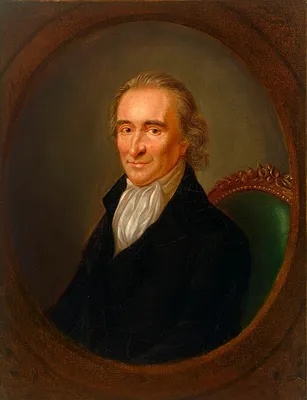
Thomas Boston, Religious Tract Society (Great Britain), Jason Roth
Thomas Paine (born Thomas Pain, February 9, 1737 [O.S. January 29, 1736] – June 8, 1809; ) was an English-born American Founding Father, French Revolutionary, inventor, political philosopher, and statesman.
💡 Why Read This Book?
• Gain a robust theological perspective on suffering, rooted in the specific concept of the "crook in the lot" as a divinely appointed, unique affliction, offering a framework for understanding hardship beyond mere chance. • Understand the 18th-century Reformed theological landscape through Boston's arguments for God's absolute sovereignty, a key intellectual current influencing devotional literature of the era. • Develop a disciplined approach to personal trials by learning to discern divine purpose in "sanctified affliction," a concept central to Boston's pastoral care for his congregation.
⭐ Reader Reviews
Honest opinions from readers who have explored this book.
❓ Frequently Asked Questions
What is the "crook in the lot" as described by Thomas Boston?
The "crook in the lot" refers to the specific, often peculiar, affliction or difficult circumstance that God assigns to each individual. Boston argues in his 1792 work that these are not random but divinely ordained for the believer's spiritual development.
When was "The crook in the lot" first published?
The work "The crook in the lot, or, The sovereignty and wisdom of God displayed in the afflictions of men" by Thomas Boston was first published in 1792.
What theological tradition does Thomas Boston represent?
Thomas Boston (1676-1732) was a prominent Scottish minister in the Reformed tradition, deeply influenced by Calvinistic theology, emphasizing divine sovereignty and providence.
How does Boston's work address the problem of evil?
Boston addresses the problem of evil by asserting God's absolute sovereignty and wisdom, positing that all afflictions, even those that appear evil, are part of a divine plan ultimately for good and God's glory.
Is "The crook in the lot" available online for free?
As a work published in 1792, "The crook in the lot" is in the public domain and is widely available for free online through various digital archives and libraries.
What is "sanctified affliction" according to Boston?
"Sanctified affliction" is the concept that suffering, when rightly understood and submitted to God's will, can lead to spiritual growth, humility, and a deeper knowledge of God. It is an instrument of divine grace for the believer.
🔮 Key Themes & Symbolism
Divine Sovereignty Over Suffering
The core of Boston's argument is that God's sovereign hand guides all human experience, including affliction. The "crook in the lot" is not an accident but a deliberate appointment by a wise and purposeful Creator. This theme asserts that even in the most painful circumstances, God's will is being enacted, offering a framework for understanding suffering as part of a larger, divine plan rather than random chaos. This perspective challenges notions of mere chance or fate, placing ultimate control in the hands of a benevolent, albeit sometimes inscrutable, deity.
The "Crook in the Lot"
This central metaphor represents the unique, personal burden of suffering that God assigns to each individual. It suggests that each person's trial is tailored, designed for their specific spiritual needs and growth. Boston explores how these "crooks"—whether poverty, illness, relational strife, or other hardships—are instruments God uses to humble, refine, and conform believers to Christ's likeness. Understanding one's "crook" is presented as a path to deeper faith and submission to divine wisdom.
Sanctified Affliction and Spiritual Growth
Boston posits that afflictions, when "sanctified" or consecrated by God's purpose, become means of grace. Rather than merely enduring hardship, believers are called to embrace it as a divine tool for spiritual maturation. This process involves developing humility, increasing reliance on God, and gaining a clearer perspective on the transient nature of earthly life. The goal is not the removal of suffering but its transformation into an agent of spiritual renewal and deeper communion with God.
Wisdom and Purpose in Trials
The work consistently emphasizes the wisdom inherent in God's ordering of human affairs. Even when human understanding fails to grasp the reason behind suffering, Boston urges trust in God's perfect knowledge and benevolent intent. This theme encourages readers to look beyond the immediate pain to perceive the ultimate purpose God has for them through their trials. It reframes adversity not as punishment, but as a manifestation of divine providence designed for a good, though often hidden, end.
💬 Memorable Quotes
“God's sovereign hand guides all human experience, including affliction.”
— This encapsulates Boston's core assertion that no suffering occurs outside of God's deliberate will and control. It serves as a foundation for finding order and purpose even in apparent chaos.
“The 'crook in the lot' is a divinely appointed, unique burden.”
— This highlights the personalized nature of suffering within Boston's theology. It suggests that each individual's trial is specifically designed by God for their spiritual formation.
“Afflictions are instruments for spiritual growth and conformity to Christ.”
— This emphasizes the redemptive potential of hardship. Boston frames suffering not as an end in itself, but as a tool God uses to refine believers and shape them into Christ's image.
“Trust in God's perfect knowledge and benevolent intent, even when incomprehensible.”
— This calls for faith in divine wisdom that transcends human understanding. It encourages believers to rely on God's ultimate goodness and purpose behind their trials.
“Sanctified affliction becomes a means of grace.”
— This speaks to the transformative power of suffering when aligned with God's will. It suggests that hardship can actively contribute to spiritual development and a closer walk with God.
🌙 Esoteric Significance
Tradition
While firmly rooted in the Reformed Protestant tradition, Boston's work touches upon esoteric themes through its rigorous examination of divine hiddenness and the purposeful ordering of seemingly chaotic events. The concept of a divinely ordained "crook in the lot" can be seen as an allegorical representation of the 'hidden hand' of Providence, a notion explored in various mystical traditions. It speaks to a belief in an underlying divine order that is not immediately apparent to human perception, a common thread in esoteric thought that seeks to uncover veiled truths about reality and the divine.
Symbolism
The primary symbol is the "crook in the lot" itself, representing a uniquely shaped burden or trial assigned by God. This can be interpreted esoterically as the individual's 'karmic' assignment or soul lesson within a divine plan. The "lot" itself symbolizes destiny or one's allotted portion in life, while the "crook" signifies its imperfection or challenge. Another motif is the "veil" of divine hiddenness, where God's purposes are obscured from human sight, requiring faith to penetrate the apparent randomness of suffering and perceive the divine design.
Modern Relevance
Contemporary thinkers and practitioners in fields like existential psychology and trauma-informed spiritual care may find echoes of Boston's work in their exploration of finding meaning in suffering. While not explicitly esoteric, the focus on a hidden divine order and the transformative potential of adversity resonates with practices that seek spiritual growth through challenging experiences. Some contemporary Christian contemplatives might also draw upon Boston's emphasis on surrender and trust in a sovereign God as a practice for deepening their spiritual life.
👥 Who Should Read This Book
• Individuals grappling with personal hardship, seeking a theological framework to understand their suffering within a context of divine purpose and control. • Students of historical theology, particularly those interested in 18th-century Reformed doctrine and the development of pastoral care within that tradition. • Readers of devotional literature who appreciate rigorous theological exposition aimed at strengthening faith during trials.
📜 Historical Context
Thomas Boston's "The crook in the lot," first published in 1792, emerged from the fertile ground of 18th-century Scottish Calvinism. This era, while marked by the intellectual currents of the Scottish Enlightenment that championed reason and empirical observation, also saw a robust continuation of Reformed theological traditions. Boston, a prominent figure in the Church of Scotland, addressed the persistent problem of human suffering through the lens of divine sovereignty and providence, a cornerstone of Calvinistic thought. His work stood in contrast to more Arminian or Enlightenment perspectives that might place greater emphasis on human free will or the inherent goodness of human nature in explaining hardship. While not a period of widespread censorship for such theological works within mainstream Protestantism, Boston's uncompromising stance on predestination and God's absolute control over all events certainly reflected a conservative theological position. His writings were influential among devotional circles, providing theological ballast for those grappling with the harsh realities of life in an era marked by agricultural crises and social change.
📔 Journal Prompts
The "crook in the lot" assigned to you: what specific aspect of its divine purpose might you explore?
Reflect on the concept of "sanctified affliction" in relation to a past trial.
How does the assertion of God's absolute sovereignty alter your perception of uncontrollable events?
Consider the "veil" of divine hiddenness in your own experiences of unanswered prayer.
What wisdom can be gleaned from the "lot" God has given you, beyond immediate understanding?
🗂️ Glossary
Crook in the Lot
A metaphor coined by Thomas Boston for the specific, unique, and often difficult circumstances or afflictions that God ordains for each individual's life.
Sovereignty of God
The doctrine that God is the supreme ruler of the universe, having absolute authority and control over all creation, events, and individuals.
Providence
The concept that God actively governs and guides the universe and human affairs, ensuring that His purposes are ultimately fulfilled.
Sanctified Affliction
The idea that suffering, when understood and submitted to God's will, becomes a means through which God works for the spiritual growth and purification of believers.
Lot
In this context, refers to one's appointed portion, inheritance, or the circumstances of life allotted to a person.
Means of Grace
Ordinances or spiritual disciplines that God uses to impart His grace to believers, often including scripture, prayer, and sacraments, and in Boston's view, sanctified affliction.
Conformity to Christ
The process by which a believer's character and life are increasingly shaped to resemble that of Jesus Christ through the work of the Holy Spirit.

















![The New-England primre [sic] improved.](/img/thumb/the-new-england-primre-sic-improved.webp)
