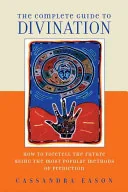
The Complete Guide to Divination
 80
80

The Complete Guide to Divination



Cassandra Eason’s "The Complete Guide to Divination" (2003) attempts a broad sweep, and largely succeeds by offering a sober, encyclopedic approach to a topic often mired in sensationalism. Eason avoids the pitfalls of overly mystical language, grounding her discussions in the practical application and historical context of practices like Tarot, palmistry, and numerology. A notable strength is the accessible integration of various methods, presenting them as tools for self-understanding rather than mere fortune-telling devices. However, the sheer breadth means some sections, particularly those on less common forms of divination, feel less detailed. The discussion on I Ching, for instance, could benefit from more depth. Eason's interpretation of Tarot symbolism, particularly the Major Arcana, offers a solid entry point for newcomers, avoiding esoteric jargon. Ultimately, the book serves as a valuable, well-organized primer for those wishing to explore the diverse world of divination with an open, analytical mind.
📝 Description
80
### What It Is Cassandra Eason's "The Complete Guide to Divination," first published in 2003, offers a comprehensive survey of various methods used throughout history to seek insight and predict future events. It moves beyond simple how-to instructions, exploring the psychological and symbolic underpinnings of these practices.
### Who It's For This volume is suited for individuals curious about the self and the unseen forces that may influence their lives. It caters to those seeking to understand the historical and cultural significance of divination, not just its practical application. Beginners and those with some familiarity with esoteric studies will find value here.
### Historical Context The book situates divination within a broader historical and cultural landscape. It acknowledges ancient practices and their evolution through different eras, demonstrating how humanity has consistently sought answers through symbolic interpretation and ritual. The work acknowledges the enduring human impulse to connect with a larger order.
### Key Concepts Central to the guide is the idea that divination is not solely about predicting the future, but also about self-discovery and understanding present circumstances. Eason explores concepts like synchronicity, archetypal symbolism, and the role of intuition in interpreting signs and omens. The book emphasizes the personal meaning derived from these practices.
💡 Why Read This Book?
• Understand the psychological roots of divination, moving beyond superstition to explore how practices like Tarot card reading can serve as tools for self-reflection, as detailed in the section on Tarot. • Gain a foundational understanding of numerology, including how specific numbers are interpreted in relation to personal traits and life paths, providing a concrete framework for self-analysis. • Explore the historical evolution of divination, tracing its presence from ancient cultures to modern practices, offering a broader perspective on humanity's quest for meaning as presented in the historical context sections.
why_read
⭐ Reader Reviews
Honest opinions from readers who have explored this book.
❓ Frequently Asked Questions
What is the primary focus of Cassandra Eason's "The Complete Guide to Divination"?
The book primarily focuses on providing a comprehensive overview of various divination methods, including Tarot, palmistry, and numerology, presenting them as tools for self-discovery and understanding rather than solely for predicting the future.
When was "The Complete Guide to Divination" first published?
"The Complete Guide to Divination" by Cassandra Eason was first published in 2003.
Does the book cover less common forms of divination?
Yes, while it extensively covers popular methods like Tarot and palmistry, the book also touches upon less common or more specialized forms of divination, offering a wider scope than many similar guides.
Is the book suitable for beginners in divination?
Absolutely. Eason's clear explanations and historical context make it an ideal starting point for beginners seeking to understand the principles and practices of divination without overwhelming jargon.
What is the author's perspective on the purpose of divination?
Cassandra Eason emphasizes that divination is a valuable means for self-exploration, gaining insight into current situations, and fostering personal growth, rather than solely a method for predicting predetermined futures.
How does the book approach the symbolism in divination?
The book delves into the rich symbolism inherent in divination practices, explaining how archetypes and recurring motifs, such as those found in the Tarot's Major Arcana, contribute to the interpretative process.
🔮 Key Themes & Symbolism
Tarot as Self-Reflection
Eason presents the Tarot not merely as a tool for fortune-telling but as a profound mirror to the psyche. The 78 cards, particularly the Major Arcana, are explored as archetypal symbols representing fundamental human experiences and developmental stages. The book details how understanding these archetypes can illuminate personal challenges and potentials, encouraging introspection and self-awareness. It moves beyond simple card meanings to explore the narrative flow and symbolic interplay within a reading.
Numerology and Personal Destiny
The guide examines numerology as a system for understanding life's patterns and individual characteristics. Eason explains how birth dates and names can be reduced to core numbers, each carrying specific vibrational energies and influences. This section explores the significance of numbers like the Life Path number and Destiny number, offering readers a framework to analyze their inherent strengths, challenges, and potential life direction, fostering a sense of agency.
Palmistry and Character Analysis
Palmistry is presented as a method for understanding character, temperament, and potential life trajectories through the study of hand markings. Eason discusses the significance of the major lines (Life, Head, Heart) and mounts, as well as minor lines and hand shapes. The book emphasizes that palmistry reveals tendencies and possibilities rather than fixed outcomes, serving as a practical tool for self-assessment and understanding interpersonal dynamics.
Historical Roots of Divination
This theme traces the ancient origins and historical evolution of various divinatory practices across different cultures. Eason highlights how these methods have served societies for millennia, fulfilling roles from spiritual guidance to social order. By contextualizing modern practices within their historical lineage, the book underscores their enduring appeal and their connection to a long-standing human desire for meaning and understanding.
💬 Memorable Quotes
“Many people use traditional forms of divination—Tarot cards, palmistry, and numerology—as a way to discover more about the self.”
— This statement reframes divination from prediction to introspection. It suggests that the primary value lies not in knowing the future, but in gaining self-knowledge through the symbolic language and structured frameworks these practices offer.
“The idea of being able to read the future is both exciting and a little frightening.”
— This captures the inherent duality many feel towards divination. It acknowledges the allure of foresight while also recognizing the potential anxiety associated with confronting the unknown or perceived destiny.
“One of the only books available that combines detailed discussions of all the popular forms of divination into one volume.”
— This highlights the book's unique selling proposition: its comprehensive scope. It positions the work as a singular resource for those wanting a broad overview of multiple divinatory systems in a single, accessible text.
“Although the idea of being able to read the future is both exciting and a little frightening, in truth, many people use traditional forms of divination—Tarot cards, palmistry, and numerology—as a way to discover more about the self.”
— This interpretation emphasizes the dual nature of divination's appeal: the thrill of the unknown future alongside the deeper, more grounded benefit of self-discovery. It suggests that the personal journey of understanding is often the true reward.
“In THE COMPLETE GUIDE TO DIVINATION, author Cassandra Eason...”
— This fragment points to the author's central role in synthesizing diverse divinatory practices. It signals that the book is a curated collection, guided by Eason's expertise in presenting these methods coherently.
🌙 Esoteric Significance
Tradition
This work fits broadly within the Western Esoteric tradition, particularly its modern, psychologically-oriented branch. While not strictly Hermetic or Kabbalistic, it draws upon the symbolic language and divinatory practices that have long been part of these lineages. Eason's approach emphasizes the practical application and personal meaning, aligning with the late 20th and early 21st-century trend of demystifying esoteric knowledge for a wider audience, making it accessible beyond traditional occult circles.
Symbolism
Key symbols explored include the archetypes within the Tarot's Major Arcana, such as The Fool representing new beginnings or The Hermit signifying introspection, which are foundational in many Western esoteric systems. The hand's lines in palmistry, representing the flow of life energy and destiny, and the numerical vibrations in numerology, particularly core numbers derived from birth data, are also central motifs. These symbols function as a lexicon for understanding the self and the cosmos.
Modern Relevance
Eason's approach continues to be relevant for contemporary practitioners of divination, particularly those integrating psychological insights with traditional methods. Her emphasis on self-discovery resonates with modern wellness and mindfulness movements. Thinkers and practitioners in fields like Jungian psychology and contemporary Tarot communities often reference or are influenced by comprehensive guides like this, which bridge historical practices with modern understanding.
👥 Who Should Read This Book
• Aspiring diviners seeking a foundational understanding of multiple systems, including Tarot, palmistry, and numerology, before specializing. • Individuals interested in the psychological and symbolic aspects of divination, looking to explore how these practices can aid self-awareness and personal growth. • Students of esoteric history and comparative religion who wish to understand the cultural and historical context of divination practices across different eras.
📜 Historical Context
Published in 2003, "The Complete Guide to Divination" emerged during a period of resurgence in esoteric and New Age studies, following the cultural shifts of the late 20th century. This era saw increased interest in alternative spiritualities and self-help methodologies, often drawing from historical traditions. Eason’s work positioned itself as a comprehensive resource within this burgeoning field, contrasting with more specialized texts that might focus on a single practice like just Tarot or just astrology. While not a period marked by significant censorship of divination texts, there was a continuing academic and popular discourse on the psychological underpinnings of belief systems, influenced by figures like Carl Jung and his theories on archetypes and synchronicity, which Eason implicitly engages with. The book offered a structured, accessible entry point, contrasting with the more arcane or fragmented information previously available.
📔 Journal Prompts
The Fool's journey as a metaphor for personal growth.
Reflecting on the core numbers derived from your birth date in numerology.
Interpreting the symbolic meaning of a chosen Tarot card for daily guidance.
Mapping the major lines on your dominant hand and their potential meanings.
Exploring the concept of synchronicity in relation to a recent divinatory experience.
🗂️ Glossary
Divination
The practice of seeking knowledge of the future or the unknown by supernatural means, often involving the interpretation of omens, symbols, or patterns.
Tarot
A deck of 78 cards featuring symbolic imagery, used for fortune-telling, divination, and as a tool for psychological insight and meditation.
Palmistry
A practice involving the study of the palm of the hand, including its lines, mounts, and shape, to interpret character and predict future events or tendencies.
Numerology
A system that assigns symbolic meaning to numbers and studies their influence on human life, often derived from names and birth dates.
Archetype
A universally understood symbol, character, or pattern of behavior that recurs across cultures and mythologies, often representing fundamental human experiences.
Synchronicity
The occurrence of events that appear meaningfully related but lack a causal connection, often interpreted as having significant personal meaning.
Major Arcana
The 22 trump cards in a Tarot deck, representing significant life events, spiritual lessons, and archetypal themes.