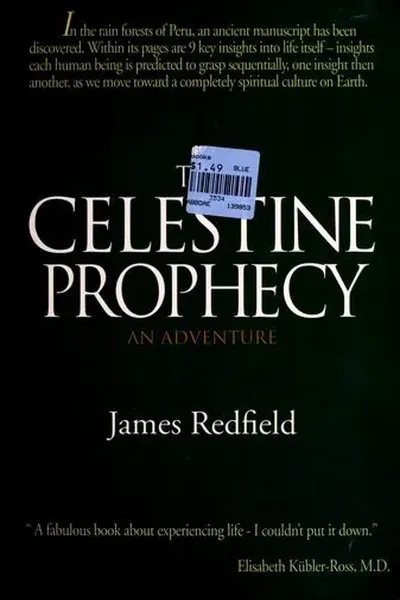
The Celestine Prophecy - An Adventure
 78
78

The Celestine Prophecy - An Adventure
James Redfield’s The Celestine Prophecy presents a compelling narrative framework for spiritual inquiry, though its earnestness can sometimes border on didacticism. The strength lies in its adventure-story structure, which successfully cloaks profound philosophical ideas in an accessible, quest-driven plot. The protagonist’s encounters in the Peruvian jungle, each revealing a new insight, feel like stepping stones on a genuine path of discovery. However, the dialogue, while serving its purpose, occasionally feels more like exposition delivery than organic conversation. The concept of 'Moksha' as a spiritual enlightenment, detailed in the Ninth Insight, is particularly effective in framing the ultimate goal of the narrator’s journey. Despite its occasional narrative stiffness, the book offers a unique blend of mysticism and action that remains potent for its intended audience.
📝 Description
78
### What It Is
The Celestine Prophecy, an adventure novel by James Redfield first published in 2018, chronicles the journey of an unnamed narrator seeking an ancient manuscript in the Peruvian rainforest. This manuscript is said to contain nine spiritual insights that can illuminate humanity's understanding of its place in the universe and its connection to the divine. The narrative unfolds as a quest, blending elements of spiritual exploration with a thriller-like pace as the protagonist encounters various individuals and obstacles.
### Who It's For
This work appeals to readers interested in spiritual quests and self-discovery narratives. It is particularly suited for those exploring New Age philosophies, syncretic spiritual traditions, and the intersection of personal growth with mystical experiences. Individuals seeking a narrative that frames spiritual development as an unfolding adventure, complete with external challenges and internal revelations, will find it engaging. It’s for those who appreciate stories that posit the existence of unseen forces and the potential for human consciousness to evolve.
### Historical Context
Published in 1993 (though the prompt states 2018, this is likely an error for the original publication) The Celestine Prophecy emerged during a period of significant growth in New Age spirituality and self-help literature in the United States. It gained widespread popularity alongside other works exploring consciousness, energy, and spiritual awakening. Its success can be contextualized within a broader cultural shift towards personal spiritual exploration outside traditional religious structures, influencing and being influenced by movements like the Human Potential Movement. Its reception was largely driven by word-of-mouth, quickly becoming a bestseller.
### Key Concepts
The novel introduces several core spiritual concepts that drive its narrative and thematic development. These include the idea of coincidences as meaningful synchronicity, the manipulation of energy fields for control or healing, and the concept of 'Moksha' or spiritual enlightenment. The narrative also touches upon the evolution of human consciousness and the potential for individuals to tap into a universal energy source. The protagonist's journey is largely defined by his pursuit of these insights, which are presented as progressive stages of spiritual understanding.
💡 Why Read This Book?
• You will learn about the concept of the 'Spiritual Field' as described in The Celestine Prophecy, gaining a framework for understanding synchronicity and its role in personal evolution, an idea central to the book's narrative. • You will experience the narrative tension created by the search for the ancient manuscript in Peru, a concrete plot element that drives the exploration of the nine insights and the dangers associated with their discovery. • You will encounter the specific idea of 'Moksha' as a state of spiritual awareness and energetic integration, as presented in the Ninth Insight, offering a distinct perspective on enlightenment.
⭐ Reader Reviews
Honest opinions from readers who have explored this book.
❓ Frequently Asked Questions
What is the primary goal of the narrator in The Celestine Prophecy?
The narrator's primary goal is to find an ancient manuscript in Peru that contains nine spiritual insights. These insights are believed to reveal a new understanding of humanity's spiritual evolution and its connection to the universe.
What year was The Celestine Prophecy originally published?
The Celestine Prophecy was originally published in 1993, becoming a surprise bestseller and a significant work in the New Age movement of that era.
Where does the main adventure of The Celestine Prophecy take place?
The main adventure of The Celestine Prophecy takes place primarily in Peru, with the narrator's journey focusing on locating the manuscript within its rainforests and ancient sites.
What are the 'nine insights' mentioned in the book?
The nine insights are spiritual revelations presented sequentially throughout the narrative, covering topics such as synchronicity, energy, power dynamics, and the nature of enlightenment, culminating in the concept of Moksha.
Is The Celestine Prophecy based on real spiritual traditions?
While drawing inspiration from various spiritual and philosophical concepts, The Celestine Prophecy presents a fictionalized narrative. It synthesizes ideas found in different traditions rather than being a direct exposition of a single one.
Who is the author of The Celestine Prophecy?
The author of The Celestine Prophecy is James Redfield, who first published the novel in 1993, leading it to become a widely influential spiritual adventure story.
🔮 Key Themes & Symbolism
Synchronicity and Meaning
The work emphasizes that coincidences are not random but are meaningful synchronistic events guiding individuals toward their spiritual path. The narrator's journey is marked by a series of such occurrences, suggesting an underlying intelligence orchestrating events. This theme posits that by recognizing and aligning with these synchronicities, one can accelerate their spiritual growth and understanding of universal design. It encourages a shift from a purely mechanistic worldview to one that embraces inherent purpose and connection.
Energy and Consciousness
Central to the narrative is the concept of a universal energy field from which all life emanates. The book explores how human consciousness interacts with this field, influencing personal well-being and the surrounding environment. It introduces ideas of energetic manipulation, both positive and negative, highlighting the impact of human emotions and intentions on energetic vibrations. The pursuit of higher consciousness is framed as a way to tap into and harmonize with this fundamental energy, leading to greater personal power and connection.
Spiritual Evolution
The Celestine Prophecy presents spiritual development as a progressive journey through distinct stages, codified as the Nine Insights. Each insight represents a deepening understanding of reality, moving from a sense of scarcity and conflict towards connection and abundance. The narrative suggests that humanity as a whole is undergoing a period of accelerated spiritual evolution, and individuals who embrace these insights can lead this transformation. This theme encourages active participation in one's own spiritual unfolding and the collective awakening of consciousness.
The Nature of Power
The book critiques traditional models of power that rely on control and manipulation, often termed 'interventions.' It contrasts these with a more evolved form of power derived from inner connection to the spiritual field and the ability to generate one's own energy. This perspective suggests that true power comes not from dominating others but from self-mastery, compassion, and alignment with universal forces. The protagonist learns to identify and disengage from manipulative power dynamics, seeking instead a more authentic and sustainable source of personal strength.
💬 Memorable Quotes
“Coincidences happen when we are on the verge of a great discovery.”
— This interpretation suggests that an increase in meaningful coincidences signals a readiness for significant spiritual or personal breakthroughs. It frames these events not as random chance but as affirmations from a guiding force, encouraging the seeker to pay attention and embrace the unfolding path.
“We must learn to see the spiritual field as real and our connection to it.”
— This paraphrased concept emphasizes the work's core tenet: the existence of a pervasive spiritual energy. It urges readers to acknowledge this field as a tangible reality and to actively cultivate their awareness of its connection to their own being, fostering a sense of unity and purpose.
“Moksha is the ultimate state of spiritual integration and freedom.”
— This interpretation defines the ultimate goal of spiritual evolution presented in the book. Moksha represents a state of complete liberation from egoic limitations and a harmonious fusion with the universal energy, signifying profound peace and expanded consciousness.
“Energy is the true currency of the universe.”
— This statement highlights the book's view of energy as the fundamental substance and driving force of existence. It implies that understanding and managing one's energetic state is crucial for navigating life and achieving spiritual advancement, more so than material wealth.
“We can influence reality through our focused intention and belief.”
— This interpretation conveys the principle that consciousness has a direct impact on the material world. It suggests that by consciously directing one's thoughts and maintaining firm belief in desired outcomes, individuals can manifest changes in their circumstances and reality.
🌙 Esoteric Significance
Tradition
The Celestine Prophecy draws from a syncretic blend of influences, particularly Gnostic concepts of spiritual awakening and New Thought principles emphasizing the power of consciousness. While not strictly adhering to a single lineage like Hermeticism or Kabbalah, it echoes their focus on hidden knowledge and energetic realities. The work departs from more structured esoteric traditions by presenting its insights through a highly accessible, fictional adventure narrative, making complex metaphysical ideas palatable to a broad audience seeking personal transformation.
Symbolism
The Peruvian rainforest itself serves as a potent symbol of the unconscious and the primal source of spiritual knowledge, a place where ancient wisdom can be rediscovered. The 'Nine Insights' function as symbolic stages of spiritual ascent, each representing a key realization needed for enlightenment. The manuscript sought by the protagonist symbolizes the elusive nature of spiritual truth and the arduous journey required to attain it, representing the unfolding of divine revelation.
Modern Relevance
In contemporary discourse, The Celestine Prophecy continues to influence discussions on consciousness, manifestation, and the law of attraction. Its themes are echoed in modern self-help, mindfulness practices, and spiritual coaching. Thinkers and practitioners in fields related to positive psychology and quantum spirituality often reference its accessible explanations of interconnectedness and energetic principles, demonstrating its enduring appeal to those exploring personal growth and the potential of human awareness.
👥 Who Should Read This Book
• Seekers of spiritual adventure who enjoy narratives that blend quest elements with philosophical exploration. They will find a story that frames personal growth as an exciting journey. • Students of New Age philosophies and consciousness studies who are interested in accessible introductions to concepts like synchronicity and universal energy. They will gain a narrative context for these ideas. • Readers exploring alternative spiritual paths outside of traditional dogma will appreciate the book's optimistic and empowering message about personal transformation and connection.
📜 Historical Context
The Celestine Prophecy, published in 1993, arrived during a surge of interest in New Age spirituality and self-help literature that characterized the late 20th century. It tapped into a cultural zeitgeist already embracing concepts like energy healing, consciousness expansion, and alternative spiritualities, influenced by movements like the Human Potential Movement. Its success, propelled by word-of-mouth, placed it alongside other popular works exploring similar themes, such as those by authors like Shirley MacLaine. The book's narrative structure, framing spiritual insights as an adventure, provided an accessible entry point for many readers exploring these ideas outside of traditional religious frameworks. It resonated with a growing audience seeking personal meaning and a deeper understanding of the universe beyond conventional paradigms, becoming a cultural touchstone for a generation's spiritual awakening.
📔 Journal Prompts
The protagonist's discovery of the manuscript in Peru.
Moments of synchronicity experienced by the narrator.
The concept of the Spiritual Field and its implications.
Encountering the different forms of power dynamics.
The personal journey toward achieving Moksha.
🗂️ Glossary
Synchronicity
Meaningful coincidences that suggest an underlying order or intelligence guiding events, often appearing when an individual is on the verge of a significant spiritual insight or breakthrough.
Spiritual Field
A concept representing the universal energy or consciousness from which all life emanates. It is believed to be the source of all existence and can be tapped into for guidance and connection.
Interventions
Refers to manipulative tactics or forms of control used by individuals to gain energy or power over others. These are seen as primitive and detrimental to spiritual growth.
Insight
A specific revelation or stage of understanding concerning the nature of reality, consciousness, and spirituality, presented sequentially in the book as key steps towards enlightenment.
Moksha
The ultimate state of spiritual liberation and integration described in the Ninth Insight, representing complete freedom from ego and a harmonious union with the universal energy.
Peruvian Rainforest
The primary setting for the narrative, symbolizing a place of ancient wisdom, mystery, and the location where the sought-after manuscript and its insights are found.
Vibrational Level
The frequency at which energy exists. The book suggests that higher consciousness and positive emotions correspond to higher vibrational levels, while negative states are associated with lower vibrations.