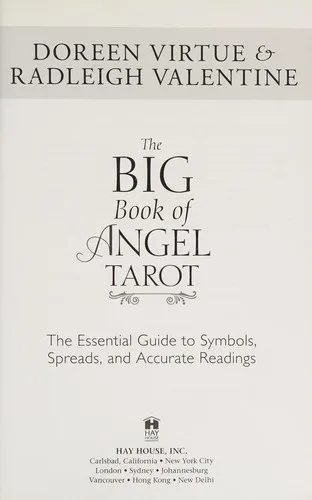
Tarot Reading
 75
75

Tarot Reading
Lisa Din's "Tarot Reading" offers a functional introduction to the practice, emphasizing its spiritual and intuitive dimensions. The book successfully conveys the notion that Tarot can be a tool for self-reflection and gaining clarity, a concept central to its appeal for many practitioners. Its strength lies in its accessible language, making complex ideas understandable for newcomers. However, the work could benefit from a more rigorous engagement with the historical development of Tarot, beyond a general acknowledgement of its age. For instance, a deeper dive into the influence of figures like Eliphas Lévi or the Marseille deck's evolution would add substantial academic weight. The section on card interpretations, while clear, sometimes lacks the nuanced depth found in more specialized texts. Despite this, "Tarot Reading" serves as a commendable entry point for those seeking to connect with Tarot's guidance potential.
📝 Description
75
### What Tarot Reading Offers
This work presents the Tarot as a method for spiritual guidance and self-understanding. It highlights the practice as a means to gain clarity on life's circumstances, fostering a deeper connection to one's inner intuition. The book posits that learning Tarot reading enhances concentration and elevates one's spirituality, transforming an enjoyable hobby into a tool for profound personal insight.
### Who Can Benefit
Tarot Reading is designed for individuals seeking to understand themselves and their life paths more fully. It caters to those who wish to learn the art of Tarot for personal use or to assist others in their own journeys. The book is particularly suited for people interested in developing their intuitive faculties and increasing their spiritual awareness through a structured, symbolic system.
### Historical Roots of Tarot
The practice of Tarot reading, as explored in this text, traces its lineage back through centuries of esoteric tradition. While the exact origins are debated, playing cards and their divinatory use gained prominence in Europe during the 18th century. This book situates Tarot within this historical framework, presenting it not merely as a game but as an ancient system of wisdom.
### Core Concepts Explained
At its heart, Tarot Reading introduces fundamental concepts of the Tarot deck, including the Major and Minor Arcana. It discusses the archetypal figures and symbolic imagery within the cards, explaining how these elements can be interpreted to reflect personal challenges and opportunities. The book emphasizes the Tarot's role in accessing subconscious knowledge and facilitating spiritual growth.
💡 Why Read This Book?
• Learn to interpret the symbolic language of the 78-card Tarot deck, understanding the distinction between the Major and Minor Arcana, as first systematically applied in the 18th century. • Develop personal intuition by practicing focused readings, a skill highlighted as crucial for unlocking deeper self-awareness beyond typical self-help methods. • Gain spiritual clarity by using Tarot as a reflective tool, moving beyond superficial guidance to engage with a practice honed over centuries.
⭐ Reader Reviews
Honest opinions from readers who have explored this book.
❓ Frequently Asked Questions
When was "Tarot Reading" by Lisa Din first published?
The book "Tarot Reading" by Lisa Din was first published on September 8, 2020. This edition provides a contemporary perspective on an ancient practice.
What is the primary purpose of learning Tarot according to the book?
The book emphasizes that learning Tarot reading serves to provide spiritual guidance, enhance understanding of life situations, and increase one's spirituality and concentration.
Does "Tarot Reading" focus on specific Tarot spreads?
While the book introduces the concepts of Tarot reading, its primary focus is on understanding the cards themselves and the intuitive process, rather than detailing numerous specific spreads.
Is "Tarot Reading" suitable for absolute beginners?
Yes, the book is designed for those wanting to learn Tarot for themselves or to help guide others, suggesting it is well-suited for individuals new to the practice.
How does the book connect Tarot to spirituality?
It explains that Tarot readings can be an enlightened way to gain clarity, and learning to read the cards is presented as a method to tap into intuition and increase spirituality.
What benefits can one expect from reading "Tarot Reading"?
Readers can expect to gain a better understanding of specific life situations, increase their concentration, and develop their spiritual awareness through the practice of Tarot.
🔮 Key Themes & Symbolism
Intuitive Development
The work posits Tarot reading as a potent method for cultivating intuition. By engaging with the symbolic language of the cards, practitioners are encouraged to move beyond purely rational thought and access deeper, subconscious knowledge. This development is framed as essential for navigating personal challenges and making more informed life choices, directly linking the practice to enhanced self-awareness and spiritual growth.
Spiritual Guidance System
Tarot Reading presents the cards not merely as fortune-telling tools but as a profound system for spiritual guidance. It suggests that the archetypal imagery and narrative structure of the Tarot deck mirror universal human experiences, offering a framework for understanding one's current path and potential futures. This perspective elevates Tarot to a sacred practice for personal enlightenment.
Clarity and Self-Understanding
A central theme is Tarot's capacity to bring clarity to complex situations. The book suggests that by focusing intention on a specific question or area of life and interpreting the resulting card spread, individuals can gain new perspectives. This process facilitates self-understanding, revealing hidden aspects of a situation and empowering the reader to approach it with greater insight and confidence.
Enhancing Concentration and Spirituality
The act of performing a Tarot reading requires significant focus and concentration, which the book argues actively sharpens the mind. This mental discipline, combined with the reflective and symbolic nature of the practice, is presented as a pathway to increased spirituality. It suggests that engaging with Tarot can deepen one's connection to inner wisdom and the subtle energies of life.
💬 Memorable Quotes
“Tarot readings have spiritually guided people for centuries.”
— This interpretation highlights the historical and spiritual lineage of Tarot, positioning it as an ancient and respected method for seeking wisdom and direction across generations.
“It is an enlightened way for a person to get a better understanding or gain more clarity on a particular situation in their life.”
— This paraphrased concept underscores Tarot's function as a tool for insight, suggesting its use can illuminate personal circumstances, leading to a more conscious and informed approach to life's events.
“For those wanting to learn the Tarot for themselves or to help guide others, it will also help increase one's concentration and greatly increase your spirituality.”
— This interpretation emphasizes the dual benefit of learning Tarot: personal development through enhanced focus and spiritual elevation, making it a practice with tangible mental and esoteric rewards.
“Learning to read the Tarot can not only be exciting and fun, but also a way to tap into your own intuition.”
— This paraphrased concept highlights the engaging nature of Tarot study, framing it as an enjoyable activity that simultaneously unlocks and strengthens a person's innate intuitive abilities.
“As you gain a greater insight into yo”
— This fragmented quote suggests that the process of Tarot reading leads to progressively deeper levels of personal understanding and self-awareness, implying a continuous journey of discovery.
🌙 Esoteric Significance
Tradition
The work aligns with the Western esoteric tradition, particularly its divinatory and self-help applications. It draws implicitly on the lineage that views Tarot as a symbolic map of the human psyche and spiritual journey, a concept popularized by figures like Carl Jung and later esoteric writers. While not explicitly referencing Hermeticism or Kabbalah, its emphasis on archetypes and inner guidance places it within this broader stream of thought.
Symbolism
Key symbols include the archetypal figures of the Major Arcana (e.g., The Fool, The Magician), representing stages of the human journey and fundamental forces. The Minor Arcana, often linked to elemental forces and daily life, provide the practical context. The interplay between these card groups is central to understanding Tarot's narrative potential, serving as a microcosm of universal energies and personal experiences.
Modern Relevance
This work resonates with contemporary spiritual seekers and practitioners of modern witchcraft and mindfulness, who utilize Tarot for personal growth and psychological insight. It speaks to a generation increasingly interested in intuitive practices and self-discovery outside traditional religious structures, finding relevance in its accessible approach to ancient symbolic systems.
👥 Who Should Read This Book
['• Individuals new to Tarot seeking a clear introduction to its purpose and basic principles, without overwhelming historical or complex occult theory.', '• Those interested in developing their intuition and seeking a structured method for self-reflection and personal guidance.', "• Spiritual seekers exploring various esoteric practices who wish to understand Tarot's role in enhancing self-awareness and clarity."]
📜 Historical Context
Published in 2020, Lisa Din's "Tarot Reading" enters a contemporary landscape where esoteric practices are experiencing a resurgence, particularly among younger demographics seeking alternative frameworks for understanding life. The work builds upon a tradition that gained significant traction in the late 19th and early 20th centuries, influenced by occult revival movements and figures like Arthur Edward Waite, who co-created the Rider-Waite deck in 1909. This period saw a concerted effort to codify Tarot symbolism within Hermetic and Kabbalistic systems. Din’s book, while not deeply engaging with these specific historical figures or the occult revival’s intellectual currents, implicitly benefits from this established esoteric groundwork. It sidesteps the more academic debates surrounding Tarot’s origins, such as its potential links to ancient Egyptian mysteries or its evolution from playing cards in Renaissance Italy, focusing instead on its divinatory and spiritual applications for the modern individual.
📔 Journal Prompts
The archetypal figures of the Major Arcana and their personal significance.
How the symbolic imagery of the Minor Arcana reflects current life challenges.
The concept of "enlightened understanding" through Tarot consultation.
Methods for increasing concentration during a Tarot reading session.
Personal spirituality as influenced by intuitive development via Tarot.
🗂️ Glossary
Tarot Reading
The practice of interpreting a spread of Tarot cards to gain insight into a situation, question, or personal state, often for spiritual guidance or self-understanding.
Spirituality
A person's connection to their inner self, the divine, or a sense of purpose and meaning in life, often enhanced through practices like Tarot.
Intuition
The ability to understand something immediately, without the need for conscious reasoning; a concept central to effective Tarot interpretation.
Clarity
The state of being clear and easy to understand; in Tarot, it refers to the insight gained regarding a specific situation or question.
Concentration
The action or power of focusing all one's attention on a particular object or activity, enhanced by engaging in Tarot study.
Major Arcana
The set of 22 trump cards in a Tarot deck, representing significant life events, spiritual lessons, and major themes.
Minor Arcana
The set of 56 cards in a Tarot deck, divided into four suits, that typically represent everyday situations, challenges, and influences.