Tarot
 74
74

Tarot
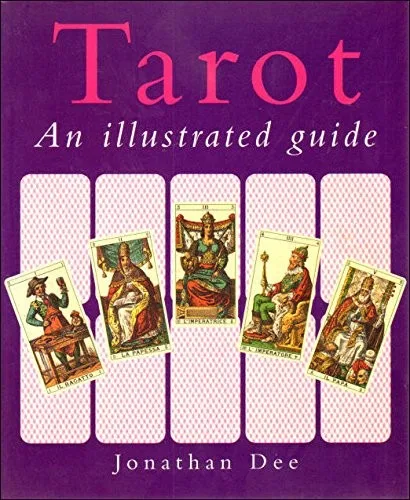
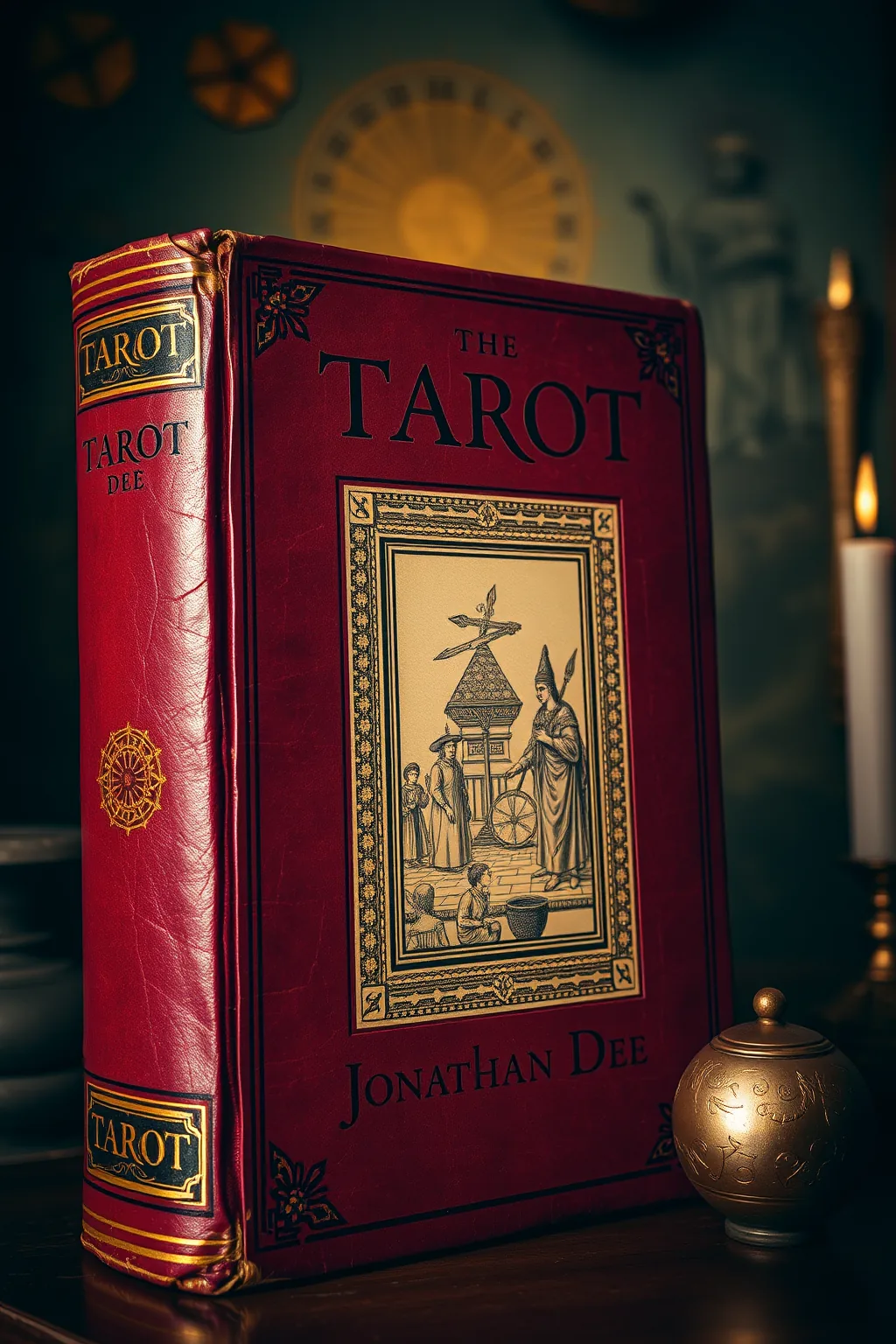
Jonathan Dee's "Tarot" tackles its subject with a sober intellectualism that sets it apart from much of the genre. The author’s strength lies in his ability to dissect the symbolic language of the cards without resorting to mystical pronouncements, particularly in his analysis of the Major Arcana as archetypal figures. However, the book's methodical, almost academic, tone can sometimes feel dry, lacking the immediate spark that draws many to the Tarot in the first place. The section discussing the Rider-Waite-Smith deck’s influence is particularly illuminating, demonstrating how a specific visual and conceptual framework became dominant. Ultimately, Dee provides a valuable, if somewhat detached, perspective on the Tarot's cultural and psychological significance.
📝 Description
74
### What It Is Jonathan Dee's "Tarot" offers a focused examination of the ubiquitous divinatory tool. First published in 2002, the work moves beyond simplistic interpretations to explore the underlying structures and historical currents that inform the Tarot's enduring appeal. It provides a critical lens through which to view the cards, not merely as instruments of fortune-telling, but as a complex system of symbolic language.
### Who It's For This book is intended for readers who seek a deeper, more analytical understanding of the Tarot. It appeals to those who have moved past introductory guides and are interested in the intellectual and historical underpinnings of cartomancy. Scholars of esotericism, comparative religion, and cultural history will find its methodical approach valuable, as will practitioners wishing to ground their intuitive work in a more robust theoretical framework.
### Historical Context The publication of "Tarot" in 2002 occurred at a time when interest in esoteric traditions was experiencing a resurgence, fueled by digital access to information and a growing dissatisfaction with purely materialistic worldviews. Dee's work emerged amidst a landscape populated by both academic studies and popular spiritual guides. It offered a middle path, respecting the symbolic power of the cards while engaging with their history and potential psychological applications, differentiating itself from purely occultist or strictly skeptical analyses.
### Key Concepts Dee's exploration centers on key concepts such as the archetypal nature of the Tarot trumps, their relationship to psychological states, and the evolution of the deck's imagery through different historical periods. The book examines how the cards, particularly the Major Arcana, function as a narrative or philosophical framework. It also touches upon the development of the Rider-Waite-Smith deck, a pivotal moment in Tarot history, and its subsequent influence on contemporary decks and practices.
💡 Why Read This Book?
• Gain a structured understanding of the Tarot’s symbolic architecture, moving beyond simple interpretations to grasp its underlying philosophical framework, as presented in Dee's analysis of the Major Arcana. • Appreciate the historical evolution of the Tarot, specifically the impact of the 1909 Rider-Waite-Smith deck, to understand how its imagery shaped modern cartomancy. • Develop a critical perspective on divination, viewing the Tarot as a tool for psychological exploration and symbolic communication rather than solely predictive magic, as explored in Dee's methodical approach.
⭐ Reader Reviews
Honest opinions from readers who have explored this book.
❓ Frequently Asked Questions
What is the main focus of Jonathan Dee's "Tarot"?
Jonathan Dee's "Tarot" primarily focuses on the symbolic language and historical development of the Tarot, treating it as a system of archetypes and a tool for psychological insight rather than solely a divinatory instrument.
When was Jonathan Dee's "Tarot" first published?
The book "Tarot" by Jonathan Dee was first published in 2002, positioning it within the late 20th and early 21st-century resurgence of interest in esoteric studies.
Does the book discuss specific Tarot decks?
Yes, the book discusses specific Tarot decks, notably highlighting the significant influence and development of the Rider-Waite-Smith deck, which played a crucial role in shaping modern Tarot imagery and interpretation.
Is this book suitable for beginners in Tarot?
While accessible, the book is best suited for those with some prior exposure to Tarot who are seeking a more analytical and historical perspective, rather than a step-by-step guide to reading the cards.
What is the author's approach to Tarot interpretation?
The author's approach is analytical and historical, emphasizing the archetypal nature of the cards and their potential for psychological exploration, while critically examining their divinatory applications.
Does "Tarot" by Jonathan Dee explore the Kabbalistic associations of the cards?
The work explores the symbolic and archetypal dimensions of the Tarot, and while it may touch upon historical connections, its primary focus is on the cards as a system of psychological and philosophical expression, rather than a deep dive into specific Kabbalistic correspondences.
🔮 Key Themes & Symbolism
Archetypal Framework
Dee's "Tarot" emphasizes the cards, particularly the Major Arcana, as embodiments of universal archetypes. The work posits that these figures—The Fool, The Magician, The High Priestess, etc.—represent fundamental human experiences, psychological states, and stages of spiritual development. This perspective moves the Tarot beyond mere fortune-telling into the realm of symbolic psychology, drawing parallels to Jungian concepts of the collective unconscious. The sequence of the Major Arcana is presented not just as a journey, but as a structured exploration of the human psyche's potential.
Historical Evolution of Imagery
A significant theme is the historical trajectory of Tarot imagery. Dee traces how the visual language of the cards has transformed across centuries, highlighting the pivotal role of the Rider-Waite-Smith deck, first published in 1909. This deck's richly illustrated cards, designed by Pamela Colman Smith under Arthur Edward Waite's direction, standardized many symbolic associations that persist today. The book examines how these visual cues and narrative structures have influenced subsequent decks and the practice of Tarot reading.
Symbolic Language and Interpretation
The core of Dee's analysis lies in understanding the Tarot as a complex symbolic language. The work explores how individual cards and their combinations can be read to convey meaning, offering insights into personal challenges, potential outcomes, and inner states. It discusses the interplay between the symbolic richness of the cards and the interpretive framework of the reader, suggesting that the Tarot acts as a mirror reflecting the querent's own understanding and subconscious landscape.
Tarot as a Philosophical Tool
Beyond divination, Dee's "Tarot" positions the cards as a vehicle for philosophical inquiry. The book suggests that the structured symbolism of the Tarot can be used to contemplate existential questions, ethical dilemmas, and the nature of reality. By engaging with the archetypal narratives and symbolic relationships within the deck, readers can develop a more nuanced perspective on life's complexities, using the Tarot as a catalyst for self-reflection and wisdom.
💬 Memorable Quotes
“The Major Arcana represent a sequence of archetypal encounters.”
— This concept highlights Dee's view of the Tarot cards, especially the trump cards, as symbolic figures or situations that resonate with universal human experiences and psychological stages.
“The Rider-Waite-Smith deck standardized much of modern Tarot symbolism.”
— This observation points to the significant historical impact of the 1909 deck, suggesting its imagery and symbolic associations have profoundly shaped how Tarot is understood and practiced today.
“Tarot functions as a symbolic language for exploring inner states.”
— Dee suggests the cards are not just predictive tools but a method for articulating and understanding one's own psychological landscape and subconscious thoughts.
“The structure of the Tarot offers a framework for contemplating life's path.”
— This implies that the order and relationships between the cards can be used as a philosophical model to examine personal journeys and existential questions.
“Interpreting the Tarot involves a dialogue between symbol and consciousness.”
— This highlights the interactive nature of Tarot reading, where the meaning arises from the encounter between the card's inherent symbolism and the individual's own mind.
🌙 Esoteric Significance
Tradition
Dee's work engages with the Western esoteric tradition, particularly its Hermetic and psychological dimensions. While not strictly adhering to any single lineage like Golden Dawn ceremonial magic or Theosophy, it draws upon the symbolic richness that these traditions have explored. The book fits within a modern hermeneutic approach to esoteric symbols, treating them as keys to understanding consciousness and culture, rather than solely as components of magical practice.
Symbolism
Key symbols examined include The Fool, representing potential and the beginning of a journey, and The High Priestess, embodying intuition and hidden knowledge. Dee also delves into the symbolic significance of the Rider-Waite-Smith deck's design, noting how its specific iconography, such as the depiction of celestial bodies or specific plants, contributes to its layered meanings and enduring influence on Tarot interpretation.
Modern Relevance
Contemporary practitioners and scholars of esoteric studies, particularly those interested in the psychology of symbolism and comparative mythology, frequently reference works like Dee's. His analytical approach informs modern interpretations that seek to integrate Tarot into fields like depth psychology, narrative therapy, and critical studies of divination, moving beyond purely occult applications.
👥 Who Should Read This Book
• Students of Western Esotericism seeking a structured analysis of Tarot's historical and symbolic development. • Psychologically-oriented readers interested in archetypes and symbolic systems as tools for self-understanding. • Comparative religion scholars examining the role of symbolic decks in cultural and spiritual traditions.
📜 Historical Context
Jonathan Dee's "Tarot," published in 2002, entered a cultural landscape increasingly fascinated by esoteric traditions, partly due to the burgeoning internet and a desire for alternative meaning-making systems. The book emerged in dialogue with both academic scholarship on symbolism and popular occult literature. It navigated a space distinct from the more overtly mystical texts popular at the time, offering a more analytical and historically grounded perspective. Contemporaries like Mary K. Greer were exploring similar themes of psychological depth in Tarot, though Dee's approach leaned towards a critical examination of the system itself. The work implicitly engaged with the legacy of figures like A.E. Waite, whose 1909 Rider-Waite-Smith deck remains a benchmark, influencing Dee's discussion of visual standardization and symbolic evolution within the Western esoteric tradition.
📔 Journal Prompts
The archetypal encounters represented by the Major Arcana.
The influence of the Rider-Waite-Smith deck's visual language.
The Tarot as a symbolic language for inner states.
Personal interpretations of The Fool's journey through the cards.
The historical shifts in Tarot imagery and their impact on meaning.
🗂️ Glossary
Major Arcana
The set of 22 trump cards in a Tarot deck, typically depicting symbolic archetypes and significant life events or stages.
Minor Arcana
The 56 suit cards in a Tarot deck (Wands, Cups, Swords, Pentacles), often representing everyday situations, actions, and challenges.
Rider-Waite-Smith Deck
A highly influential Tarot deck first published in 1909, featuring full-scene illustrations for all 78 cards, designed by Pamela Colman Smith under A.E. Waite's direction.
Archetype
In the context of Tarot, a universal, primal symbol or theme representing fundamental human experiences or patterns of behavior, often associated with Carl Jung's psychological theories.
Divination
The practice of seeking knowledge of the future or the unknown by supernatural means, often through the use of tools like the Tarot.
Cartomancy
The practice of using playing cards or, more commonly, Tarot cards for divination or fortune-telling.
Symbolic Language
A system of communication that uses symbols, images, or metaphors to convey meaning, often with multiple layers of interpretation, as seen in Tarot.