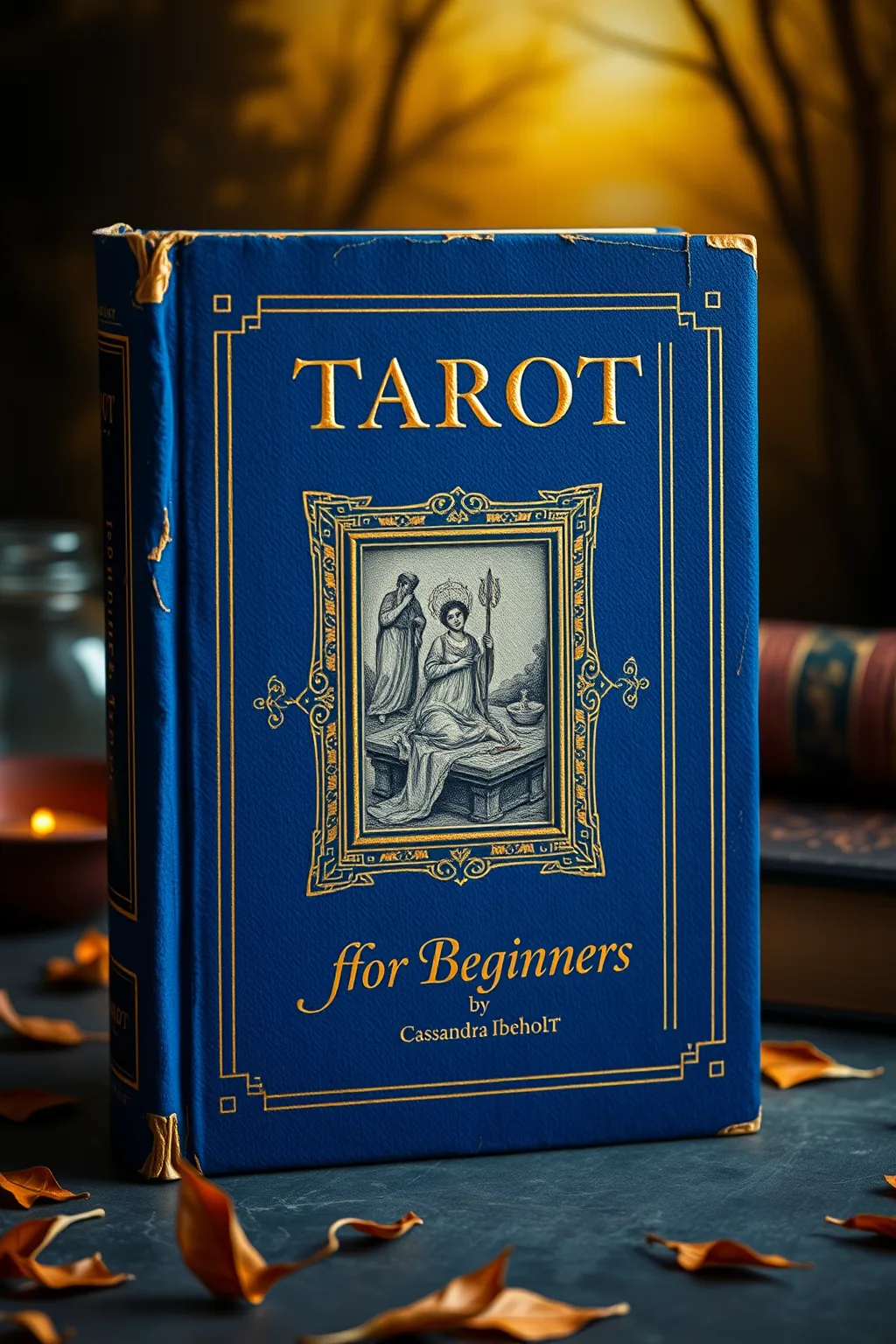
Tarot Intro Book for Beginners
 76
76

Tarot Intro Book for Beginners



Ibenholt’s primer for novice Tarot enthusiasts, "Tarot Intro Book for Beginners," successfully strips away the intimidation factor often associated with cartomancy. Its primary strength lies in its directness; it avoids the dense philosophical meanderings found in older occult texts, offering instead a functional guide. The inclusion of a practical Three-card Spread and a journal template are commendable, encouraging immediate engagement. However, the book's brevity can feel like a limitation. While it covers the basics of card meanings and interpretation, it offers little exploration into the deeper historical currents or the psychological archetypes that Carl Jung would later connect to Tarot imagery. A section dedicated to the Rider-Waite-Smith deck's specific iconography, which remains the most popular for beginners, would have been beneficial. Nevertheless, for a reader seeking a no-frills introduction to begin reading cards, it serves its purpose adequately.
📝 Description
76
### What It Is
Cassandra Ibenholt's "Tarot Intro Book for Beginners" serves as a foundational text for individuals embarking on their journey with the Tarot. Published initially on October 22, 2020, it presents itself as a straightforward reference guide. The work aims to demystify the archetypal imagery and symbolic language inherent in a standard Tarot deck, offering a low-entry point for comprehension and application.
### Who It's For
This book is explicitly designed for neophytes – those completely new to Tarot card reading. It caters to individuals who seek a clear, unadorned introduction without the jargon often associated with more advanced occult literature. It is suitable for anyone interested in personal development, divination, or simply understanding the historical and symbolic significance of the Tarot.
### Historical Context
The 2020 publication date places this book within a contemporary resurgence of interest in esoteric practices, particularly amplified by digital platforms. While the Tarot's roots trace back to 15th-century Italy, Ibenholt's work addresses a modern audience familiar with online learning and accessible digital content. It arrives in an era where figures like Rachel Pollack have extensively documented Tarot's psychological and divinatory applications, offering a new generation a starting point distinct from earlier, more complex treatises.
### Key Concepts
Central to the book is the breakdown of the 78-card structure, distinguishing between the Major and Minor Arcana. It introduces the concept of card significance, explaining how each card, from The Fool to The World, carries distinct meanings. The text also emphasizes the practice of asking effective questions to guide readings and presents a simple yet adaptable Three-card Tarot Spread as a practical tool for initial interpretation and application.
💡 Why Read This Book?
• Gain a foundational understanding of the 78-card Tarot structure, including the distinct roles of the Major and Minor Arcana, as detailed in the book's card lists, enabling you to interpret basic readings. • Learn a practical method for asking insightful questions tailored to Tarot divination, a technique specifically outlined by Cassandra Ibenholt to enhance the accuracy of your readings. • Immediately apply your knowledge with the provided Three-card Tarot Spread, a simple yet effective layout designed for beginners to start practicing card interpretation from their first session.
why_read
⭐ Reader Reviews
Honest opinions from readers who have explored this book.
❓ Frequently Asked Questions
What is the primary purpose of the Tarot Intro Book for Beginners?
The book is designed as an easy-to-read reference guide for individuals new to Tarot. It aims to provide a clear and accessible introduction to understanding the significance of each Tarot card and how to begin performing readings.
When was the Tarot Intro Book for Beginners first published?
The book by Cassandra Ibenholt was first published on October 22, 2020, placing it within contemporary discussions and accessibility of esoteric knowledge.
Does the book explain how to read Tarot cards?
Yes, the book includes instructions on how to read Tarot for beginners. It covers essential aspects like understanding card meanings and asking the right questions for a reading.
What specific Tarot spread is taught in the book?
The book features an adaptable and straightforward Three-card Tarot Spread, which is presented as a ready-to-use tool for beginners to start their practice immediately.
Is there a tool for recording readings included?
Yes, the book provides a Tarot Journal section designed to help beginners record their readings, interpretations, and progress as they develop their skills.
What kind of questions are recommended for Tarot readings?
The book emphasizes the importance of asking the right questions. It guides beginners on formulating inquiries that lead to clearer insights and more meaningful interpretations from their Tarot spreads.
🔮 Key Themes & Symbolism
Beginner's Tarot Framework
This book establishes a clear, structured approach to learning the Tarot, specifically addressing the needs of novices. It breaks down the 78 cards into manageable components, differentiating the Major and Minor Arcana and detailing the significance of each. The emphasis is on creating an accessible entry point, moving away from complex historical or philosophical tangents to focus on practical understanding and application for those unfamiliar with the cards.
Effective Questioning for Divination
A core theme is the art of asking the right questions. The book posits that the quality of insight derived from a Tarot reading is directly proportional to the clarity and intention behind the question posed. It offers guidance on formulating inquiries that are specific enough to yield useful answers, moving beyond vague or overly broad questions to encourage more focused and actionable interpretations.
Practical Application and Journaling
The text champions hands-on learning through practical exercises. It introduces a simplified Three-card Tarot Spread, enabling beginners to immediately practice interpreting card combinations. Complementing this is the inclusion of a Tarot Journal, encouraging users to document their readings, reflect on the symbolism, and track their personal development and evolving understanding of the cards over time.
Card Significance Breakdown
Central to the book's utility is its detailed exposition on the meaning and significance of each Tarot card. It provides a lexicon of interpretations for the Major and Minor Arcana, serving as a reference point for new readers. This systematic approach helps demystify the symbolic language of the deck, allowing beginners to build a foundational knowledge base for their practice.
💬 Memorable Quotes
“The Tarot Intro Book for Beginners is an Easy-to-Read Reference Guide for New Tarotists”
— This statement directly frames the book's primary function: to serve as a straightforward, accessible resource for individuals just starting their exploration of Tarot card reading.
“includes everything you need to begin your Tarot reading journey”
— This suggests a comprehensive yet concise approach, aiming to equip beginners with the essential knowledge and tools required to start practicing Tarot without feeling overwhelmed.
“A list of the Tarot cards and their significance”
— Highlights the book's foundational content, emphasizing the detailed explanation of individual card meanings as a core component for understanding the Tarot system.
“How-to read Tarot for beginners”
— This points to the practical, instructional nature of the book, promising step-by-step guidance specifically tailored for those with no prior experience in performing Tarot readings.
“Asking the right questions”
— Underscores the importance placed on the querent's role in the divination process, indicating that the book will offer advice on formulating effective inquiries for clearer insights.
🌙 Esoteric Significance
Tradition
While not strictly adhering to a singular esoteric lineage like Hermeticism or Kabbalah, this book functions as an entry point to the broader Western Esoteric Tradition's use of Tarot. It sidesteps the intricate correspondences found in Golden Dawn or Theosophical interpretations, opting for a more generalized, accessible understanding of archetypal symbolism. Its place is that of a modern primer, preparing the ground for those who might later explore more complex systems that integrate Tarot with Qabalah, astrology, or alchemy.
Symbolism
The book introduces fundamental Tarot symbols by focusing on the core meanings of the Major Arcana (e.g., The Fool representing beginnings, The Magician signifying manifestation) and the suits of the Minor Arcana (Wands for action, Cups for emotion, Swords for intellect, Pentacles for material). It emphasizes interpreting these symbols as visual language, facilitating a beginner's grasp of the deck's narrative and divinatory potential without delving into deep esoteric symbolism.
Modern Relevance
In contemporary practice, this book is relevant for its role in democratizing Tarot knowledge. It serves as a stepping stone for individuals who encounter Tarot through social media, online courses, or wellness practices. Thinkers and practitioners focused on accessible self-help tools, mindfulness, and basic divination techniques find value in its straightforward approach, which contrasts with the more intricate systems favored by established occult orders.
👥 Who Should Read This Book
['• Absolute beginners in Tarot seeking a clear, no-nonsense introduction to card meanings and basic reading techniques.', '• Individuals interested in self-reflection and personal development tools who want a practical method for gaining insight without complex theory.', '• Aspiring diviners who require a foundational text before exploring more advanced Tarot systems or historical esoteric traditions.']
📜 Historical Context
Published in 2020, "Tarot Intro Book for Beginners" emerges during a period of renewed global interest in divination and esoteric practices, often facilitated by online communities and accessible digital content. This contemporary context is crucial; while the Tarot itself has a history stretching back to 15th-century Italy with games like Tarocchi, its adoption as a divinatory tool gained significant traction in the late 19th and early 20th centuries through figures like Arthur Edward Waite and Pamela Colman Smith, whose Rider-Waite-Smith deck remains a benchmark. Ibenholt's work arrives in an era shaped by psychoanalysts like Carl Jung, who explored archetypes, and by contemporary authors such as Rachel Pollack, who have extensively documented Tarot's psychological and spiritual dimensions. The book's accessible, low-entry approach contrasts with more scholarly or historically dense works, catering to a digital-native audience seeking immediate practical application rather than deep dives into occult traditions or comparative symbology. Its publication avoids major contemporary controversies or censorship, instead reflecting a mainstreaming of interest in personal development tools.
📔 Journal Prompts
Reflect on the archetype of The Fool as presented in the book; how does its journey mirror your own current path?
Consider the significance of the Three-card Spread; what message might the past, present, and future cards hold for a specific question?
Document the meanings of the four suits (Wands, Cups, Swords, Pentacles) and note any personal associations you have with each.
Analyze a reading you conducted using the book's guidance; what specific card interpretations stood out or surprised you?
Record your understanding of the difference between Major and Minor Arcana based on the book's descriptions.
🗂️ Glossary
Tarot
A deck of 78 cards featuring symbolic imagery, used for divination, self-reflection, and spiritual exploration. It comprises the Major Arcana (22 cards) and the Minor Arcana (56 cards).
Major Arcana
The 22 trump cards in a Tarot deck, representing significant life lessons, archetypal forces, and major spiritual themes. Cards range from The Fool to The World.
Minor Arcana
The 56 cards divided into four suits (Wands, Cups, Swords, Pentacles), representing everyday events, challenges, and circumstances. Each suit contains cards numbered Ace through 10, plus four court cards.
Suit
One of the four divisions of the Minor Arcana: Wands (energy, passion), Cups (emotions, relationships), Swords (intellect, conflict), and Pentacles (material world, finances).
Three-card Spread
A basic Tarot layout typically used for simple questions, often representing Past, Present, and Future, or Situation, Action, Outcome.
Significance
The meaning attributed to each Tarot card, encompassing its divinatory interpretation, symbolic representation, and potential lessons or guidance it offers.
Tarot Journal
A notebook or section within a book used to record Tarot readings, including the cards drawn, the questions asked, interpretations, and personal reflections on the process.