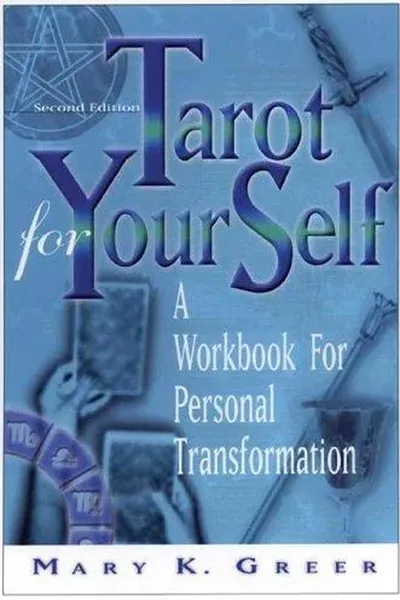
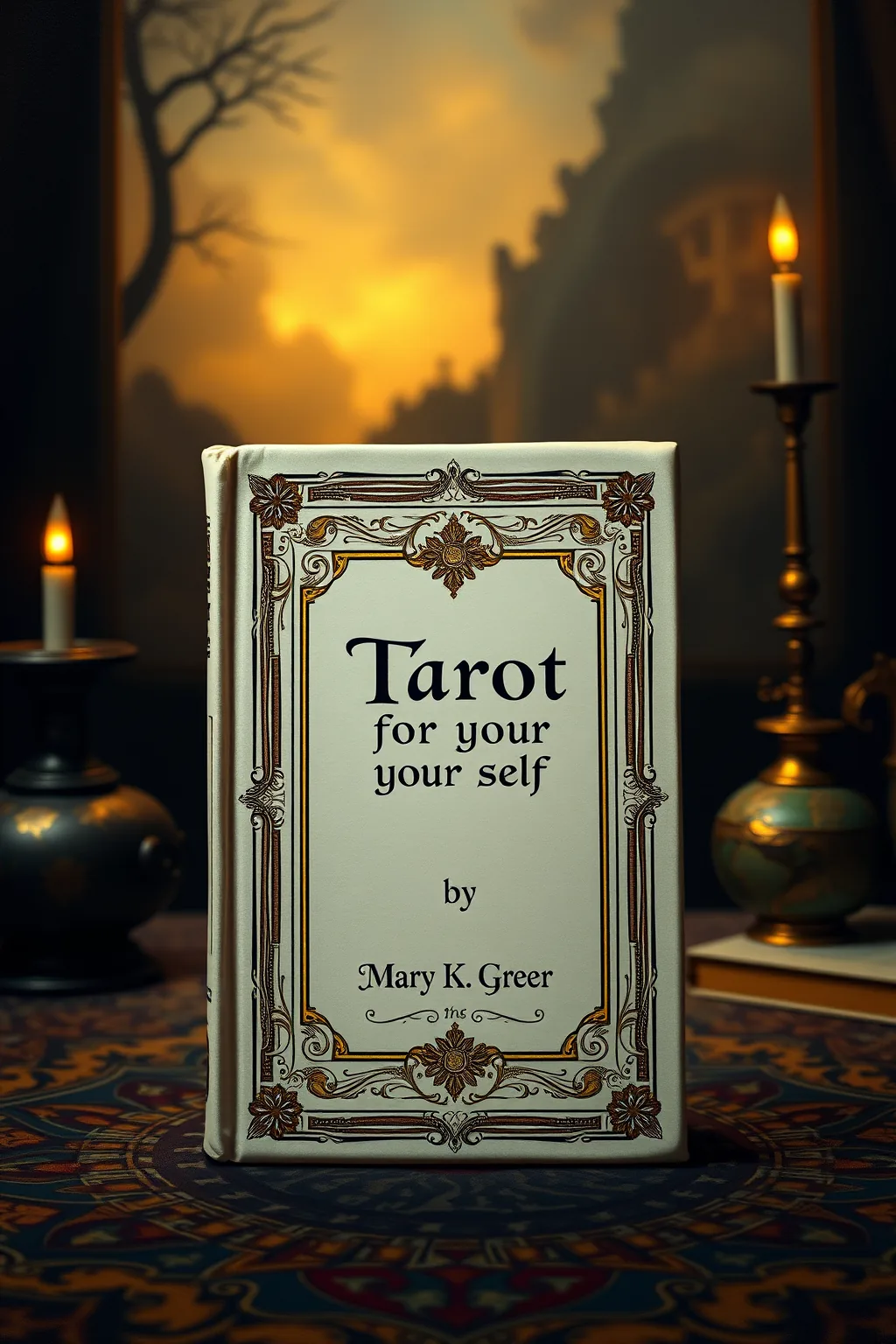
Tarot for your self
 81
81

Tarot for your self



Mary K. Greer's "Tarot for Your Self" is not merely a book; it's an invitation to a prolonged, intimate conversation with the archetypal energies of the Tarot. Greer masterfully shifts the focus from external prediction to internal exploration, a stance that feels both revolutionary and deeply intuitive. Her emphasis on developing a personal symbolic language with the cards, particularly through extensive journaling exercises, is a significant strength. The chapter detailing how to read for oneself without external validation is particularly empowering. If there's a limitation, it's that the sheer depth of introspection required might be daunting for those expecting a quick-start guide to divination. The concept of working with the "Shadow" aspects of the cards, for instance, demands a significant degree of self-awareness and courage. Nevertheless, "Tarot for Your Self" remains an essential text for anyone serious about integrating the Tarot into their personal growth journey.
📝 Description
81
### What It Is Mary K. Greer's "Tarot for Your Self," first published in 1984, offers a deeply personal and introspective approach to understanding the Tarot beyond mere fortune-telling. It emphasizes the cards as mirrors reflecting the querent's inner landscape, promoting self-discovery and psychological growth. This work moves beyond conventional divinatory practices to explore the Tarot as a tool for psychological exploration and spiritual development.
### Who It's For This seminal text is for anyone seeking to forge a profound, individual connection with the Tarot. It is particularly suited for those who feel traditional readings lack personal depth or who wish to use the cards for personal development, creative inspiration, or spiritual inquiry. Readers interested in Jungian psychology and archetypal symbolism will find particular resonance.
### Historical Context Emerging in the early 1980s, a period of renewed interest in esoteric studies and personal growth movements, Greer's book provided a distinctly psychological and self-directed framework for Tarot. It stood apart from more predictive or externally focused methods prevalent at the time, aligning with a growing counter-cultural emphasis on inner work and subjective experience. This contrasted with the more historical and ceremonial approaches explored by contemporaries like Rachel Pollack.
### Key Concepts The core of Greer's methodology lies in the concept of "Tarot as a psychological map." She introduces techniques for personal interpretation, journaling, and creative engagement with the cards. Emphasis is placed on active participation, moving the reader from a passive recipient of information to an active interpreter of their own psyche through the archetypal language of the Tarot. This includes exploring the Shadow self and the Higher Self as represented by specific cards.
💡 Why Read This Book?
• Learn to engage with the Tarot as a dynamic psychological mirror, moving beyond prediction to self-understanding, a technique exemplified in Greer's detailed journaling methods outlined in the early chapters. • Develop a personalized system for interpreting card meanings based on your own life experiences and inner responses, as advocated in the sections on active Tarot exploration. • Discover how to identify and integrate your own archetypal patterns and shadow aspects through dedicated exercises, directly referencing the psychological framework Greer established in 1984.
why_read
⭐ Reader Reviews
Honest opinions from readers who have explored this book.
❓ Frequently Asked Questions
When was Mary K. Greer's "Tarot for Your Self" first published?
Mary K. Greer's "Tarot for Your Self" was first published in 1984, marking a significant shift towards psychological and self-exploratory Tarot practices in the esoteric literature of the era.
What is the primary focus of "Tarot for Your Self"?
The book's primary focus is on using the Tarot as a tool for self-discovery, personal growth, and psychological exploration, rather than solely for divination or fortune-telling.
Does this book teach traditional Tarot meanings?
While it acknowledges traditional meanings, "Tarot for Your Self" strongly encourages developing personal interpretations through introspection, journaling, and active engagement with the cards.
Is this book suitable for beginners?
Yes, it is suitable for beginners who are serious about deep self-work with the Tarot. It provides a structured approach to building a personal relationship with the cards.
What kind of exercises does Mary K. Greer include?
Greer includes numerous exercises focused on journaling, meditation, creative visualization, and active engagement with card symbolism to foster psychological insight and personal development.
How does this book differ from other Tarot guides?
It differentiates itself by prioritizing the user's subjective experience and psychological landscape, treating the Tarot as a map of the inner world rather than a predictor of external events.
🔮 Key Themes & Symbolism
Personal Tarot Interpretation
Greer champions the idea that the most potent Tarot readings come from within. The book guides readers to bypass rote memorization of traditional meanings and instead cultivate a unique, dialogue-based relationship with the cards. This involves detailed journaling and reflective exercises, encouraging the reader to see the cards not as external pronouncements but as symbolic representations of their own psyche, beliefs, and potential paths. The 1984 publication date places this emphasis within a broader shift towards subjective experience in esoteric studies.
The Tarot as a Psychological Map
This work presents the Tarot as a sophisticated tool for psychological self-analysis, drawing parallels with archetypal psychology. Greer illustrates how the Major and Minor Arcana can illuminate internal conflicts, personal strengths, and areas for growth. By engaging with card imagery and symbolism on a personal level, readers are invited to map their own inner worlds, identifying patterns and understanding subconscious influences. This approach fosters self-awareness and aids in navigating personal challenges through symbolic understanding.
Active Engagement and Shadow Work
Central to Greer's method is the concept of active engagement. The book provides practical techniques, including visualization and creative exercises, designed to bring the reader into direct contact with the archetypes presented by the Tarot. A significant component involves confronting the 'shadow' aspects of the self, as reflected in certain cards, encouraging integration rather than suppression. This process is crucial for holistic personal development, allowing readers to acknowledge and work with all facets of their personality.
Spiritual Growth Through Self-Reflection
Beyond psychological insights, "Tarot for Your Self" frames the Tarot as a pathway to spiritual evolution. By fostering a deeper understanding of oneself and one's place in the greater cosmic order, the book promotes a more conscious and intentional spiritual life. The self-exploration techniques encourage readers to connect with their intuition and inner wisdom, leading to a more authentic spiritual practice that is deeply rooted in personal experience. This aligns with the introspective currents of esoteric thought prominent since its 1984 release.
💬 Memorable Quotes
“The Tarot is a mirror of the psyche.”
— This concise statement encapsulates Greer's core thesis: the Tarot's primary value lies in its ability to reflect the reader's inner world, facilitating self-understanding and personal growth rather than predicting external events.
“Learn to read for yourself, for in yourself lies the greatest wisdom.”
— This quote emphasizes the book's central tenet of empowering the individual to access their own inner knowledge through the Tarot, positioning self-reliance and intuitive wisdom as paramount.
“The cards are not static pronouncements, but dynamic dialogues.”
— This highlights Greer's view of the Tarot as an interactive tool. It suggests that meaning is co-created through engagement and reflection, rather than being fixed or dictated by external authorities.
“Embrace the shadow aspects of the cards as much as the light.”
— This points to the importance of confronting and integrating all aspects of the self, including the less desirable or 'shadow' elements, as reflected in certain Tarot archetypes, for true wholeness.
“Journaling is the key to unlocking personal meaning.”
— This emphasizes the practical methodology Greer advocates, positioning the act of writing and reflection as the primary mechanism for translating Tarot symbolism into actionable self-insight.
🌙 Esoteric Significance
Tradition
Greer's work draws significantly from the Western Esoteric Tradition, particularly its psychological and hermeneutical branches. While not explicitly tied to a single lineage like Hermeticism or Kabbalah, it synthesizes their emphasis on symbolic language and inner correspondence with modern psychological insights, particularly those of Carl Jung. It represents a departure from more dogmatic or divinatory-focused schools, advocating for a personalized, experiential approach to esoteric symbolism that prioritizes self-knowledge.
Symbolism
The book utilizes the archetypal symbolism inherent in the Tarot deck, specifically the Major Arcana figures (e.g., The Fool, The Magician, The High Priestess) and the court cards. Greer interprets these symbols not just as archetypes of the collective unconscious but as direct reflections of an individual's inner states, potentials, and challenges. For example, The Shadow archetype can be explored through confronting seemingly negative cards, integrating their energies for psychological wholeness.
Modern Relevance
Greer's emphasis on self-directed learning and psychological integration through the Tarot continues to influence contemporary Tarot practitioners and authors. Her methodologies are foundational for many modern 'Tarot as a transformational tool' approaches. Thinkers and practitioners in fields like depth psychology, mindfulness, and creative arts therapy often cite or implicitly use her framework for personal growth and self-inquiry, demonstrating the enduring relevance of her 1984 publication.
👥 Who Should Read This Book
• Individuals seeking to deepen their personal connection with the Tarot beyond fortune-telling, particularly those interested in psychological introspection and self-development. • Students of Jungian psychology and archetypal studies who wish to explore the Tarot as a symbolic language for the unconscious mind. • Tarot enthusiasts who feel traditional readings lack personal resonance and desire practical methods for self-reading and intuitive development.
📜 Historical Context
Mary K. Greer's "Tarot for Your Self," published in 1984, emerged during a fertile period for esoteric and psychological exploration. The era saw a confluence of interest in Jungian psychology, humanistic psychology, and various spiritual self-help movements. Greer's approach distinguished itself by moving away from the more predictive or ceremonial styles of Tarot interpretation prevalent in earlier decades, aligning instead with a growing cultural emphasis on personal empowerment and introspection. While contemporaries like Rachel Pollack were exploring the Tarot's narrative and mythological dimensions in works like "Seventy-Eight Degrees of Wisdom" (published in two volumes, 1980 and 1983), Greer focused intently on the individual's direct, subjective experience. This introspective turn resonated with readers seeking tools for personal development and inner work, positioning the book as a foundational text for a generation of Tarot practitioners interested in self-discovery.
📔 Journal Prompts
The Fool's leap: Your personal journey into the unknown.
Reflecting on the Magician's tools: What resources do you possess?
The High Priestess's intuition: Uncovering hidden knowledge within.
Your personal interpretation of The Lovers card's choice.
Journaling the Emperor's structure: Personal discipline and control.
🗂️ Glossary
Archetype
Universal, archaic patterns and images that derive from the collective unconscious and are the psychic counterpart of instinct. In Tarot, figures like The Fool or The Crone represent archetypal patterns of human experience.
Collective Unconscious
A concept from Jungian psychology referring to a universal layer of the human unconscious, containing basic patterns and images inherited from ancestors. The Tarot's archetypes are seen as expressions of this layer.
Shadow Self
In Jungian psychology, the unconscious or repressed aspects of the personality. Greer suggests exploring these darker, less acknowledged facets of oneself through specific Tarot cards.
Querent
The person for whom a Tarot reading is performed. In Greer's work, the querent is often the reader themselves, emphasizing self-reflection.
Active Imagination
A technique, often associated with Jung, involving direct engagement with unconscious imagery (e.g., from dreams or Tarot cards) to foster dialogue and integration.
Symbolic Language
A system of communication that uses symbols to represent ideas, concepts, or energies. The Tarot is viewed as a rich symbolic language of the psyche.
Inner Work
A term encompassing psychological and spiritual practices aimed at self-understanding, personal growth, and integration of various aspects of the self.