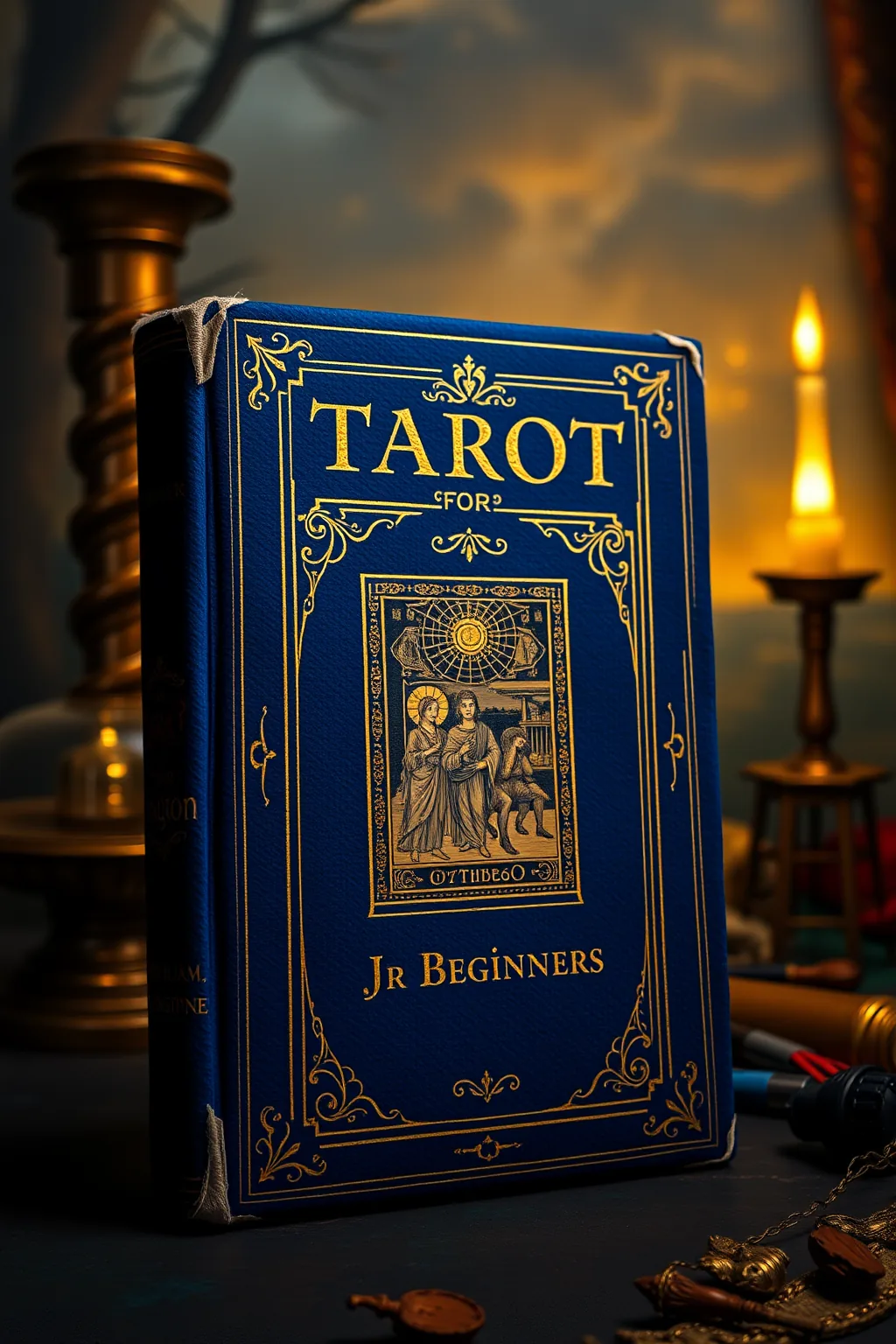
Tarot for Beginners
 80
80

Tarot for Beginners



William J. Kingstone's "Tarot for Beginners" tackles the daunting task of introducing novice readers to the 78-card system with commendable clarity. Its strength lies in its methodical breakdown of both the Major and Minor Arcana, avoiding overwhelming jargon. The book offers a solid grounding in the Rider-Waite-Smith tradition, which is crucial for understanding many modern decks. However, its primary limitation is its brevity; while it covers the essentials, it offers little depth on the more nuanced interpretations or the historical evolution beyond basic facts. The section on the Minor Arcana's court cards, for instance, could benefit from more illustrative examples. Kingstone's approach is functional rather than deeply philosophical, making it an accessible entry point but not a comprehensive guide for those seeking profound esoteric exploration. It serves as a competent primer for the absolute novice.
📝 Description
80
### What It Is This manual serves as an introduction to the foundational principles of Tarot card reading. It aims to demystify the structure of a Tarot deck, typically comprising 78 cards divided into the Major and Minor Arcana. The text guides users through the symbolic language inherent in each card, offering interpretations for individual cards and their interplay within spreads.
### Who It's For "Tarot for Beginners" is explicitly designed for individuals with no prior experience in Tarot. It caters to those curious about divination, self-exploration, or seeking a structured method to understand symbolic communication. The book is ideal for readers who prefer a direct, step-by-step approach to learning a new esoteric practice.
### Historical Context The practice of Tarot card reading has roots tracing back to 18th-century Europe, initially as a game before evolving into a divinatory tool. Influential decks like the Marseille Tarot (circa 1760) and later the Rider-Waite-Smith deck (published 1909) established visual and symbolic conventions that many contemporary Tarot practices, including those discussed in Kingstone's work, build upon. The occult revival of the late 19th and early 20th centuries, particularly figures like Eliphas Lévi and Arthur Edward Waite, significantly shaped modern Tarot interpretations.
### Key Concepts The book introduces core Tarot concepts such as the archetypal journey represented by the Major Arcana, from the Fool's initiation to the World's completion. It also covers the four suits of the Minor Arcana—Wands, Cups, Swords, and Pentacles—and their association with elements and aspects of human experience. Understanding the numerological significance of cards and basic spread configurations are central to grasping the book's teachings.
💡 Why Read This Book?
• Gain a foundational understanding of the 78-card Tarot structure, including the distinct roles of the Major and Minor Arcana, as detailed in Kingstone's methodical approach. • Learn to interpret the core meanings of individual cards, such as The Magician or The High Priestess, and how they function within simple spreads, providing practical skills for self-reflection. • Understand the elemental associations of the four suits (Wands, Cups, Swords, Pentacles) as presented in the book, enabling a deeper connection to the symbolic language of the Tarot.
why_read
⭐ Reader Reviews
Honest opinions from readers who have explored this book.
❓ Frequently Asked Questions
What is the difference between the Major and Minor Arcana in Tarot for Beginners?
In 'Tarot for Beginners,' the Major Arcana represents significant life events and spiritual lessons, while the Minor Arcana, divided into four suits, details everyday occurrences and challenges.
Which Tarot deck is 'Tarot for Beginners' based on?
While not explicitly stated for all interpretations, the book's approach aligns closely with the widely popular Rider-Waite-Smith deck, first published in 1909, known for its rich imagery.
How does the book explain card spreads?
The book introduces basic spread configurations, guiding beginners on how to lay out cards and interpret their relationships to one another for specific questions or insights.
Is 'Tarot for Beginners' suitable for someone interested in psychological Tarot reading?
Yes, the book provides a solid foundation in card meanings that can be adapted for psychological interpretation, focusing on self-understanding and personal growth.
What are the four suits mentioned in the book?
The book covers the four suits of the Minor Arcana: Wands (creativity, action), Cups (emotions, relationships), Swords (intellect, conflict), and Pentacles (material world, finances).
Can I use 'Tarot for Beginners' to learn about historical Tarot decks?
The book focuses on modern interpretations and practical application, referencing the Rider-Waite-Smith tradition. While it provides context, it is not an in-depth historical study of decks like the Tarot de Marseille.
🔮 Key Themes & Symbolism
The Fool's Journey
The book frames the Major Arcana as an archetypal journey, often referred to as the Fool's Journey. This narrative arc follows the progression of 'The Fool' card from zero to twenty-one, symbolizing spiritual growth, life lessons, and the unfolding of consciousness. It's presented as a foundational allegory for understanding the higher spiritual and personal challenges the Tarot represents.
Elemental Suit Associations
Kingstone explains the connection between the four suits of the Minor Arcana (Wands, Cups, Swords, Pentacles) and the classical elements: Fire, Water, Air, and Earth, respectively. This framework is crucial for interpreting the context of daily life events, actions, emotions, and material concerns represented by these cards.
Card Symbolism and Interpretation
A central theme is deciphering the visual and symbolic language of Tarot cards. The book guides readers to look beyond literal imagery to understand the deeper meanings, archetypes, and potential messages embedded within each card, fostering intuitive understanding alongside learned meanings.
Basic Reading Techniques
The work emphasizes practical application by introducing fundamental techniques for reading Tarot. This includes interpreting individual cards, understanding their position within simple spreads, and synthesizing the information to provide guidance or insight into questions posed.
💬 Memorable Quotes
“The Major Arcana represent the big lessons and spiritual milestones.”
— This concise statement highlights the elevated significance of the Major Arcana cards, distinguishing them as markers of profound personal and spiritual development rather than everyday occurrences.
“Each suit in the Minor Arcana corresponds to a different aspect of life.”
— This paraphrase emphasizes the structured system the book uses to categorize and understand the Minor Arcana, linking specific suits to distinct domains of human experience like emotions or intellect.
“Learning Tarot is a step-by-step process.”
— This interpretation underscores the book's pedagogical approach, suggesting that mastery of Tarot is achievable through a methodical progression of learning fundamental concepts and techniques.
“The Fool begins a journey that leads through all the Major Arcana.”
— This paraphrase captures the essence of the Fool's Journey narrative, illustrating how the Tarot's Major Arcana can be viewed as a symbolic progression of archetypal experiences and growth stages.
“Visual cues on the cards offer clues to their meaning.”
— This interpretation stresses the importance of iconography and imagery in Tarot reading, encouraging beginners to observe the details within card illustrations to unlock their symbolic messages.
🌙 Esoteric Significance
Tradition
This work fits within the contemporary esoteric landscape, primarily drawing from the Western Hermetic tradition as popularized by the Rider-Waite-Smith deck. It serves as an accessible entry point, translating complex symbolic systems into digestible lessons for newcomers. While not delving into deep Kabbalistic or Gnostic frameworks, it lays the groundwork for understanding the archetypal narratives common in these lineages.
Symbolism
Key symbols explored include 'The Fool,' representing new beginnings and the potential of the unknown, and the four suits: Wands (action, spirit), Cups (emotions, intuition), Swords (intellect, challenges), and Pentacles (material world, groundedness). These elemental and archetypal symbols are presented as a language for understanding life's experiences and inner states.
Modern Relevance
Kingstone's approach resonates with contemporary self-help and mindfulness practices that utilize symbolic tools for personal growth. It provides a foundation for individuals engaging with modern divination, journaling, and therapeutic applications of Tarot, echoing the personalized and accessible spiritual exploration common in the 21st century.
👥 Who Should Read This Book
• Aspiring diviners seeking a clear, structured introduction to the 78-card Tarot system without prior knowledge. • Individuals interested in self-exploration and personal development who wish to use Tarot as a tool for introspection and understanding life's patterns. • Enthusiasts of esoteric symbolism looking for a practical guide to interpreting archetypal imagery and its application to everyday situations.
📜 Historical Context
William J. Kingstone's "Tarot for Beginners" emerges within a modern landscape shaped by the enduring popularity of Tarot, particularly following the influence of the Rider-Waite-Smith deck, first published in 1909. This era saw Tarot move from its earlier, more game-oriented origins in 18th-century France towards a system deeply integrated with occult and esoteric philosophies, heavily influenced by figures like Arthur Edward Waite and Pamela Colman Smith. The work implicitly engages with the resurgence of interest in divination and self-exploration that characterized the late 20th and early 21st centuries. While Kingstone's text focuses on practical instruction, it operates within a tradition that expanded significantly during the occult revival, where Tarot was explored alongside Hermeticism and Kabbalah. Its approachable format contrasts with more academic or historical explorations of Tarot, positioning it as a contemporary entry point for a broad audience seeking accessible guidance.
📔 Journal Prompts
The Fool's initial leap into the unknown – what unexplored path beckons you?
Reflect on the elemental energies associated with the Cups suit and your current emotional landscape.
Consider the role of intellect, represented by Swords, in a recent challenge you faced.
How might the grounded nature of Pentacles inform your approach to a current material goal?
Identify a Major Arcana card that represents a significant lesson you are currently learning.
🗂️ Glossary
Major Arcana
The set of 22 cards in a Tarot deck that represent significant life lessons, spiritual journeys, and archetypal figures. They are often seen as depicting the major turning points and challenges in life.
Minor Arcana
The 56 cards in a Tarot deck, divided into four suits (Wands, Cups, Swords, Pentacles). They typically represent everyday events, circumstances, and challenges encountered in daily life.
Wands
One of the four suits of the Minor Arcana, traditionally associated with the element of Fire. It relates to passion, creativity, inspiration, action, and ambition.
Cups
One of the four suits of the Minor Arcana, associated with the element of Water. It governs emotions, relationships, intuition, love, and psychic awareness.
Swords
One of the four suits of the Minor Arcana, linked to the element of Air. It represents intellect, thoughts, communication, conflict, truth, and challenges.
Pentacles
One of the four suits of the Minor Arcana, associated with the element of Earth. It pertains to the material world, finances, work, health, and practical matters.
Spread
A specific arrangement of Tarot cards laid out in a pattern to answer a question or explore a situation. Different spreads are designed to provide various types of information.