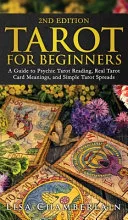
Tarot for Beginners
 81
81

Tarot for Beginners
Chamberlain's "Tarot for Beginners" effectively strips away the arcane jargon that often encumbers introductory guides. Its strength lies in its clear, no-nonsense approach, presenting the 78 cards of the Tarot de Marseille and Rider-Waite-Smith decks as accessible tools for introspection. The 2019 publication date places it firmly within the modern resurgence of Tarot, emphasizing psychological interpretation over rigid prophecy. A notable passage explains the Court Cards not as literal people, but as aspects of the querent's personality or different approaches to a situation. However, the book's brevity, while a virtue for beginners, means it offers limited depth on the historical evolution of specific card symbolism, particularly the esoteric interpretations favored by Golden Dawn practitioners. For those seeking a straightforward entry point, it succeeds admirably, though dedicated students may soon need to consult more specialized literature.
📝 Description
81
### What It Is Lisa Chamberlain's "Tarot for Beginners" offers a structured introduction to the archetypal imagery and divinatory practices of the Tarot. Published in 2019, this work aims to demystify the 78-card deck, presenting it not as a mystical oracle dictating fate, but as a tool for self-reflection and psychological insight. The book breaks down the Major and Minor Arcana, explaining the core meanings of each card and providing foundational techniques for interpreting spreads.
### Who It's For This guide is explicitly designed for individuals new to Tarot. It caters to those curious about divination, personal growth, or the symbolic language of the cards who may feel intimidated by more complex or historically dense texts. It is suitable for skeptics seeking a rational approach to symbolic systems as well as those open to exploring intuitive development and esoteric concepts.
### Historical Context The Tarot's origins are debated, but its modern popularization as a divinatory tool began in the late 18th century with figures like Antoine Court de Gébelin, who linked its symbols to ancient Egyptian wisdom. By the 20th century, Tarot study was influenced by occultists like Aleister Crowley and the Hermetic Order of the Golden Dawn, who developed intricate systems of correspondences. Chamberlain's work, published in 2019, arrives in an era where Tarot has re-entered mainstream consciousness, often discussed within psychological frameworks and digital communities, moving away from solely esoteric interpretations.
### Key Concepts Chamberlain introduces readers to the concept of the Fool's Journey, tracing the Major Arcana as a narrative of personal development. The book also explains the suit system of the Minor Arcana (Wands, Cups, Swords, Pentacles) and the significance of court cards (Page, Knight, Queen, King). It elaborates on basic spreads, such as the three-card draw and the Celtic Cross, guiding users on how to ask questions and interpret card combinations for practical guidance.
💡 Why Read This Book?
• Gain foundational knowledge of the 78 Tarot cards, including the Major and Minor Arcana, presented clearly without esoteric jargon, which is crucial for understanding systems like the Rider-Waite-Smith deck. • Learn practical, step-by-step methods for laying out and interpreting common Tarot spreads, such as the three-card draw, enabling immediate application of learned concepts. • Understand the Tarot as a psychological mirror, a concept highlighted by Chamberlain's focus on card meanings as reflections of internal states and external circumstances, offering a modern perspective distinct from older divinatory methods.
⭐ Reader Reviews
Honest opinions from readers who have explored this book.
❓ Frequently Asked Questions
What is the primary goal of "Tarot for Beginners"?
The book aims to provide a clear, accessible introduction to reading Tarot cards for individuals new to the practice, focusing on understanding card meanings and basic interpretation techniques.
Which Tarot decks does Lisa Chamberlain reference?
The book typically references foundational decks like the Rider-Waite-Smith and Tarot de Marseille, which are common starting points for beginners due to their widespread influence and distinct symbolism.
How does "Tarot for Beginners" differ from more advanced Tarot books?
It focuses on core meanings and simple spreads, avoiding complex symbolism, historical deep dives, or advanced astrological/Kabbalistic correspondences found in texts for experienced readers.
Is "Tarot for Beginners" suitable for someone interested in the psychological aspects of Tarot?
Yes, the book frames Tarot as a tool for self-reflection and understanding personal circumstances, aligning with psychological approaches to divination.
When was "Tarot for Beginners" first published?
Lisa Chamberlain's "Tarot for Beginners" was first published on November 27, 2019, making it a contemporary guide to the practice.
Does the book teach specific divination methods?
Yes, it introduces fundamental divination methods by explaining common spreads like the three-card draw and the Celtic Cross, providing practical application.
🔮 Key Themes & Symbolism
The Fool's Journey Archetype
The work explores the Major Arcana as a symbolic narrative of personal growth, often termed 'The Fool's Journey.' This concept frames the 22 cards as stages of spiritual and psychological development, beginning with the innocent Fool and progressing through various life lessons and challenges. Chamberlain guides readers to see their own life path reflected in this archetypal sequence, encouraging introspection on their current stage and the lessons presented by each card.
Suit System and Elemental Correspondences
A central theme is the breakdown of the Minor Arcana into its four suits: Wands (Fire), Cups (Water), Swords (Air), and Pentacles (Earth). The book details the elemental associations and core themes of each suit, explaining how they represent different facets of human experience—action, emotion, intellect, and material reality, respectively. Understanding these correspondences is presented as key to interpreting the numerical cards within the suits.
Court Card Personalities
Chamberlain addresses the four Court Cards (Page, Knight, Queen, King) within each suit, moving beyond simple identification. The work interprets these cards as representing stages of maturity, personality types, or specific energies related to the suit's element. This offers a nuanced perspective, suggesting they can symbolize aspects of the querent's own psyche or external influences encountered in a reading.
Practical Spread Interpretation
The book emphasizes practical application by teaching fundamental Tarot spreads. It guides beginners on how to construct simple layouts, like the three-card spread for past-present-future or situation-action-outcome, and the more complex Celtic Cross. The focus is on how to synthesize the meanings of individual cards within the context of the spread for actionable insights.
💬 Memorable Quotes
“The Tarot is a mirror reflecting your inner world and outer circumstances.”
— This interpretation highlights the book's emphasis on Tarot as a tool for self-awareness and understanding current life situations, rather than solely predictive divination.
“Each card, from the Major Arcana to the numbered suits, tells a part of a larger story.”
— This concept underscores the interconnectedness of the Tarot deck, suggesting that individual card meanings contribute to a cohesive narrative when read in sequence or within a spread.
“Court cards can represent people, but also attitudes or ways of approaching challenges.”
— This paraphrased concept points to the book's nuanced interpretation of Court Cards, suggesting they are not just literal figures but also symbolic representations of internal states or behavioral patterns.
“Learning the basic meanings is the first step to intuitive reading.”
— This idea suggests that while intuition is important, a solid foundation in established card meanings, as provided by the book, is essential for developing a personal reading style.
“A simple three-card spread can offer clarity on immediate concerns.”
— This highlights the book's focus on accessible techniques, demonstrating that complex questions can be addressed effectively with straightforward spreads, making Tarot practice manageable for beginners.
🌙 Esoteric Significance
Tradition
While not strictly adhering to a single lineage, Chamberlain's work engages with the modern interpretation of Tarot that draws heavily from late 19th and early 20th-century Western esoteric traditions, particularly those influenced by the Hermetic Order of the Golden Dawn and the symbolic frameworks developed by A.E. Waite. It departs by often prioritizing psychological and self-help applications over the more complex astrological and Kabbalistic correspondences emphasized in those older traditions.
Symbolism
The book focuses on the core symbolism of the Major Arcana, particularly the archetypal 'Fool's Journey,' representing stages of human consciousness and development. It also explains the elemental correspondences of the four suits (Wands/Fire, Cups/Water, Swords/Air, Pentacles/Earth) and the symbolic roles of the Court Cards (Page, Knight, Queen, King) as representations of personality archetypes or developmental stages within those elements.
Modern Relevance
Contemporary practitioners and authors focusing on intuitive development, psychological self-exploration, and mindfulness often reference the foundational understandings presented in beginner guides like Chamberlain's. Her approach aligns with modern spiritual movements that utilize Tarot as a tool for personal growth, shadow work, and gaining clarity, making it relevant to current discussions on practical spirituality and self-discovery.
👥 Who Should Read This Book
• Absolute beginners curious about Tarot who want a straightforward, non-intimidating entry point without complex historical or occult theory. • Individuals interested in using Tarot for personal reflection, psychological insight, and understanding life patterns, rather than solely for predictive divination. • Aspiring readers seeking to learn the basic meanings of the 78 cards and fundamental techniques for interpreting spreads like the three-card draw or Celtic Cross.
📜 Historical Context
The Tarot's journey from playing cards to a divinatory system accelerated in the late 18th and 19th centuries. Antoine Court de Gébelin's 1781 essay linked Tarot imagery to ancient Egyptian mysteries, sparking widespread esoteric interest. By the early 20th century, occult orders like the Hermetic Order of the Golden Dawn, with figures such as A.E. Waite and Pamela Colman Smith (creators of the influential Rider-Waite-Smith deck in 1909), codified complex symbolic systems, integrating Kabbalah, astrology, and Hermeticism. These interpretations often stood in contrast to earlier, simpler divinatory uses or the secular playing card games from which Tarot evolved. Lisa Chamberlain's 2019 "Tarot for Beginners" arrives in an era where Tarot has experienced a significant mainstream revival, often presented through psychological lenses and digital platforms, diverging from the more rigid, occult-focused traditions of the early 20th century.
📔 Journal Prompts
The Fool's Journey: Identify your current stage within this archetypal progression.
Suit Meanings: Reflect on how the elements (Fire, Water, Air, Earth) manifest in your daily life.
Court Card Archetypes: Which Court Card personality most closely resembles your current approach to a challenge?
Three-Card Spread: Analyze a recent three-card draw using the book's interpretation guidelines.
Symbolic Imagery: Choose one Major Arcana card and describe its visual elements and associated feelings.
🗂️ Glossary
Major Arcana
The set of 22 trump cards in a Tarot deck, numbered 0 (The Fool) to 21 (The World), representing significant life lessons, archetypal forces, and spiritual milestones.
Minor Arcana
The 56 cards of a Tarot deck divided into four suits (Wands, Cups, Swords, Pentacles), representing everyday events, situations, and challenges in life.
Suit
One of the four divisions within the Minor Arcana (Wands, Cups, Swords, Pentacles), each associated with an element and specific themes of human experience.
Court Cards
The four face cards within each suit of the Minor Arcana: Page, Knight, Queen, and King, often interpreted as personality types, roles, or stages of development.
Spread
A specific arrangement or layout of Tarot cards used for divination or self-reflection, designed to answer particular questions or explore specific themes.
Divination
The practice of seeking knowledge of the future or the unknown by supernatural means; in Tarot, it involves interpreting card meanings to gain insight.
Archetype
A universal, inherited pattern of thought or image derived from the experience of the race and present in the individual unconscious, as defined by Carl Jung.