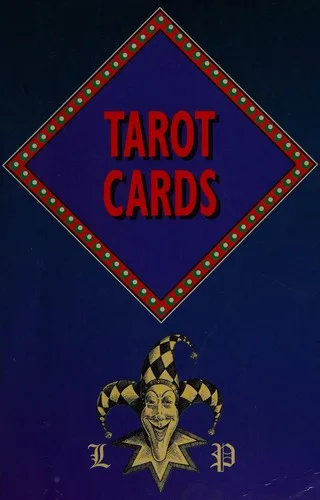
Tarot cards

 72
72

Tarot cards
Jane Lyle’s "Tarot Cards" presents a meticulously researched overview, distinguishing itself through its historical depth rather than novel interpretations. The strength lies in its detailed tracing of the tarot's lineage, particularly its connections to Renaissance symbolism and occult societies. Lyle doesn't shy away from the academic aspects, which is refreshing. However, the book sometimes feels more like a historical document than a practical guide. For instance, the section on the Court Cards, while informative about their origins, offers less direct advice for contemporary readings compared to other texts. The discussion of the Fool's journey through the Major Arcana, however, remains a clear and well-articulated framework for understanding personal development. Lyle's work is a solid, if somewhat dry, academic contribution to tarot literature.
📝 Description
72
### What It Is Jane Lyle's "Tarot Cards" offers a comprehensive exploration of the history, symbolism, and practical application of tarot decks. It moves beyond simple divination to examine the tarot as a complex system of archetypes and a tool for psychological introspection. The work details the evolution of tarot imagery from its Renaissance origins to its modern interpretations.
### Who It's For This book is suited for readers interested in understanding the tarot beyond fortune-telling. It appeals to students of esotericism, Jungian psychology enthusiasts, and those seeking a structured approach to self-discovery through symbolic language. Individuals curious about the historical development of esoteric systems will also find value.
### Historical Context Lyle's text emerged during a period of renewed interest in esoteric traditions, following the occult revivals of the late 19th and mid-20th centuries. The book situates tarot within a broader context of Western esotericism, acknowledging influences from Hermeticism and Kabbalah. It addresses how the tarot transitioned from a game to a divinatory and psychological tool.
### Key Concepts The work elucidates core tarot concepts such as the Major Arcana as a spiritual journey, the Minor Arcana's depiction of everyday life, and the significance of court cards as personality archetypes. It explores the Rider-Waite-Smith deck's foundational role in modern tarot interpretation, a deck often referenced for its rich allegorical artwork.
💡 Why Read This Book?
• Understand the tarot's roots in 15th-century Italy, moving beyond modern interpretations to grasp its original societal context and symbolic language. • Explore the archetypal journey of the Major Arcana, as Lyle details its progression from the Fool to the World, offering a framework for personal growth. • Gain insights into the historical development of the Rider-Waite-Smith deck, first published in 1909, and its foundational influence on contemporary tarot practices.
⭐ Reader Reviews
Honest opinions from readers who have explored this book.
❓ Frequently Asked Questions
When was Jane Lyle's "Tarot Cards" first published?
Jane Lyle's "Tarot Cards" was first published in 1994, entering a growing field of esoteric studies with its detailed historical and symbolic analysis.
What historical periods are covered in the book regarding tarot cards?
The book covers the tarot's origins in 15th-century Italy and traces its evolution through various esoteric revivals and its adoption as a divinatory tool.
Does the book focus on a specific tarot deck?
While discussing the general history, Lyle's work often references the Rider-Waite-Smith deck, acknowledging its significant impact on modern tarot symbolism and interpretation.
Is this book suitable for beginners in tarot?
Yes, the book provides a strong foundational understanding of tarot history and symbolism, making it suitable for beginners who want to learn the context behind the cards.
What esoteric traditions does the book connect tarot to?
Lyle connects tarot to Western esoteric traditions, including Hermeticism and Kabbalah, exploring how these systems influenced tarot's symbolic language and divinatory use.
Does Jane Lyle's book offer practical reading techniques?
While rich in historical and symbolic context, the book's primary focus is on understanding the tarot's development and meaning, offering less emphasis on direct, prescriptive reading techniques.
🔮 Key Themes & Symbolism
Renaissance Origins
Lyle meticulously documents the tarot's emergence in 15th-century Italy, moving beyond later occult interpretations to explore its initial context as a game and a reflection of Renaissance intellectual currents. The book highlights how early decks, like the Visconti-Sforza, served not just as entertainment but also as visual compendiums of societal structures and allegorical meanings, setting the stage for its later esoteric adoption.
Major Arcana as Archetypal Journey
The book elaborates on the concept of the Major Arcana as a narrative of spiritual evolution. Lyle frames the sequence of 22 cards, from The Fool to The World, as a symbolic representation of the soul's progression through various stages of awareness and experience. This interpretation connects tarot to psychological models and esoteric philosophies concerning self-discovery and individuation.
Symbolism of the Minor Arcana
Lyle examines the Minor Arcana, detailing how the four suits (Wands, Cups, Swords, Pentacles) and their numbered cards represent the mundane world and its cycles. The work elucidates the symbolic correspondence of each suit to elements and aspects of life, providing a framework for understanding the practical, everyday dimensions of human experience as depicted through tarot imagery.
The Rider-Waite-Smith Influence
A significant portion of the book addresses the profound impact of the Rider-Waite-Smith deck, first published in 1909. Lyle discusses how Arthur Edward Waite and Pamela Colman Smith's innovative pictorial designs for the Minor Arcana, along with their reinterpretation of the Major Arcana, revolutionized tarot reading and established a visual language that continues to dominate contemporary practice.
💬 Memorable Quotes
“The Fool's journey represents the initiation into spiritual understanding.”
— This paraphrase captures the essence of Lyle's depiction of The Fool as the starting point of a profound inner quest, symbolizing innocence, potential, and the first step on a path of self-discovery.
“Court cards can be seen as archetypal figures representing facets of personality or social roles.”
— This interpretation highlights Lyle's perspective that the King, Queen, Knight, and Page in each suit embody distinct energies or character types, useful for understanding individuals or dynamics in a reading.
“The symbolic language of tarot evolved from Renaissance aristocratic games.”
— This paraphrased concept points to Lyle's research grounding tarot's esoteric use in its historical context as a card game enjoyed by the nobility in 15th-century Italy, before its later adoption by occultists.
“The Rider-Waite-Smith deck standardized visual symbolism for modern tarot.”
— This reflects Lyle's emphasis on the crucial role of the RWS deck, created in the early 20th century, in establishing a widely recognized and influential visual vocabulary for tarot cards.
“Tarot's structure mirrors the Kabbalistic Tree of Life.”
— This interpretation reflects the book's exploration of connections between tarot symbolism and other esoteric systems, suggesting that the arrangement of cards can align with concepts like the Kabbalistic Tree of Life.
🌙 Esoteric Significance
Tradition
Lyle's work fits within the lineage of Western Esotericism, particularly drawing from Hermetic and Kabbalistic frameworks that gained prominence during the occult revivals of the late 19th and early 20th centuries. It acknowledges the influence of orders like the Hermetic Order of the Golden Dawn, which were instrumental in developing the divinatory and symbolic systems associated with tarot. The book positions tarot as a complex symbolic language akin to other esoteric arts, capable of mapping psychological processes and spiritual development.
Symbolism
Key symbols explored include The Fool, representing the primordial state of potential and innocence, and the progression through the Major Arcana as a spiritual quest. The four suits of the Minor Arcana—Wands, Cups, Swords, and Pentacles—are discussed as representations of elemental forces and their manifestation in the material world, mirroring concepts found in Hermeticism and Kabbalah. The Court Cards are examined as archetypal figures embodying personality traits and social roles.
Modern Relevance
Contemporary tarot practitioners and scholars continue to draw upon Lyle's detailed historical contextualization. Her work is foundational for those seeking to understand the evolution of tarot from its origins to its modern application in psychological counseling and spiritual guidance. Thinkers in the field of comparative mysticism and esoteric studies often cite Lyle's research for its clarity on the development of tarot symbolism, particularly its connection to the Rider-Waite-Smith deck.
👥 Who Should Read This Book
• Students of Western Esotericism seeking to understand the historical development and symbolic structure of tarot within broader occult traditions. • Aspiring tarot readers who desire a deep grounding in the origins and archetypal meanings of the cards beyond simple divinatory interpretations. • Academics and researchers interested in the history of games, symbolism, and their intersection with psychological and spiritual practices in Western culture.
📜 Historical Context
Jane Lyle's "Tarot Cards," published in 1994, arrived during a period when occult studies were experiencing a significant resurgence, moving from niche interest to broader academic and popular attention. The late 20th century saw a proliferation of works on Western esotericism, influenced by figures like Manly P. Hall and the continuing impact of the Golden Dawn. Lyle's text positioned itself within this milieu by meticulously tracing the tarot's lineage, acknowledging its roots in 15th-century Italian playing cards and its subsequent transformation into a divinatory tool. It engaged with the intellectual currents that viewed tarot not merely as fortune-telling apparatus but as a symbolic system reflecting psychological and spiritual archetypes, influenced by depth psychology. This approach contrasted with purely historical or simplistic divinatory manuals, offering a more integrated view. Lyle's work implicitly responded to the ongoing academic and practitioner debates about tarot's authenticity and its relationship to older mystical traditions, particularly during a time when scholars like Frances Yates had already highlighted the historical importance of Hermeticism.
📔 Journal Prompts
The Fool's journey through the Major Arcana as a personal narrative.
Interpreting the Court Cards as archetypal energies in daily life.
The symbolism of the four suits in relation to elemental correspondences.
Tracing the historical evolution of tarot imagery from the 15th century to the Rider-Waite-Smith deck.
Connecting tarot symbolism to personal psychological patterns.
🗂️ Glossary
Major Arcana
The set of 22 trump cards in a tarot deck, often interpreted as representing significant life lessons, archetypal figures, and stages of spiritual development.
Minor Arcana
The 56 cards of a tarot deck, divided into four suits (Wands, Cups, Swords, Pentacles), which are typically seen as representing everyday events, challenges, and situations.
Rider-Waite-Smith Deck
A highly influential tarot deck first published in 1909, known for its allegorical illustrations by Pamela Colman Smith and its detailed symbolism, which has shaped much of modern tarot practice.
Archetype
In Jungian psychology and esoteric thought, a universal, archaic pattern or image that derives from the collective unconscious and is made manifest in symbols.
Hermeticism
A philosophical and religious tradition based on the purported teachings of Hermes Trismegistus, emphasizing spiritual enlightenment and the interconnectedness of the cosmos.
Kabbalah
A system of Jewish mysticism that explores the nature of God and the universe through symbolic interpretation, often represented by the Tree of Life.
Divination
The practice of seeking knowledge of the future or the unknown by supernatural means, often through symbolic tools like tarot cards.