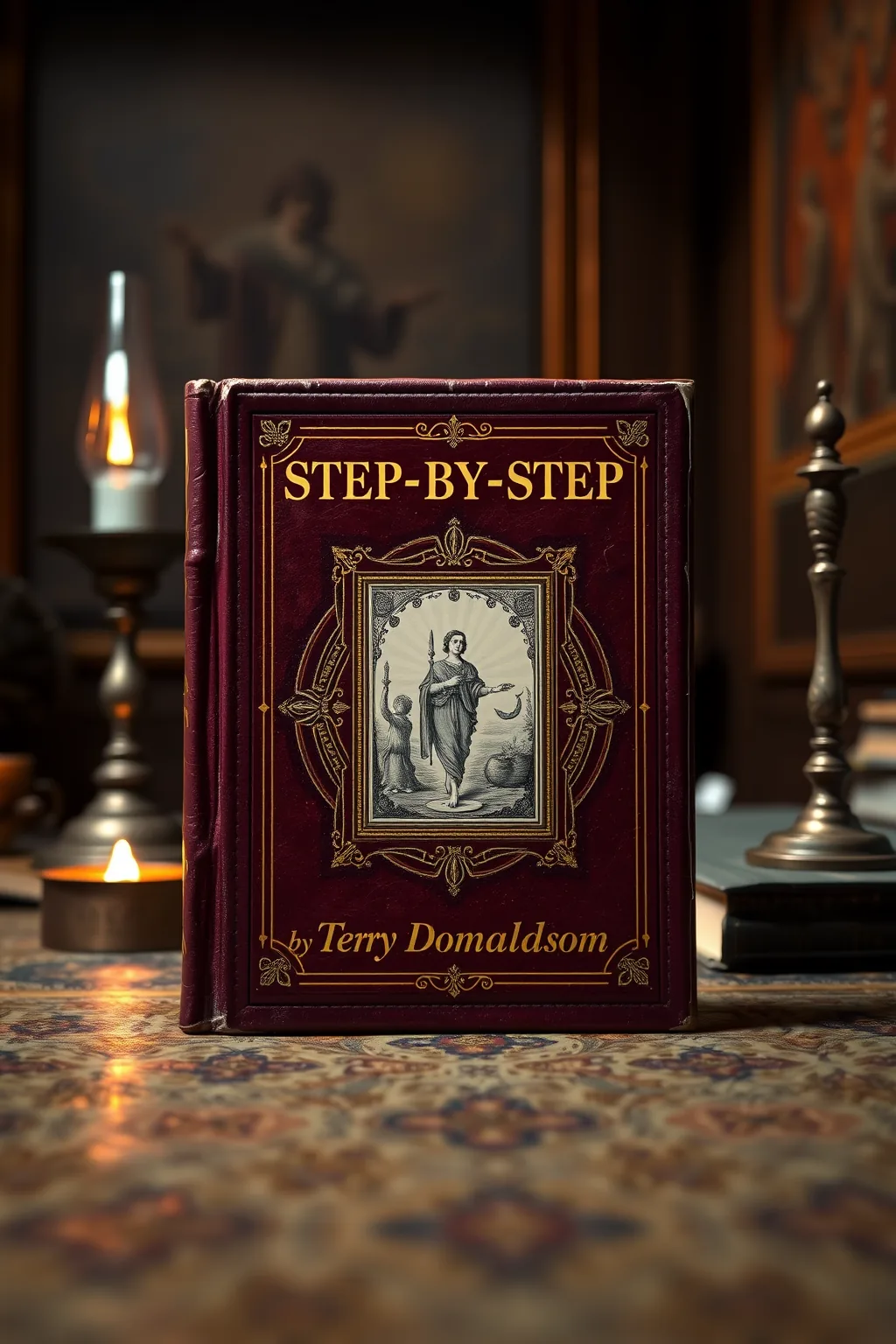
Step-by-step Tarot
 74
74

Step-by-step Tarot
Donaldson's "Step-by-step Tarot" succeeds admirably in its stated goal of demystifying the tarot. The strength lies in its methodical progression, breaking down the often overwhelming symbolism of 78 cards into digestible lessons. It avoids the pitfalls of overly esoteric jargon, making it genuinely accessible. A particularly effective section details how to approach the 'court cards' – King, Queen, Knight, and Page – not just as archetypes but as reflections of personality dynamics within a reading. Its primary limitation, however, is its 1995 publication date, which means some of the contemporary esoteric discourse or digital tools now common are absent. Nevertheless, for the novice tarot student seeking a clear, practical foundation, the book provides a solid training ground. Donaldson offers a sensible, step-by-step entry into the art of card reading.
📝 Description
74
Terry Donaldson's 1995 book, "Step-by-step Tarot," offers a clear method for learning tarot interpretation.
Published in 1995, "Step-by-step Tarot" by Terry Donaldson provides a structured method for tarot card interpretation. The book functions as a workbook, moving users from foundational knowledge to applied techniques. Its aim is to simplify tarot reading, removing the obscurity that often surrounds the practice.
This guide suits a wide range of readers, from those entirely new to tarot to individuals with prior experience looking to improve their abilities. The practical, step-by-step format supports independent study, charting a direct course for anyone interested in understanding the symbolic language of tarot cards. It was released during a time of growing interest in self-help and esoteric studies.
Terry Donaldson's "Step-by-step Tarot" emerged in the mid-1990s, a period when interest in spiritual and self-help literature was increasing. The book offered a straightforward entry into tarot, a practice sometimes seen as complex or mystical. It contrasted with more academic or purely esoteric approaches prevalent at the time, providing a practical manual for a general audience.
💡 Why Read This Book?
• Learn a structured method for card selection and interpretation, explicitly guided by advice on choosing your first tarot deck, as detailed in the book's early chapters. • Understand the distinct meanings of each of the 78 tarot cards, including the court cards like the Knight and Page, through clear explanations and exercises. • Gain practical skills in applying various tarot spreads, such as those described for daily readings or specific question-answering, moving beyond mere memorization.
⭐ Reader Reviews
Honest opinions from readers who have explored this book.
❓ Frequently Asked Questions
What is the primary benefit of Terry Donaldson's "Step-by-step Tarot" for beginners?
The book offers a structured, workbook-style approach that demystifies tarot reading. It guides beginners through choosing a deck, understanding individual card meanings, and using various spreads, making the learning process accessible and practical.
When was "Step-by-step Tarot" by Terry Donaldson first published?
The book "Step-by-step Tarot" by Terry Donaldson was first published in 1995.
Does this book cover different tarot spreads?
Yes, "Step-by-step Tarot" describes various card spreads, providing practical examples of how to lay out and interpret cards for different types of readings and questions.
Who is the intended audience for "Step-by-step Tarot"?
The book is suitable for both absolute beginners to tarot and those with some experience looking for a more systematic training method. Its clear, step-by-step format appeals to self-learners.
What does the book teach about individual tarot cards?
It teaches the meanings of each card in the deck, covering both the Major and Minor Arcana. The focus is on practical interpretation rather than purely symbolic or historical analysis.
Is "Step-by-step Tarot" considered a comprehensive guide?
Yes, the book is presented as a complete guide, offering all the necessary training to begin reading tarot cards, from understanding basic meanings to applying them in practice.
🔮 Key Themes & Symbolism
Structured Learning Path
The book emphasizes a methodical, step-by-step curriculum for learning tarot. Unlike more intuitive or tradition-bound texts, Donaldson structures the acquisition of knowledge from selecting a deck to interpreting complex spreads. This approach aims to build confidence by progressing logically through the material, ensuring users grasp foundational concepts before moving to advanced applications, making the esoteric art of tarot accessible through systematic instruction.
Explaining Card Meanings
A central theme is the clarification of individual card symbolism. Donaldson breaks down the archetypal meanings of the Major and Minor Arcana, moving beyond rote memorization to foster genuine understanding. The book encourages users to see the cards not as fixed omens but as fluid symbols representing psychological states, potential events, and guidance, thus stripping away the fear often associated with their interpretation.
Practical Application of Spreads
The work moves beyond theoretical knowledge to practical application, detailing various tarot spreads. These range from simple one-card draws for daily reflection to more elaborate layouts designed to address specific questions or situations. The instruction focuses on how to effectively use these spreads to gain insights and guidance, bridging the gap between learning card meanings and performing actual readings.
Accessible Esotericism
Donaldson's approach aims to make esoteric practices like tarot reading accessible to a wide audience. By using clear language and a workbook format, the book lowers the barrier to entry for those interested in divination and self-discovery. It positions tarot not as an exclusive or arcane art, but as a learnable skill available to anyone willing to follow a structured course.
💬 Memorable Quotes
Direct passages from the work, attributed to the author.
“An excellent introductory course that explains the ancient art of tarot reading.”
— This captures the book's primary objective: to simplify and clarify tarot. It suggests that the work serves as a foundational educational resource, making a complex subject understandable for newcomers.
“With equal appeal for both the beginner and the more experienced student.”
— This interpretation points to the book's balanced approach, suggesting it offers value across different levels of tarot knowledge. Beginners gain a solid foundation, while experienced readers may find refreshers or new perspectives.
“Various spreads are described.”
— This concise statement emphasizes the practical utility of the book. It signals that readers will learn not just card meanings but also how to arrange and interpret them in context through different layout techniques.
💡 Key Ideas
Editorial paraphrase of the work's core concepts — not direct quotes.
This comprehensive workbook guides you through a practical step-by-step course that is fun and simple to use.
This quote highlights the book's design as an interactive learning tool. It emphasizes ease of use and enjoyment, positioning tarot study as an engaging activity rather than a daunting academic pursuit.
It gives all the advice you need to choose the right pack and learn the meanings of each card.
This paraphrase underscores the book's foundational coverage. It assures the reader that essential starting points – selecting a deck and understanding core symbolism – are thoroughly addressed within its pages.
🌙 Esoteric Significance
Tradition
While not explicitly aligning with a single esoteric lineage like Kabbalah or Hermeticism, "Step-by-step Tarot" operates within the broader Western esoteric tradition's interest in divination and self-knowledge. It draws upon the established structure of the Rider-Waite-Smith deck, which itself is steeped in Masonic and Hermetic symbolism. The book functions as a secularized, practical entry point, making symbolic interpretation techniques accessible without requiring adherence to specific magical or religious doctrines.
Symbolism
The book systematically addresses the symbolism inherent in the Rider-Waite-Smith tarot deck. Key symbols discussed include the archetypal figures of the Major Arcana (e.g., The Fool, The Magician, The High Priestess) representing stages of spiritual or psychological development, and the four suits of the Minor Arcana (Wands, Cups, Swords, Pentacles) symbolizing elements and different facets of human experience (action, emotion, intellect, material world).
Modern Relevance
Donaldson's methodical approach continues to resonate with contemporary tarot enthusiasts seeking clear, practical instruction. While modern discourse may incorporate more psychological depth or intersectional perspectives, the foundational skills taught in "Step-by-step Tarot" remain relevant. Its accessible format serves as a gateway for individuals exploring self-help, mindfulness, and intuitive development through divination, influencing beginner-focused online courses and modern tarot communities.
👥 Who Should Read This Book
• Absolute beginners to tarot seeking a clear, structured introduction that explains card meanings and spreads. • Individuals interested in self-discovery and personal development who want a practical tool for introspection and guidance. • Aspiring tarot readers looking for a foundational workbook that systematically builds skills for interpreting card readings.
📜 Historical Context
Terry Donaldson's "Step-by-step Tarot" emerged in 1995, a period marked by a significant surge in popular interest in New Age spirituality and esoteric practices. This era saw a proliferation of accessible guides aimed at explaining subjects previously confined to specialized circles. The book entered a market already influenced by figures like Rachel Pollack, whose works often explored tarot's psychological and narrative depth, and Dion Fortune, a foundational figure in British occultism whose writings provided a more traditional Hermetic framework. Donaldson's approach, however, leaned towards a practical, almost workbook-like methodology, contrasting with the more deeply theoretical or mystical explorations found in earlier occult literature. Published during a time when the internet was nascent, books like this served as primary conduits for self-education in subjects like tarot, astrology, and witchcraft, offering structured learning outside of formal esoteric orders or academic study.
📔 Journal Prompts
The Fool's journey through the Major Arcana represents a path of new beginnings; reflect on a recent significant start in your life.
Consider the symbolic meaning of the suit of Swords as presented in the book; how have intellectual or conflict-based challenges manifested for you?
Analyze the role of the Court Cards (King, Queen, Knight, Page) in your own personality or relationships, as described by Donaldson.
Reflect on the advice given for choosing your first tarot deck; what qualities do you seek in a tool for divination?
Evaluate the utility of a specific tarot spread discussed in the text for understanding a current life situation.
🗂️ Glossary
Major Arcana
The set of 22 trump cards in a tarot deck, often representing significant life lessons, spiritual archetypes, and major events or turning points.
Minor Arcana
The 56 cards of a tarot deck, divided into four suits (Wands, Cups, Swords, Pentacles), which typically represent everyday events, challenges, and circumstances.
Court Cards
The four face cards within each suit of the Minor Arcana: King, Queen, Knight, and Page. They can represent people, personality types, or specific energies.
Spread
A specific arrangement of tarot cards laid out in a pattern for interpretation, designed to answer a particular question or explore a situation.
Divination
The practice of seeking knowledge of the future or the unknown by supernatural means, often through tools like tarot cards.
Archetype
A universally understood symbol, character, or pattern of behavior that recurs in different cultures and stories, often represented in the Major Arcana.
Symbolism
The use of symbols to represent ideas and qualities, crucial for interpreting the meaning of tarot cards.