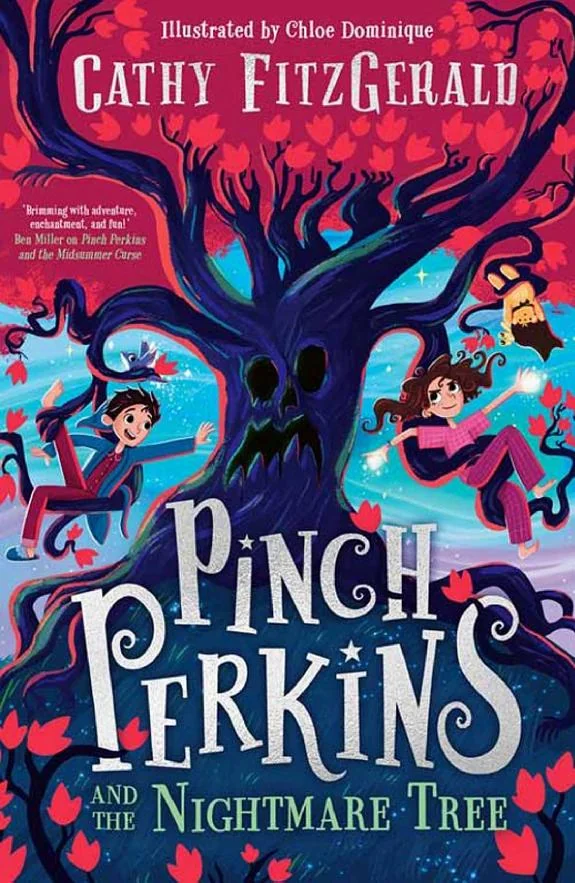
Pinch Perkins and the Nightmare Tree
 83
83

Pinch Perkins and the Nightmare Tree



Cathy FitzGerald’s Pinch Perkins and the Nightmare Tree presents a raw, untamed magic that feels refreshingly chaotic. The author avoids the common pitfall of instant magical proficiency, instead focusing on the sheer pandemonium Pinch’s budding powers unleash. A particularly effective passage details the accidental animation of inanimate objects, creating a scene of surreal, disruptive mischief that perfectly captures the book's spirit. However, the narrative’s rapid descent into trouble, while central to its premise, occasionally overshadows deeper character development. Pinch’s internal struggles are hinted at but not fully explored, leaving the reader wanting more insight into their emotional response to the escalating chaos. FitzGerald's strength lies in depicting the immediate, tangible consequences of uncontrolled arcane forces. The book offers a compelling, if somewhat abrupt, introduction to a magically turbulent world.
📝 Description
83
### What It Is Pinch Perkins and the Nightmare Tree, penned by Cathy FitzGerald and first published on January 30, 2025, introduces readers to Pinch, a protagonist whose nascent magical abilities are proving unexpectedly disruptive. The narrative centers on the uncontrolled eruption of Pinch’s powers, leading to significant complications and chaos within their environment. This work functions as a foundational text in a developing esoteric narrative series, exploring the inherent difficulties and responsibilities that accompany emerging arcane talents. It sets the stage for future explorations into the consequences of magic wielded without full comprehension or control.
### Who It's For This book is crafted for individuals drawn to narratives of magical awakening and its immediate fallout. Readers who appreciate stories where characters grapple with powers they don't fully understand, and the resulting entanglements, will find resonance here. It appeals to those interested in the early stages of magical development, particularly when such development is portrayed as a source of conflict and personal growth rather than immediate mastery. The intended audience seeks fiction that examines the practical, often messy, side of inheriting or discovering supernatural abilities.
### Historical Context FitzGerald's work emerges in a literary landscape increasingly interested in modern mythologies and the integration of magical elements into contemporary settings. While specific historical parallels are not explicit, the 2025 publication date places it within a period where speculative fiction often engages with themes of hidden worlds and personal transformation. The book implicitly comments on the ongoing fascination with the occult and the supernatural that has seen a resurgence since the late 20th century, as seen in the rise of authors like Neil Gaiman who blend the mundane and the magical. It follows a tradition of children's and young adult literature exploring magical systems, albeit with a focus on the disruptive potential rather than pure escapism.
### Key Concepts The central concept is the 'uncontrolled magic' trope, where power manifests before skill or wisdom. This is exemplified by Pinch's abilities causing unintended trouble. Another key concept is the 'coming-of-age' narrative, reframed through an esoteric lens, focusing on the arduous process of learning to manage innate magical talent. The 'Nightmare Tree' itself serves as a potent symbol, representing the subconscious fears or the tangible manifestation of chaotic magical energy that Pinch must confront. The narrative explores the idea that magic is not merely a tool but a force with its own unpredictable nature.
💡 Why Read This Book?
• Understand the immediate, disruptive consequences of nascent magic, as exemplified by Pinch's uncontrolled abilities causing chaos, offering a unique perspective beyond typical wish-fulfillment fantasy. • Explore the symbolic weight of the 'Nightmare Tree,' a motif representing internal fears and external magical turmoil, providing a concrete focal point for personal struggle and growth. • Experience a narrative that grounds magical discovery in practical, often messy, real-world complications, differing from idealized portrayals of magical learning found in many fantasy works.
why_read
⭐ Reader Reviews
Honest opinions from readers who have explored this book.
❓ Frequently Asked Questions
What is the core conflict in Pinch Perkins and the Nightmare Tree?
The central conflict arises from Pinch's magical abilities manifesting uncontrollably, causing widespread trouble and chaos before they can be understood or managed, setting up a dynamic of struggle and learning.
When was Pinch Perkins and the Nightmare Tree first published?
The book was first published on January 30, 2025, positioning it as a contemporary work within the esoteric fiction genre.
What kind of magic does Pinch Perkins possess?
Pinch's magic is depicted as innate and largely untrained, manifesting in unpredictable ways that lead to disruption and unintended consequences, rather than precise spellcasting.
Who is the author of Pinch Perkins and the Nightmare Tree?
The author is Cathy FitzGerald, whose work introduces this narrative of magical emergence and its inherent difficulties.
Does the book offer a complete magical system explanation?
No, the focus is on the experience of uncontrolled magic and its effects, rather than a detailed exposition of a magical system, aligning with its narrative of discovery.
What does the 'Nightmare Tree' symbolize in the book?
The Nightmare Tree serves as a significant symbol, likely representing the manifestation of Pinch's fears, the chaotic nature of their magic, or the challenges they must overcome.
🔮 Key Themes & Symbolism
The Perils of Untamed Power
The narrative foregrounds the immediate, often chaotic, repercussions of magical abilities that emerge without proper training or understanding. Pinch's story illustrates that power, particularly of a supernatural kind, is not inherently benign; its uncontrolled release can disrupt personal lives and environments. This theme challenges idealistic views of magic, presenting it as a force that demands immense responsibility and careful stewardship, a concept that resonates within esoteric traditions focused on ethical magical practice and the dangers of hubris.
Symbolism of the Nightmare Tree
The titular Nightmare Tree functions as a potent symbol within the work. It represents not only the external manifestation of Pinch's burgeoning, chaotic magic but also potentially embodies their internal fears and psychological landscape. In esoteric thought, such symbolic flora often represents growth, danger, and connection to deeper, sometimes perilous, realms of consciousness. The tree serves as a focal point for Pinch's struggle, a tangible representation of the challenges that must be confronted for personal and magical maturation.
Magical Coming-of-Age
FitzGerald reinterprets the classic coming-of-age narrative through an esoteric lens. Instead of typical adolescent challenges, Pinch faces the daunting task of mastering unpredictable magical talents. This journey emphasizes the difficult, often messy, process of self-discovery when intertwined with arcane forces. It explores the idea that true magical development involves confronting the darker, more chaotic aspects of oneself and one's power, a theme common in initiatory traditions that require rigorous self-examination.
Consequences and Responsibility
A core tenet of the book is the exploration of cause and effect in the context of magic. Pinch's actions, driven by uncontrolled power, have tangible and often negative consequences. This highlights the ethical dimension of wielding any form of power, especially magic. The narrative implicitly suggests that with magical ability comes a profound responsibility to understand and control it, lest it inflict harm. This aligns with many esoteric philosophies that stress the importance of discipline and ethical conduct for practitioners.
💬 Memorable Quotes
“Pinch’s magic has arrived... and it’s causing a whole lot of trouble!”
— This blurb encapsulates the central premise: the sudden, disruptive emergence of Pinch's magical abilities. It immediately sets a tone of chaos and conflict, signaling that the narrative will focus on the immediate fallout of uncontrolled power.
“The Nightmare Tree pulsed with an energy Pinch couldn't explain.”
— This highlights the mysterious and perhaps malevolent nature of the titular symbol. It suggests a connection between Pinch's magic and an external, potent force that is both alluring and dangerous.
“Every spark of Pinch's power seemed to find something to break.”
— This vividly illustrates the destructive aspect of Pinch's untrained magic. It emphasizes the lack of control and precision, showing how even nascent magical efforts result in tangible damage.
“Understanding came slower than the chaos.”
— This phrase captures the core struggle of the protagonist. It contrasts the rapid proliferation of magical disruption with the much slower, more arduous process of gaining knowledge and control.
“The world felt tilted, wrong, ever since the magic took hold.”
— This conveys the profound impact of Pinch's abilities on their perception of reality. It suggests that the intrusion of magic fundamentally alters one's experience of the mundane world, creating a sense of disorientation.
🌙 Esoteric Significance
Tradition
This work, while fictional, touches upon themes prevalent in Western esoteric traditions, particularly those concerned with the development of the self and the responsible handling of inner or outer magical forces. It can be loosely associated with the concept of the 'inner work' found in Hermeticism and modern magical paths, where personal transformation is paramount. The narrative departs from strict adherence to established lineages, instead focusing on a more accessible, character-driven exploration of magical emergence, suitable for a contemporary audience unfamiliar with complex doctrines.
Symbolism
The 'Nightmare Tree' is a central symbolic motif, likely representing the shadow self, repressed fears, or the untamed chaos of the unconscious mind that must be confronted. The uncontrolled 'magic' itself symbolizes primal energy that, without proper grounding and understanding, can lead to destruction. The narrative might also implicitly utilize the concept of the 'astral plane' or psychic turbulence, where emotional states and magical intentions can manifest in unpredictable, often unsettling, ways.
Modern Relevance
Contemporary practitioners and students of esoteric philosophy might draw parallels between Pinch's struggle and their own journeys of self-discovery and magical development. The book's focus on the messy reality of power aligns with modern discussions in witchcraft and occultism that emphasize ethical practice and the psychological impact of magical work. Thinkers exploring the integration of magic into everyday life, or those examining the archetypal journey of the reluctant hero, may find resonance in FitzGerald's depiction of uncontrolled magical potential.
👥 Who Should Read This Book
• Young adults and older readers interested in fantasy narratives that explore the difficult, often chaotic, side of discovering magical abilities, moving beyond simple wish-fulfillment. • Aspiring practitioners of esoteric arts who appreciate stories that realistically portray the challenges and responsibilities associated with developing supernatural talents. • Fans of contemporary fiction that blends magical realism with themes of personal growth and confronting inner turmoil, seeking relatable characters grappling with extraordinary circumstances.
📜 Historical Context
Cathy FitzGerald’s Pinch Perkins and the Nightmare Tree, published in 2025, enters a contemporary literary scene where speculative fiction frequently explores the intersection of the mundane and the magical. While not directly tied to a specific historical movement like the Hermetic Order of the Golden Dawn (founded 1888), it echoes the latter 20th and early 21st-century resurgence of interest in occult themes within popular culture. The work implicitly engages with the ongoing discourse surrounding the nature of power and its responsible use, a theme explored by numerous esoteric writers. Its focus on the disruptive potential of magic aligns with a modern sensibility that often subverts traditional heroic narratives. Unlike earlier fantasy that might have presented magic as an immediate gift, FitzGerald's work reflects a more nuanced, critical perspective on arcane abilities, possibly influenced by contemporary discussions on the ethics of power and unintended consequences, a contrast to the more straightforward magical systems found in authors like J.R.R. Tolkien.
📔 Journal Prompts
Pinch's uncontrolled magic caused significant trouble. Reflect on a time when your own actions, driven by impulse rather than thought, led to unforeseen consequences.
The Nightmare Tree serves as a potent symbol. What personal 'nightmare trees' – fears or unresolved issues – might be influencing your own life or creative endeavors?
Consider the phrase 'Understanding came slower than the chaos.' How can you foster patience and a methodical approach when facing overwhelming situations or learning new skills?
Analyze the initial disruption caused by Pinch's magic. How does this portrayal differ from other fictional depictions of magical awakenings you've encountered?
Explore the idea that magic requires responsibility. What ethical considerations should guide the use of any powerful ability, whether magical or mundane?
🗂️ Glossary
Nightmare Tree
A central symbolic element in the book, representing the chaotic manifestation of Pinch's uncontrolled magic, internal fears, or a dangerous external force.
Uncontrolled Magic
Refers to magical abilities that manifest spontaneously and unpredictably, often with disruptive or harmful consequences, before the individual gains mastery or understanding.
Esoteric
Relating to or concerned with the inner, secret, or specialized knowledge, particularly in spiritual, mystical, or occult traditions.
Magical Awakening
The process by which an individual becomes aware of and begins to manifest supernatural or arcane abilities, often involving a period of discovery, confusion, and struggle.
Symbolic Flora
Plants or trees used in literature or mythology to represent abstract concepts, emotions, or spiritual states, such as growth, danger, or transformation.
Arcane Talent
A natural aptitude or gift for practicing magic or engaging with supernatural forces, often implying a hidden or mysterious potential.
Coming-of-Age Narrative
A story that focuses on the psychological and moral growth of the protagonist from youth to adulthood, often involving challenges and self-discovery.