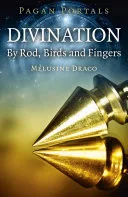
Pagan Portals - Divination
 81
81

Pagan Portals - Divination



Melusine Draco's *Pagan Portals - Divination* attempts to bridge the gap between theoretical knowledge and practical application in the realm of divination. The author rightly identifies that proficiency, particularly within a witchcraft context, hinges on sustained practice rather than passive learning. Draco's insistence on cultivating the 'art of seeing' is a strong point, urging readers to develop their inherent intuitive faculties. However, the book sometimes feels overly directive, presenting its specific methods as the primary path to success. A more nuanced exploration of how different individuals might develop their own unique divinatory languages, perhaps drawing more explicitly from diverse historical practices beyond the implied Wiccan/Pagan framework, would have enriched the text. Despite this, the emphasis on personal gnosis and the necessity of vigorous practice makes it a valuable, albeit somewhat narrowly focused, addition to the practical occult shelf. It serves as a solid primer for those dedicated to dedicated, personal engagement with divinatory arts.
📝 Description
81
### What It Is Pagan Portals - Divination by Melusine Draco is a practical guide to developing divinatory skills within a Pagan framework. Published in 2018, the book moves beyond mere theory, emphasizing the necessity of dedicated practice for true proficiency. It introduces a variety of techniques and correspondences, asserting that developing an intuitive 'art of seeing' is paramount for any successful divinatory endeavor. The work covers foundational principles applicable to various forms of divination, aiming to equip readers with the tools for personal discovery.
### Who It's For This volume is squarely aimed at individuals identifying with or exploring modern Pagan witchcraft. It is particularly suited for those who have moved past introductory concepts and seek a deeper, more hands-on approach to divination. Readers interested in developing a personal connection with their divinatory tools and intuition, rather than relying solely on external interpretations, will find value here. It caters to those willing to commit to the rigorous practice the author stresses as essential for mastery.
### Historical Context While the 2018 publication date positions it within contemporary Paganism, the book engages with a long lineage of divinatory practices that have been central to esoteric traditions for centuries. It implicitly acknowledges the vast landscape of occult literature that predates it, from Agrippa's *Three Books of Occult Philosophy* to modern works on Tarot and scrying. Draco's emphasis on personal practice and intuition can be seen as a modern interpretation of the Gnostic pursuit of inner gnosis, adapted for the specific needs of contemporary witches seeking direct knowledge.
### Key Concepts Draco introduces the concept of the 'art of seeing,' which is fundamental to successful divination. This refers to the cultivated ability to perceive subtle energies, signs, and correspondences that often go unnoticed. The book also highlights the importance of 'correspondences,' the interconnectedness of symbols, elements, and concepts in the universe, which form the basis for interpreting divinatory readings. Furthermore, it stresses the role of 'occult techniques' as tools to unlock intuitive perception and facilitate communication with the unseen.
💡 Why Read This Book?
• Gain practical techniques for developing the 'art of seeing,' a core skill for intuitive divination, as detailed in Melusine Draco's approach. • Understand the crucial role of 'correspondences' in interpreting divinatory signs, a concept central to the book's methodology and Pagan practice. • Commit to the author's call for 'vigorous practice,' recognizing that true divinatory skill, as explored in the 2018 publication, is forged through consistent effort and personal discovery.
why_read
⭐ Reader Reviews
Honest opinions from readers who have explored this book.
❓ Frequently Asked Questions
What specific divinatory tools does Melusine Draco focus on in Pagan Portals - Divination?
The book mentions the use of a rod and fingers as divinatory tools, alongside a variety of other means, emphasizing the development of the 'art of seeing' which can be applied broadly.
Is Pagan Portals - Divination suitable for complete beginners in witchcraft?
While it covers foundational concepts, the book stresses that proficiency requires 'vigorous practice.' It's best suited for those ready to move beyond basic introductions and commit to dedicated effort.
What is the significance of 'correspondences' in this book?
Correspondences refer to the interconnectedness of symbols, elements, and concepts. The book uses this understanding as a key to interpreting signs and unlocking deeper meaning in divination.
When was Pagan Portals - Divination first published?
The book was first published on August 31, 2018.
Does the book offer theoretical explanations or practical exercises?
The book focuses heavily on practical application, arguing that theoretical knowledge alone is insufficient and that proficiency comes through consistent, hands-on practice of occult techniques.
What does the author mean by the 'art of seeing'?
The 'art of seeing' is presented as a cultivated intuitive ability to perceive subtle signs, energies, and occult connections crucial for successful divination, beyond literal interpretation.
🔮 Key Themes & Symbolism
The Art of Seeing
This central theme posits divination not merely as an act of prediction, but as a cultivated perception. Draco emphasizes developing an internal 'art of seeing' that allows practitioners to interpret subtle signs, energies, and correspondences. This goes beyond rote memorization of meanings, encouraging a deeper, intuitive engagement with the divinatory process. It's about training the inner eye to perceive the unseen connections that inform the present and potential futures, a core tenet for achieving proficiency as a witch.
Vigorous Practice
Draco repeatedly stresses that true divinatory skill is achieved through dedicated and 'vigorous practice.' The book frames divination as a craft that requires consistent effort, experimentation, and self-reflection, much like any other specialized skill. It moves away from the idea of innate talent alone, highlighting that systematic application of techniques and personal exploration are essential for unlocking one's potential and gaining confidence in reading signs and omens.
Correspondences and Occult Techniques
The book explores the foundational esoteric principle of 'correspondences' – the interconnectedness of all things in the cosmos. Understanding these links between symbols, elements, planets, and energies is presented as vital for accurate divination. Alongside this, Draco outlines various 'occult techniques' designed to sharpen intuition and facilitate this understanding, serving as practical tools for the modern Pagan practitioner seeking to enhance their divinatory abilities.
Personal Discovery
A significant undercurrent in the book is the emphasis on personal discovery within divination. While providing frameworks and techniques, Draco encourages readers to find their own methods and develop a personal relationship with their divinatory tools and intuition. This aligns with many modern Pagan paths that value individual experience and direct connection to the divine or the subtle realms, fostering autonomy in practice.
💬 Memorable Quotes
“Divination is only a small part of a witch’s stock in trade...”
— This highlights the author's view that divination is a practical, integrated skill within the broader context of witchcraft, not an isolated or purely theoretical pursuit.
“...proficiency will only come through vigorous practice.”
— This statement underscores the book's core message: mastery in divination requires consistent, dedicated effort and hands-on experience, not just passive learning.
“Before a witch can perform any of these operations with any degree of success, we need to develop the ‘art of seeing’...”
— This points to the foundational importance of cultivating intuitive perception and subtle awareness as a prerequisite for effective divinatory work.
“...a great variety of means, correspondences, signs and occult techniques.”
— This indicates the multifaceted approach the book advocates, drawing upon diverse methods and esoteric principles to facilitate divinatory insight.
“...the ability to divine with rod, fingers...”
— This offers concrete examples of tools and methods that readers can explore, grounding the discussion in tangible practices.
🌙 Esoteric Significance
Tradition
This work fits within the broad spectrum of modern Pagan witchcraft, drawing implicitly on Western Esotericism's emphasis on practical magic and personal gnosis. It aligns with traditions that value direct experience and intuitive development over strict adherence to dogma. While not explicitly Hermetic or Kabbalistic, it employs the principle of correspondences, a concept deeply rooted in these traditions, adapting it for contemporary witchcraft practices.
Symbolism
The 'rod' and 'fingers' mentioned serve as potent symbols of direct, personal engagement with the unseen. The rod can represent direction, focus, and the channeling of energy, while fingers symbolize tactile connection and intuitive tracing of patterns. 'Correspondences' themselves function symbolically, representing the underlying unity and interconnectedness of the cosmos, a fundamental esoteric concept.
Modern Relevance
Contemporary practitioners focused on personal empowerment and intuitive development in their spiritual paths find resonance with Draco's approach. Modern witchcraft circles often emphasize the 'art of seeing' and practical application, making this book a relevant guide for those seeking to deepen their connection to divinatory arts beyond theoretical study.
👥 Who Should Read This Book
• Aspiring witches and Pagans seeking a practical, practice-oriented introduction to divination, moving beyond purely theoretical texts. • Established practitioners looking to refine their intuitive skills and deepen their understanding of correspondences within a witchcraft framework. • Students of comparative religion or esoteric studies interested in contemporary Pagan approaches to divination and personal gnosis.
📜 Historical Context
Published in 2018, Melusine Draco's *Pagan Portals - Divination* emerged during a period of significant growth and diversification within modern Paganism and witchcraft communities. The book situates itself within a lineage of practical occult literature, implicitly engaging with traditions that span centuries, from ancient oracular practices to 20th-century Wiccan and Neopagan developments. While not explicitly referencing contemporaries, its emphasis on personal practice and intuition aligns with broader trends in contemporary esoteric thought, often diverging from more rigid, ceremonial magic structures. The work implicitly responds to a demand for accessible, hands-on guides that empower individual practitioners. Its reception likely falls within the existing network of Pagan publishers and practitioners, catering to a readership already familiar with concepts like correspondences and occult techniques, differentiating it from earlier, more academic or historically focused works on divination.
📔 Journal Prompts
Reflect on the 'art of seeing' and how it might manifest in your daily life beyond formal divinatory practices.
Map out personal correspondences between elements, colors, and emotions relevant to your current divinatory focus.
Describe a recent experience where intuition played a significant role, analyzing it through the lens of developing the 'art of seeing'.
How can the concept of 'vigorous practice' be applied to a non-divinatory skill you wish to master?
Consider the relationship between the 'rod' and 'fingers' as tools of divination and your own preferred methods of connection.
🗂️ Glossary
Divination
The practice of seeking knowledge of the future or the unknown by supernatural means, often through interpreting signs, symbols, or omens.
Witch
In the context of this book, typically refers to a practitioner of modern Pagan witchcraft, emphasizing personal spiritual practice and connection to nature.
Art of Seeing
A cultivated intuitive ability to perceive subtle energies, signs, and occult connections that are not immediately apparent through ordinary senses.
Correspondences
The esoteric principle that various elements, symbols, concepts, and forces in the universe are interconnected and can be used to understand and interpret each other.
Occult Techniques
Methods and practices employed within esoteric traditions to access hidden knowledge, develop spiritual awareness, or influence subtle energies.
Proficiency
A high degree of skill, competence, or expertise in a particular subject or practice, achieved through dedicated learning and application.
Rod
A tool sometimes used in divination and ritual, often symbolizing direction, focus, and the channeling of energy or intent.