Favorite Tarot Card Reader
 71
71

Favorite Tarot Card Reader
The "Favorite Tarot Card Reader" notebook, released in 2019, presents a curious case: a utilitarian object imbued with the aspiration of esoteric identity. Its design, featuring "original artwork with elegant typographic design," clearly targets the self-identified tarot reader who appreciates a certain aesthetic flair. The layout, a standard 6x9 inch lined notebook with numbered pages and a table of contents, is functional. However, its efficacy as a tool for serious esoteric study is questionable. While it provides space for recording readings, it offers no interpretive guidance or theoretical framework. The blurb's assertion that the design "stands out" is subjective; the "eye-catcher" quality relies heavily on individual taste. A notable strength is its provision for organized journaling, essential for tracking patterns in readings over time, a practice advocated by many cartomancers since the late 19th century. Its primary limitation, however, is its superficiality; it is a blank slate, offering no deeper engagement with the rich symbology or historical currents of tarot, unlike, for instance, the annotated notebooks of early Golden Dawn members. Ultimately, it serves as a stylish container for personal practice rather than a substantive contribution to the field of tarot scholarship.
📝 Description
71
### What It Is
This volume presents itself not as a treatise on esoteric doctrine but as a functional artifact for practitioners of cartomancy, specifically tarot. Its primary function is as a notebook, measuring 6x9 inches with 120 lined pages. The pages are numbered, and a table of contents is provided, facilitating organized note-taking. The design emphasizes utility for individuals engaged in the practice of tarot reading, offering a dedicated space for recording interpretations, observations, and personal insights derived from card spreads and individual card meanings. It functions as an external memory and analytical tool for the tarot enthusiast.
### Who It's For
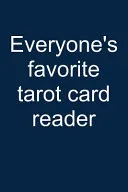
This item is explicitly designed for individuals who identify as tarot card readers. It is intended for those who already possess a tarot deck, books, bags, and other associated paraphernalia. The "Everyone's favorite tarot card reader" text suggests an appeal to those who see tarot as an integral, perhaps even defining, aspect of their identity or practice. The "eye-catcher" design and "elegant typographic design" indicate an audience that values aesthetics alongside practicality, appreciating original artwork and distinctive visual presentation in their tools.
### Historical Context
While this specific notebook was first published in 2019, its utility taps into a long tradition of scribal practices within esoteric disciplines. Since the late 19th century, with the rise of movements like Theosophy and the Hermetic Order of the Golden Dawn, the documentation of divinatory practices, including tarot, has been a common activity. Individuals like Arthur Edward Waite, who collaborated on the Rider-Waite-Smith deck in 1909, and Aleister Crowley, with his Thoth Tarot (published posthumously in 1969), engaged deeply with creating and interpreting tarot systems. Such documented efforts highlight a historical reliance on written records for personal and collective understanding of complex symbolic systems. This notebook serves a modern iteration of that enduring need for recorded practice.
### Key Concepts
The central concept is the practical application of tarot reading through systematic record-keeping. The notebook facilitates the user’s personal exploration and development within their chosen tarot system. It supports the idea that consistent journaling of readings—including the cards drawn, their positions in a spread, and the subsequent interpretation—can lead to deeper intuitive understanding and predictive accuracy. The design itself, with its emphasis on being an "eye-catcher" and "original artwork," suggests a belief in the energetic or symbolic importance of the tools used in divination, aligning with the notion that the tools themselves can influence the efficacy of the practice.
💡 Why Read This Book?
• Gain a structured method for documenting your tarot readings, specifically leveraging the 6x9 inch format and numbered pages provided in the 2019 edition to track patterns over time. • Enhance your personal tarot practice by using a dedicated journal featuring "original artwork" that aligns with the aesthetic preferences of modern cartomancers. • Acquire a practical tool for developing your intuitive skills in tarot interpretation, supported by the notebook's design which caters to those who already own tarot decks and supplies.
⭐ Reader Reviews
Honest opinions from readers who have explored this book.
❓ Frequently Asked Questions
What is the primary purpose of the 'Favorite Tarot Card Reader' notebook?
The primary purpose is to serve as a dedicated journal for tarot card readers to record their readings, interpretations, and insights. It's designed for practical use, offering features like numbered pages and a table of contents to organize notes.
Who is the intended audience for this tarot notebook?
The notebook is intended for individuals who actively practice tarot reading and already own tarot decks, books, and other supplies. It appeals to those who appreciate a stylish and original design for their divination tools.
What are the physical specifications of the notebook?
The notebook measures 6x9 inches and contains 120 lined pages. It features numbered pages and includes a table of contents at the front for easy organization and reference.
When was 'Favorite Tarot Card Reader' first published?
The book was first published on April 14, 2019. This date places it within the contemporary resurgence of interest in tarot and divination practices.
Does this notebook offer tarot interpretations or guidance?
No, this notebook is a blank journal designed for users to record their own interpretations and observations. It does not contain specific card meanings, spread layouts, or interpretive guidance.
Is the design of the notebook significant?
Yes, the design is highlighted as an "eye-catcher" with "original artwork and elegant typographic design." It aims to appeal to users who value aesthetics and originality in their personal and spiritual tools.
🔮 Key Themes & Symbolism
Practical Cartomancy Tools
This notebook functions as a specialized tool for the practice of cartomancy, specifically tarot. Its design prioritizes utility for the active reader. Features like numbered pages and a table of contents, introduced in the 2019 publication, facilitate systematic recording of readings. This echoes historical practices where scribal documentation was crucial for developing interpretive skills and tracking divinatory outcomes. The emphasis is on providing a physical space that supports the user's engagement with their tarot deck and spreads, acting as an external memory and analytical aid.
Aesthetic and Identity in Esotericism
The book's presentation, described with "original artwork with elegant typographic design," highlights the intersection of aesthetics and esoteric identity. The blurb's claim of being an "eye-catcher" suggests that the tools used in spiritual practices are not merely functional but also symbolic extensions of the practitioner's self-perception. This aligns with certain modern esoteric trends where personal style and visual expression are integrated into spiritual disciplines, making the tools themselves part of the ritual and personal statement.
Personalized Divinatory Practice
The core concept revolves around fostering a personalized approach to tarot reading. By providing a blank canvas, the notebook encourages users to develop their unique interpretive frameworks and record their individual experiences with the cards. This contrasts with prescriptive texts and emphasizes the journey of self-discovery through divination. The utility of the notebook supports the idea that consistent, documented practice, as supported by its 120 lined pages, is key to deepening one's connection with tarot symbolism and intuitive insights.
The Tarot Reader's Toolkit
This item is positioned as an essential component of a tarot reader's toolkit, alongside decks, books, and bags. Its inclusion signifies the importance placed on supplementary materials that enhance the divination process. The 'great design for those who love tarot' phrasing indicates an appeal to enthusiasts who actively curate their practice-related possessions, viewing them as integral to their identity as practitioners.
💬 Memorable Quotes
“Everyone's favorite tarot card reader.”
— This phrase suggests a popular, perhaps even idealized, self-image for the tarot practitioner. It implies a desire for recognition and mastery within the community, positioning the user as an admired figure in their practice.
“Stylish notebook 6x9 inches lined 120 pages with table of contents and numbered pages.”
— This is a direct description of the artifact's physical attributes. It emphasizes functionality and organization, crucial elements for any practitioner seeking to systematically document their divinatory work and personal insights.
“FOR TAROT CARD READERS - Great design for those who love tarot and already own a tarot card deck, books, sets, bags, and other supplies!”
— This highlights the intended user base: dedicated tarot enthusiasts. It positions the notebook as a complementary item within a larger collection of divination tools, appealing to collectors and active practitioners alike.
“EYE-CATCHER - This design stands out! Original artwork with elegant typographic design.”
— This emphasizes the aesthetic appeal and uniqueness of the notebook's visual presentation. It suggests that the object itself is intended to be noticed and appreciated for its artistic merit, differentiating it from generic stationery.
“GREAT GIFT - Buy this funny design for a passionate tarot card reader!”
— This frames the notebook as an ideal present for individuals deeply invested in tarot. The mention of 'funny' implies a lighthearted, possibly humorous, element to the design or its accompanying text, suitable for gifting.
🌙 Esoteric Significance
Tradition
This work does not align with a specific historical esoteric tradition like Hermeticism or Kabbalah. Instead, it serves a modern, broadly defined practice of tarot reading that draws eclectically from various influences. Its significance lies in facilitating personal, non-denominational divination practices. It functions as a blank slate for users to imprint their own understanding, reflecting a contemporary trend towards personalized spirituality rather than adherence to established esoteric lineages.
Symbolism
The notebook itself, while not overtly symbolic in its content, becomes a symbolic vessel for the user's divinatory journey. The 'original artwork' and 'elegant typographic design' can be seen as symbolic representations of the user's connection to their practice and their aesthetic sensibilities. The act of numbering pages and creating a table of contents symbolizes order, structure, and the methodical pursuit of knowledge within the inherently intuitive and often chaotic realm of tarot interpretation.
Modern Relevance
Contemporary practitioners of intuitive divination, self-styled spiritual coaches, and individuals exploring mindfulness through journaling find relevance in this type of artifact. It supports modern practices that emphasize self-reflection, personal growth, and the integration of symbolic systems into daily life, often outside formal occult orders. Thinkers and practitioners focused on the 'wellness' aspect of spirituality might utilize such journals to track personal development.
👥 Who Should Read This Book
['• Dedicated Tarot Enthusiasts: Individuals who already possess tarot decks and books and seek a stylish, organized way to document their readings and interpretations.', '• Aspiring Diviners: Those beginning their journey with tarot who wish to establish a habit of consistent journaling from the outset, supported by a functional and aesthetically pleasing tool.', '• Esoteric Journal Keepers: Practitioners of various divination methods who appreciate well-designed notebooks for recording insights, reflections, and spiritual explorations.']
📜 Historical Context
Published in 2019, Tatyana Tarotista's "Favorite Tarot Card Reader" notebook emerges amidst a contemporary resurgence of interest in divination, particularly tarot. This period, following the early 21st-century digital renaissance and a renewed focus on tangible practices, saw a proliferation of esoteric literature and tools. The notebook’s design philosophy—emphasizing aesthetics and personal branding for the practitioner—reflects trends seen in the burgeoning self-publishing market and the rise of artisanal spiritual goods. This contrasts with the more academic or strictly ritualistic documentation prevalent in earlier esoteric movements. For instance, the Hermetic Order of the Golden Dawn, active in the late 19th and early 20th centuries, fostered detailed journaling practices among its members, often focused on ritual efficacy and symbolic interpretation within a structured magical system. While Tarotista’s notebook provides space for similar documentation, its primary appeal lies in its contemporary design and self-expression angle, rather than adherence to a specific historical lineage or scholarly engagement. Reception of such items is largely individual, driven by personal aesthetic and utility preferences rather than critical acclaim or controversy.
📔 Journal Prompts
The 'eye-catcher' design's impact on your reading session.
Reflect on the utility of numbered pages for tracking long-term tarot patterns.
Your personal definition of 'favorite tarot card reader' and how this journal supports it.
The role of aesthetic tools in your spiritual practice.
Documenting a reading where the tarot deck and notebook felt particularly aligned.
🗂️ Glossary
Cartomancy
The practice of fortune-telling or divination using a deck of cards. Tarot reading is a prominent form of cartomancy, utilizing a specialized deck with symbolic imagery.
Tarot Spread
A specific arrangement or layout of tarot cards used in a divination session. Different spreads are designed to address particular questions or areas of inquiry.
Interpretation
The process of assigning meaning to the tarot cards drawn in a reading, based on their individual symbolism, their position within a spread, and the context of the question asked.
Esoteric
Relating to or concerned with the occult or abstract ideas. In a spiritual context, it refers to knowledge or practices intended for or understood by a select group of initiated individuals.
Divination
The practice of seeking knowledge of the future or the unknown by supernatural means. Tarot reading falls under this broad category.
Typographic Design
The art and technique of arranging typefaces and displaying them so as to make the copy legible, readable, and appealing when displayed.