Easy Tarot Reading
 79
79

Easy Tarot Reading
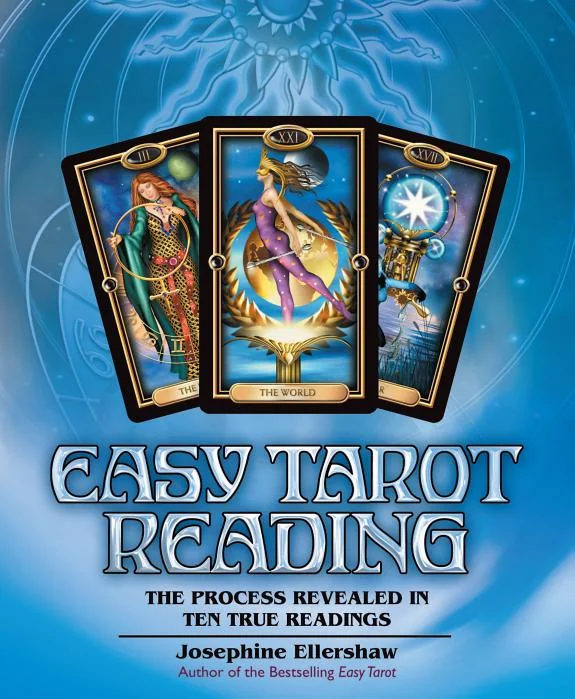
Josephine Ellershaw's Easy Tarot Reading tackles the crucial, often-overlooked step of synthesizing individual card meanings into a coherent narrative. Her approach, showcased through illustrative examples, effectively demystifies the process of constructing a reading. The inclusion of a foreword by Barbara Moore, an established voice in Tarot, lends immediate credibility. Ellershaw's strength lies in her clear, encouraging prose, making complex interpretive steps feel manageable. However, the book’s focus on ease might, for some advanced practitioners, feel less suited to exploring the deeper, more esoteric layers of the Tarot. A particular strength is the section demonstrating how to read the relationship between the Querent card and the outcome card, offering a tangible method for assessing influence. Ultimately, Easy Tarot Reading succeeds in its promise of accessibility, providing a solid foundation for confident interpretation.
📝 Description
79
### What It Is Easy Tarot Reading offers a direct approach to interpreting the Tarot beyond simple card meanings. Josephine Ellershaw guides readers from memorizing individual card significations to synthesizing them into a cohesive narrative. The book emphasizes practical application, moving beginners from theoretical knowledge to confident, insightful readings.
### Who It's For This volume is designed for individuals new to Tarot who have already grasped the basic meanings of the Major and Minor Arcana. It specifically addresses the common hurdle of connecting disparate cards and spreads into a meaningful whole. Those seeking to develop accuracy and helpfulness in their readings will find it particularly beneficial.
### Historical Context Published in 2025, Easy Tarot Reading emerges within a contemporary resurgence of interest in esoteric practices, building on a lineage of Tarot instruction that gained significant traction in the late 20th century. Authors like Rachel Pollack and Mary K. Greer had already established comprehensive guides, yet Ellershaw aims for a streamlined, accessible method for the digital age, a contrast to the more academic or historical analyses prevalent in some earlier works.
### Key Concepts The core of Ellershaw's method lies in understanding the interplay between cards. This involves recognizing how suits, numbers, and archetypes within a spread influence each other. The book likely explores techniques for identifying the central theme of a reading, the flow of energy between positions, and the subtle nuances that elevate a basic interpretation to a truly insightful one.
💡 Why Read This Book?
• Gain practical techniques for weaving individual card meanings into a flowing, narrative reading, moving beyond rote memorization as demonstrated in Ellershaw’s method for analyzing card relationships. • Develop confidence in delivering accurate and helpful Tarot readings by learning to identify the central theme and energy flow within a spread, as guided by the book's interpretive framework. • Benefit from a contemporary, accessible approach to Tarot interpretation, building upon the legacy of Tarot authors like Barbara Moore and focusing on actionable steps for beginners.
⭐ Reader Reviews
Honest opinions from readers who have explored this book.
❓ Frequently Asked Questions
What is the publication date of Easy Tarot Reading?
Easy Tarot Reading was first published on August 5, 2025. This makes it a recent addition to the literature on Tarot interpretation, offering contemporary perspectives.
Who wrote the foreword for Easy Tarot Reading?
The foreword for Easy Tarot Reading was written by Barbara Moore, a recognized and award-winning author in the field of Tarot studies, lending significant weight to the book's introduction.
Is Easy Tarot Reading suitable for absolute beginners with no prior Tarot knowledge?
While the book is accessible, it is best suited for those who have already learned the basic meanings of Tarot cards and are looking to advance to the next step: performing cohesive readings.
What is the main focus of Josephine Ellershaw's approach in this book?
Ellershaw focuses on the practical skill of fitting individual card meanings and spread positions into a unified, insightful reading, aiming for accuracy and helpfulness.
Does the book cover different types of Tarot spreads?
The book discusses basic spreads and focuses on the principles of interpretation that apply across various layouts, enabling readers to adapt the techniques to different spread structures.
What distinguishes this book from other beginner Tarot guides?
This book moves beyond basic card definitions to teach the art of synthesis, helping readers understand how cards interact within a reading to create a narrative, a step often less emphasized in introductory texts.
🔮 Key Themes & Symbolism
Synthesizing Card Meanings
The central theme revolves around moving past isolated card definitions to understand their interplay. Ellershaw illustrates how suits, numbers, and archetypes combine, creating a narrative flow. This moves the reader from simply knowing what a card means to understanding what it means in relation to its neighbors and the overall spread structure. It’s about seeing the story the cards are telling collectively.
Developing Reading Accuracy
Ellershaw emphasizes practical application and the pursuit of 'amazingly accurate, helpful Tarot readings.' This theme focuses on building interpretive skills that lead to actionable insights for the querent. The book likely provides frameworks for identifying key influences, potential challenges, and outcomes based on the card combinations presented.
Beginner to Intermediate Transition
The work is positioned as the logical next step after learning basic Tarot meanings and spreads. It aims to bridge the gap for those who feel stuck with individual card knowledge but struggle to perform a full, cohesive reading. The approach is designed to build confidence and competence in a progressive manner.
The Art of Intuitive Synthesis
While providing structure, the book implicitly encourages the development of intuition. By learning to see patterns and connections, readers are guided to trust their own interpretive voice. This synthesis is presented not just as a mechanical process but as an art form that can be cultivated through practice and focused attention.
💬 Memorable Quotes
“The next step for beginners is fitting all these pieces into a cohesive, insightful reading.”
— This statement highlights the core challenge addressed by the book: the transition from memorizing individual elements of the Tarot to integrating them into a holistic interpretive practice.
“Ellershaw illuminates the Tarot reading process by inviting you to virtually sit in on her read”
— This suggests a pedagogical approach that uses observational learning, allowing readers to witness the application of techniques in a simulated, real-time scenario, making the process less abstract.
“Josephine Ellershaw, the author of the international bestseller Easy Tarot”
— This contextualizes Ellershaw’s expertise and the book’s potential audience, indicating a proven track record in making Tarot accessible to a wide readership.
“easy, effective, and enjoyable way for anyone to learn to do amazingly accurate, helpful Tarot readings.”
— This encapsulates the book's promise: a user-friendly method designed to yield practical, reliable, and satisfying results for the reader, emphasizing both efficacy and positive user experience.
“After learning Tarot card meanings and basic spreads, the next step...”
— This frames the book’s purpose clearly, positioning it as essential material for those who have completed foundational Tarot study and are ready for more advanced interpretive skills.
🌙 Esoteric Significance
Tradition
While not explicitly tied to a single historical lineage like Hermeticism or Kabbalah, Easy Tarot Reading operates within the broad Western esoteric tradition of divination, particularly the interpretation of symbolic systems. It follows in the footsteps of 20th-century occultists and authors who popularized Tarot as a tool for self-understanding and foresight, aiming to democratize its practice beyond formal initiatory orders.
Symbolism
The book likely engages with core Tarot symbolism, such as the journey of the Fool (0) through the Major Arcana, representing spiritual progression, and the elemental associations of the four suits (Wands, Cups, Swords, Pentacles) corresponding to Fire, Water, Air, and Earth. Understanding these foundational symbols is crucial for synthesizing their meanings in a reading.
Modern Relevance
Contemporary practitioners and online Tarot communities, often seeking practical skills and accessible guidance, draw heavily on works like Ellershaw’s. Its focus on effective, enjoyable readings aligns with modern desires for self-help and personal development tools, making it relevant for digital-native spiritual seekers and those exploring divination outside traditional religious frameworks.
👥 Who Should Read This Book
• Beginning Tarot students who have memorized card meanings but struggle to connect them into a coherent narrative reading. • Individuals seeking a clear, step-by-step method for interpreting spreads that moves beyond basic definitions to practical application. • Aspiring readers who want to develop confidence in delivering accurate and helpful insights, as guided by Ellershaw's effective techniques.
📜 Historical Context
Published in 2025, Easy Tarot Reading arrives during a period of sustained interest in practical occultism and divination, following the boom in digital esoteric communities. It builds upon a rich tradition of Tarot pedagogy that gained significant momentum in the late 20th century, notably with figures like Rachel Pollack, whose expansive works explored Tarot's psychological and narrative dimensions. Ellershaw's approach, however, appears to prioritize streamlined accessibility, contrasting with the more in-depth, often historical or psychological, analyses found in earlier foundational texts. Unlike works that might delve deeply into the Kabbalistic or astrological correspondences, Ellershaw’s focus is on the immediate application for effective readings. The book enters a market already populated by numerous guides, seeking to carve out space by emphasizing clarity and ease of use for those transitioning from basic knowledge to confident interpretation.
📔 Journal Prompts
The interplay between the Querent card and the outcome card in a reading.
Identifying the central theme of a specific Tarot spread.
How the elemental associations of the suits influence a reading's narrative.
The journey of the Fool archetype across different spreads.
Reflecting on a personal reading and its cohesive message.
🗂️ Glossary
Querent
The person for whom a Tarot reading is being performed. The cards are interpreted in relation to their questions or life circumstances.
Spread
The arrangement of Tarot cards in a specific pattern for a reading. Different spreads are designed to address various types of questions or areas of life.
Major Arcana
The trump cards of the Tarot deck (typically 22 cards), representing significant life lessons, spiritual archetypes, and major events.
Minor Arcana
The 56 cards of the Tarot deck divided into four suits, representing everyday events, challenges, and experiences.
Suit
One of the four divisions of the Minor Arcana (Wands, Cups, Swords, Pentacles), each associated with an element and a distinct area of life.
Archetype
A universal, primordial pattern or image that recurs across cultures and time, often represented by figures or concepts within the Major Arcana.
Synthesis
The process of combining individual elements (like card meanings and positions) into a unified, coherent whole that forms a meaningful interpretation.