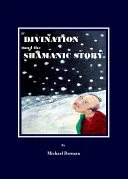
Divination and the Shamanic Story
 79
79

Divination and the Shamanic Story



Michael Berman’s "Divination and the Shamanic Story" attempts to carve out a new category for narrative analysis, one that pivots on the concept of the shamanic journey. The ambition is commendable; by linking story directly to experiences in non-ordinary reality, Berman offers a fresh lens for understanding tales that might otherwise be filed away as mere myth or folklore. He persuasively argues that many narratives, particularly those involving visionary elements, share a common origin in altered states of consciousness. The strength of the book lies in its innovative classification system and its detailed exploration of how these stories function as guides through the psychic landscape. However, the book occasionally strains its central thesis, sometimes forcing narratives into the shamanic mold where the connection feels less organic. A particularly effective passage discusses how fairy tales can be reinterpreted as simplified accounts of shamanic voyages, illustrating the potential of his framework. While the concept is powerful, the execution sometimes lacks the nuanced differentiation needed to fully satisfy a critical reader. It’s a valuable, if occasionally overextended, contribution to the study of narrative and consciousness.
📝 Description
79
### What This Book Is Michael Berman’s "Divination and the Shamanic Story" posits a novel genre for narrative exploration: the shamanic story. This classification moves beyond traditional labels like myth, legend, or fable by focusing on the origin and nature of the narrative itself. A shamanic story is defined as one either derived from or inspired by a shamanic journey—an experience of non-ordinary reality—or one that intrinsically embodies characteristics of such journeys. The work argues that many stories, regardless of their initial categorization, can be understood through this shamanic lens, revealing deeper layers of meaning connected to altered states of consciousness and transpersonal experience.
### Who Should Engage This book is for readers interested in the intersection of narrative, consciousness studies, and comparative religion. It will appeal to anthropologists, psychologists, and literary critics seeking to expand their analytical frameworks. Furthermore, practitioners of shamanism, divination, and those exploring altered states will find a unique perspective on the stories they encounter and create. Anyone curious about the roots of storytelling and its connection to profound human experiences, particularly those involving altered perceptions of reality, will find fertile ground here.
### Historical Contextualization Berman’s work emerges from a period of renewed interest in shamanism, influenced by anthropologists like Mircea Eliade and psychologist Carl Jung. Eliade’s "Shamanism: Archaic Techniques of Ecstasy" (1951) was pivotal in establishing shamanism as a global phenomenon. Jung’s theories on archetypes and the collective unconscious provided a psychological framework for understanding numinous experiences. Berman’s contribution is to specifically apply this understanding to narrative classification, suggesting a genre that directly links story structure and content to the visionary experiences characteristic of shamanic traditions. The book offers a unique perspective on how these ancient practices inform contemporary storytelling.
### Key Concepts Explored The central concept is the "shamanic story" itself, distinguished by its connection to shamanic journeys or its embodiment of numinous experiences. Berman explores how these stories function as maps of non-ordinary reality, guiding both the narrator and the audience through altered states. The work also touches upon the nature of divination, viewing it not merely as fortune-telling but as a form of accessing and interpreting information from these non-ordinary realms. The idea of "numinous experience" is critical, defining the quality of encounters that transcend the mundane and form the bedrock of shamanic narratives. The book examines how these narratives carry specific energetic or informational qualities derived from their visionary origins.
💡 Why Read This Book?
• Understand narrative through a shamanic lens: Learn how stories originating from or inspired by shamanic journeys possess unique structures and functions, offering insights beyond traditional literary analysis, as explored in Berman's concept of the "shamanic story." • Re-evaluate familiar tales: Discover how classic myths, legends, and fairy tales can be reinterpreted as maps of non-ordinary reality, revealing hidden layers of meaning connected to altered states of consciousness, a key focus of the book. • Connect storytelling to altered states: Grasp how the book links narrative creation and interpretation to divination and numinous experiences, providing a framework for understanding the psychological and spiritual roots of storytelling.
why_read
⭐ Reader Reviews
Honest opinions from readers who have explored this book.
❓ Frequently Asked Questions
What is the primary definition of a "shamanic story" according to Michael Berman?
A shamanic story, as defined by Michael Berman, is a narrative that is either directly based on a shamanic journey—an experience in non-ordinary reality—or one that is inspired by such journeys, embodying their characteristic elements and themes.
How does "Divination and the Shamanic Story" connect storytelling to altered states of consciousness?
The book posits that many stories originate from or are inspired by shamanic journeys, which are inherently altered states of consciousness. It explores how these narratives function as maps or guides for understanding and navigating these non-ordinary realities.
What traditional narrative classifications does Berman suggest his "shamanic story" genre complements or replaces?
Berman suggests his genre can offer a new perspective on narratives traditionally classified as epics, myths, sagas, legends, folk tales, fairy tales, parables, or fables, especially when these stories exhibit characteristics of visionary or numinous experiences.
Who would benefit most from reading "Divination and the Shamanic Story"?
Readers interested in comparative mythology, psychology of religion, anthropology, divination practices, and shamanism will find the book particularly relevant for its unique approach to narrative analysis.
When was "Divination and the Shamanic Story" first published?
Michael Berman's "Divination and the Shamanic Story" was first published on March 26, 2009.
What role does "numinous experience" play in Berman's theory?
Numinous experience is central, as Berman defines shamanic stories as those arising from or reflecting these profound, awe-inspiring encounters with the sacred or the non-ordinary, which transcend everyday perception.
🔮 Key Themes & Symbolism
The Shamanic Story Genre
This theme introduces Berman's central thesis: the creation of a new narrative category, the "shamanic story." This genre is defined by its direct lineage from or inspiration by shamanic journeys—experiences in non-ordinary reality. The work argues that this classification offers a more accurate way to understand narratives that traditional labels like myth or legend fail to fully encompass, especially those featuring visionary or transformative elements.
Narrative as a Map of Non-Ordinary Reality
A core concept is the function of shamanic stories as navigational tools. These narratives are presented not just as entertainment or cultural artifacts, but as guides through altered states of consciousness and the landscapes encountered during shamanic journeys. They provide frameworks for understanding and integrating experiences that lie beyond the consensual reality, offering symbolic representations of psychic and spiritual territories.
Divination and Numinous Experience
The book links storytelling directly to divination and the concept of the numinous. Divination is reframed as a practice of accessing information from non-ordinary realms, mirroring the insights gained through shamanic journeys. Numinous experiences—those profound, awe-inspiring encounters with the sacred or the unknown—are identified as the wellspring from which many potent stories emerge, imbuing them with a unique energetic quality.
Reinterpreting Traditional Narratives
Berman applies his framework to analyze various traditional stories, suggesting that many, from fairy tales to myths, can be understood as expressions of shamanic experiences or teachings. This reinterpretation reveals deeper psychological and spiritual dimensions, highlighting the enduring connection between storytelling, altered consciousness, and humanity's quest for meaning beyond the mundane.
💬 Memorable Quotes
“The definitions of the terms have a tendency to overlap, making it difficult to classify and categorize material.”
— This observation highlights the inadequacy of existing literary classifications when faced with narratives that blur traditional boundaries, setting the stage for Berman's proposed 'shamanic story' genre.
“a case can be made for the introduction of a new genre, termed the shamanic story”
— This directly states the book's core argument: the need for a new category of storytelling that specifically acknowledges narratives derived from or embodying shamanic journeys and altered states of consciousness.
“a shamanic journey—a numinous experience in non-ordinary reality”
— This concise definition establishes the foundational concept of the book, linking the shamanic journey to profound, awe-inspiring experiences outside the bounds of everyday perception.
“one that contains a number of the characteristics of such a journey”
— This expands the definition of a shamanic story, indicating that narratives don't need to be directly *from* a journey but can also *reflect* its qualities, such as visionary elements or encounters with non-ordinary beings.
“Stories have traditionally been classified as epics, myths, sagas, legends, folk tales, parables or fables.”
— This sets the context for Berman's work by listing the established categories of narrative, implicitly questioning their sufficiency and paving the way for his alternative classification.
🌙 Esoteric Significance
Tradition
This work fits within the broader esoteric tradition's interest in altered states of consciousness and their relationship to knowledge and reality. While not strictly Hermetic, Kabbalistic, or Gnostic, it aligns with traditions that explore visionary experiences and the interpretation of non-ordinary reality. It echoes Gnostic ideas of accessing hidden knowledge through altered perception and draws parallels with shamanic practices found across numerous indigenous cultures, often studied within comparative religion and esoteric studies.
Symbolism
Key symbols revolve around the concept of the 'journey' itself, representing a passage through the psyche or non-ordinary realms. The 'numinous experience' acts as a potent symbol for encounters with the sacred or the unknown, often manifesting in narratives through encounters with deities, spirits, or transformative landscapes. The act of 'divination' symbolizes the interpretation of these symbolic encounters, translating the non-ordinary into comprehensible meaning.
Modern Relevance
Berman's work finds resonance today within contemporary shamanic practices, transpersonal psychology, and psychedelic-assisted therapy circles, where the interpretation of visionary experiences and altered states is paramount. Thinkers exploring consciousness studies and narrative therapy may draw upon his framework for understanding how subjective experiences shape our personal and collective stories.
👥 Who Should Read This Book
• Students of comparative mythology and folklore: Those seeking to expand their analytical tools beyond traditional genre classifications and explore the psychological and experiential roots of myths. • Practitioners of shamanism and divination: Individuals engaged in altered states of consciousness who wish to understand the narrative structures and interpretations common to their practices. • Literary critics and theorists: Scholars interested in interdisciplinary approaches that connect narrative studies with psychology, anthropology, and consciousness research.
📜 Historical Context
Published in 2009, "Divination and the Shamanic Story" emerged during a period of significant academic and popular interest in shamanism, building upon foundational works like Mircea Eliade's "Shamanism: Archaic Techniques of Ecstasy" (1951). Anthropologists and psychologists like Carlos Castaneda (though controversial) had already popularized notions of altered states and visionary experiences. Berman's work positioned itself within this milieu, offering a unique literary-critical perspective that complemented psychological interpretations (like Carl Jung's) and anthropological studies. It sought to bridge the gap between the study of consciousness, narrative theory, and esoteric traditions. While figures like Joseph Campbell had explored mythological patterns, Berman focused specifically on the *process* of shamanic journeying as the generative source for a distinct narrative type, diverging from purely archetypal or structuralist analyses prevalent in comparative mythology.
📔 Journal Prompts
The concept of the shamanic journey as a source of narrative.
The numinous experience's role in story creation.
How traditional fairy tales might function as maps of non-ordinary reality.
The connection between divination and the interpretation of visionary narratives.
Identifying characteristics of a shamanic story in contemporary media.
🗂️ Glossary
Shamanic Journey
An experience in non-ordinary reality, often induced through altered states of consciousness (e.g., drumming, chanting), during which the practitioner encounters spiritual realms, guides, or receives information.
Numinous Experience
A profound, awe-inspiring, and often overwhelming encounter with the sacred or the transcendent, characterized by feelings of mystery, fascination, and sometimes terror.
Non-Ordinary Reality
A state of consciousness or perceived reality that deviates significantly from the consensus, everyday waking state. This can include dream states, visionary experiences, or altered perceptions.
Shamanic Story
A proposed narrative genre defined as a story directly based on or inspired by a shamanic journey or embodying the characteristics of such experiences.
Divination
The practice of seeking knowledge or insight into the future or the unknown through supernatural means or by interpreting omens and signs, often viewed here as accessing information from non-ordinary reality.
Narrative Classification
The system of categorizing stories based on their form, content, origin, or intended audience, such as myth, legend, fable, or the proposed 'shamanic story'.
Altered State of Consciousness
Any mental state significantly different from the normal waking state, often achieved through various techniques like meditation, trance induction, or psychoactive substances.