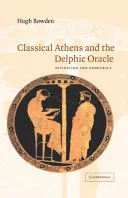
Classical Athens and the Delphic Oracle
 78
78

Classical Athens and the Delphic Oracle
Hugh Bowden's Classical Athens and the Delphic Oracle offers a compelling counter-narrative to the often secularized view of Athenian democracy. The book meticulously details instances where Athenian leaders, even during periods of intense political development, sought and acted upon the pronouncements of the Pythia. A particular strength lies in the author's careful examination of the sources, demonstrating how the *act* of consulting Delphi, regardless of the content, served vital political and social functions. The work effectively challenges the notion that Athenian democracy was a precursor to modern secular governance. However, the text could benefit from a more explicit exploration of the *process* by which the priestesses themselves conveyed the oracles, a detail that remains somewhat opaque. Despite this, Bowden's rigorous scholarship provides a crucial corrective, emphasizing that for the Athenians, the divine was not separate from the civic sphere. It is a significant contribution to understanding ancient Greek political religion.
📝 Description
78
### What It Is Classical Athens and the Delphic Oracle examines the profound role of the Pythia's pronouncements in the political and social fabric of ancient Athens. It moves beyond a simple recounting of prophecies to analyze how Athenian decision-making, from grand policy to individual concerns, was shaped by the perceived will of Apollo. The work scrutinizes the mechanisms of consultation and the interpretation of divine messages, highlighting their integration into Athenian civic life.
### Who It's For This text is essential for scholars of ancient Greek history, religion, and political thought. It will also engage readers interested in the intersection of faith and governance, particularly those questioning the secular assumptions often applied to classical democracies. Students of comparative mythology and the history of divination will find its detailed analysis of Athenian interactions with Delphi illuminating.
### Historical Context The book situates its study within Athens' Golden Age and the subsequent Classical period, a time when democratic institutions were developing and Athenian power was ascendant. It confronts the prevalent idea of Athenian democracy as a purely rational, secular entity by demonstrating the persistent influence of religious oracles. The work specifically addresses the period leading up to and during the Peloponnesian War, a time of immense stress where divine guidance was heavily sought.
### Key Concepts The central argument revolves around the concept of 'divine politics' – the idea that Athenian leaders and citizens genuinely believed Apollo's directives, channeled through the Oracle at Delphi, were crucial for the city's well-being and success. It explores the strategic use of oracle consultations to legitimize actions, manage crises, and unify public opinion. The work challenges modern interpretations that might dismiss this reliance on prophecy as mere superstition, arguing instead for its functional importance in Athenian statecraft.
💡 Why Read This Book?
• Gain insight into the specific political strategies employed by Athenian leaders who consulted the Oracle at Delphi, understanding how divine sanction was sought for actions like the colonization of Delos. • Grasp the functional importance of religious consultation in Athenian democracy, learning how the perceived will of Apollo, as interpreted by the Pythia, influenced state policy during critical periods like the 5th century BCE. • Challenge modern assumptions about secular governance by examining the deep integration of religious authority into Athenian political decision-making, as evidenced by Athens' numerous consultations with Delphi.
⭐ Reader Reviews
Honest opinions from readers who have explored this book.
❓ Frequently Asked Questions
What is the primary focus of Classical Athens and the Delphic Oracle?
The book primarily examines the significant role of the Delphic Oracle in the political and religious life of ancient Athens, particularly during its democratic period. It explores how Athenian citizens and leaders relied on consultations with Apollo's priestess for guidance on state matters.
Who was Apollo in relation to the Delphic Oracle?
According to Greek tradition, Apollo was the god who spoke through his priestess, the Pythia, at the Oracle of Delphi. The pronouncements of the Pythia were considered divine messages from Apollo, highly influential in the ancient Greek world.
How did the Delphic Oracle influence Athenian democracy?
The work demonstrates that concern for the gods' will, as communicated through Delphi, deeply affected Athenian politics. Consultations were used to legitimize decisions, manage crises, and shape public opinion, challenging the idea of Athenian democracy as purely secular.
What is the historical period covered by the book?
The book focuses on the age of Athenian democracy, spanning from its development through the Classical period. It specifically investigates Athenian consultations with the Oracle of Delphi during this era.
Does the book argue that Athenian democracy was not secular?
Yes, the book challenges the notion that Athenian democracy can be viewed as a model for modern secular constitutions. It argues that religious considerations, particularly consultations at Delphi, were integral to Athenian political life.
What does the book say about the Pythia?
The book discusses the Pythia as the priestess through whom Apollo communicated his prophecies at Delphi. It explores the importance Athenians placed on her pronouncements and the process of consultation.
🔮 Key Themes & Symbolism
Divine Mandate in Politics
The book emphasizes how Athenian leaders actively sought divine validation for their policies and actions through consultations at Delphi. This theme explores the practical application of religious belief in statecraft, demonstrating that decisions regarding war, peace, and colonization were often framed by oracles. The perceived will of Apollo served as a crucial legitimizing force, influencing public opinion and reinforcing the authority of decision-makers in the 5th century BCE and beyond.
The Oracle as a Political Tool
Beyond genuine religious conviction, the work investigates the strategic use of the Delphic Oracle by Athenians. Consultations could be initiated to gauge public mood, rally support for unpopular measures, or even to provide a scapegoat if ventures failed. The selective reporting and interpretation of oracular pronouncements highlight the complex interplay between divine pronouncements and political maneuvering in ancient Athens.
Challenging Secular Democracy
A core tenet of the book is its direct confrontation with the idea of Athenian democracy as a purely secular model for modern governance. By detailing the pervasive influence of religious consultations, the work argues that the divine sphere was inextricably linked to the political sphere. This challenges scholars to reconsider the foundational assumptions when comparing ancient political systems to contemporary ones.
Athenian Civic Religion
The book situates the consultations at Delphi within the broader context of Athenian civic religion. It illustrates how participation in religious rituals and seeking divine guidance were integral aspects of Athenian identity and civic duty. The reliance on the Oracle reflects a worldview where the gods were active participants in human affairs, and their favor was essential for the polis's prosperity and survival.
💬 Memorable Quotes
“Apollo would speak through his priestesses.”
— This simple statement encapsulates the core mechanism of the Delphic Oracle, highlighting the Pythia as the divine conduit. It underscores the belief system that allowed Athenians to seek direct communication with their gods for guidance.
“Concern to do the will of the gods affected Athenian politics.”
— This paraphrased concept points to the pervasive influence of religious belief on governance. It suggests that political decisions were not solely based on pragmatic considerations but were significantly shaped by attempts to align with divine intentions.
“Athenian democracy may be seen as a model for modern secular democratic constitutions.”
— This statement represents a common interpretation that the book actively seeks to dismantle. By presenting evidence of deep religious integration, the author questions the applicability of Athenian democracy as a purely secular precedent.
“All the known consultations of the oracle by Athens in the period bef”
— This incomplete phrase from the original blurb suggests the book's commitment to comprehensive historical documentation. It implies a detailed cataloging of Athenian interactions with Delphi, serving as factual evidence for its arguments.
“The Delphic Oracle was where, according to Greek tradition, Apollo would speak through his priestesses.”
— This foundational statement establishes the premise of the book: the Delphic Oracle as the primary locus of divine communication. It highlights the traditional understanding of Apollo's role and the Pythia's function as intermediary.
🌙 Esoteric Significance
Tradition
While not strictly within a defined esoteric lineage like Hermeticism or Theosophy, this work contributes to esoteric studies by examining historical instances where divination and divine communication were central to societal functioning. It aligns with esoteric interests in the power of prophecy, the nature of consciousness (as potentially accessed by the Pythia), and the integration of spiritual guidance into worldly affairs, offering a historical case study of oracular practice outside modern occult frameworks.
Symbolism
The Oracle itself, and the figure of the Pythia, serve as potent symbols of divine revelation and intermediaries between the human and the divine. The laurel leaves and intoxicating vapors associated with the Pythia's trance represent altered states of consciousness used for divination. The tripod upon which she sat symbolizes her elevated, sacred position. These elements speak to the esoteric concept of accessing higher knowledge through specific ritualistic or altered states.
Modern Relevance
Contemporary practitioners of divination, synchronicity studies, and those interested in archetypal psychology might draw parallels to the Athenian engagement with Delphi. Thinkers exploring the role of intuition and symbolic communication in decision-making, or alternative models of governance that integrate spiritual or collective consciousness, can find historical precedent in Bowden's analysis. The work provides a grounding for understanding how ancient societies navigated uncertainty through forms of spiritual consultation.
👥 Who Should Read This Book
• Students of ancient Greek history and religion seeking a deeper understanding of Athenian political decision-making beyond purely rational models. • Comparative religion scholars interested in the historical role of oracles and divination in shaping societal norms and governance. • Readers intrigued by the intersection of faith and public life, particularly those questioning the historical purity of secular democratic ideals.
📜 Historical Context
Published in 2005, Hugh Bowden's work emerged during a period when scholarship on ancient Greece continued to grapple with the relationship between religion and politics. The book directly engages with the ongoing debate surrounding the nature of Athenian democracy, challenging interpretations that emphasized its rational and secular aspects, often by implicitly contrasting it with modern democratic ideals. While scholars like M.I. Finley had previously highlighted the economic and social structures of ancient Greece, Bowden focuses specifically on the pervasive influence of religious consultation. The intellectual currents of the time often sought to identify the roots of Western secularism in classical antiquity. Bowden's contribution lies in meticulously detailing the extent to which Athenian decision-making, particularly concerning major state actions, was intertwined with seeking and interpreting divine pronouncements from the Oracle at Delphi, directly confronting the notion of Athens as a purely secular precursor.
📔 Journal Prompts
The strategic use of the Delphic Oracle by Athenian leaders.
Athenian reliance on the Pythia's pronouncements during times of crisis.
The concept of 'divine politics' in Classical Athens.
Challenging the secular view of Athenian democracy.
The functional importance of oracular consultations for the Athenian polis.
🗂️ Glossary
Delphic Oracle
An ancient Greek sanctuary located at Delphi, dedicated to the god Apollo. It was famous for its priestess, the Pythia, who delivered prophecies said to be inspired by Apollo, making it a central site for consultation throughout the Greek world.
Pythia
The high priestess of the Temple of Apollo at Delphi. She was believed to channel prophecies from Apollo, often in a trance-like state, and her pronouncements were highly influential in ancient Greek politics and personal life.
Apollo
In ancient Greek religion, Apollo was a major god associated with prophecy, music, healing, light, and archery. The Oracle at Delphi was considered his primary oracle, where he communicated divine will.
Polis
An ancient Greek city-state. It was the fundamental political unit of ancient Greece, encompassing a city and its surrounding territory, and functioning as an independent political entity.
Consultation
In the context of the Delphic Oracle, consultation refers to the process by which individuals, emissaries, or city representatives would travel to Delphi to seek divine advice or prophecy from the Pythia.
Divine Politics
A concept describing the integration of religious belief and divine guidance into the practice of statecraft and governance. In Classical Athens, this involved seeking and acting upon the perceived will of the gods, particularly Apollo through the Delphic Oracle.
Secular Democracy
A form of democratic governance characterized by the separation of religious institutions and religious influence from state affairs. The book questions whether Athenian democracy fits this modern definition.