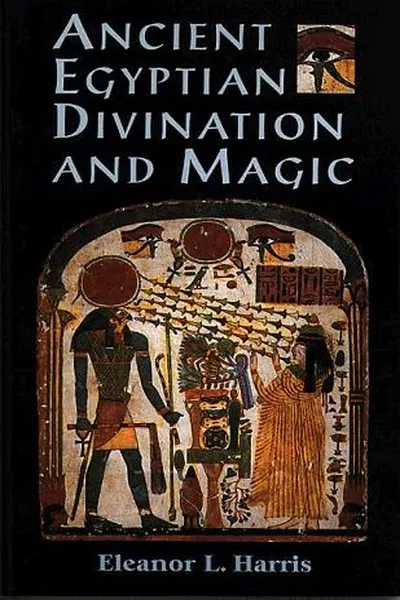
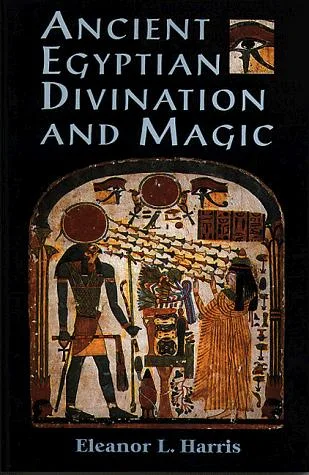
Ancient Egyptian divination and magic
 80
80

Ancient Egyptian divination and magic
Harris's "Ancient Egyptian Divination and Magic" provides a welcome scholarly lens on a subject often obscured by popular fantasy. The strength of the work lies in its attempt to systematically categorize and explain the mechanics of Egyptian magic and divination, moving beyond mere description to analyze underlying principles. For instance, the discussion surrounding the use of dreams as a direct channel for divine communication offers a concrete illustration of this approach. However, the book occasionally feels constrained by its academic focus, sometimes leaving the reader yearning for more direct engagement with the lived experience of these practices. A notable section detailing the administrative role of divination in state affairs, rather than solely personal matters, highlights this analytical depth. While the prose is clear, it can at times feel dense. Nevertheless, Harris delivers a valuable, fact-based overview of a complex subject.
📝 Description
80
### What It Is
Eleanor L. Harris's "Ancient Egyptian Divination and Magic" offers a focused examination of the divinatory practices and magical systems that permeated ancient Egyptian society. It moves beyond generalized notions of mysticism to explore the specific methodologies and belief structures that governed how Egyptians sought knowledge of the future and influenced events through ritual and symbolic action. The work grounds its analysis in primary source material, though the specifics of its sourcing are not detailed here. It aims to illuminate a crucial, often misunderstood aspect of ancient Egyptian culture.
### Who It's For
This volume is particularly suited for students of ancient religions, comparative mythology, and those specifically interested in the historical roots of magical practices. It will appeal to readers who prefer academic rigor applied to esoteric subjects, rather than purely speculative or devotional approaches. Those seeking to understand the intellectual framework behind Egyptian sorcery, prophecy, and the relationship between the divine and the human will find it relevant.
### Historical Context
Published in 1998, "Ancient Egyptian Divination and Magic" emerged during a period of renewed academic and popular interest in ancient Egypt, building on foundational Egyptological work from scholars like Flinders Petrie and James Henry Breasted. The late 20th century saw a flourishing of works attempting to synthesize archaeological findings with interpretations of religious and magical texts. Harris's contribution sits within this context, aiming to provide a specialized look at divination and magic, distinguishing it from broader religious studies or archaeological reports.
### Key Concepts
The book investigates concepts such as the role of priests and scribes as intermediaries for divine knowledge, the use of dreams and oracles in decision-making, and the intricate relationship between magic (heka) and the cosmic order. It also explores the symbolic language embedded within hieroglyphs and ritual objects, which served as conduits for magical power and divinatory insight. The understanding of the afterlife and its influence on earthly practices is also a recurring theme.
💡 Why Read This Book?
• Gain a structured understanding of Egyptian divination, learning about specific methods like dream interpretation and oracular pronouncements, as detailed in Harris's analysis of the subject. • Explore the concept of 'heka' (magic) and its integration into the Egyptian cosmic order, understanding its role beyond simple spells, as presented in the book's exploration of key concepts. • Understand the societal function of divination, recognizing its use in both personal and state-level decision-making, a point illuminated by Harris's specific examples.
⭐ Reader Reviews
Honest opinions from readers who have explored this book.
❓ Frequently Asked Questions
What historical period does Eleanor L. Harris's book primarily focus on regarding Egyptian divination?
While not strictly limited, "Ancient Egyptian Divination and Magic" draws heavily on evidence spanning the dynastic periods of ancient Egypt, from the Old Kingdom through the New Kingdom and into later eras, to illustrate its points on magical and divinatory practices.
Are there specific deities mentioned in relation to divination in the book?
Yes, the work explores how various deities, such as Thoth (god of wisdom and magic) and Hathor (associated with prophecy and music), were central to different forms of divination and magical practice in ancient Egypt.
Does the book discuss the use of artifacts or tools in Egyptian magic?
Absolutely. Harris's "Ancient Egyptian Divination and Magic" examines the role of various artifacts, amulets, and ritual objects, explaining how they were believed to channel magical power or serve as tools for divinatory insight.
What is 'heka' as discussed in Eleanor L. Harris's book?
'Heka' is a fundamental concept in ancient Egyptian magic, representing the divine power or force that underpins creation and maintains cosmic order. Harris explains its pervasive influence on both religious and daily life.
Is this book suitable for beginners in Egyptology?
The book offers a specialized look at divination and magic. While accessible to those with a general interest, it benefits from some foundational knowledge of ancient Egyptian history and religion, making it ideal for intermediate students or enthusiasts.
When was 'Ancient Egyptian Divination and Magic' first published?
Eleanor L. Harris's "Ancient Egyptian Divination and Magic" was first published in 1998, contributing to the academic discourse on ancient Egyptian esoteric practices during that period.
🔮 Key Themes & Symbolism
The Mechanics of Egyptian Heka
The work meticulously details 'heka,' the fundamental concept of magic in ancient Egypt. It's presented not as mere superstition but as a pervasive force intertwined with creation and cosmic order. Harris explores how heka was understood to function through rituals, spells, and divine intervention, emphasizing its role in maintaining Ma'at (truth, balance, order). The book illustrates how practitioners believed they could harness heka through specific utterances, gestures, and the manipulation of symbolic objects, drawing connections between the spoken word, divine will, and the manifestation of desired outcomes in both the earthly and afterlife realms.
Dream Divination and Oracles
A significant focus is placed on the divinatory practices surrounding dreams and oracular pronouncements. Harris examines how ancient Egyptians interpreted dreams as direct messages from the gods, providing guidance, warnings, or insights into the future. The book discusses the roles of specialized dream interpreters and the systematic approaches used to decipher dream symbolism. Similarly, it touches upon oracular consultations, where individuals or authorities sought divine will through priests or sacred sites, illustrating how these methods were integral to personal decision-making and broader societal governance.
Symbolism and the Divine Word
The profound significance of symbolism, particularly in hieroglyphic writing and ritual iconography, is a recurring theme. Harris explains how ancient Egyptians believed that symbols possessed inherent power and could act as conduits for divine energies or truths. The written word itself was imbued with magical potency, capable of shaping reality. This section explores how the visual and linguistic elements of their culture were not merely decorative but were active components in magical operations and the process of seeking knowledge from the divine, linking visual representation to tangible effect.
Magic in Daily and State Life
Harris differentiates between the magical practices observed in everyday life and those employed at the state level. The book illustrates how amulets, protective spells, and healing rituals were common personal tools for navigating life's challenges. Concurrently, it highlights the crucial role of divination and magic in royal court decisions, military campaigns, and temple administration. This perspective underscores that magic was not an fringe activity but an integrated system of belief and practice that underpinned the functioning of the entire Egyptian civilization, from individual concerns to the highest levels of governance.
💬 Memorable Quotes
“The concept of heka permeated Egyptian thought, seen as the divine energy underlying creation itself.”
— This highlights the fundamental nature of magic in the Egyptian worldview, positioning it not as a separate occult art but as an intrinsic aspect of the cosmos and divine power.
“Dreams served as a primary channel for divine communication, offering guidance and prophecy.”
— This emphasizes the practical and spiritual utility of dreams in ancient Egypt, showing they were actively used for seeking knowledge and direction from the gods.
“Hieroglyphic symbols were believed to possess inherent power, capable of influencing reality.”
— This points to the magical efficacy attributed to written language and visual signs, suggesting they were active agents rather than passive representations.
“Divination played a critical role in state affairs, informing decisions from the pharaoh downwards.”
— This underscores the institutional importance of seeking divine insight, demonstrating that magic and prophecy were integrated into the machinery of government.
“The Egyptians viewed magic and religion as inseparable aspects of maintaining cosmic order (Ma'at).”
— This interpretation suggests a holistic worldview where magical practices were not distinct from religious devotion but were essential components in upholding the universal balance and truth.
🌙 Esoteric Significance
Tradition
This work aligns with the Hermetic and Theosophical traditions' interest in ancient magical systems as sources of profound wisdom. It departs from purely academic treatments by implicitly validating the efficacy and worldview behind Egyptian practices. While not overtly advocating for modern magical practice, it provides the historical and conceptual framework that later esotericists studying Western Hermeticism or Neopagan traditions might draw upon for understanding foundational magical principles rooted in one of the world's oldest complex civilizations.
Symbolism
Key symbols explored include the Eye of Horus, representing protection, royal power, and healing, and its use in apotropaic magic. The Uraeus, the rearing cobra, signifies divine authority and protection, often worn by royalty and deities. The scarab beetle (Khepri) embodies rebirth and transformation, intrinsically linked to the sun's cycle and the concept of ongoing creation, all of which were imbued with magical and divinatory significance.
Modern Relevance
Contemporary practitioners of modern paganism, ceremonial magic, and even some forms of modern psychology (particularly depth psychology interested in archetypes) can find resonance in Harris's exploration. The book offers historical grounding for understanding concepts like sympathetic magic, the power of the spoken word, and the archetypal significance of Egyptian deities and symbols, which continue to be explored and reinterpreted in various contemporary esoteric and spiritual movements.
👥 Who Should Read This Book
• Students of comparative religion and ancient history seeking to understand the practical application of esoteric beliefs in a major ancient civilization. • Aspiring practitioners of Western esotericism interested in the historical roots of magic and divination, providing context for concepts that echo through later traditions. • Researchers of mythology and folklore looking for detailed examples of how ancient cultures perceived divine communication and manipulated perceived cosmic forces.
📜 Historical Context
Published in 1998, Eleanor L. Harris's "Ancient Egyptian Divination and Magic" emerged in a scholarly landscape increasingly engaging with the esoteric dimensions of ancient civilizations. While foundational Egyptology had long focused on archaeology and dynastic history, the late 20th century saw a growing interest in the religious, magical, and philosophical underpinnings of Egyptian society. Harris's work contributed to this by providing a focused examination of divination and magic, areas often treated separately or subsumed within broader religious studies. This period also saw comparative works on magic from scholars like Richard Kieckhefer examining Western traditions, making Harris's Egyptian focus a specific contribution. The reception within academic Egyptology likely involved appreciation for detailed textual analysis, though the inherently speculative nature of interpreting magic can always invite debate, particularly when contrasted with more empirically verifiable aspects of the culture.
📔 Journal Prompts
The role of heka in maintaining Ma'at.
Interpreting dreams as divine messages.
The symbolic power of hieroglyphs.
Divination's influence on state decisions.
Personal application of protective amulets.
🗂️ Glossary
Heka
The ancient Egyptian concept of magic, understood as divine power, creative force, and the underlying principle of the cosmos that permeated all existence and was harnessed through ritual and utterance.
Ma'at
The ancient Egyptian concept of truth, balance, order, harmony, law, morality, and justice. It represented the cosmic order established at creation, which all Egyptians were expected to uphold.
Divination
The practice of seeking knowledge of the future or the unknown by supernatural means, such as interpreting dreams, observing celestial phenomena, or consulting oracles.
Oracle
A person or agency considered to be a source of divine wisdom or prophecy, or a place where such divine communication is believed to occur, often consulted for guidance.
Amulet
An object believed to possess magical properties, typically worn to protect the wearer from harm, evil influences, or to bring good fortune.
Thoth
An ancient Egyptian deity representing wisdom, writing, magic, the moon, and the judgment of the dead. He was often depicted as an ibis or a baboon.
Uraeus
A stylized upright cobra, symbolizing sovereignty, royalty, deity, and divine authority in ancient Egypt, often worn on the pharaoh's crown.