Vedic Astrology
 73
73

Vedic Astrology
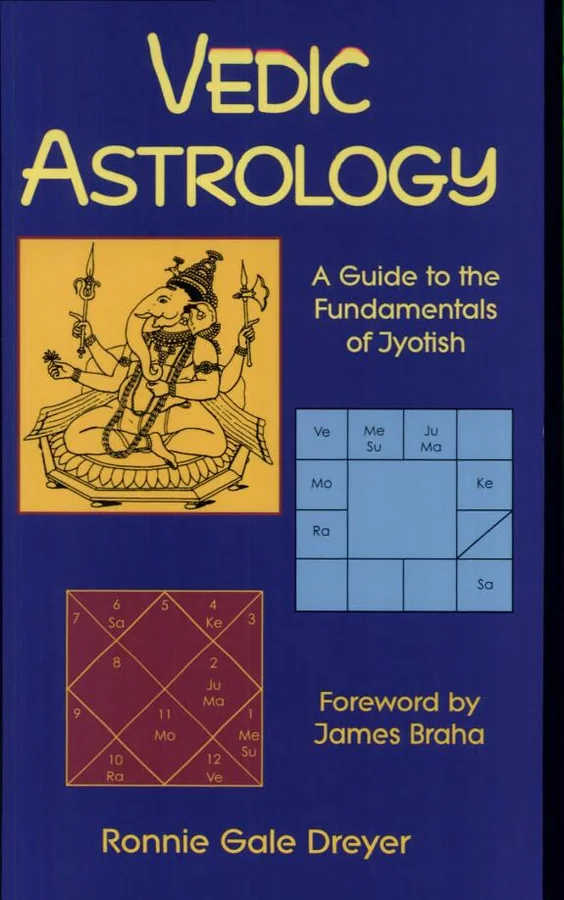
Ronnie Gale Dreyer's "Vedic Astrology" presents Jyotish with a clarity that belies its intricate subject matter. The initial chapters, particularly those detailing the sidereal zodiac's distinction from the tropical one, are exceptionally well-handled for a beginner audience. Dreyer's explanation of the navagrahas (nine planets) is grounded and avoids overly esoteric jargon, making the core celestial influences understandable. However, the book occasionally feels like a primer rather than a deep dive; while it introduces concepts like Vimshottari Dasa, the practical application and calculation of these complex predictive systems are, by necessity, simplified. A notable strength is the inclusion of charts and a glossary, which significantly aid comprehension. The limitation lies in the breadth versus depth trade-off inherent in introductory texts. Despite this, Dreyer’s 1997 work remains a solid, informative entry point for Western readers curious about the astrological traditions of India.
📝 Description
73
Ronnie Gale Dreyer's Vedic Astrology introduces Jyotish, an Indian system using a sidereal zodiac.
This book explains Vedic astrology, known as Jyotish, a system distinct from Western astrology. Jyotish uses a sidereal zodiac and incorporates complex planetary periods called dashas and divisional charts named vargas. Dreyer’s work offers an accessible guide to these principles and their practical uses.
It is a good starting point for those interested in astrological systems outside the Western tropical zodiac. The book is suitable for students of comparative mysticism, followers of Indian philosophy, and anyone seeking a structured way to understand cosmic influences. It also benefits practitioners of Western astrology who wish to expand their knowledge.
The system has roots in the Vedic period of India, possibly dating back to the second millennium BCE. Its development is linked to the Vedas and philosophical schools like Vedanta and Yoga. Sages such as Parashara and Varahamihira codified the system. Unlike Hellenistic astrology, Jyotish remained closely tied to Indian cultural and religious practices.
Jyotish, or Vedic astrology, is a system of divination with origins in ancient India, closely tied to Vedic cosmology and philosophy. It developed alongside major Indian religious and philosophical traditions like Vedanta and Yoga. Unlike Western astrology, which traces its lineage through Hellenistic traditions, Jyotish remained integrated within Indian culture for millennia, influencing personal and communal life through its unique calendrical, divinatory, and philosophical frameworks.
💡 Why Read This Book?
• Gain a foundational understanding of the sidereal zodiac, distinct from the Western tropical system, by exploring its mathematical basis as presented in Chapter 1, "What is Vedic Astrology?" • Learn to differentiate the Jyotish concept of the navagrahas (nine planets) from Western astrological interpretations, understanding their unique symbolism and influence as detailed in the "Planets" section. • Grasp the significance of nakshatras (lunar mansions) and their role in precise astrological timing, a key element introduced in the chapter "The Lunar Mansions."
⭐ Reader Reviews
Honest opinions from readers who have explored this book.
❓ Frequently Asked Questions
What is the primary difference between Vedic astrology and Western astrology?
Vedic astrology, or Jyotish, uses the sidereal zodiac, which aligns with the actual constellations. Western astrology primarily uses the tropical zodiac, which is based on the seasons. This difference in the zodiac system leads to different chart calculations and interpretations.
When was Ronnie Gale Dreyer's "Vedic Astrology" first published?
Ronnie Gale Dreyer's "Vedic Astrology" was first published on May 1, 1997.
Does the book cover planetary periods (dashas)?
Yes, the book introduces key Jyotish concepts including planetary periods, specifically mentioning the Vimshottari Dasa system, which is a core predictive technique in Vedic astrology.
Is "Vedic Astrology" suitable for complete beginners?
Absolutely. The book is designed as an introduction, explaining complex ideas in an easy-to-understand manner with helpful charts and a glossary for newcomers to Jyotish.
What are the 'navagrahas' mentioned in Vedic astrology?
The navagrahas are the nine celestial influencers in Vedic astrology: the Sun, Moon, Mars, Mercury, Jupiter, Venus, Saturn, Rahu (North Node of the Moon), and Ketu (South Node of the Moon).
Does the book explain how to cast a Vedic birth chart?
The book provides instructions and charts to help readers understand how a Vedic birth chart, or Janma Kundali, is constructed and what its components represent.
🔮 Key Themes & Symbolism
Sidereal vs. Tropical Zodiac
The work meticulously details the fundamental divergence between the sidereal zodiac, employed by Jyotish, and the tropical zodiac, prevalent in Western astrology. It explains how the sidereal zodiac aligns with the actual fixed stars and constellations, whereas the tropical zodiac is tied to the Earth's seasons. This distinction is crucial for understanding why Vedic charts often appear different from Western ones, impacting planetary positions and house cusps.
The Navagrahas and Their Influence
A central theme is the exploration of the 'navagrahas' – the nine primary planetary influences in Vedic cosmology. Each graha (Sun, Moon, Mars, Mercury, Jupiter, Venus, Saturn, Rahu, and Ketu) is presented not just as a celestial body but as an energetic principle with specific characteristics, effects, and correspondences within the human psyche and experience. The book elucidates how these energies manifest in an individual's birth chart.
Dasa Systems and Timing
The book introduces the sophisticated timing mechanisms of Vedic astrology, particularly the concept of 'dashas' or planetary periods. It explains how different planets rule specific durations of life, influencing events and personal development according to their strength and placement in the birth chart. This system provides a framework for predictive astrology, offering insights into life's unfolding cycles.
Divisional Charts (Vargas)
Dreyer touches upon the importance of divisional charts, or 'vargas,' in Jyotish. These are derived charts that offer a more detailed analysis of specific areas of life, such as career, marriage, or progeny. The concept highlights the layered and nuanced approach of Vedic astrology, allowing for a deeper examination of life's various facets beyond the main birth chart.
💬 Memorable Quotes
Direct passages from the work, attributed to the author.
“Jyotish uses a sidereal zodiac, which is based on the actual constellations.”
— This concisely captures the core technical difference between Vedic and Western astrology, emphasizing the astronomical basis of Jyotish's zodiac.
“The navagrahas are the nine planets that influence our lives.”
— This highlights the foundational principle of the nine planetary deities or forces that form the backbone of Jyotish's interpretive framework.
“Understanding Vedic astrology requires learning its unique terminology and concepts.”
— This acknowledges the learning curve involved in approaching Jyotish, underscoring the need for dedicated study of its specific vocabulary and principles.
“Charts and a glossary are provided for ease of understanding.”
— This points to the pedagogical tools employed by the author to make the complex subject of Vedic astrology more accessible to the reader.
💡 Key Ideas
Editorial paraphrase of the work's core concepts — not direct quotes.
The dasa system helps predict future events by assigning planetary periods.
This paraphrased concept explains the purpose of the Vimshottari Dasa and other similar systems, pointing to their role in timing life's occurrences.
🌙 Esoteric Significance
Tradition
Jyotish is deeply rooted in the Vedic tradition of India, forming a branch of the Vedas (Vedanga). Its esoteric significance lies in its function as a tool for understanding karma, dharma, and the cosmic influences that shape human destiny according to principles of cyclical time and reincarnation. It is less about prediction for its own sake and more about aligning oneself with universal laws and understanding one's path within a larger cosmic order.
Symbolism
Key symbols include the 'grahas' (planets), each representing archetypal energies and divine forces (e.g., Saturn for discipline and limitation, Jupiter for wisdom and expansion). The 'rashis' (zodiac signs) and 'nakshatras' (lunar mansions) add layers of complex symbolism, with nakshatras, in particular, offering a finer division of the zodiac linked to lunar deities and specific qualities. The birth chart itself, the 'janma kundali,' is a symbolic map of these celestial influences at the moment of birth.
Modern Relevance
Contemporary Western esotericists, particularly those in the New Age and self-help movements, frequently draw upon Jyotish concepts. Thinkers and practitioners interested in comparative mythology, consciousness studies, and yogic philosophy find its framework for understanding karma and reincarnation compelling. Modern astrological schools often incorporate elements of Jyotish, or offer dedicated courses, recognizing its depth and predictive accuracy as a complementary or alternative system to Western astrology.
👥 Who Should Read This Book
• Aspiring astrologers seeking to expand their knowledge beyond the Western tropical system, offering a clear introduction to the sidereal zodiac and Jyotish principles. • Students of comparative religion and philosophy interested in the cosmological underpinnings of Indian culture and its unique approach to time and destiny. • Individuals curious about the concept of karma and reincarnation, looking for an astrological system that explicitly addresses these philosophical tenets within its interpretive structure.
📜 Historical Context
Ronnie Gale Dreyer's "Vedic Astrology," first published in 1997, emerged during a period of increasing global interest in Eastern spiritual and philosophical traditions. As Western esoteric circles were exploring various yogic and meditative practices, the sophisticated astrological system of India, Jyotish, began gaining traction. While Hellenistic astrology had laid the groundwork for Western traditions, Jyotish had developed independently within the Indian subcontinent, codified by ancient sages like Varahamihira in his Brihat Samhita (c. 6th century CE). Dreyer's work arrived at a time when comparative astrology was becoming more common, offering a structured, accessible introduction to a system that differed significantly from the prevalent tropical zodiac and planetary rulerships familiar to Western practitioners. The book's reception was generally positive among those seeking alternative astrological frameworks, filling a niche for English-language resources on Jyotish.
📔 Journal Prompts
The concept of the sidereal zodiac as presented in Chapter 1.
Vedic interpretations of the navagrahas and their influence.
The role of nakshatras in charting an individual's path.
How dasa periods might map onto personal life cycles.
The symbolic meaning of the birth chart (janma kundali).
🗂️ Glossary
Jyotish
The traditional Indian system of astrology, also known as Vedic astrology. It is considered a Vedanga, or limb of the Vedas, and uses a sidereal zodiac.
Sidereal Zodiac
An astrological zodiac that aligns with the fixed stars and constellations. It differs from the tropical zodiac used in Western astrology by accounting for the precession of the equinoxes.
Tropical Zodiac
The astrological zodiac commonly used in the West, which is based on the seasons and the Sun's apparent path (the ecliptic), beginning with 0 degrees Aries at the vernal equinox.
Navagrahas
The nine celestial bodies or influences in Vedic astrology: the Sun, Moon, Mars, Mercury, Jupiter, Venus, Saturn, and the lunar nodes Rahu and Ketu.
Rashi
The Sanskrit term for the twelve zodiac signs used in Vedic astrology, equivalent to the Western astrological signs but calculated using the sidereal zodiac.
Nakshatra
One of the 27 lunar mansions or divisions of the ecliptic in Vedic astrology. Each nakshatra has unique symbolism, deity associations, and characteristics.
Dasa
A system of planetary periods used in Vedic astrology to time life events. The Vimshottari Dasa is one of the most commonly used dasa systems.
This book appears in 1 collection
🔮 Readers Also Liked
Browse all →

![Animadversio astrologica: or, a discourse touching astrology. To which are added, these considerations, I. Of the mutability of sublunary beings. ... IV. The causes of several phenomena's [sic] ... By D. Irish, ... 1701](/img/thumb/animadversio-astrologica-or-a-discourse-touching-astrology-to-which-are-added-these-considerations-i-of-the-mutability-of-sublunary-beings-iv-the-causes-of-several-phenomena-s-sic-by-d-irish-1701-iris.webp)






From the “Vedic Astrology” Collection
View all →








More Free Astrology & Cosmology Books
View all →