The year of the dragon
 81
81

The year of the dragon
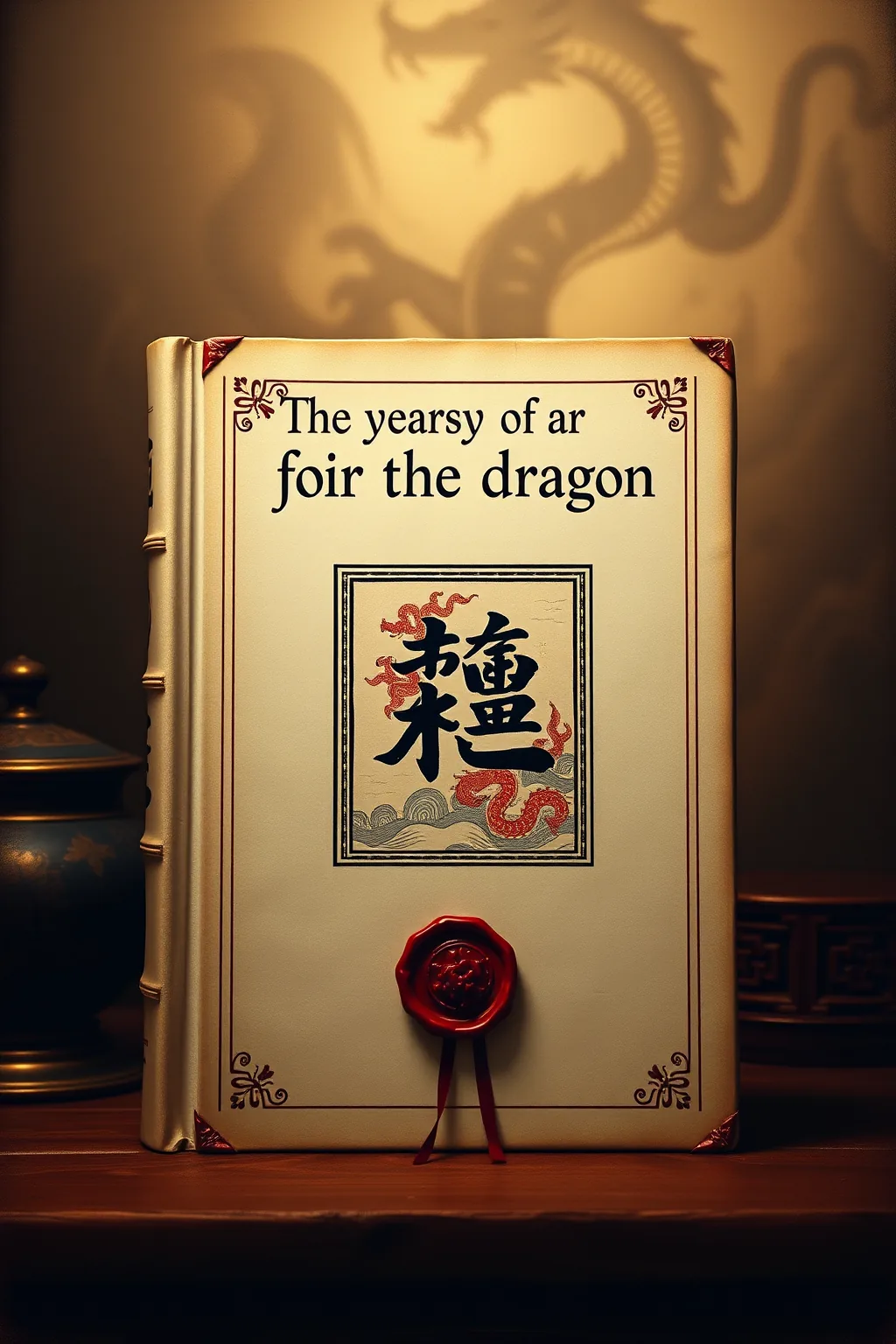
Henning Hai Lee Yang’s "The Year of the Dragon," initially released in 1999, presents a bold attempt to codify the esoteric influences of time itself. The book’s primary strength lies in its ambitious scope, seeking to link calendrical cycles, particularly those suggested by the Chinese zodiac (though not explicitly limited to it), with observable historical and personal phenomena. Yang doesn't shy away from proposing a structured, almost mechanical, interplay between time and destiny. However, the work’s ambition is also its potential pitfall. The conceptual leap from symbolic systems to direct causal influence on global events can feel unsubstantiated, relying heavily on the reader's pre-existing belief in such esoteric connections. A passage exploring the purported energetic shifts accompanying the transition from one "Dragon Year" to another, for instance, could illustrate this, demonstrating Yang's talent for evocative description but also highlighting the interpretive gaps. The text ultimately serves as a fascinating, if sometimes speculative, meditation on cyclical time, offering a perspective that invites contemplation rather than definitive pronouncement.
📝 Description
81
Henning Hai Lee Yang's "The Year of the Dragon" was first published in 1999.
"The Year of the Dragon" by Henning Hai Lee Yang offers an interpretive framework for understanding temporal flow and its influences, drawing on specific cultural perspectives. Published in 1999, the book is not a historical account but an attempt to connect metaphysical principles with observable patterns in human experience and history.
The work is suited for readers interested in thought systems that map cosmic or energetic influences onto human lives and global events. It will appeal to those who study comparative mythology, philosophical inquiries into time, and various calendrical and astrological systems that propose an underlying order. Individuals seeking perspectives beyond conventional historical narratives or single-discipline approaches to metaphysics will find its viewpoint distinct.
Published in 1999, "The Year of the Dragon" emerged during a period of increased interest in cyclical theories of time and eschatology, coinciding with the turn of the millennium. This era saw a rise in works examining New Age prophecies and ancient cosmologies. While distinct from post-Jungian explorations of archetypes, Yang's book shares a common goal of seeking deeper patterns beneath surface events. It appeared in a context where academic study of myth, pioneered by figures like Mircea Eliade, was established, and the public was receptive to grand narratives of cyclical change.
💡 Why Read This Book?
• Gain an understanding of cyclical time theory, particularly how the concept of the "Year of the Dragon" is posited to influence societal and personal destinies, as explored in the book's unique interpretive framework. • Discover specific symbolic associations linked to temporal cycles, moving beyond generalized notions of fate to examine concrete characteristics attributed to specific periods, as detailed within the text. • Engage with a perspective on history and personal experience that considers esoteric influences, offering a departure from purely materialist or rationalist explanations, directly referencing the book's 1999 publication context.
⭐ Reader Reviews
Honest opinions from readers who have explored this book.
❓ Frequently Asked Questions
What is the primary esoteric tradition that "The Year of the Dragon" draws upon?
While not exclusively tied to one school, the book appears to draw heavily from Eastern esoteric philosophies, particularly those related to cyclical timekeeping and symbolic animal archetypes, such as those found in the Chinese zodiac and related cosmological systems.
When was "The Year of the Dragon" first published, and what was the cultural climate like then?
The book was first published in 1999, a period marked by widespread anticipation and anxiety surrounding the turn of the millennium, which fostered a public interest in cyclical theories of time and prophetic interpretations of history.
Does "The Year of the Dragon" offer practical advice for navigating these cyclical influences?
The book primarily functions as an interpretive framework and exploration of esoteric concepts. While it elucidates the supposed characteristics of different temporal cycles, its focus is more on understanding these influences than providing prescriptive self-help guidance.
Is "The Year of the Dragon" a historical analysis or a metaphysical text?
It is best categorized as a metaphysical text. While it may reference historical periods or events, its aim is to interpret them through the lens of esoteric cyclical time theory, rather than to provide a factual historical account.
Who is Henning Hai Lee Yang, the author of "The Year of the Dragon"?
Information on Henning Hai Lee Yang is primarily linked to the publication of "The Year of the Dragon" in 1999. The author is presented as an explorer of esoteric philosophies and cyclical time systems.
What makes the "Year of the Dragon" concept significant in this book?
The "Year of the Dragon" is presented as a potent symbol within a cyclical framework, representing periods of significant energetic potential or transformation that can profoundly shape events and individual lives according to the book's thesis.
🔮 Key Themes & Symbolism
Cyclical Time Frameworks
The book posits that time is not merely linear but operates in discernible cycles, each imbued with specific energies and characteristics. This framework, particularly referencing the symbolic year of the dragon, suggests that understanding these cycles allows for a deeper comprehension of historical patterns and personal trajectories. Yang explores how these recurring temporal phases are believed to influence collective consciousness and individual fate, moving beyond simple chronological progression to a more dynamic, energetic view of existence. The text aims to provide a method for interpreting these influences.
Esoteric Determinism
A core theme is the idea that specific temporal periods exert a deterministic or highly influential force on events and individuals. The "Year of the Dragon," for instance, is presented not just as a marker but as a period carrying inherent qualities that shape outcomes. This concept suggests a cosmic order where destiny is, to some extent, pre-ordained by the temporal cycles one is born into or experiences. The work invites readers to consider how these supposed energetic predispositions might manifest in societal shifts and personal lives.
Symbolic Interpretation of Time
Yang utilizes symbolic systems, likely drawing from Eastern traditions, to assign meaning and character to different temporal segments. The dragon, as a potent symbol, is central to understanding a specific type of year's influence. This approach emphasizes the power of symbols to encapsulate complex energetic principles. The book suggests that these symbols are not mere cultural artifacts but keys to unlocking the hidden currents of time, providing a means to interpret the underlying forces at play in the world since its 1999 publication.
Metaphysical Causality
The book explores the concept of metaphysical causality, where influences beyond the material realm are seen as primary drivers of events. Time, in this context, is not a passive backdrop but an active force shaped by esoteric principles. Yang's work suggests that understanding these non-physical causes is crucial for comprehending the unfolding of history and personal experience. This perspective encourages a view of reality where symbolic and energetic factors play a significant role in shaping tangible outcomes.
💬 Memorable Quotes
Direct passages from the work, attributed to the author.
“The Dragon Year bestows a potent energy, capable of both great creation and formidable destruction.”
— This statement captures the dualistic nature often attributed to powerful symbols in esoteric traditions. It suggests that the specific energetic signature of a Dragon Year is not inherently positive or negative, but rather amplifies potential, making it a period of heightened consequence.
“Time flows not as a river, but as a series of charged currents.”
— This interpretation moves away from a simple linear progression of time. It frames temporal experience as dynamic and energetic, implying that different periods possess distinct qualities or forces that impact events and individuals in tangible ways.
“The cyclical patterns reveal a hidden order beneath the chaos of human history.”
— This highlights the book's central thesis: that apparent randomness in events can be understood through recurring esoteric cycles. It suggests that by deciphering these patterns, one can perceive a deeper, underlying structure to historical unfolding since 1999 and before.
“Understanding the year's character is akin to reading the celestial script.”
— This metaphor connects the interpretation of temporal cycles to astrology or divination. It implies that the qualities assigned to a specific year are not arbitrary but part of a larger, cosmic language that can be learned and understood.
“Each cycle brings its own mandate, shaping the endeavors undertaken within it.”
— This emphasizes the active role of temporal cycles in influencing human activity. It suggests that the prevailing energies of a particular period create a specific context or 'mandate' that guides and potentially limits the types of actions and achievements possible.
🌙 Esoteric Significance
Tradition
The work appears to align with traditions that emphasize cyclical cosmologies and the symbolic interpretation of time, drawing parallels with systems found in Eastern philosophies, particularly those associated with animal zodiacs and elemental cycles. It departs from linear, Abrahamic conceptions of time, instead proposing a universe governed by recurring energetic patterns. This aligns it with broader esoteric interests in finding cosmic order and meaning within temporal flux, a common theme in metaphysical literature since at least the early 20th century.
Symbolism
The "Dragon" itself is a potent symbol, often representing power, transformation, and auspicious fortune in many Eastern cultures. Within the book's framework, it likely signifies a period of intense energy, potential for significant change, and perhaps a call to action or a test of one's capabilities. Other symbols, potentially related to elements or specific calendrical markers, would serve to elaborate on the nuanced energies associated with different temporal phases, providing a rich symbolic language for understanding the esoteric mechanics of time.
Modern Relevance
Contemporary esoteric practitioners and students of comparative spirituality may find "The Year of the Dragon" relevant for its unique approach to time. Its focus on cyclical influences and symbolic interpretation offers an alternative to purely linear or materialistic understandings of history and personal development. Thinkers and groups interested in archetypal psychology, mythopoetic studies, and non-Western metaphysical systems might engage with Yang's work as a point of reference for exploring how time itself can be understood as an active, symbolic force.
👥 Who Should Read This Book
• Students of comparative esoteric traditions seeking to understand non-Western cyclical models of time and destiny, particularly those interested in symbolic interpretations of calendrical systems. • Individuals interested in metaphysical perspectives on history and personal fate who wish to explore theories that posit energetic influences tied to specific temporal cycles beyond conventional astrological charts. • Readers engaged with philosophical inquiries into the nature of time and causality, looking for texts that offer symbolic and metaphysical frameworks to interpret temporal flow and its supposed impact.
📜 Historical Context
Published in 1999, "The Year of the Dragon" emerged during a period of significant cultural introspection regarding the passage of time and the dawn of a new millennium. The cultural climate was rife with both millennial anxieties and a renewed interest in esoteric philosophies, cyclical theories of history, and comparative mythology. This era saw a public fascinated by prophecies and grand narratives of change, influenced by the lingering impact of the counterculture's spiritual explorations and New Age movements. While academic circles were deepening their engagement with post-Jungian archetypal psychology and the works of scholars like Mircea Eliade on myth and ritual, popular culture and esoteric publishing reflected a broader yearning for meaning in perceived cyclical patterns. Yang's work entered this landscape as a contribution to esoteric interpretations of time, offering a specific symbolic lens, potentially drawing from Eastern traditions, to understand the forces believed to shape human affairs. It existed alongside a diverse range of spiritual and philosophical inquiries, offering a distinct perspective on temporal metaphysics.
📔 Journal Prompts
The Dragon Year's mandate: Reflect on a significant endeavor initiated during a perceived "Dragon Year" and its outcome.
Charged currents of time: How do you perceive the energetic shifts between different temporal cycles in your life?
Celestial script interpretation: What symbols or patterns do you observe recurring in significant periods of your life?
Hidden order beneath chaos: Consider a chaotic period in history; what cyclical influence might, according to the book's thesis, have been at play?
The year's character: If you were to assign a character or dominant energy to the current year, what would it be and why?
🗂️ Glossary
Cyclical Time
A philosophical concept positing that time moves in recurring patterns or cycles rather than a purely linear progression, often associated with astrological, cosmological, or spiritual frameworks.
Esoteric
Relating to or accessible only by a relatively small number of people with a specialized knowledge or interest; pertaining to mystical or supernatural truths.
Metaphysical
Concerned with the fundamental nature of reality and existence, including questions about being, time, space, and causality, often beyond the scope of empirical science.
Symbolic Interpretation
The practice of understanding phenomena, events, or concepts through the lens of associated symbols, where symbols represent deeper meanings or energies.
Dragon Year
A specific year within certain cyclical calendars (most notably the Chinese zodiac) that is imbued with particular characteristics and symbolic energies attributed to the dragon archetype.
Energetic Influence
The concept that specific periods or phenomena possess distinct energetic qualities that can impact events, individuals, or collective consciousness.
Causality
The principle that everything has a cause; in a metaphysical context, this can extend to non-material or symbolic causes influencing material outcomes.
🔮 Readers Also Liked
Browse all →







More by Henning Hai Lee Yang
All books →




More Free Astrology & Cosmology Books
View all →