The definitive book of Chinese astrolgy

 76
76

The definitive book of Chinese astrolgy
Shelly Wu’s effort to codify Chinese astrology for a Western audience in 2010 is commendable for its systematic approach. The book’s strength lies in its detailed explanation of the Five Elements (Wu Xing) and their cyclical interactions, moving beyond the superficial animal sign readings. Wu’s presentation of the BaZi (Eight Characters) chart, detailing the Stems and Branches for birth hour, day, month, and year, provides a solid framework for analysis. However, the text occasionally feels dense, particularly when detailing the complex elemental relationships. While striving for comprehensiveness, a deeper dive into the historical evolution of specific interpretative methods, perhaps referencing the Song Dynasty's contributions, would have added further scholarly weight. Nevertheless, for those seeking to understand the mechanics of Chinese astrology beyond popular summaries, Wu’s book offers a clear and structured guide.
📝 Description
76
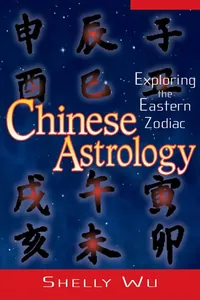
Shelly Wu's 2010 book explains Chinese astrology beyond the 12 animals.
Published in 2010, Shelly Wu's book moves past the common understanding of Chinese astrology. It details how the Five Elements (Wu Xing) and Yin and Yang principles interact with birth years, offering a more complete picture than just the yearly animal signs. The book is suitable for anyone wanting to grasp the core ideas of Chinese cosmology and how they connect to personal fate.
Whether you are new to the subject or already familiar with the 12 animal signs, this work helps to expand your understanding. Wu's research connects the ancient system to Taoism and its historical use in Chinese society. The text breaks down important concepts like the 60-year cycle, the Heavenly Stems and Earthly Branches, and BaZi (Eight Characters), which are used to create individual astrological charts. It shows how these components shape personality and life possibilities.
Chinese astrology is an ancient tradition, over 2,000 years old, that grew from astronomical observation and philosophical thought, particularly Taoism. It was woven into the fabric of Chinese life for centuries, affecting decisions from personal relationships to state matters. Wu's book examines this deep historical and philosophical background, showing how it forms a complex system for understanding human life and destiny.
💡 Why Read This Book?
• Understand the Five Elements (Wu Xing) and their dynamic interactions, gaining insight into how they influence personality and destiny, a core concept introduced early in the book. • Learn to calculate and interpret the BaZi (Eight Characters) chart, moving beyond the 12 animal signs to a more personalized astrological reading based on birth time. • Appreciate the historical depth of Chinese astrology, understanding its development over millennia, as outlined in the book's contextual sections.
⭐ Reader Reviews
Honest opinions from readers who have explored this book.
❓ Frequently Asked Questions
What is the significance of the Five Elements in Chinese astrology?
The Five Elements (Wu Xing) – Wood, Fire, Earth, Metal, and Water – are fundamental in Chinese astrology. They represent different energies that interact cyclically, influencing personality traits, relationships, and life events based on their balance or imbalance in an individual's BaZi chart.
How does Chinese astrology differ from Western astrology?
Chinese astrology is primarily based on a lunar calendar and a 12-year cycle of animal signs, combined with a 60-year cycle of elements and stems. Western astrology is solar-based and focuses on planetary positions relative to zodiac constellations at the time of birth.
What is BaZi and why is it important?
BaZi, or 'Eight Characters,' is a Chinese astrological system that uses four pairs of Heavenly Stems and Earthly Branches corresponding to the year, month, day, and hour of birth. These eight characters form a unique chart that provides a detailed blueprint of a person's destiny.
When was Chinese astrology first developed?
The origins of Chinese astrology are ancient, with evidence suggesting its development began over 2,000 years ago, evolving alongside early Chinese astronomy and philosophy during periods like the Han Dynasty (206 BCE – 220 CE).
Can Chinese astrology predict specific future events?
While Chinese astrology provides insights into potential strengths, challenges, and tendencies throughout a person's life, it is generally understood as a system for understanding patterns and potentials rather than making deterministic predictions of specific events.
What is the difference between the Earthly Branches and the Heavenly Stems?
The Earthly Branches correspond to the 12 animal signs of the Chinese zodiac (Rat, Ox, Tiger, etc.), while the Heavenly Stems are a set of ten symbols representing Yin and Yang energies and the Five Elements. Together, they form the basis of the BaZi chart.
🔮 Key Themes & Symbolism
The BaZi Chart
The BaZi, or Eight Characters, is central to personal Chinese astrology. Wu meticulously details how the Heavenly Stems and Earthly Branches, derived from birth year, month, day, and hour, form a unique chart. This system goes beyond the common 12 animal signs to reveal intricate personality traits, strengths, and potential life paths. Understanding the combinations within one's BaZi is presented as key to self-knowledge and navigating one's destiny.
Interplay of Wu Xing
The Five Elements (Wu Xing) – Wood, Fire, Earth, Metal, Water – are not static but engage in dynamic cycles of creation and destruction. This book explains how the relative strength and balance of these elements in an individual's BaZi chart dictate their character, health, and relationships. Wu illustrates how imbalances can manifest as challenges, while harmony promotes well-being and success, drawing from ancient Taoist principles.
Yin and Yang Dynamics
Complementing the Five Elements, the principles of Yin and Yang are woven throughout the astrological interpretations. Each element, animal sign, and stem possesses Yin or Yang qualities. Wu's work demonstrates how the interplay between these opposing yet complementary forces within a BaZi chart shapes an individual's temperament and life experiences, reflecting a core tenet of Chinese philosophy.
Cycles and Timing
Chinese astrology emphasizes the importance of cycles, most notably the 12-year animal cycle and the 60-year cycle that combines the 12 Earthly Branches with the 10 Heavenly Stems. The book explains how these cycles influence collective trends and individual fortunes, offering a framework for understanding opportune times for action and periods that may require caution.
💬 Memorable Quotes
Direct passages from the work, attributed to the author.
“The animal sign is merely the 'face' of your destiny; the true portrait lies within the eight characters of your birth pillar.”
— This highlights the book's emphasis on the depth of the BaZi system over the superficial understanding of just the yearly animal sign. It suggests that a comprehensive astrological reading requires examining all components of the birth chart.
“Each Heavenly Stem carries a specific energetic signature, influencing the Earthly Branch it governs.”
— This statement points to the intricate relationship between the two core components of the BaZi system. It emphasizes that the interaction between Stems and Branches is crucial for a nuanced astrological interpretation.
“Understanding the cycles of time allows one to align actions with cosmic currents.”
— This interpretation reflects the practical application of Chinese astrological knowledge, suggesting that awareness of temporal cycles can inform decision-making and improve outcomes.
💡 Key Ideas
Editorial paraphrase of the work's core concepts — not direct quotes.
Harmony among the Five Elements in your chart signifies ease; discord indicates challenges requiring skillful management.
This paraphrase captures the essence of how elemental balance is viewed in Chinese astrology. It frames astrological analysis not as fatalistic prediction but as a guide to understanding inherent potentials and areas needing attention.
The Yin and Yang aspects of your birth elements reveal the duality within your nature.
This paraphrase underscores the book's integration of Yin-Yang theory into astrological interpretation, showing how these fundamental principles help explain personality complexities and inner conflicts.
🌙 Esoteric Significance
Tradition
This work aligns with the broader Hermetic and esoteric interest in cosmic correspondences and divination systems. While not strictly Hermetic, its exploration of macrocosm-microcosm relationships – how celestial patterns (Stems, Branches, Elements) reflect human characteristics – shares common ground with Hermetic principles like 'As Above, So Below.' It draws heavily from Taoist philosophy and ancient Chinese cosmology, integrating them into a predictive and self-understanding framework.
Symbolism
Key symbols include the 12 Earthly Branches, represented by animals like the Rat and Dragon, each embodying specific energies and archetypes. The 10 Heavenly Stems, linked to the Five Elements (Wu Xing) and Yin/Yang, provide a more nuanced layer of interpretation. The cyclical interaction of these elements (e.g., the destructive cycle of Metal over Wood) forms a symbolic language for understanding the dynamics of life and personality.
Modern Relevance
Contemporary practitioners of comparative divination, psychologists interested in archetypal patterns, and individuals exploring mindfulness through Eastern philosophies often turn to comprehensive texts like Wu's. The emphasis on elemental balance and cyclical timing appeals to modern wellness trends and the search for personalized guidance systems in an increasingly complex world.
👥 Who Should Read This Book
• Aspiring practitioners of Chinese metaphysics seeking a detailed, foundational text on astrological chart construction and interpretation. • Individuals interested in comparative esoteric systems who wish to understand the principles of BaZi and Wu Xing in relation to other divination methods. • Readers curious about their personal destiny and personality who desire a more in-depth analysis than the popular 12-animal year signs offer.
📜 Historical Context
Published in 2010, 'The Definitive Book of Chinese Astrology' emerged during a period of renewed global interest in Eastern philosophies and esoteric systems. Chinese astrology, with its roots stretching back over two millennia, had seen various interpretations and syntheses throughout Chinese history, notably during the Song Dynasty (960–1279) when astrological practices became more systematized. While Western occult traditions were flourishing, Wu's work specifically aimed to present the intricate Chinese system clearly. Its publication predates the widespread digital dissemination of astrological tools, positioning it as a comprehensive textual resource for serious students. It offered a structured alternative to the often simplified, animal-sign-focused astrology prevalent in popular media, engaging with scholars and practitioners interested in comparative cosmology.
📔 Journal Prompts
The Earthly Branches assigned to your birth year and day: how do their associated animal characteristics manifest in your daily life?
Identify a dominant Five Element in your BaZi chart. Reflect on its creative and destructive cycles and how they might influence your relationships.
Consider the interplay of Yin and Yang within your core birth elements. Where do you experience balance, and where do you feel tension?
The concept of the 60-year cycle: how might understanding these larger temporal patterns offer perspective on your personal life stages?
Reflect on a specific Heavenly Stem or Earthly Branch from your chart. What personal qualities or potential challenges does it illuminate?
🗂️ Glossary
BaZi (八字)
Literally 'Eight Characters,' referring to the four pairs of Heavenly Stems and Earthly Branches derived from a person's birth year, month, day, and hour, forming a unique astrological chart.
Heavenly Stems (天干)
A set of ten symbols (Jia, Yi, Bing, Ding, Wu, Ji, Geng, Xin, Ren, Gui) representing the Five Elements in their Yin and Yang aspects, used in combination with Earthly Branches.
Earthly Branches (地支)
A set of twelve symbols corresponding to the 12 animal signs of the Chinese zodiac (Rat, Ox, Tiger, etc.), used in combination with Heavenly Stems.
Wu Xing (五行)
The Five Elements: Wood (木), Fire (火), Earth (土), Metal (金), and Water (水). They represent fundamental forces and energies that interact in cycles of creation and destruction.
Yin and Yang (阴阳)
The fundamental Taoist concept of complementary, opposing forces. In astrology, it helps define the nature of elements, stems, and branches.
60-Year Cycle
A cyclical calendar system combining the 12 Earthly Branches with the 10 Heavenly Stems, repeating every 60 years. Each year has a unique Stem-Branch combination.
Four Pillars
Another term for BaZi, referring to the four pairs of Stem and Branch characters representing the Year Pillar, Month Pillar, Day Pillar, and Hour Pillar.
🔮 Readers Also Liked
Browse all →








More by Shelly Wu
All books →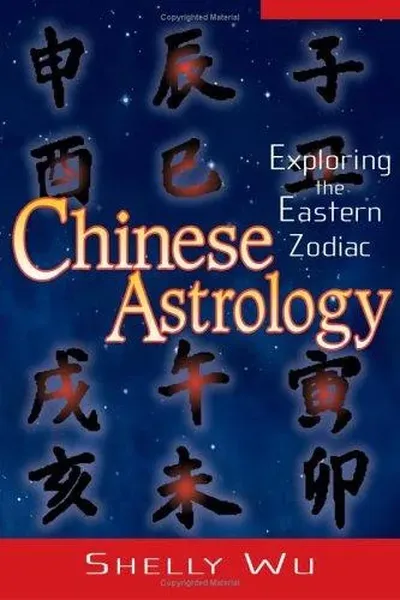



More Free Astrology & Cosmology Books
View all →