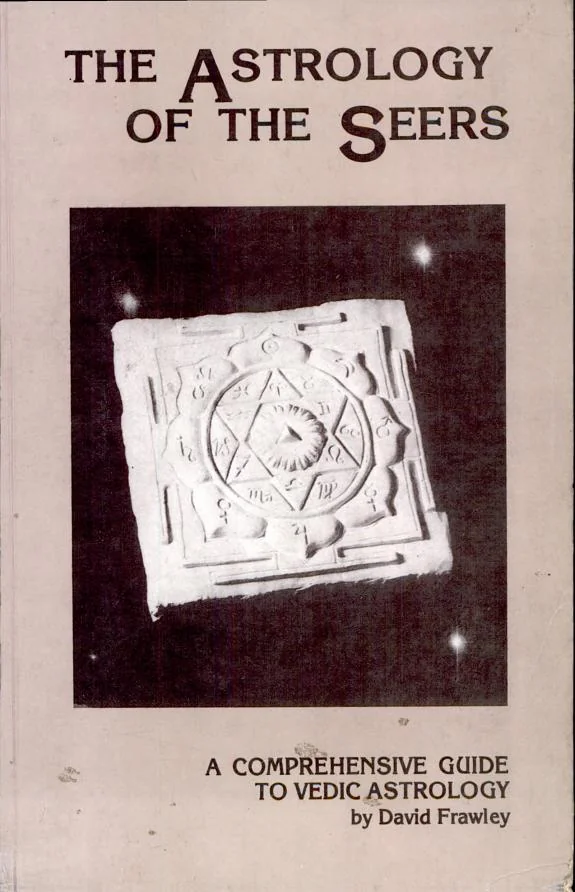
The Astrology of Seers
 83
83

The Astrology of Seers
David Frawley’s The Astrology of Seers offers a compelling case for Vedic astrology as a spiritual discipline rather than mere fortune-telling. Frawley’s strength lies in his ability to articulate the philosophical depth of Jyotish, particularly its connection to yogic philosophy and cosmology. He effectively demystifies concepts like the Yugas, presenting them as integral to understanding human history from a Vedic viewpoint. A passage discussing the solar system’s connection to galactic energy sources, while dense, highlights the book’s ambitious scope. However, the original 1992 publication’s prose, while clear, occasionally feels didactic, and the sheer breadth of topics covered might leave newcomers wanting more step-by-step practical application. Nonetheless, for those seeking to understand the 'why' behind Vedic astrology, this work provides substantial intellectual and spiritual grounding.
📝 Description
83
David Frawley's 1992 book frames Vedic astrology as a spiritual science, not just prediction.
The Astrology of Seers, published in 1992, argues that Vedic astrology, or Jyotish, is more than a system for forecasting events. David Frawley writes that it is a spiritual science with deep philosophical roots. The book aims to make the complex structure of Jyotish understandable to a broader readership. It moves past basic chart readings to examine the philosophical foundations of this ancient practice. Frawley positions astrology as a key element in yogic and spiritual growth.
This work is for those who want a more thorough grasp of Vedic astrology than simple techniques provide. It will interest students of spirituality, yoga practitioners, and anyone drawn to comparative cosmology. Readers curious about the Vedic view of history, consciousness, and cosmic energetic links will find significant content. The book is suited for the dedicated seeker of astrological knowledge. It examines core Vedic concepts like planetary periods (dashas) and karmic patterns. The text highlights astrology as a means for self awareness and spiritual advancement, connecting planetary positions to internal consciousness and yogic methods. The concept of the Yugas, a cyclical model of history, is also explored.
Published in the early 1990s, The Astrology of Seers appeared during a time of increased Western interest in Eastern spiritual thought. Frawley's book addressed a growing demand for genuine Vedic knowledge, setting itself apart from more Westernized astrological systems common then. Its discussion of the Yugas, or world ages, provided a cosmological framework that appealed to those interested in cyclical historical perspectives, including influences from the Theosophical Society's wider engagement with ancient traditions.
💡 Why Read This Book?
• Gain a practical understanding of Vedic astrology's spiritual dimensions, moving beyond predictive techniques to explore its role in self-realization, as detailed in sections on astrology and yoga. • Comprehend the Vedic perspective on world history through the detailed explanation of the Yugas (world-ages), a concept central to understanding cosmic cycles. • Discover the connection between our solar system and broader galactic energy sources, offering a cosmological framework not commonly found in Western astrological texts.
⭐ Reader Reviews
Honest opinions from readers who have explored this book.
❓ Frequently Asked Questions
What is Vedic astrology and how does it differ from Western astrology?
Vedic astrology, also known as Jyotish, originates from ancient India and uses a sidereal zodiac, which aligns with the fixed stars. It places significant emphasis on karma, spiritual development, and a cyclical view of time, including concepts like the Yugas.
What are the Yugas mentioned in The Astrology of Seers?
The Yugas are epochs or ages within the Vedic cosmological model, representing a grand cycle of time and the progressive decline and eventual renewal of dharma and consciousness. Frawley explains this cycle as integral to understanding human history.
Is The Astrology of Seers suitable for beginners in astrology?
While it aims for clarity, the book delves into complex spiritual and cosmological concepts. It's best suited for those with some foundational knowledge or a strong interest in the philosophical aspects of Vedic astrology, rather than absolute beginners seeking only basic chart interpretation.
What is the connection between astrology and yoga in this book?
Frawley presents astrology as a spiritual science that complements yoga. He explores how planetary influences can be understood in relation to inner states of consciousness, karmic patterns, and the path towards spiritual liberation within the yogic framework.
Does the book discuss planetary energies and their impact?
Yes, the book discusses the energetic influence of planets within the Vedic system. It goes further to explore how these energies are interconnected with broader cosmic forces, including galactic sources, offering a holistic view of celestial influences.
When was The Astrology of Seers first published?
The Astrology of Seers was first published on January 1, 1992, making it a significant contribution to the literature on Vedic astrology during a period of growing interest in Eastern spiritual traditions in the West.
🔮 Key Themes & Symbolism
Astrology as Spiritual Science
Frawley positions Vedic astrology not merely as a predictive art but as a profound spiritual science, integral to the path of yoga and self-realization. The work emphasizes understanding celestial patterns as reflections of karmic imprints and as guides for spiritual evolution. It explores how the Jyotish system can illuminate the soul's journey, offering insights into one's dharma and the unfolding of consciousness through different life stages and cosmic cycles.
The Cycle of World-Ages (Yugas)
A significant portion of the book is dedicated to explaining the Vedic concept of Yugas, the cyclical ages that chart the course of cosmic and human history. Frawley connects these epochs to the evolution of consciousness and the shifting balance of dharma. This cosmological perspective offers a grand narrative of time, suggesting a cyclical pattern of decline and renewal that influences collective human experience and destiny.
Cosmic Connections and Galactic Energies
The Astrology of Seers posits a deep interconnectedness between our solar system and the wider cosmos, including galactic sources of energy. This perspective moves beyond a geocentric or heliocentric view to embrace a more holistic understanding of the universe's energetic matrix. Frawley suggests that celestial bodies not only exert influence within our immediate system but also participate in larger energetic flows emanating from distant cosmic centers.
Astrology, Psychology, and Yoga
The book bridges the domains of astrology, psychology, and yoga, presenting Jyotish as a tool for understanding the psyche and facilitating yogic practice. It explores how planetary placements and transits can correlate with psychological tendencies and karmic patterns. By integrating astrological insights with yogic principles, Frawley offers a framework for self-awareness, personal growth, and spiritual transformation.
💬 Memorable Quotes
Direct passages from the work, attributed to the author.
“The Vedic system of astrology is a spiritual science, not merely a predictive tool.”
— This core assertion frames the entire work, emphasizing that Jyotish's primary value lies in its capacity to illuminate spiritual truths and guide the seeker toward self-understanding and liberation.
“The Yugas reveal the Vedic view of human history and its cyclical nature.”
— This highlights the book's exploration of cosmic time cycles, presenting a grand narrative of historical progression and regression that shapes collective human consciousness and destiny.
“Our solar system is linked to galactic sources of energy.”
— This points to the book's ambitious cosmological scope, proposing that terrestrial and solar influences are part of a larger energetic web extending throughout the galaxy.
“Jyotish provides practical relevance for spiritual life.”
— This interpretation underscores Frawley's aim to make Vedic astrology accessible and applicable, demonstrating its utility not just for prediction but for working through the spiritual path.
💡 Key Ideas
Editorial paraphrase of the work's core concepts — not direct quotes.
Astrology is connected to the deeper implications of yoga and consciousness.
This paraphrase suggests that Frawley views astrological configurations as indicators of inner states and karmic predispositions, making it a complementary practice for yogic development.
🌙 Esoteric Significance
Tradition
The Astrology of Seers is deeply rooted in the Vedic tradition, specifically the branch of Jyotish. It aligns with the broader Hindu philosophical framework that views the cosmos as a manifestation of divine consciousness and time as cyclical. Frawley integrates Jyotish with yogic philosophy, presenting it as a path to understanding karma and achieving spiritual liberation (moksha), departing from purely predictive or psychological interpretations often found in Western esotericism.
Symbolism
Key symbols include the planets (grahas) representing karmic forces and divine energies, and the zodiac signs and houses acting as archetypal fields of experience. The concept of the Yugas is a potent symbol of cosmic time and the cyclical nature of creation and dissolution. Frawley also alludes to the Sun as a galactic nexus, symbolizing ultimate consciousness and the source of life-giving energy.
Modern Relevance
Frawley's work continues to influence contemporary practitioners of Vedic astrology and those interested in comparative cosmology. Thinkers exploring the intersection of consciousness studies, ancient wisdom, and modern science often draw upon his interpretations of the Yugas and galactic connections. His emphasis on astrology as a spiritual path speaks to modern yogis and spiritual seekers looking for integrated frameworks for personal and collective evolution.
👥 Who Should Read This Book
• Students of Vedic astrology seeking a deeper philosophical and spiritual context for Jyotish beyond basic predictive techniques. • Yoga practitioners interested in understanding the cosmic influences and karmic patterns that inform their spiritual journey and personal growth. • Readers of comparative cosmology and history intrigued by the Vedic model of world-ages (Yugas) and its implications for understanding human destiny.
📜 Historical Context
Published in 1992, David Frawley's The Astrology of Seers arrived during a resurgence of interest in Eastern spiritual traditions within the West. Frawley, already a respected voice in Vedic studies, offered a comprehensive look at Jyotish, distinguishing it from the more prevalent Western astrological systems. The era saw figures like Georg Feuerstein also championing Vedic knowledge, though Frawley’s focus on the spiritual and cosmological dimensions, particularly the Yugas, provided a unique perspective. While not facing overt censorship, the work contributed to a broader intellectual current that sought ancient wisdom traditions as counterpoints to secular modernity. Its reception was largely positive within esoteric and spiritual circles, reinforcing the growing legitimacy of Vedic sciences.
📔 Journal Prompts
The concept of the Yugas and its relation to current historical events.
Vedic astrology as a spiritual science versus a predictive tool.
Your personal karma and its potential astrological indicators.
The solar system's connection to galactic energy sources.
Integrating astrological insights with yogic practices for self-realization.
🗂️ Glossary
Jyotish
The traditional Vedic system of astrology, originating from ancient India. It is considered a Vedanga, or limb of the Vedas, aiming to guide human activities in alignment with cosmic rhythms.
Yugas
The four cyclical ages (Satya, Treta, Dvapara, Kali) that constitute a Mahayuga, representing a grand cycle of cosmic time and the progressive decline of dharma and consciousness.
Dharma
In the Vedic context, refers to one's duty, righteousness, natural law, or cosmic order. It encompasses the principles that uphold the universe and guide individual conduct towards spiritual fulfillment.
Karma
The universal law of cause and effect, where actions in this life and past lives determine future experiences and circumstances. Jyotish is seen as a map of one's karma.
Graha
Literally 'seizer' or 'enveloper,' referring to the planets in Vedic astrology. They are considered the primary agents of karmic influence and divine energy.
Dasha
Planetary periods or cycles in Vedic astrology that indicate the unfolding of karma and specific influences throughout a person's life.
Moksha
Liberation or release from the cycle of birth, death, and rebirth (samsara). It is the ultimate goal in many Indian spiritual traditions, including yoga and Vedanta.
This book appears in 1 collection
🔮 Readers Also Liked
Browse all →









From the “Vedic Astrology” Collection
View all →







More Free Astrology & Cosmology Books
View all →