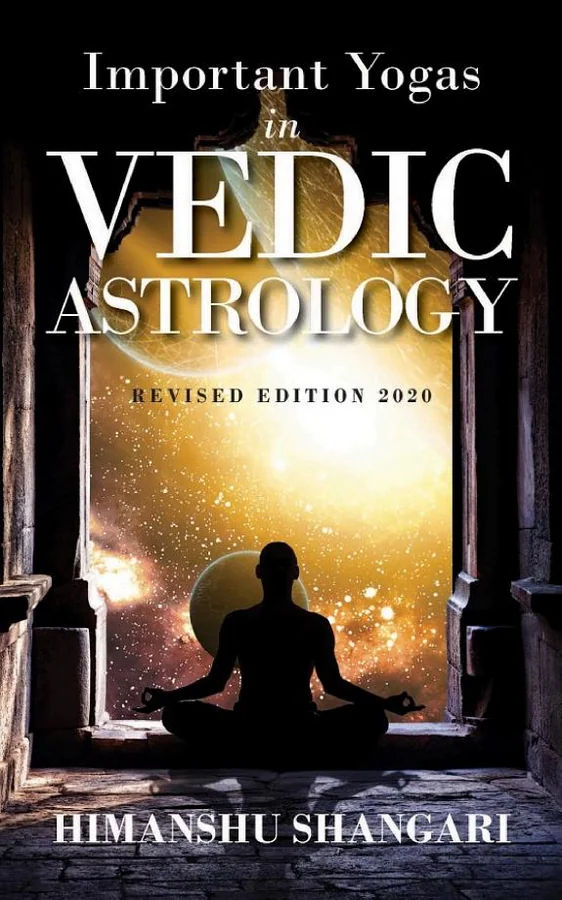
Important Yogas in Vedic Astrology : Revised Edition 2020
 84
84

Important Yogas in Vedic Astrology : Revised Edition 2020
Himanshu Shangari's "Important Yogas in Vedic Astrology" offers a welcome corrective to the often-muddied waters of Jyotish Yoga interpretation. The author's commitment to dissecting definitions, particularly his detailed examination of the conditions for Hamsa Yoga, demonstrates a scholarly rigor that is frequently absent in contemporary astrological literature. He rightly questions interpretations that have become commonplace without scriptural backing. The limitation lies in its density; while comprehensive, the book demands focused attention and may prove challenging for absolute beginners. Shangari's insistence on precise planetary degrees and house placements for, for instance, Vipreet Rajyoga, is a strength that elevates the work beyond mere descriptive astrology. It serves as a valuable reference for those who value accuracy in astrological analysis.
📝 Description
84
Himanshu Shangari's 2020 revised edition clarifies Vedic Yoga definitions.
This 2020 revised edition of Himanshu Shangari's "Important Yogas in Vedic Astrology" addresses widespread confusion about astrological formations within the Vedic system. The author meticulously separates common interpretations from original scriptural intent, clarifying the precise astrological conditions that define significant Yogas. Shangari focuses on the deep analysis of these celestial configurations.
The text is structured for individuals seeking a rigorous understanding of Vedic astrology beyond superficial readings. It appeals to students and practitioners who wish to refine their analytical skills, particularly those who question existing interpretations of Yogas. Those interested in comparing classical astrological texts with modern discourse will find value here.
The book examines both auspicious Yogas, such as Hamsa, Malavya, and Ruchaka Yogas, and inauspicious ones like Guru Chandal Yoga and Grahan Yoga. The emphasis is on the exact planetary placements, dignities, and aspects required for each Yoga to manifest authentically.
Vedic astrology, or Jyotish, traces its lineage back thousands of years, influenced by ancient Indian astronomical observations and philosophical systems. Yogas, as specific planetary combinations, are a fundamental component of this tradition. Classical texts like the Brihat Parashara Hora Shastra describe these formations. This book engages with the historical development of Yoga interpretations, noting how certain definitions may have shifted over centuries. It aims to restore a more scripturally aligned understanding of these complex astrological indicators.
💡 Why Read This Book?
• Learn the precise astrological conditions for forming auspicious Yogas like Hamsa Yoga, moving beyond generalized interpretations found in many introductory texts, and understand their specific scriptural basis. • Gain clarity on malefic Yogas such as Guru Chandal Yoga, differentiating between ancient astrological definitions and modern, potentially diluted, understandings of their effects. • Appreciate the historical evolution of astrological concepts by examining how Yoga interpretations have been presented and potentially altered since classical Vedic texts, such as the Brihat Parashara Hora Shastra.
⭐ Reader Reviews
Honest opinions from readers who have explored this book.
❓ Frequently Asked Questions
What is the primary goal of "Important Yogas in Vedic Astrology"?
The book aims to clarify the precise definitions and astrological conditions of significant Yogas in Vedic astrology, distinguishing between original scriptural intent and prevalent modern interpretations.
Which specific Yogas are discussed in the revised 2020 edition?
The 2020 edition covers both benefic Yogas like Hamsa, Malavya, and Ruchaka, and malefic Yogas including Guru Chandal, Grahan, and Angarak Yoga, with expanded details.
Is this book suitable for beginners in Vedic astrology?
While comprehensive, the book's depth and analytical focus are best suited for students and practitioners who already possess a foundational understanding of Vedic astrological principles.
What makes this edition 'Revised 2020' significant?
The revised edition signifies updated research and a more detailed exploration of various Yogas, reflecting Shangari's ongoing engagement with the subject matter since earlier publications.
Does the book provide astrological charts as examples?
The text focuses on defining the conditions for Yogas rather than providing extensive chart examples, emphasizing the theoretical and definitional aspects of these astrological patterns.
How does Shangari approach the concept of malefic Yogas?
Shangari examines malefic Yogas like Guru Chandal Yoga by detailing the specific planetary interactions and placements that constitute them, aiming for an objective astrological assessment.
🔮 Key Themes & Symbolism
Authentic Yoga Definitions
This theme centers on the book's core objective: to establish the true astrological definitions of key Yogas, distinguishing them from common, often inaccurate, interpretations. Shangari emphasizes the importance of adhering to classical astrological texts and principles when evaluating planetary combinations. He scrutinizes how Yogas like Ruchaka Yoga, which involve planets in their own signs (Moolatrikona or Swakshetra), are understood and applied, advocating for a precise understanding of planetary strength and placement.
Benefic vs. Malefic Yogas
The work systematically categorizes and explains both positive (benefic) and challenging (malefic) Yogas. For instance, the auspiciousness of Malavya Yoga, linked to Jupiter's placement, is contrasted with the complexities introduced by Guru Chandal Yoga, a conjunction of Jupiter and Rahu. Shangari explores the astrological factors that determine whether a Yoga manifests as beneficial, detrimental, or a mix, focusing on the precise nature of planetary aspects and conjunctions.
Depth of Astrological Analysis
Shangari champions a deep, analytical approach to Jyotish, moving beyond superficial pattern recognition. The book encourages readers to investigate the underlying principles of planetary interaction, house lordship, and divisional charts that contribute to the formation and manifestation of Yogas. This emphasis on detailed analysis is evident in his treatment of Vipreet Rajyoga, requiring specific conditions of planetary debilitation and combustion.
Classical Jyotish Principles
A significant theme is the reverence for and accurate application of classical Jyotish principles. The book grounds its explanations in the foundational knowledge found in ancient Sanskrit astrological treatises. By referencing these sources, Shangari seeks to uphold the integrity of Vedic astrology, encouraging practitioners to consult original texts and understand the historical context of astrological interpretations for Yogas.
💬 Memorable Quotes
Direct passages from the work, attributed to the author.
“The prevalent definition is given first. The science...”
— This highlights the book's methodology: presenting the commonly accepted understanding of a Yoga before dissecting it to reveal its more accurate, scripturally supported, astrological basis.
“focus here is going deeper and deeper”
— This phrase underscores the author's commitment to thoroughness and detailed analysis, moving beyond surface-level explanations of astrological phenomena.
“Hamsa Yoga, Malavya Yoga, Ruchaka Yoga”
— These names represent key examples of benefic Yogas discussed, illustrating the book's focus on identifying and understanding configurations that promise positive astrological outcomes.
“Guru Chandal Yoga, Grahan Yoga and Angarak Yoga”
— These are examples of malefic Yogas explored, demonstrating the book's balanced approach to analyzing both auspicious and challenging planetary combinations in Vedic astrology.
“attempt to create awareness about true nature”
— This expresses the author's foundational motivation: to educate readers about the accurate astrological significance of Yogas, combating misinformation and common misunderstandings.
🌙 Esoteric Significance
Tradition
This work firmly belongs within the Vedic (Jyotish) astrological tradition, a system deeply intertwined with Hindu philosophy, cosmology, and concepts of karma and reincarnation. It departs from purely predictive or psychological interpretations by emphasizing the classical, scriptural understanding of astrological configurations (Yogas) as indicators of destiny and karmic patterns.
Symbolism
Key symbols include the specific planetary Yogas themselves, such as Hamsa Yoga (associated with Jupiter in a Kendra), representing wisdom and spiritual elevation, or Guru Chandal Yoga (Jupiter afflicted by Rahu), symbolizing a potential distortion of wisdom or ethical compromise. The precise degrees and house placements act as symbolic language, indicating the quality and intensity of karmic influences.
Modern Relevance
Modern Jyotish practitioners, particularly those seeking to deepen their understanding beyond popular astrology, draw on Shangari's work to refine their analytical skills. Thinkers interested in comparative astrology or the philosophical underpinnings of cosmic determinism find value in his rigorous approach to classical texts and concepts.
👥 Who Should Read This Book
['• Students of Vedic astrology seeking to move beyond introductory concepts and understand the precise astrological conditions for significant Yogas like Hamsa and Guru Chandal Yoga.', '• Experienced Jyotish practitioners who wish to verify or refine their understanding of classical Yoga interpretations against scriptural sources and detailed analysis.', '• Comparative astrology researchers interested in the specific methodologies and definitions employed within the Vedic tradition, particularly concerning planetary combinations.']
📜 Historical Context
Himanshu Shangari's "Important Yogas in Vedic Astrology" emerges from a rich tradition of Jyotish scholarship that spans millennia, with roots in ancient Indian astronomical and astrological texts like the Brihat Parashara Hora Shastra, dating potentially to the 7th century CE or earlier. The book engages with a modern astrological landscape where interpretations of classical concepts can become diluted or misapplied. While Vedic astrology has always been a distinct system from Western astrology, the 20th century saw increased cross-pollination of ideas. Shangari's work implicitly addresses this by reaffirming the classical framework. The 2020 revised edition reflects contemporary scholarship and a desire to correct prevalent misunderstandings that may have arisen over time, potentially influenced by various schools of astrological thought or simplified teaching methods. Its focus on precise definition stands in contrast to more syncretic or generalized approaches to astrological interpretation.
📔 Journal Prompts
Analyze the conditions for Ruchaka Yoga in your birth chart or a known chart.
Reflect on the distinction between scriptural and popular definitions of Grahan Yoga.
Consider the astrological impact of Jupiter and Rahu's conjunction as described for Guru Chandal Yoga.
Evaluate the importance of planetary dignity when assessing Yogas like Malavya Yoga.
How does the concept of Vipreet Rajyoga challenge common astrological assumptions?
🗂️ Glossary
Yoga
In Vedic astrology, a specific combination of planets or planetary positions that produces a particular effect or outcome in a person's life.
Hamsa Yoga
An auspicious Yoga formed when Jupiter is in a Kendra from the Ascendant or Moon, and in its own sign (Sagittarius or Pisces) or exaltation sign (Cancer).
Malavya Yoga
A benefic Yoga formed when Venus is in a Kendra from the Ascendant or Moon, and in its own sign (Taurus or Libra) or exaltation sign (Pisces).
Ruchaka Yoga
A powerful Yoga formed when Mars is in a Kendra from the Ascendant or Moon, and in its own sign (Aries or Scorpio) or exaltation sign (Capricorn).
Vipreet Rajyoga
A category of Yogas formed by malefic planets in challenging houses (6th, 8th, 12th), which can surprisingly yield positive results after initial difficulties.
Guru Chandal Yoga
A Yoga formed by the conjunction of Jupiter (Guru) and Rahu, often indicating unconventional wisdom, ethical dilemmas, or a spiritual path influenced by illusion.
Grahan Yoga
Literally 'eclipse Yoga', generally formed by the Sun or Moon being conjunct with malefics like Rahu or Ketu, potentially causing obstruction or diminished vitality.
This book appears in 1 collection
🔮 Readers Also Liked
Browse all →








From the “Vedic Astrology” Collection
View all →









More Free Astrology & Cosmology Books
View all →