Chinese Astrology
 75
75

Chinese Astrology
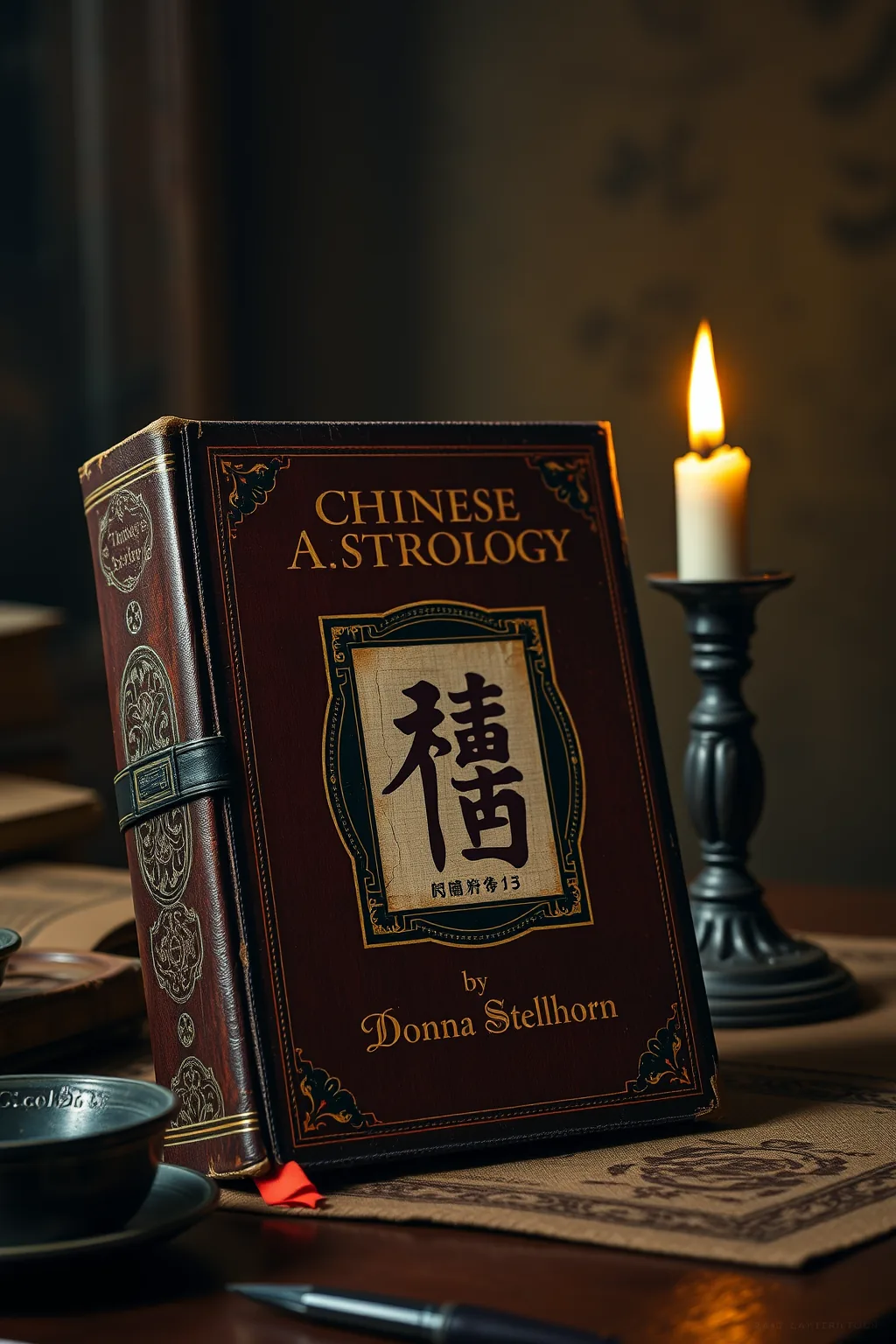
Donna Stellhorn's Chinese Astrology offers a clear entry point into a complex system. The strength of the book lies in its systematic breakdown of the sixty sign-element combinations, moving beyond the superficial traits of the twelve animals to reveal deeper layers of personality and potential. For instance, the detailed exploration of how a Water Rat differs from a Fire Rat provides actionable insight. However, the book occasionally leans into generalized descriptions that, while accurate, lack the sharp, critical edge one might expect from a seasoned reviewer. A notable passage details the inherent conflict and complementary energies between the Dragon and the Dog, illustrating the book's capacity for nuanced explanation. Ultimately, Stellhorn's work is a competent, if somewhat conventional, primer on the Chinese zodiac.
📝 Description
75
Donna Stellhorn's Chinese Astrology, published in 2025, details the twelve animal signs and their elemental influences.
This book breaks down the Chinese zodiac system, focusing on the twelve animal signs and their associated elemental influences. It explains not just the general traits of each animal but also the complex interactions within the sixty unique sign/element combinations. The work serves as a practical guide for understanding personality, relationships, and future possibilities through this tradition. Stellhorn's modern interpretation makes these ancient principles accessible to a contemporary audience. It is suitable for individuals curious about Chinese cosmology, those seeking self-understanding, or astrology practitioners interested in comparative systems. Beginners will find it approachable, while those with prior knowledge can deepen their comprehension of its finer points. Anyone interested in applying ancient wisdom to modern life, understanding interpersonal dynamics, or exploring predictive techniques will find value here.
Chinese astrology is an ancient system with roots thousands of years old, deeply tied to Chinese philosophy, astronomy, and calendrical systems. It is a significant form of divination, predating many Western astrological traditions. Its longevity and widespread use point to its cultural importance and perceived effectiveness over centuries. Stellhorn's book bridges historical practice with modern application, making these ancient principles accessible.
💡 Why Read This Book?
• Gain a practical framework for understanding personality archetypes by exploring the specific traits of each of the twelve animal signs, such as the steadfast Ox or the clever Monkey, as detailed in Stellhorn's chapters. • Discover how the interaction of the Five Elements (Wood, Fire, Earth, Metal, Water) with your birth animal sign creates unique characteristics, offering insights not found in simpler zodiac guides. • Learn about the sixty distinct sign-element combinations, providing a granular understanding of character and potential challenges or strengths, as presented through Stellhorn's comprehensive analysis.
⭐ Reader Reviews
Honest opinions from readers who have explored this book.
❓ Frequently Asked Questions
When was Donna Stellhorn's Chinese Astrology first published?
Donna Stellhorn's Chinese Astrology was first published on January 8, 2025, making it a contemporary guide to this ancient practice.
What are the twelve animal signs in Chinese Astrology?
The twelve animal signs, in order, are the Rat, Ox, Tiger, Rabbit, Dragon, Snake, Horse, Goat, Monkey, Rooster, Dog, and Pig. Each sign is associated with a year in a twelve-year cycle.
How do the Five Elements influence Chinese Astrology?
The Five Elements—Wood, Fire, Earth, Metal, and Water—are fundamental to Chinese astrology. They interact with the animal signs, modifying their characteristics and influencing relationships and destiny based on cycles of creation and destruction.
Does the book cover more than just the basic animal signs?
Yes, the book goes into detail on the sixty unique combinations of the twelve animal signs and the Five Elements, offering a more nuanced understanding of individual profiles.
What kind of insights can one expect from Chinese Astrology?
Readers can expect insights into personality traits, relationship compatibility, potential strengths and challenges, and guidance for navigating future events based on the cyclical nature of the zodiac and elements.
Is this book suitable for beginners in astrology?
Yes, the book is designed as an engaging guide for those new to Chinese astrology, clearly explaining its core concepts and offering practical applications.
🔮 Key Themes & Symbolism
The Twelve Animal Signs
The book meticulously details the characteristics of each of the twelve animals in the Chinese zodiac: Rat, Ox, Tiger, Rabbit, Dragon, Snake, Horse, Goat, Monkey, Rooster, Dog, and Pig. Each sign is presented with its associated personality traits, strengths, weaknesses, and general life path. Stellhorn emphasizes how these archetypes, rooted in ancient folklore, offer a framework for understanding human nature and societal roles. The narrative moves beyond simple descriptions to explore the symbolism inherent in each creature, linking them to specific virtues and challenges.
The Five Elements
Central to the book's analysis are the Five Elements: Wood, Fire, Earth, Metal, and Water. Stellhorn explains their cyclical interactions—the Sheng (creation) and Ke (destruction) cycles—and how they imbue each animal sign with unique qualities. For example, a Wood Dragon possesses different energies and inclinations than a Metal Dragon. This elemental layer adds significant depth, allowing for a more personalized astrological reading and understanding of compatibility and conflict.
Sixty Sign-Element Combinations
By combining the twelve animal signs with the five elements, the book explores the sixty unique astrological profiles. This detailed approach moves past generic interpretations, providing readers with highly specific insights into their own birth chart and that of others. Stellhorn demonstrates how these combinations reveal intricate personality nuances, potential career paths, and relationship dynamics, offering a comprehensive map of individual destiny.
Personal Growth and Relationships
Stellhorn frames Chinese astrology not just as a predictive tool but as a pathway to self-awareness and improved interpersonal relationships. By understanding one's own elemental and animal sign, and those of others, readers are empowered to navigate social interactions more effectively. The book offers guidance on fostering harmony, resolving conflicts, and leveraging individual strengths within familial, romantic, and professional contexts.
💬 Memorable Quotes
Direct passages from the work, attributed to the author.
“Each sign carries its own wisdom, and the elements add layers of complexity.”
— This statement captures the book's core approach: recognizing the fundamental nature of the twelve animal signs while acknowledging that the five elemental influences provide crucial, individualized nuance.
“The year of your birth is a powerful indicator, but so are the elements that shape your sign.”
— This highlights the dualistic nature of Chinese astrology as presented by Stellhorn, emphasizing that a complete understanding requires considering both the animal archetype and its corresponding elemental energy.
“Understanding the cycles of creation and destruction between elements is key to predicting interactions.”
— This points to the dynamic and relational aspect of the Five Elements in Chinese cosmology, suggesting that their interplay governs the flow of energy and destiny.
“Compatibility is not just about liking each other; it's about elemental harmony.”
— This interpretation suggests that successful relationships, according to the principles explored in the book, depend on a deeper, energetic alignment between individuals' astrological profiles, beyond superficial attraction.
“The Dragon's ambition meets the Dog's loyalty; a dynamic of power and duty.”
— This exemplifies the book's method of analyzing the interplay between specific animal signs, illustrating how their inherent traits can create compelling and often challenging interpersonal dynamics.
🌙 Esoteric Significance
Tradition
Chinese astrology belongs to a distinct lineage of East Asian esoteric thought, deeply rooted in Taoism and Confucianism, rather than the Hermetic or Kabbalistic traditions of the West. It operates within a cosmological framework that emphasizes natural cycles, elemental balance (Wu Xing), and the interconnectedness of heaven, earth, and humanity (Tian Ren He Yi). Unlike Western astrology, which often uses a zodiac based on constellations and planetary influences, Chinese astrology is primarily based on a twelve-year animal cycle and the five elements, linked to the I Ching's hexagrams and the Chinese calendar.
Symbolism
Key symbols include the twelve animals, each embodying specific archetypal energies and associations derived from folklore and natural observation (e.g., the Dragon symbolizing power and good fortune, the Ox representing diligence and reliability). The Five Elements (Wood, Fire, Earth, Metal, Water) are also potent symbols, representing fundamental forces that interact in cycles of creation and destruction, influencing all aspects of existence. The concept of Yin and Yang is implicitly present, underpinning the dualistic nature of these forces and their balance.
Modern Relevance
Contemporary practitioners and scholars of East Asian traditions continue to draw upon Chinese astrology for personal insight and cultural understanding. Its principles inform modern Feng Shui practices, Traditional Chinese Medicine (TCM) diagnostic methods, and various forms of personal development coaching. Thinkers and artists explore its archetypes in literature and visual arts. The system's focus on cyclical time and elemental harmony offers a counterpoint to Western linear and materialistic perspectives, finding resonance with modern ecological and holistic worldviews.
👥 Who Should Read This Book
• Individuals seeking self-knowledge and personal development: Readers interested in understanding their core personality traits, life purpose, and potential challenges will find a detailed map within the book's analysis of animal signs and elements. • Those interested in comparative astrology: Practitioners and students of Western astrology or other divination systems will benefit from exploring the unique principles and methodologies of the Chinese zodiac. • Individuals navigating relationships: Anyone looking to improve understanding and compatibility with partners, family, or colleagues can use the insights provided on interpersonal dynamics based on elemental and sign interactions.
📜 Historical Context
The practice of Chinese astrology is ancient, with origins likely tracing back to the Han Dynasty (206 BCE – 220 CE) or earlier, deeply embedded in Taoist philosophy and the Yin-Yang cosmological framework. It developed alongside astronomical observations and the lunisolar calendar, becoming an integral part of Chinese culture for millennia. Unlike the Hellenistic astrology that dominated the West, Chinese astrology primarily focused on a cyclical rather than linear time system, using a twelve-year cycle of animals. Its influence extended across East Asia, impacting traditions in Korea, Japan, Vietnam, and other regions. During periods of intellectual exchange, figures like Jesuit missionaries in the 17th and 18th centuries documented and sometimes translated Chinese astrological texts, bringing them to the attention of European scholars, though often viewed through a lens of exoticism. The reception of these systems in the West has varied, often existing parallel to, rather than directly engaging with, Western astrological schools, though syncretic practices have emerged.
📔 Journal Prompts
The Ox's steadfastness versus the Monkey's adaptability: Where do these energies manifest in your life?
Reflect on the Sheng cycle (creation) of the Five Elements and how it applies to a current project.
Consider the symbolic meaning of the Dragon in your personal aspirations.
Map the interplay of Yin and Yang energies within your dominant animal sign and element.
Analyze a past conflict using the Ke cycle (destruction) of the Five Elements to understand its energetic dynamics.
🗂️ Glossary
Animal Signs
The twelve zodiac animals (Rat, Ox, Tiger, Rabbit, Dragon, Snake, Horse, Goat, Monkey, Rooster, Dog, Pig) associated with years in a twelve-year cycle, each representing distinct personality traits and archetypes.
Five Elements (Wu Xing)
The five fundamental forces—Wood, Fire, Earth, Metal, Water—that are believed to interact in cycles of creation and destruction, influencing all phenomena in the universe and shaping astrological profiles.
Sheng Cycle
Also known as the creation or generating cycle, this describes the harmonious interaction where one element nourishes or creates the next (e.g., Wood feeds Fire, Fire creates Earth from ash).
Ke Cycle
Also known as the control or destructive cycle, this describes the antagonistic interaction where one element overcomes or restrains another (e.g., Water extinguishes Fire, Fire melts Metal).
Sixty Combinations
The result of pairing each of the twelve Animal Signs with each of the Five Elements, creating sixty unique astrological profiles that offer more detailed character analysis.
Yin and Yang
The fundamental Taoist concept of complementary, interconnected opposites (e.g., dark/light, passive/active) that are believed to govern the natural world and influence the balance within astrological configurations.
Earthly Branches
The twelve terrestrial signs (represented by the animals) that correspond to specific periods of time within the Chinese lunisolar calendar and astrological system.