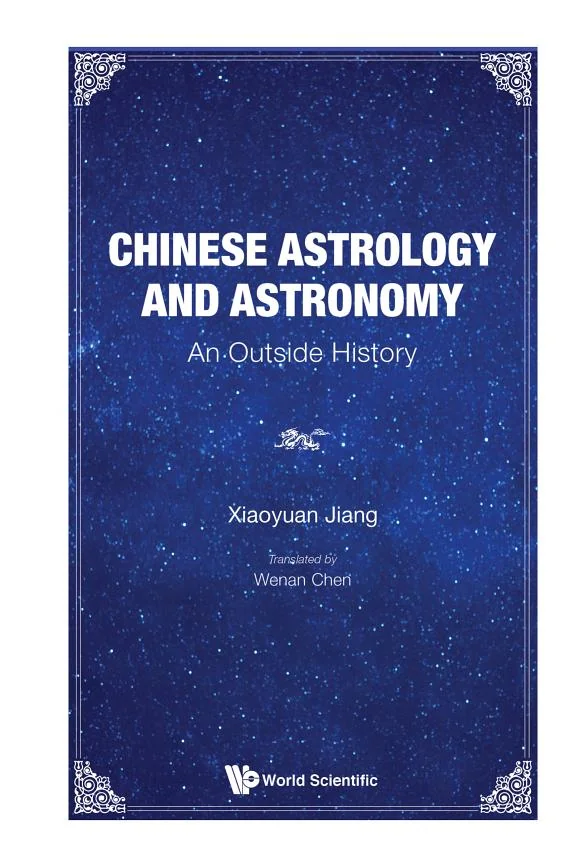
Chinese Astrology And Astronomy: An Outside History
 83
83

Chinese Astrology And Astronomy: An Outside History
Xiaoyuan Jiang’s "Chinese Astrology and Astronomy: An Outside History" offers a welcome counterpoint to the often Western-dominated narratives of celestial study. The author meticulously unpacks the indigenous drivers behind ancient Chinese astronomical pursuits, presenting them not as mere precursors to modern science but as complex systems intrinsically linked to cosmology, philosophy, and governance. A particular strength lies in the detailed analysis of ancient astronomical manuals, which Jiang uses to illuminate the conceptual world of Chinese scholars. However, the dense academic prose, while precise, may prove challenging for readers less familiar with sinological scholarship. The discussion on the divergence from Western astronomy, particularly the exploration of the concept of *Tian*, is compelling, though it occasionally feels like a missed opportunity to more deeply integrate comparative cosmological frameworks. Ultimately, Jiang provides a valuable, specialized study for those seeking a non-Western perspective on the history of understanding the heavens.
📝 Description
83
Xiaoyuan Jiang's 2022 book examines ancient Chinese astronomy's origins beyond calendrical use.
This book looks at the historical and philosophical roots of Chinese astronomical practices. It goes beyond simple calendar making or fortune telling to understand early Chinese sky watchers' deeper beliefs about the cosmos. The author analyzes old astronomical records and texts to show how the universe was understood.
It is for academics, researchers, and students of comparative cosmology, the history of science, and ancient Chinese culture. The book will appeal to those who like careful analysis of historical texts and a perspective that is not focused only on the West. Readers interested in how philosophy, religion, and early science connect will find a lot here.
The study is set in early imperial China, a time of great intellectual and governmental growth. It compares ancient Chinese cosmology with the path Western astronomy took, pointing out unique Chinese ways of thinking. The work also joins the larger academic discussion about the history of science, especially the argument about universal scientific ideas versus those that are specific to a culture.
This work positions ancient Chinese astronomy within a tradition where the cosmos was not merely an object of detached scientific inquiry but was deeply interwoven with state power, philosophical order, and spiritual understanding. The focus on *Tian* as a unifying force and the connection between celestial events and imperial legitimacy highlight a worldview where the human and cosmic realms were seen as interconnected and mutually influential. This contrasts with later Western scientific models that often separate the observer from the observed, emphasizing a holistic approach characteristic of many esoteric traditions.
💡 Why Read This Book?
• Learn about the ancient Chinese concept of *Tian* (Heaven) and its role in their cosmological worldview, offering a unique perspective beyond Western astronomical traditions. • Understand the specific needs and reasons behind ancient Chinese astronomical practices, differentiating them from modern Western astronomy as detailed in the book's analysis of historical manuals. • Gain insight into the imperial context of Chinese astronomy, exploring its connection to statecraft and legitimacy, a facet distinct from the scientific or religious motivations found elsewhere.
⭐ Reader Reviews
Honest opinions from readers who have explored this book.
❓ Frequently Asked Questions
What is the primary focus of "Chinese Astrology and Astronomy: An Outside History"?
The book focuses on the historical motivations, cosmological views, and unique nature of ancient Chinese astronomical practices, contrasting them with Western modern astronomy.
Who is the author, Xiaoyuan Jiang?
Xiaoyuan Jiang is the author of "Chinese Astrology and Astronomy: An Outside History," first published in 2021, offering an academic perspective on the subject.
Does the book discuss the astrological applications of Chinese astronomy?
Yes, the book examines the nature and functions of astronomy to ancient Chinese, which inherently included astrological and divinatory applications as part of their cosmological understanding.
How does this book differ from typical Western astronomy histories?
It provides an 'outside history,' emphasizing indigenous Chinese needs and cosmological views, rather than framing Chinese practices as simply a precursor to or deviation from Western scientific models.
What period of Chinese history does the book cover regarding astronomy?
The book covers ancient Chinese history, analyzing early astronomical phenomena, manuals, and cosmological views prevalent during that era.
Is the book suitable for beginners in Chinese history?
While informative, the book's scholarly approach and detailed analysis of ancient texts suggest it is best suited for readers with some existing interest or background in history of science or Chinese studies.
🔮 Key Themes & Symbolism
Indigenous Cosmological Frameworks
The work meticulously dissects the indigenous Chinese understanding of the cosmos, focusing on concepts like *Tian* (Heaven) as a foundational principle. It moves beyond a simple chronological account to explore how these beliefs shaped astronomical observation and interpretation. The book highlights the integrated nature of Chinese cosmology, where celestial events were intrinsically linked to terrestrial affairs, imperial legitimacy, and philosophical inquiry, offering a stark contrast to the more mechanistic views that later dominated Western science.
The Function of Astronomy in Governance
A significant theme is the role of astronomy in the administration and legitimacy of the ancient Chinese state. The book details how celestial observations were not merely academic pursuits but vital tools for the emperor and his court. This included calendrical accuracy, predicting auspicious events, and interpreting omens, all of which underscored the ruler's mandate from Heaven. Jiang explores the institutional structures that supported astronomical study, revealing its deep integration into the fabric of Chinese imperial power.
Divergence from Western Models
The book explicitly frames its narrative as an 'outside history,' emphasizing the unique trajectory of Chinese astronomy. It systematically contrasts ancient Chinese methods and worldviews with the development of Western astronomy, particularly its modern, empirical orientation. This comparison serves to highlight the distinct philosophical underpinnings and societal functions of Chinese celestial studies, arguing for their intrinsic value and complexity rather than viewing them solely through a Western scientific lens.
Analysis of Ancient Astronomical Manuals
Central to the book's argument is the rigorous analysis of ancient Chinese astronomical texts and manuals. Jiang examines these primary sources to reconstruct the observational techniques, theoretical models, and interpretive frameworks employed by ancient scholars. This detailed textual work provides concrete evidence for the book's claims about Chinese cosmology and the practical applications of their astronomical knowledge, serving as the foundation for understanding their unique scientific and philosophical heritage.
💬 Memorable Quotes
Direct passages from the work, attributed to the author.
“It expounds the nature and functions of astronomy to ancient Chinese, as well as its difference from the western modern astronomy of today.”
— This emphasizes the book's comparative approach, seeking to define the unique purpose and scope of Chinese astronomy on its own terms, distinct from contemporary Western scientific paradigms.
“The ancient Chinese's needs and reasons for engaging in astronomy.”
— This points to the book's focus on the socio-political and philosophical drivers behind celestial observation in ancient China, moving beyond purely scientific curiosity.
“Exploring on new issues in a bold but logical fashion, and offering arguments that challenge even the...”
— This suggests the author's willingness to present original interpretations and engage with complex questions in the field, potentially revising established understandings of the subject.
“The cosmological views of ancient Chinese.”
— This concisely states a central objective: to illuminate the specific worldview and understanding of the universe held by ancient Chinese cultures.
💡 Key Ideas
Editorial paraphrase of the work's core concepts — not direct quotes.
The study on ancient astronomical phenomena and manuals, and analyzes the cosmological views of ancient Chinese.
This passage highlights the book's core methodology: a deep dive into historical records and texts to understand the philosophical underpinnings of ancient Chinese sky-watching.
🌙 Esoteric Significance
Tradition
While not strictly within a Western Hermetic or Gnostic lineage, this work touches upon universal esoteric principles concerning humanity's relationship with the cosmos. It explores ancient cosmological systems that, like Hermeticism, sought to understand macrocosm and microcosm. The Chinese approach, however, is deeply rooted in its own philosophical traditions (e.g., Daoism, I Ching) and governmental structures, offering a distinct, non-Western esoteric perspective on celestial order and its influence.
Symbolism
Key symbols include the cyclical nature of celestial movements, which in Chinese thought often mirrored terrestrial cycles and imperial fortunes. The concept of *Tian* (Heaven) itself functions as a supreme, albeit often impersonal, symbolic force governing the universe and human affairs. Astronomical phenomena, such as eclipses or planetary alignments, were not merely physical events but potent symbols laden with meaning for statecraft and spiritual well-being.
Modern Relevance
Contemporary practitioners of diverse spiritual paths, including those interested in comparative cosmology and alternative historical narratives, draw from such studies. Thinkers exploring shamanism, world mythologies, and the philosophical underpinnings of ancient civilizations find value in understanding these non-Western frameworks. The work’s emphasis on integrated systems—where astronomy, philosophy, and governance are intertwined—speaks to modern holistic approaches to knowledge and spirituality.
👥 Who Should Read This Book
• Researchers in comparative cosmology and history of science seeking non-Western perspectives on astronomical development. • Students of ancient Chinese culture and philosophy interested in the intellectual underpinnings of early Chinese society. • Individuals fascinated by the intersection of governance, spirituality, and scientific inquiry in pre-modern civilizations.
📜 Historical Context
Published in 2021, Xiaoyuan Jiang’s work emerges within a contemporary academic landscape increasingly interested in decolonizing knowledge and appreciating non-Western scientific traditions. It implicitly engages with the historiography of science, particularly the shift away from a singular, linear progression towards recognizing diverse intellectual paths. The book's focus on ancient China situates it against the backdrop of early imperial dynasties, a period characterized by sophisticated bureaucratic systems and the development of complex philosophical schools like Confucianism and Daoism. While not directly engaging with specific contemporary scholars in its blurb, the work's premise challenges the implicit dominance of Western scientific paradigms, akin to the intellectual currents seen in comparative philosophy and the history of Eastern thought. The reception of such works often involves academic discourse on the definition of 'science' itself and the value of culturally specific epistemologies.
📔 Journal Prompts
Ancient Chinese cosmological views and their relation to *Tian*.
The practical functions of astronomy in ancient Chinese statecraft.
Contrast the motivations for Chinese celestial observation with those in Western traditions.
The significance of analyzing ancient astronomical manuals for understanding past worldviews.
How did the concept of Heaven influence imperial legitimacy in ancient China?
🗂️ Glossary
*Tian*
A fundamental concept in ancient Chinese philosophy, often translated as 'Heaven.' It represents a supreme cosmic principle, a celestial force, or a divine entity that governs the universe and influences human affairs, including imperial legitimacy.
Cosmological Views
The systematic understanding and interpretation of the structure, origin, and evolution of the universe held by a particular culture or philosophical tradition. In this context, it refers to how ancient Chinese perceived the cosmos and their place within it.
Astronomical Phenomena
Observable events in the universe, such as the movement of stars and planets, eclipses, comets, and meteor showers. Ancient Chinese astronomy meticulously recorded and interpreted these events.
Ancient Astronomical Manuals
Historical texts and records compiled by ancient Chinese astronomers containing observational data, calculations, theories, and interpretations related to celestial bodies and events.
Western Modern Astronomy
The scientific study of celestial objects and phenomena, characterized by empirical observation, mathematical modeling, and the scientific method, as it developed primarily in Europe and North America from the Renaissance onwards.
Calendrical Accuracy
The precise alignment and maintenance of a calendar system with astronomical cycles, such as solar years and lunar months. This was crucial for agriculture, state rituals, and governance in ancient China.
Imperial Legitimacy
The perceived right and justification for a ruler or government to exercise authority. In ancient China, celestial harmony and accurate astronomical records were often seen as crucial components of the emperor's mandate from Heaven.
This book appears in 1 collection
🔮 Readers Also Liked
Browse all →









From the “Chinese Astrology” Collection
View all →
![ERIC ED476541: Animals of the Chinese Zodiac. [Lesson Plan].](/img/thumb/eric-ed476541-animals-of-the-chinese-zodiac-lesson-plan-eric.webp)






More Free Astrology & Cosmology Books
View all →