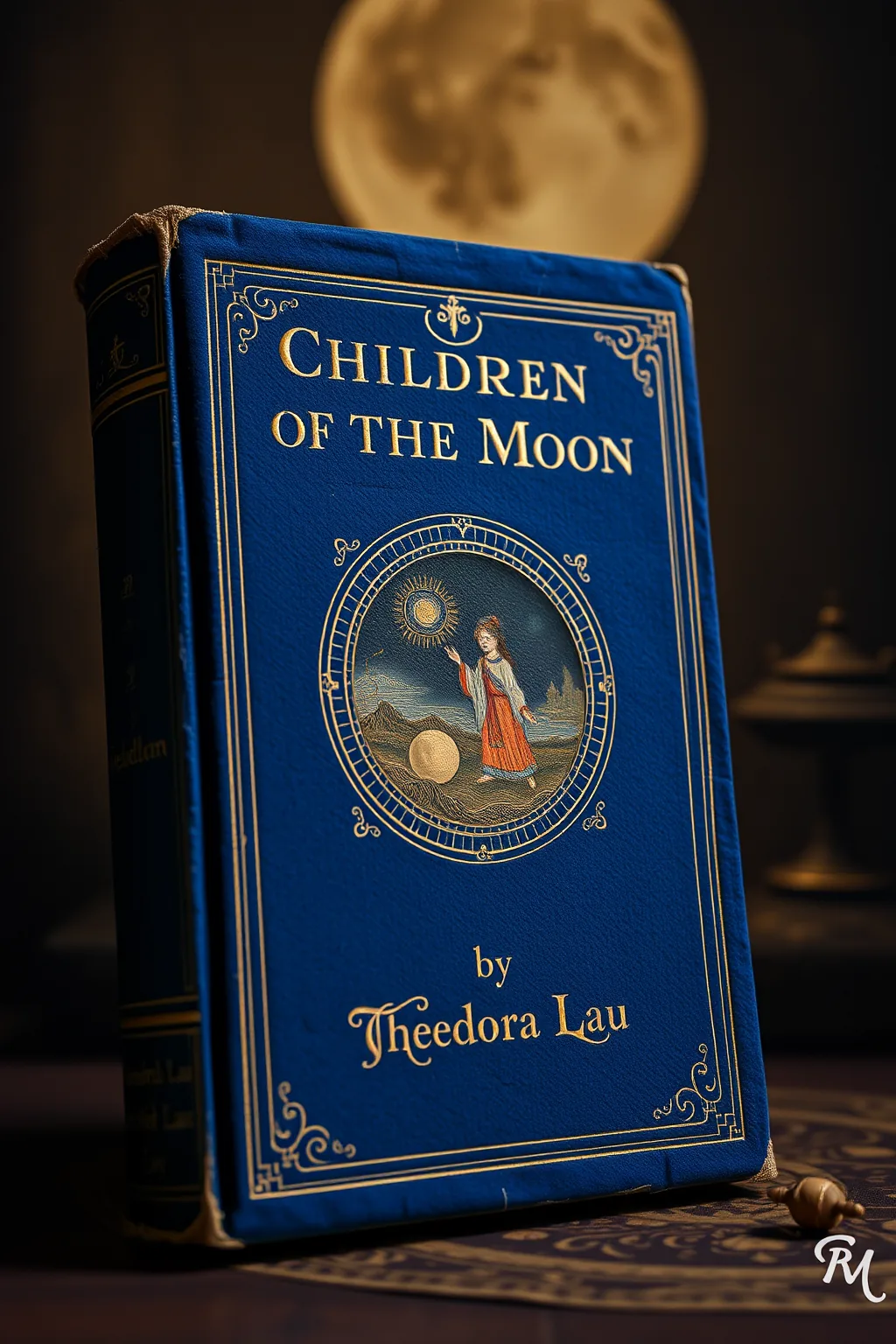
Children of the Moon
 82
82

Children of the Moon
Theodora Lau's "Children of the Moon" offers a diligent cataloging of lunar associations across disparate esoteric traditions. Its strength lies in the meticulous gathering of cross-cultural myths and symbolisms, presenting a coherent, if dense, argument for the moon's centrality in occult thought. However, the work sometimes feels more like an encyclopedic compilation than a deeply analytical text. The section detailing the "Lunar Feminine" archetype, while informative, could benefit from a more critical engagement with modern feminist interpretations of such concepts. Lau is at her most compelling when juxtaposing the lunar lore of ancient Egypt with that of the pre-Christian Celts, demonstrating a clear narrative thread through historical periods. It's a valuable resource for researchers, though perhaps less so for those seeking a singular, radical new perspective.
📝 Description
82
Published in 2002, Children of the Moon examines the moon's symbolic significance in esoteric traditions.
Theodora Lau's 2002 book, Children of the Moon, investigates the symbolic and mythological weight of lunar cycles and their connection to human experience. It traces links between moon phases, archetypal imagery, and various occult philosophies. The book offers a structured way to understand the moon's role within mystical frameworks.
This work is for individuals interested in comparative mythology, lunar lore, and the intersection of astrology and esoteric studies. It appeals to those wanting to understand lunar symbolism beyond basic astrology, especially those drawn to historical occult practices. Readers familiar with or curious about ancient cosmologies will find its detailed examinations relevant.
Lau's text examines the concept of the "lunar feminine," a symbol for intuitive, receptive, and cyclical energies. It also discusses the "shadow self" in relation to lunar phases, suggesting times for introspection during specific lunar transits. The book further looks at the "Great Mother" archetype, connecting lunar deities and their myths to primal forces.
The early 2000s saw a renewed interest in esoteric subjects, with authors often synthesizing historical occult traditions for modern readers. Children of the Moon appeared during this period, contributing to discussions about celestial influences. This discourse was previously shaped by figures like Aleister Crowley in the early 20th century and the rise of goddess centered spirituality later that century. Lau's book builds on this background by focusing specifically on the moon's role in these traditions.
💡 Why Read This Book?
• Gain a structured understanding of lunar symbolism, moving beyond basic astrological interpretations to explore its role in ancient cosmologies and mythology, as detailed in the book's exploration of the "Great Mother" archetype. • Discover connections between lunar phases and psychological states, specifically how the book links waxing and waning moons to concepts of the "shadow self" and introspection. • Explore the practical application of lunar cycles within esoteric traditions, as evidenced by the book's examination of historical occult practices and their symbolic underpinnings.
⭐ Reader Reviews
Honest opinions from readers who have explored this book.
❓ Frequently Asked Questions
What is the historical significance of "Children of the Moon"?
Published in 2002, "Children of the Moon" emerged during a period of renewed interest in esoteric studies, synthesizing existing knowledge on lunar symbolism and occult traditions for a contemporary audience.
Does "Children of the Moon" discuss astrology?
While not exclusively an astrology text, it explores the symbolic and mythological dimensions of lunar cycles that underpin many astrological interpretations, focusing on esoteric connections.
What esoteric traditions does "Children of the Moon" reference?
The book draws from a variety of esoteric lineages, including comparative mythology, ancient cosmologies, and various historical occult philosophies that assign significance to lunar phases.
Who is Theodora Lau?
Theodora Lau is the author of "Children of the Moon," a work published in 2002 that focuses on lunar symbolism and its esoteric significance.
What is the "lunar feminine" concept in the book?
The "lunar feminine" refers to the symbolic representation of intuitive, receptive, and cyclical energies within the book, often linked to the moon and its archetypal associations.
Can "Children of the Moon" be used for personal development?
Yes, the book's exploration of the "shadow self" and lunar phases offers a framework for introspection and understanding personal cycles within a broader esoteric context.
🔮 Key Themes & Symbolism
Lunar Cycles and Archetypes
The book meticulously details how the waxing and waning phases of the moon are not merely astronomical events but are deeply interwoven with archetypal patterns of human consciousness and mythology. Lau connects these cycles to concepts of birth, death, rebirth, and the cyclical nature of the "Great Mother" archetype, tracing these connections through various ancient belief systems and esoteric practices. The emphasis is on understanding the moon's symbolic language as a key to unlocking deeper spiritual and psychological insights.
The Shadow Self and Lunar Influence
A significant theme is the moon's relationship to the hidden aspects of the psyche, often termed the "shadow self." The text posits that specific lunar phases, particularly the dark moon and its preceding periods, offer potent opportunities for confronting these concealed elements. This exploration studies how introspection during these times can lead to greater self-awareness and integration, drawing parallels with initiation rites and psychotherapeutic concepts within esoteric frameworks.
Esoteric Lunar Deities
The work surveys a pantheon of lunar deities and figures from diverse cultures, examining their symbolic roles and the rituals associated with them. From ancient Mesopotamian goddesses to figures in Greek mythology and beyond, Lau highlights how these entities embody different facets of lunar power – fertility, intuition, illusion, and transformation. This comparative approach reveals a universal reverence for the moon's influence across historical spiritual landscapes.
The Lunar Feminine Principle
Central to "Children of the Moon" is the concept of the "lunar feminine" as a universal principle of receptivity, intuition, and emotional depth. This is presented as distinct from biological sex, representing a fundamental energetic quality present in all beings. The book argues that understanding and honoring this principle, often symbolized by the moon, is crucial for spiritual balance and the integration of the conscious and subconscious realms.
💬 Memorable Quotes
Direct passages from the work, attributed to the author.
“The moon's phases mirror the unfolding and folding of the soul's journey.”
— This statement captures the book's core premise: that celestial rhythms, specifically lunar cycles, provide a symbolic map for inner spiritual and psychological development, reflecting the dynamic processes of the human spirit.
“In the dark of the moon, we confront the elements of what we have suppressed.”
— This highlights the book's focus on the psychological impact of lunar phases, suggesting that periods of darkness are conducive to acknowledging and integrating the repressed or hidden aspects of one's personality, often referred to as the shadow self.
“Every goddess of the night carries a fragment of the moon's ancient power.”
— This emphasizes the pervasive influence of lunar symbolism across global mythologies, positing that deities associated with night, magic, and the feminine often embody specific attributes of the moon's complex energy.
“The cyclical nature of the moon reflects the eternal rhythm of creation and dissolution.”
— This interpretation points to the book's broader cosmological perspective, framing the moon's predictable cycles as a microcosm of the universe's fundamental processes of coming into being and passing away.
💡 Key Ideas
Editorial paraphrase of the work's core concepts — not direct quotes.
To understand the moon is to understand the deep currents of the unconscious.
This paraphrased concept suggests a direct correlation between lunar symbolism and the field of the subconscious mind, implying that studying the moon offers a pathway to exploring its deeper meaning and influences.
🌙 Esoteric Significance
Tradition
The work primarily situates itself within the Western Esoteric Tradition, drawing heavily from comparative mythology, Neoplatonic thought, and archetypal psychology. It connects lunar symbolism to themes found in Hermeticism, Gnosticism, and ancient mystery religions, viewing the moon as a primary mediator of celestial energies that influence both the material world and the human psyche. Lau's approach is syncretic, aiming to identify universal patterns across various spiritual lineages.
Symbolism
Key symbols include the crescent moon, representing intuition, potential, and the nascent stages of a cycle; the full moon, symbolizing illumination, manifestation, and the peak of energy; and the dark moon, signifying introspection, the underworld, and the dissolution necessary for renewal. The "lunar feminine" is another core motif, representing the receptive, intuitive, and cyclical forces inherent in nature and consciousness, often embodied by lunar goddesses.
Modern Relevance
Contemporary practitioners of modern witchcraft, paganism, and various forms of contemporary spirituality often draw upon the archetypal and symbolic framework presented in "Children of the Moon." Its exploration of the "lunar feminine" principle and the psychological aspects of lunar phases appeals to those seeking to integrate cyclical awareness into personal growth and ritual practice, particularly within goddess-centered traditions and modern depth psychology informed by esoteric concepts.
👥 Who Should Read This Book
• Students of comparative mythology and ancient religions seeking to understand the cross-cultural significance of lunar deities and myths. • Practitioners of esoteric arts and witchcraft interested in deepening their understanding of lunar cycles for ritual and personal development. • Readers of archetypal psychology and depth psychology who are exploring the moon's symbolic connection to the unconscious and the "shadow self."
📜 Historical Context
Theodora Lau's "Children of the Moon," published in 2002, arrived at a time when interest in esoteric spirituality and comparative mythology was experiencing a sustained revival. The work tapped into a cultural milieu that had seen the rise of goddess feminism in the late 20th century and a continued engagement with occult philosophy, influenced by figures like Dion Fortune and the broader Theosophical movement. Lau's text offered a focused exploration of lunar symbolism, a theme that had been touched upon by earlier occultists but often within broader astrological or ceremonial contexts. This period also saw a growing academic interest in esotericism, moving it from the fringes towards more serious scholarly consideration, though often contrasted with more rationalist interpretations of mythology. The book's detailed synthesis of lunar lore from disparate cultures contributed to the ongoing discourse on universal archetypes and their manifestation in spiritual practices.
📔 Journal Prompts
The "lunar feminine" principle as depicted in the text, its qualities, and its manifestation in your life.
Reflecting on the "shadow self" during a dark moon period, as suggested by the book's concepts.
The symbolism of the crescent moon and its connection to your personal aspirations.
Ancient lunar deities and their archetypal significance in contemporary understanding.
The cyclical rhythms of the moon and their parallel to life transitions.
🗂️ Glossary
Lunar Feminine
A symbolic principle representing intuitive, receptive, cyclical, and nurturing energies, often associated with the moon and its archetypal feminine deities.
Shadow Self
In esoteric and psychological contexts, the repressed, unconscious, or disowned aspects of the personality that often surface during specific periods, such as the dark moon phase.
Great Mother
An archetypal figure representing the primordial creative and nurturing force, often linked to lunar goddesses and associated with fertility, life, and the cycles of nature.
Archetype
A universal, archaic pattern or image that recurs in the collective unconscious, often appearing in myths, dreams, and religious symbols, such as lunar deities.
Esoteric
Relating to or accessible only by a relatively small number of people with a specialized knowledge or interest, often concerning spiritual or mystical traditions.
Syncretism
The amalgamation or attempted amalgamation of different religions, cultures, or schools of thought, as seen in the book's comparative approach to lunar symbolism.
Comparative Mythology
The study and comparison of myths from different cultures and traditions to identify common themes, archetypes, and underlying structures.
🔮 Readers Also Liked
Browse all →









More by Theodora Lau
All books →





More Free Astrology & Cosmology Books
View all →