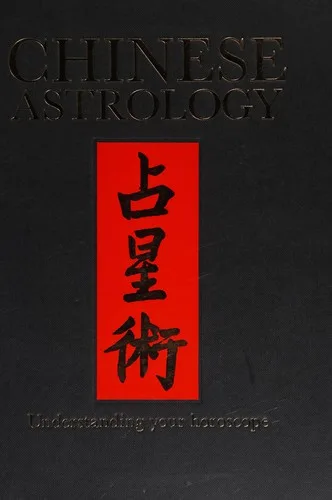
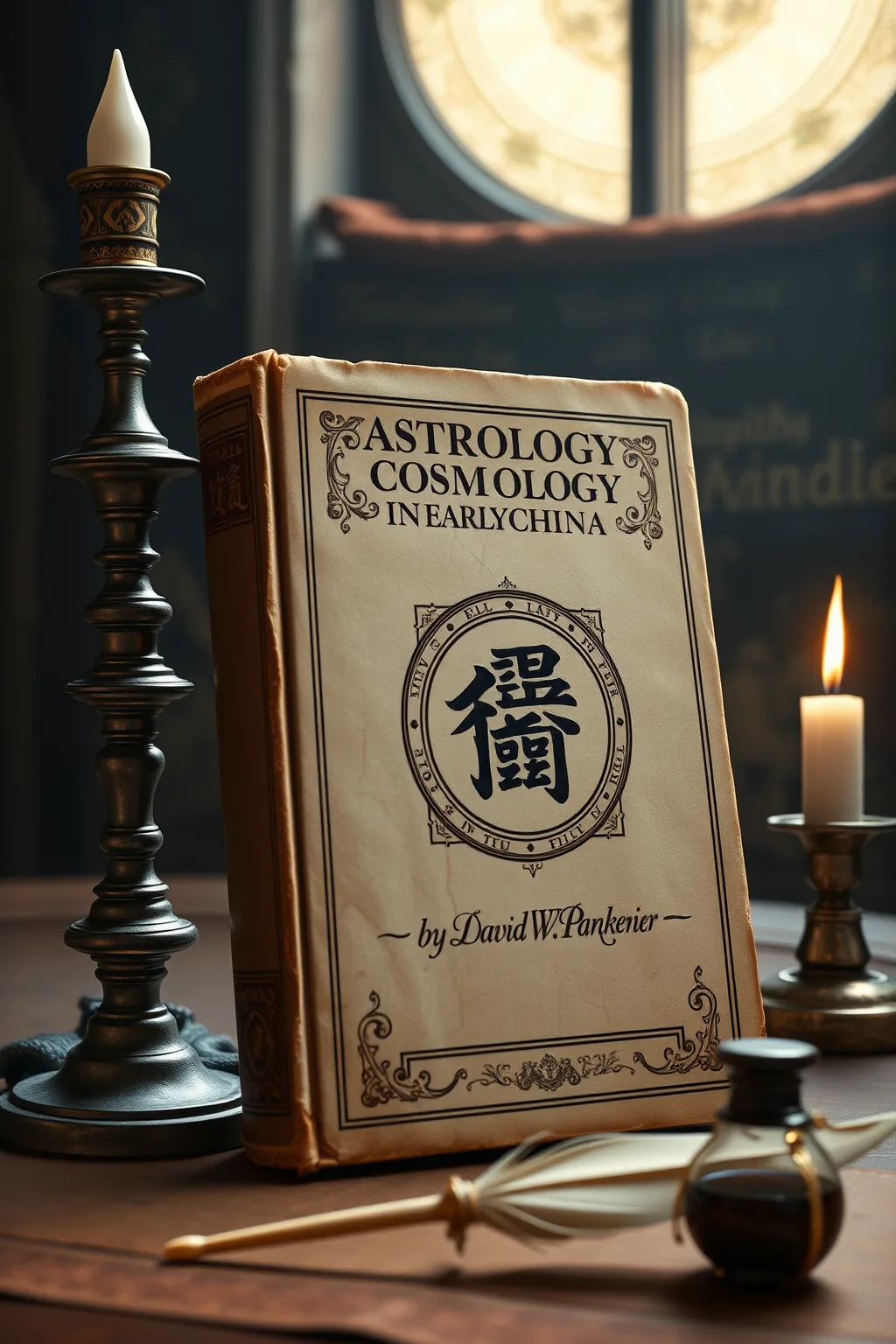
Astrology and Cosmology in Early China
 79
79

Astrology and Cosmology in Early China
Pankenier’s "Astrology and Cosmology in Early China" offers a rigorous dissection of how the ancient Chinese perceived the heavens as a blueprint for earthly affairs. The strength of this work lies in its exhaustive engagement with primary sources, presenting a compelling argument for the sophisticated, integrated nature of early Chinese cosmological thinking. Pankenier masterfully demonstrates how astronomical observation was not merely a scientific pursuit but a crucial element of governance and philosophical inquiry. A particularly illuminating section discusses the political implications of celestial events during the Han Dynasty, illustrating how rulers used astrological interpretations to legitimize their power. However, the book’s dense academic prose and reliance on specialized terminology might present a barrier for readers less familiar with the field, occasionally obscuring the broader narrative flow. Despite this, the meticulous scholarship makes it an indispensable resource for understanding the intellectual foundations of imperial China. It provides a granular look at a system profoundly different from Western traditions.
📝 Description
79
David W. Pankenier's 2013 book examines early Chinese astrology and cosmology.
David W. Pankenier's "Astrology and Cosmology in Early China" analyzes the connection between astronomical observation and cosmological thought in ancient China. The book shows how celestial events were interpreted to understand earthly matters and guide societal structure. It presents astrology not as a simple system, but as a complex one woven into early Chinese philosophy, politics, and ritual. Pankenier uses foundational texts and archaeological findings to reconstruct a worldview where the heavens reflected the human world.
The work covers the period from the Warring States through the Han Dynasty, a time when statecraft and the cosmos were closely linked. This era saw the formalization of philosophical ideas and the creation of advanced calendrical systems, often tied to the need for accurate astronomical predictions to support imperial authority. The book emphasizes the indigenous development of these ideas, distinguishing them from later European astrological traditions.
This volume is intended for academics, researchers, and students of Chinese history, philosophy, science, and religion. It will also interest those studying comparative cosmology, ancient divination, and calendrical science. Readers should have some background in East Asian history or be prepared for detailed scholarly material.
This book situates early Chinese celestial interpretation within a tradition where understanding the cosmos was vital for earthly order and governance. It details how concepts like the Mandate of Heaven, Yin-Yang, and the Five Phases were integrated with astronomical observation. This approach connects to broader esoteric traditions that seek correspondences between macrocosmic patterns and microcosmic human affairs, moving beyond mere prediction to a philosophical framework for understanding existence.
💡 Why Read This Book?
• You will gain a concrete understanding of how astronomical phenomena, such as the significance of eclipses during the Warring States period, were interpreted as direct messages influencing political decisions and dynastic legitimacy in ancient China. • You will learn about the specific cosmological frameworks, like the Five Phases (Wuxing) and Yin-Yang, and how they were integrated with celestial observation to form a coherent worldview that shaped early Chinese society. • You will encounter detailed analyses of foundational texts and the reconstruction of ancient Chinese astronomical practices, offering insights into the indigenous development of these disciplines distinct from later Western influences.
⭐ Reader Reviews
Honest opinions from readers who have explored this book.
❓ Frequently Asked Questions
What specific historical periods does Pankenier focus on in "Astrology and Cosmology in Early China"?
The book primarily concentrates on the Warring States period (475–221 BCE) and the Han Dynasty (206 BCE–220 CE), examining the development and application of cosmological thought during these formative eras in Chinese history.
How did early Chinese rulers use astronomical observations?
Rulers utilized astronomical observations and their interpretations as a means of legitimizing their rule, demonstrating their connection to the cosmic order, and justifying their policies or dynastic changes through celestial portents.
What is the concept of the Mandate of Heaven (Tianming) in relation to Chinese cosmology?
The Mandate of Heaven is a political and religious doctrine that asserts the divine right to rule. In early Chinese cosmology, celestial events were often interpreted as indicators of whether a ruler still possessed this mandate, influencing dynastic successions.
Does the book discuss specific astronomical instruments used in early China?
While the focus is on interpretation, the work touches upon the sophisticated observational methods and calendrical science developed in early China, which formed the basis for astrological calculations and cosmological understanding.
How does Pankenier's work differentiate early Chinese cosmology from Western traditions?
Pankenier emphasizes the indigenous development and unique integration of astronomical observation with philosophy, politics, and ritual in early China, highlighting its distinct conceptual framework compared to Western astrological systems.
What role do the Five Phases (Wuxing) play in early Chinese astrology?
The Five Phases (Wood, Fire, Earth, Metal, Water) were a fundamental cosmological concept used to categorize phenomena and understand cyclical processes, including correlating them with celestial events and their earthly implications.
🔮 Key Themes & Symbolism
Celestial Mandate and Rule
The book meticulously details how early Chinese rulers and scholars perceived a direct correlation between celestial phenomena and the legitimacy of imperial power, a concept embodied by the Mandate of Heaven (Tianming). Astronomical events like eclipses or unusual star formations were not merely observed but interpreted as divine pronouncements on the ruler's virtue and the state's stability. This section of Pankenier's work highlights how understanding these 'messages from the heavens' was crucial for statecraft, influencing policy, dynastic succession, and the very fabric of political ideology in ancient China, particularly during the Han Dynasty.
Integrated Cosmological Frameworks
Pankenier illuminates the sophisticated philosophical systems that underpinned early Chinese cosmological thought, most notably the Five Phases (Wuxing) and the principles of Yin and Yang. These concepts were not abstract theories but practical tools used to categorize and understand the interconnectedness of all things, from human society to the movements of celestial bodies. The work demonstrates how these frameworks provided a coherent structure for interpreting omens and portents, linking cosmic cycles to earthly events and human affairs in a unified worldview.
Astronomy as Divination and Statecraft
This theme explores the practical application of astronomical knowledge in early China, moving beyond mere observation to its function as a sophisticated system of divination and statecraft. The book examines the development of precise calendrical science, essential for agricultural planning and ritual observance, but also for predicting and understanding celestial anomalies. Pankenier shows how this astronomical-divinatory knowledge was a closely guarded resource, wielded by the elite to maintain social order, legitimize authority, and navigate perceived cosmic influences on human destiny.
Textual and Archaeological Evidence
A significant aspect of Pankenier's research involves the critical analysis of early Chinese textual sources, such as transmitted histories and philosophical treatises, alongside archaeological findings. The work demonstrates how these diverse forms of evidence are synthesized to reconstruct the intellectual range of ancient China. By scrutinizing these sources, the book provides verifiable insights into the evolution of astrological beliefs and cosmological theories, offering a scholarly foundation for understanding this complex historical and intellectual tradition.
💬 Memorable Quotes
Direct passages from the work, attributed to the author.
“The heavens were not merely observed; they were read.”
— This concise statement captures the essence of early Chinese cosmology, where celestial movements and phenomena were imbued with meaning and interpreted as direct communications influencing human affairs and governance.
“Cosmological understanding was integral to the exercise of imperial power.”
— This interpretation highlights how the belief system connecting the cosmos and earthly rule was not peripheral but central to the functioning of ancient Chinese states, used to legitimize authority and guide policy.
“The Five Phases provided a grid for understanding cosmic correspondences.”
— This interpretation explains how the Wuxing system acted as a conceptual framework, allowing early Chinese thinkers to classify and connect diverse phenomena, including celestial patterns, to earthly events.
“Calendrical science was a vital tool for both ritual and state control.”
— This concept underscores the dual importance of accurate timekeeping in ancient China: essential for religious ceremonies and the maintenance of social order, as well as a means for the state to exert authority.
💡 Key Ideas
Editorial paraphrase of the work's core concepts — not direct quotes.
Eclipses served as potent symbols of cosmic disequilibrium and political instability.
This paraphrased concept emphasizes the specific, potent meaning attributed to astronomical events like eclipses, which were seen as direct omens of potential upheaval in both the celestial and terrestrial realms.
🌙 Esoteric Significance
Tradition
This work engages with the esoteric traditions of ancient China, specifically the complex interplay of cosmology, divination, and statecraft that formed a distinct lineage of occult knowledge. Unlike Western Hermeticism or Kabbalah, early Chinese esoteric sciences were deeply integrated into the ruling ideology and philosophical discourse of the time. Pankenier's research demonstrates how celestial observation and interpretation served as a practical, state-sponsored form of 'knowing the heavens' to govern earthly affairs, aligning with a tradition where the microcosm (human world) was believed to mirror the macrocosm (cosmos).
Symbolism
Key symbols explored include celestial portents such as eclipses, comets, and the movement of specific constellations, which were read as direct communications from the cosmic order, often signifying imperial favor or displeasure. The Yin-Yang duality and the Five Phases (Wuxing) are also central symbolic systems. These were not merely philosophical concepts but cosmological grids used to understand the cyclical processes of nature and history, and to correlate terrestrial events with celestial patterns, providing a symbolic language for cosmic order.
Modern Relevance
Contemporary thinkers and practitioners in fields like comparative religion, the history of science, and even certain branches of mindfulness and philosophical inquiry can draw from Pankenier's work. His meticulous reconstruction of an integrated worldview, where the celestial and terrestrial were seen as intimately connected, offers a potent counterpoint to modern Western secularism and fragmented knowledge systems. Scholars studying the evolution of belief systems and the role of cosmology in societal structures find renewed relevance in understanding how ancient societies derived meaning and order from the cosmos.
👥 Who Should Read This Book
• Academic researchers in East Asian studies, history of science, and comparative religion will find detailed source analysis and contextualization useful for their work. • Students of ancient Chinese philosophy and political thought can gain a deeper appreciation for the cosmological underpinnings of imperial ideology and governance. • Enthusiasts of ancient divination systems and the history of astrology will discover the sophisticated, state-sanctioned practices that shaped early Chinese civilization.
📜 Historical Context
David W. Pankenier's "Astrology and Cosmology in Early China" emerged in 2013, a period where scholarship on ancient Chinese thought had long grappled with integrating Western scientific paradigms. The book situates itself within the study of Chinese intellectual history, particularly during the formative Warring States (475–221 BCE) and Han Dynasty (206 BCE–220 CE) periods. This era was characterized by intense philosophical development, including Confucianism, Daoism, and Legalism, and a growing need for sophisticated calendrical systems to underpin statecraft. The work implicitly engages with the reception of Western scientific models in Chinese studies, offering a counterpoint by emphasizing the indigenous development of these ideas, distinct from later European astrological traditions. Pankenier's research builds upon earlier foundational works by scholars like Joseph Needham, but offers a more focused examination of the direct links between astronomical observation, cosmological theory, and political ideology, particularly the concept of Tianming (Mandate of Heaven).
📔 Journal Prompts
The interpretation of celestial portents as indicators of the Mandate of Heaven.
The role of the Five Phases (Wuxing) in connecting cosmic cycles to earthly events.
How astronomical observation functioned as a tool for statecraft in the Han Dynasty.
The relationship between observed celestial phenomena and philosophical concepts like Yin-Yang.
Reconstructing the worldview where the heavens were actively 'read' for guidance.
🗂️ Glossary
Tianming (Mandate of Heaven)
A political and religious doctrine in ancient China that justified the rule of the emperor. It posited that Heaven granted the right to rule to a just ruler, but could withdraw it and give it to another if the ruler became corrupt or incompetent, often signaled by celestial events.
Wuxing (Five Phases)
A Chinese philosophical concept of five fundamental elements or phases: Wood, Fire, Earth, Metal, and Water. These phases were believed to interact in cyclical patterns and were used to explain natural phenomena, historical cycles, and the relationships between various aspects of the universe.
Yin and Yang
Fundamental concepts in Chinese philosophy representing complementary, interconnected forces. Yin typically denotes passive, dark, feminine, and cold, while Yang represents active, light, masculine, and hot. Their dynamic balance was seen as crucial for cosmic and earthly harmony.
Celestial Portents
Unusual or significant astronomical events, such as eclipses, comets, or the appearance of new stars, that were interpreted as omens or signs from the cosmos, often carrying specific meanings related to political events or the ruler's fortune.
Calendrical Science
The sophisticated development and use of astronomical observation to create accurate calendars. In early China, this was vital for agricultural planning, ritual scheduling, and maintaining the temporal order, closely linked to astrological interpretation.
Warring States Period
A period in Chinese history (c. 475–221 BCE) characterized by intense political conflict and philosophical innovation, during which many foundational concepts of Chinese cosmology and statecraft were developed and debated.
Han Dynasty
A major imperial dynasty of China (206 BCE–220 CE) known for its territorial expansion, administrative reforms, and the consolidation of many aspects of Chinese culture and political thought, including the institutionalization of cosmology.
🔮 Readers Also Liked
Browse all →








More by David W. Pankenier
All books →

More Free Astrology & Cosmology Books
View all →