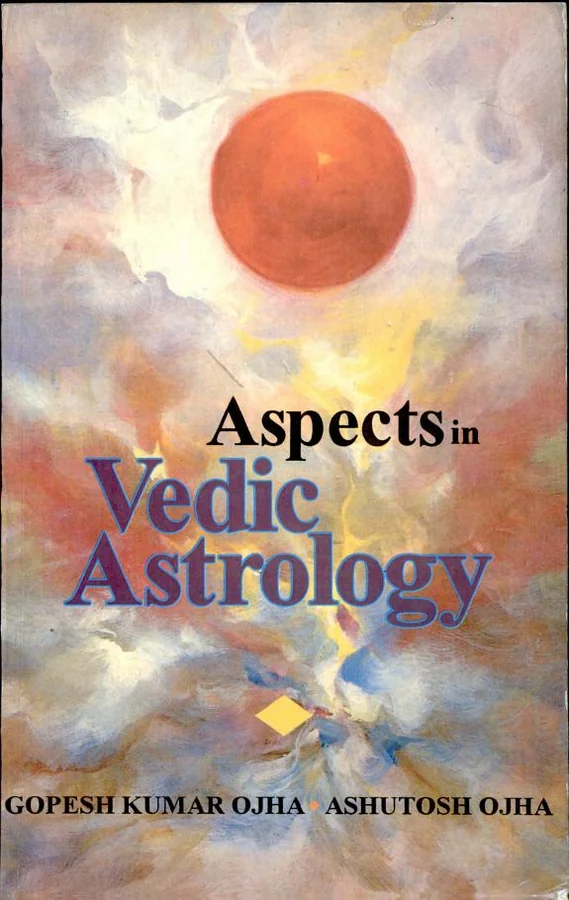
Aspects in Vedic Astrology
 83
83

Aspects in Vedic Astrology
Gopesh Kumar Ojha and Ashutosh Ojha's 'Aspects in Vedic Astrology' addresses a significant lacuna in astrological literature. The authors’ dedication to drawing from classical Sanskrit texts is commendable, offering a scholarly approach to planetary aspects, or drishti. The work succeeds in providing a clear, systematic treatment, particularly useful for astrologers seeking to move beyond rudimentary understandings. Its strength lies in its faithful adherence to traditional principles, offering a reliable guide for those who value authenticity. However, the book’s dense, academic prose, while precise, can occasionally feel dry for readers accustomed to more narrative astrological texts. A passage discussing the unique 8th aspect of Mars, for instance, clearly illustrates the book's detailed, almost forensic, examination of each planetary influence. While invaluable for serious students, those seeking a more fluid or introductory text might find it challenging. Ultimately, it serves as an essential reference for the dedicated Jyotish practitioner.
📝 Description
83
Gopesh Kumar Ojha and Ashutosh Ojha's 2002 work examines planetary aspects in Vedic astrology.
Published in October 2002, 'Aspects in Vedic Astrology' by Gopesh Kumar Ojha and Ashutosh Ojha systematically addresses the theoretical foundations and practical use of planetary aspects within Jyotish. The authors compiled their material directly from classical Sanskrit texts, referencing ancient sages and medieval commentators. This volume aims to provide a clear and concise treatment of a subject crucial for interpreting astrological charts, filling a perceived gap in existing literature.
The book is intended for Vedic astrology practitioners who have surpassed introductory levels and desire a more thorough grasp of this essential interpretive component. It suits those aware of aspects' significance but find current resources insufficient in depth or clarity. Students and experienced astrologers, particularly those focused on rigorous textual analysis and traditional methods, will find value in its focused presentation. The work appeals to readers who rely on authoritative sources and seek to enhance their predictive and delineative abilities through a structured study of planetary interactions.
This text emerges from the rich, millennia-old tradition of Vedic astrology, or Jyotish. It draws directly from classical Sanskrit sources, connecting modern practice to ancient Indian wisdom. The systematic codification of topics like planetary aspects reflects an ongoing effort to preserve and disseminate Indian knowledge, often in response to historical neglect or misinterpretation. The book's publication in the early 21st century coincides with a period of revived global interest in Eastern philosophical and spiritual systems, including astrology.
💡 Why Read This Book?
• Gain a foundational understanding of planetary aspects (drishti) as presented in classical Vedic astrology, learning how planets influence each other and the houses they aspect, a concept detailed throughout the book. • Master the specific angular relationships and influences unique to each planet, such as the 4th and 8th aspects of Mars, which are crucial for accurate chart interpretation as explained in the text. • Refine your astrological analysis by integrating traditional Jyotish principles on aspects, enhancing your ability to predict outcomes and understand life patterns, drawing directly from the authors' compilation of ancient and medieval sources.
⭐ Reader Reviews
Honest opinions from readers who have explored this book.
❓ Frequently Asked Questions
What is the primary focus of 'Aspects in Vedic Astrology' by Gopesh Kumar Ojha?
The book's primary focus is a comprehensive and systematic study of planetary aspects (drishti) in Vedic astrology, drawing heavily from classical Sanskrit texts and medieval commentaries to explain their theory and application in chart delineation.
When was 'Aspects in Vedic Astrology' first published?
The book 'Aspects in Vedic Astrology' by Gopesh Kumar Ojha and Ashutosh Ojha was first published on October 1, 2002.
Who are the authors of 'Aspects in Vedic Astrology'?
The authors are Gopesh Kumar Ojha and Ashutosh Ojha. Gopesh Kumar Ojha is a respected scholar and practitioner of Vedic astrology.
What kind of astrological system does this book primarily address?
The book exclusively addresses Vedic astrology, also known as Jyotish. It focuses on the principles and interpretive techniques specific to this ancient Indian system of astrology.
Does the book cover aspects beyond the standard planetary influences?
Yes, the book delves into the nuances of aspects as understood in classical Jyotish, including the full and partial aspects of various planets, their specific degrees, and their impact on houses and significations.
Is this book suitable for absolute beginners in astrology?
While it provides clear explanations, the book is best suited for students and practitioners who have a basic understanding of Vedic astrological concepts and are looking to deepen their knowledge of aspects.
🔮 Key Themes & Symbolism
Planetary Drishti
The central theme is drishti, the aspectual influence planets exert on other celestial bodies and houses in a Vedic horoscope. The book meticulously details how each planet casts its gaze, emphasizing the unique strengths and characteristics of these influences. It moves beyond simple positional astrology to explore the dynamic interplay, explaining how aspects modify planetary significations and house results, thereby adding layers of complexity and predictive power to chart readings.
Classical Jyotish Authority
A central to the book is its rigorous adherence to and compilation of classical Jyotish texts. The authors prioritize the wisdom of ancient sages and medieval commentators, presenting interpretations grounded in traditional scholarship rather than modern astrological fads. This commitment ensures that readers engage with the foundational principles of Vedic astrology, preserving the integrity of the system as it has been understood for centuries. The work acts as a conduit to this authoritative knowledge base.
Delineation and Prediction
The book is fundamentally concerned with the practical application of aspects for astrological delineation and prediction. It guides the reader on how to synthesize aspectual influences to understand the underlying patterns and potentials within a birth chart. By clarifying the mechanics of aspects, the authors empower practitioners to make more accurate assessments of personality traits, life events, and the timing of occurrences, moving from theoretical knowledge to practical interpretive skill.
Completeness of Aspectual Theory
The authors identify and address a perceived gap in existing literature regarding a comprehensive treatment of aspects. They aim to provide a singular, authoritative source that covers the theory and practical application of drishti without omission. This focus on completeness ensures that students and practitioners have access to a thorough understanding, covering all significant planetary aspects and their implications for astrological analysis.
💬 Memorable Quotes
Direct passages from the work, attributed to the author.
“Planetary aspects add detail and definition to a birth chart.”
— This concise statement highlights the fundamental role of aspects in astrological interpretation. It suggests that without understanding planetary influences on each other, a horoscope remains a skeletal outline, lacking the nuanced details that define an individual's destiny and personality.
“There has been no single work which deals comprehensively with the theory and delineation of aspects in Vedic Astrology.”
— This statement articulates the book's primary objective: to fill a void in astrological literature. It indicates a deliberate effort to create a definitive resource that systematically covers planetary aspects, a topic often treated piecemeal in other works.
“This book fills a void by providing a clear and concise treatment of the subject.”
— This highlights the book's value proposition. It promises to deliver a much-needed resource that is both thorough in its coverage of aspects and accessible in its presentation, making complex astrological concepts understandable.
💡 Key Ideas
Editorial paraphrase of the work's core concepts — not direct quotes.
The authors have drawn their material from the ancient and medieval classics of Vedic astrology.
This paraphrased concept underscores the book's commitment to traditional sources. It signifies that the interpretations and theories presented are rooted in the foundational texts of Jyotish, offering readers an authentic connection to classical astrological wisdom.
Aspects between planets... add detail and definition.
This paraphrased concept emphasizes how the interactions between planets, specifically their aspects, bring clarity and specificity to the interpretation of a birth chart. It suggests that these influences are crucial for understanding the finer points of astrological readings.
🌙 Esoteric Significance
Tradition
This work is firmly rooted in the Vedic astrological tradition, also known as Jyotish, which is an ancient Indian system of divination and self-knowledge deeply intertwined with Hindu philosophy and cosmology. It departs from Western astrological traditions by employing a sidereal zodiac and distinct interpretive frameworks. Its significance lies in its adherence to classical Jyotish principles, maintaining the esoteric lineage that views celestial movements as reflections of cosmic consciousness and karma.
Symbolism
The primary symbolism revolves around the concept of 'drishti' (aspects), which are visualized as planetary rays or gazes. These aspects are not merely geometric relationships but energetic influences that 'see' and affect other parts of the horoscope. The book details the specific houses and planets each leading figure aspects, with certain planets like Mars and Jupiter possessing unique, potent rays that carry symbolic weight related to their inherent nature (e.g., Mars's aggressive energy, Jupiter's expansive wisdom).
Modern Relevance
Contemporary Vedic astrologers and students of comparative astrology find immense value in this text for its scholarly rigor and comprehensive coverage of aspects. Thinkers and practitioners focused on karmic astrology, predictive techniques, and the application of classical Jyotish principles for personal growth and spiritual understanding often refer to works like this. It supports modern schools of thought that emphasize returning to source materials for authentic astrological practice and interpretation.
👥 Who Should Read This Book
["• Vedic astrology students seeking a definitive text on planetary aspects (drishti), who wish to understand the theoretical basis and practical application of influences beyond planetary conjunctions.\n• Experienced Jyotish practitioners looking to deepen their interpretive skills and cross-reference their understanding of aspects with classical sources, as detailed in the book's compilation of ancient and medieval wisdom.\n• Scholars of comparative astrology and Indic traditions interested in the specific methodologies and cosmological underpinnings of Vedic astrological aspect theory, as presented through the lens of traditional texts.", '• Beginners with a foundational grasp of Vedic astrology who want to move beyond basic chart readings and understand how planetary relationships truly shape destiny.\n• Those interested in the historical development of astrological thought, particularly within the Jyotish tradition, can gain insight into how aspect theory has been codified over centuries.\n• Individuals seeking to understand the energetic interplay between celestial bodies as conceptualized in a non-Western esoteric framework will find the detailed analysis of drishti clear.', '• Comparative religion students exploring divination practices and their theoretical frameworks within different cultural contexts, specifically the role of astrology in ancient India.\n• Aspiring astrologers who prioritize learning from established authorities and classical texts, aiming to build a solid, tradition-based foundation in their practice.\n• Anyone curious about how specific planetary influences, like the 4th and 8th aspects of Mars, are traditionally interpreted to understand life challenges and potentials.']
📜 Historical Context
Published in October 2002, 'Aspects in Vedic Astrology' emerged during a resurgence of interest in Eastern spiritual and philosophical traditions, including Jyotish, across the Western world. This period saw a greater demand for scholarly and authentic texts on Indic systems, often in reaction to colonial-era academic interpretations. The book’s approach, drawing directly from ancient Sanskrit classics and medieval commentaries, positions it within a lineage of scholarship aimed at preserving and disseminating classical knowledge. It addresses a perceived lack of comprehensive resources on planetary aspects within Vedic astrology, a field that has seen numerous interpretive schools and texts develop over centuries. While classical texts like Brihat Parashara Hora Shastra laid foundational concepts, modern compilations like Ojha's work aimed to synthesize and clarify these for contemporary students, ensuring the tradition's continuity against the backdrop of evolving global intellectual currents.
📔 Journal Prompts
The specific nature of Mars's 4th and 8th aspects and their significations.
How Jupiter's unique 5th aspect modifies the houses it aspects.
The comprehensive treatment of aspects in Vedic astrology as presented by the authors.
The application of classical Jyotish principles regarding planetary drishti.
Synthesizing planetary aspects for nuanced chart delineation.
🗂️ Glossary
Drishti
The Sanskrit term for 'aspect' in Vedic astrology, referring to the planetary rays or gazes that planets cast upon other houses and planets in a horoscope, influencing their significations.
Jyotish
The traditional Indian system of astrology, also known as Vedic astrology. It is a complex system of divination and self-knowledge rooted in ancient Indian philosophy and cosmology.
Aspects
In astrology, aspects are specific angular relationships between planets and other celestial points, believed to influence their interactions and the overall meaning of a horoscope. Vedic astrology has its own unique system of aspects.
Delineation
The process of interpreting a birth chart to understand an individual's personality, potential, and life path. In astrology, delineation involves analyzing planetary positions, aspects, and other factors.
Natal Chart
A map of the heavens at the exact moment of a person's birth, used in astrology to analyze their character, destiny, and life events. Also known as a birth chart or horoscope.
Sanskrit Classics
Ancient and medieval foundational texts written in the Sanskrit language, which form the primary source material for many traditional Indian sciences, including Vedic astrology.
Planetary Rays
A metaphorical concept in Vedic astrology referring to the energetic influences or 'gazes' (drishti) that planets emit towards other parts of the horoscope.
This book appears in 1 collection
🔮 Readers Also Liked
Browse all →









From the “Vedic Astrology” Collection
View all →









More Free Astrology & Cosmology Books
View all →