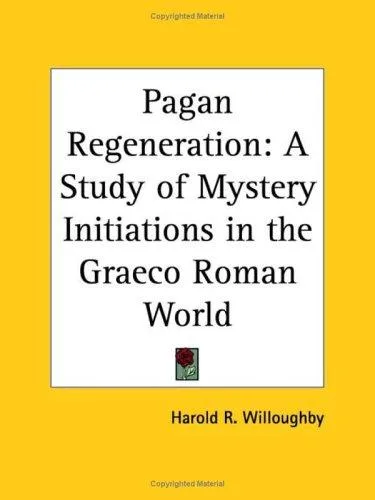
The Zelator
 76
76

The Zelator
Ovason's "The Zelator" offers a detailed examination of alchemical symbolism, particularly focusing on the symbolic journey of the Zelator, the initiate. The book distinguishes itself by moving past sensationalized notions of physical transmutation, instead emphasizing the spiritual and psychological dimensions of the Great Work. Ovason's strength lies in his meticulous attention to alchemical iconography and textual exegesis, providing readers with a robust framework for understanding the symbolic language employed. A limitation, however, is the dense prose which, at times, can make the intricate arguments challenging to follow without prior familiarity with Hermetic philosophy. The section discussing the "Prima Materia" as a symbolic representation of the unmanifest potential is particularly illuminating, illustrating the book's capacity to reveal deeper esoteric meanings. "The Zelator" serves as a valuable, if demanding, resource for dedicated students of Western esotericism.
📝 Description
76
Published in 2013, David Ovason's The Zelator examines alchemy beyond gold-making.
David Ovason's The Zelator, published in 2013, examines the symbolic language and philosophical ideas behind historical alchemy. The book moves past simple notions of creating gold to show alchemy as a deeper spiritual and psychological pursuit. Ovason scrutinizes alchemical texts and artifacts, looking to understand the complex meanings in diagrams and writings.
This work is for serious students of Western esotericism, especially those interested in Hermeticism, Rosicrucianism, and the history of alchemy. It will appeal to readers who value careful textual analysis and want to see alchemy as a complex philosophical and spiritual discipline, not just an early science. Those looking to connect historical alchemical practices with modern psychological ideas will find substantial content.
The Zelator enters a modern revival of interest in esoteric traditions. This interest began to re-evaluate alchemy in the late 19th and early 20th centuries, influenced by scholars like Carl Jung, who interpreted alchemical symbols psychologically. Ovason's book connects to this ongoing scholarly discussion about the intellectual and spiritual world of alchemists from the medieval period through the Renaissance and later.
💡 Why Read This Book?
• Gain a nuanced understanding of alchemy beyond mere metallurgy, specifically exploring the symbolic stages of the "Zelator" initiation as detailed in Chapter 1. • Decipher the complex visual language of alchemical texts and diagrams, learning to interpret symbols like the "Prima Materia" and the "Philosopher's Stone" as presented in Ovason's analysis. • Connect historical alchemical practices to broader Hermetic and esoteric philosophies, understanding the "Great Work" as a spiritual discipline illuminated by Ovason's discussion of its historical context.
⭐ Reader Reviews
Honest opinions from readers who have explored this book.
❓ Frequently Asked Questions
What is the primary focus of David Ovason's "The Zelator"?
The book primarily focuses on the esoteric and symbolic dimensions of alchemy, examining the spiritual and psychological journey of the alchemist, particularly the initiate known as the Zelator, rather than literal material transformation.
When was "The Zelator" by David Ovason first published?
"The Zelator" by David Ovason was first published in 2013, reflecting a modern scholarly interest in the deeper meanings of alchemical traditions.
What historical periods does "The Zelator" draw upon for its analysis?
The work draws upon a broad historical spectrum of alchemical activity, encompassing texts and practices from the medieval period through the Renaissance and into later periods where Hermetic philosophy remained influential.
Does "The Zelator" discuss the Philosopher's Stone?
Yes, "The Zelator" discusses the Philosopher's Stone, but it interprets it primarily as a symbol of spiritual perfection and enlightenment rather than solely a physical agent for transmuting metals.
What does the term 'Zelator' refer to in the context of this book?
In this context, 'Zelator' refers to the initiate or beginner in the alchemical path, signifying the initial stage of the alchemical journey towards spiritual transformation and understanding.
Is "The Zelator" suitable for beginners in esoteric studies?
While accessible, the book is best suited for those with some foundational knowledge of Western esotericism or Hermeticism, as it delves into complex symbolism and historical context.
🔮 Key Themes & Symbolism
The Initiate's Path
The book centers on the 'Zelator,' representing the initial stage of the alchemical adept's journey. This path is not about physical manipulation of elements but a profound inner transformation. Ovason illustrates how the Zelator's progress is marked by understanding fundamental symbols and preparing the self for the greater work. This involves confronting the "Prima Materia" not as a substance, but as the raw potential within the aspirant. The text emphasizes discipline, study, and the purification of intention as hallmarks of this early stage.
Symbolism of the Great Work
Ovason meticulously decodes the complex symbolism of the "Great Work" (Main work). Beyond the popular image of creating gold, the true 'Work' is presented as the attainment of spiritual enlightenment or gnosis. The "Philosopher's Stone" emerges as a potent metaphor for this perfected state, a catalyst for inner transmutation. The book explores how various alchemical operations, often described through the language of chemical processes, are allegorical representations of psychological and spiritual development, mirroring stages of self-realization.
Hermetic Cosmology and Alchemy
"The Zelator" firmly places alchemy within the broader Hermetic tradition, highlighting its roots in ancient wisdom and its interconnectedness with astrology, Kabbalah, and Neoplatonism. Ovason demonstrates how alchemists viewed the cosmos as a unified system, where terrestrial processes mirrored celestial influences. Understanding this integrated worldview is crucial to grasping alchemical texts, which often employ planetary, elemental, and zodiacal symbolism to describe both the stages of transmutation and the corresponding spiritual states of the practitioner.
The Language of Alchemical Art
A significant aspect of the book is its focus on the esoteric language and visual vocabulary of alchemy. Ovason analyzes the deliberate ambiguity and multi-layered meanings within alchemical treatises and illustrations. Symbols like the Ouroboros, the Rebis, and various animalistic or mythological figures are not merely decorative but integral components of a coded system. Understanding this 'language' is presented as a prerequisite for anyone seeking to comprehend the deeper philosophical and spiritual teachings embedded within the alchemical corpus.
💬 Memorable Quotes
Direct passages from the work, attributed to the author.
“The Zelator represents the first step on the path, a stage of intense study and purification.”
— This highlights the foundational role of the Zelator in the alchemical process. It emphasizes that the journey begins not with grand transformations, but with diligent learning and the internal refinement of the aspirant's character and intentions.
“The "Prima Materia" is the unformed potential, the chaos from which order and perfection can arise.”
— This interpretation shifts the focus from a physical substance to a metaphysical concept. It suggests that alchemy's starting point is the recognition of latent possibility within the self or the universe, awaiting conscious direction.
“Transmutation in alchemy signifies spiritual enlightenment as much as material change.”
— This succinctly captures the dual nature of alchemical goals. It posits that the ultimate aim is not merely material wealth but a profound inner transformation leading to a higher state of consciousness or spiritual realization.
“Alchemical symbols are keys to understanding the hidden correspondence between the macrocosm and the microcosm.”
— This emphasizes the interconnectedness central to Hermetic thought. It suggests that by studying the symbolic language of alchemy, one can unlock secrets about the relationship between the universe and the individual human being.
“The true 'Great Work' is an internal quest for perfection, not an external feat.”
— This statement reframes the entire endeavor of alchemy. It redirects the reader's attention from the pursuit of external achievements to the more challenging and rewarding process of inner self-cultivation and spiritual attainment.
🌙 Esoteric Significance
Tradition
The work is deeply rooted in the Western Esoteric Tradition, specifically within Hermeticism and its various offshoots like Rosicrucianism and traditional alchemy. It aligns with the Hermetic principle of "as above, so below," interpreting alchemical processes as reflections of cosmic laws and spiritual truths. Ovason's approach emphasizes the Gnostic and Neoplatonic underpinnings of alchemy, viewing the "Great Work" as a path towards spiritual liberation and reunion with the divine.
Symbolism
Key symbols explored include the "Prima Materia," representing the undifferentiated potential or primordial substance from which all creation arises, and the "Philosopher's Stone," a potent symbol of perfected spirit and the ultimate goal of the alchemical quest. The "Zelator" himself symbolizes the initiate, the aspirant starting the path of spiritual purification and transformation, embodying the initial phase of disciplined study and inner preparation.
Modern Relevance
Contemporary practitioners of Hermeticism, ceremonial magic, and depth psychology continue to draw upon Ovason's interpretations. His work informs modern understandings of alchemy not just as a historical curiosity but as a living tradition offering insights into psychological integration and spiritual development. Thinkers exploring consciousness, symbolism, and the intersection of science and spirituality find value in his detailed analysis of alchemical doctrines.
👥 Who Should Read This Book
• Students of Western Esotericism: Those seeking to understand the historical development and symbolic language of Hermeticism, Rosicrucianism, and alchemy will find "The Zelator" an invaluable resource for its detailed textual and symbolic analysis. • Comparative Religion Scholars: Researchers interested in the philosophical underpinnings of spiritual traditions and the concept of transformation across different belief systems will benefit from Ovason's exploration of alchemy's spiritual dimension. • Depth Psychology Practitioners: Individuals exploring Jungian psychology and archetypal symbolism will find parallels between alchemical processes and the journey of individuation, as elucidated by Ovason's interpretations.
📜 Historical Context
Published in 2013, "The Zelator" enters a field revitalized by 20th-century scholarship that began re-examining alchemy's spiritual dimensions. Following the work of figures like Carl Jung, who explored alchemical symbolism through psychoanalysis, and scholars who traced Hermetic lineages, Ovason's book contributes to a contemporary understanding of alchemy as a philosophical and spiritual discipline. This contrasts sharply with earlier, purely materialistic interpretations prevalent in earlier centuries. The intellectual climate of the early 21st century, marked by a renewed interest in esoteric traditions and comparative religion, provides fertile ground for such detailed analyses. While not directly engaging with specific contemporaries in its textual presentation, the work implicitly participates in ongoing dialogues with scholars of Western esotericism, Hermeticism, and the history of science.
📔 Journal Prompts
The symbolic meaning of the "Prima Materia" in your own life.
Reflect on the Zelator's initial stage of study and purification.
How does the concept of the "Great Work" apply to personal growth?
Analyze a personal symbol through the lens of Hermetic correspondence.
Consider the "Philosopher's Stone" as a metaphor for inner attainment.
🗂️ Glossary
Zelator
The first degree or initiate in some alchemical and Hermetic orders, representing the beginner stage of the alchemical journey focused on study and initial purification.
Prima Materia
The fundamental, undifferentiated substance from which all matter is believed to have originated in alchemical philosophy; often interpreted symbolically as the raw potential of the self or the universe.
Philosopher's Stone
A legendary alchemical substance said to be capable of turning base metals into gold or silver, but more importantly, interpreted esoterically as a symbol of spiritual perfection, enlightenment, or the perfected human state.
Great Work (Main work)
The entire alchemical process, from the initial stages of purification and transformation to the final creation of the Philosopher's Stone; understood as a spiritual or psychological journey towards enlightenment.
Hermeticism
A philosophical and religious tradition based on writings attributed to Hermes Trismegistus, emphasizing the interconnectedness of all things and the potential for human spiritual perfection through gnosis.
Transmutation
In alchemy, the process of changing one substance into another. Esoterically, it refers to the transformation of the human soul or consciousness towards a higher spiritual state.
Microcosm
The belief that the human being or the Earth reflects the structure and principles of the larger universe (macrocosm); "as above, so below."
🔮 Readers Also Liked
Browse all →









More by David Ovason
All books →



More Free Alchemy & Hermeticism Books
View all →