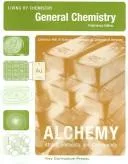
The secret tradition in alchemy

 83
83

The secret tradition in alchemy
Arthur Edward Waite's "The Secret Tradition in Alchemy" is a dense, scholarly examination that eschews sensationalism for historical rigor. Its strength lies in meticulously cataloging and analyzing the philosophical currents that fed into the alchemical tradition, rather than focusing on laboratory lore. Waite’s deep immersion in primary texts, though sometimes leading to dense prose, provides a valuable counterpoint to more romanticized accounts. A notable limitation is the occasional opacity of his arguments; he assumes a significant level of prior knowledge from the reader, making sections on specific Kabbalistic influences particularly challenging without supplementary study. For instance, his treatment of the "Prima Materia" is less a definition and more a complex exploration of its varied symbolic manifestations across different historical periods, demanding careful attention. Despite its demanding nature, the book offers a sophisticated understanding of alchemy's intellectual heritage. It is an essential, if occasionally formidable, resource for the dedicated student of Western esotericism.
📝 Description
83
Arthur Edward Waite's 1992 book examines alchemy as a symbolic language of spiritual transformation.
Arthur Edward Waite's "The Secret Tradition in Alchemy," first published in 1992, offers a detailed survey of alchemical arts and their philosophical foundations. The book does not function as a practical laboratory guide. Instead, Waite concentrates on the symbolic, spiritual, and historical aspects of alchemy, viewing it as a philosophical discipline. The work traces the development of alchemical thought from ancient Hermeticism through the medieval and Renaissance eras. It also examines alchemy's connections to other esoteric traditions. Waite's focus is less on the practical methods of transmutation and more on the meaning and symbolism within alchemy, seen as a method of spiritual change.
This volume is suited for dedicated students of esoteric philosophy, the history of science, and comparative religion. It will appeal to those who view alchemy not as a literal pursuit of gold, but as a complex symbolic system for understanding the universe and the human spirit. Readers interested in the intellectual history of the West, particularly the connections between science, religion, and mysticism, will discover significant content. It is not an introductory text, but rather a scholarly examination for individuals already acquainted with basic occult concepts.
Waite wrote "The Secret Tradition in Alchemy" during a period of significant occult revival in late 19th and early 20th century Europe. This era saw renewed interest in traditions like Hermeticism, influenced by figures such as Éliphas Lévi and the Theosophical Society. Waite aimed to present a systematic and critical study of these esoteric currents. His work emerged as part of a broader engagement with ancient wisdom, seeking to counter purely materialistic views of history and offering interpretations of figures like Nicolas Flamel and Paracelsus within a context of mystical speculation and early scientific thought.
💡 Why Read This Book?
• Gain a nuanced understanding of the "Great Work" as a spiritual and philosophical pursuit, moving beyond literal interpretations of laboratory processes, as detailed in Waite's examination of alchemical allegory. • Explore the historical connections between alchemy and other esoteric systems like Hermeticism and Kabbalah, recognizing how these traditions informed alchemical symbolism and practice during the Renaissance. • Appreciate the complex symbolic language of alchemy, including the significance of elements and planetary correspondences, as Waite meticulously breaks down these motifs within their historical and philosophical contexts.
⭐ Reader Reviews
Honest opinions from readers who have explored this book.
❓ Frequently Asked Questions
What is Arthur Edward Waite's primary focus in "The Secret Tradition in Alchemy"?
Waite's primary focus is on the philosophical, symbolic, and historical dimensions of alchemy, rather than practical laboratory techniques. He explores alchemy as a spiritual discipline and a symbolic language.
When was "The Secret Tradition in Alchemy" first published?
The book was first published in 1992, though Arthur Edward Waite was a prolific writer on occult subjects much earlier in the 20th century.
Who are some key historical figures discussed in the book?
Waite discusses influential figures such as Nicolas Flamel and Paracelsus, examining their contributions and the historical milieu in which they operated.
Does the book provide practical alchemical recipes?
No, the book does not provide practical alchemical recipes. It is a scholarly work focused on the theory, philosophy, and historical development of alchemical thought.
What esoteric traditions does Waite connect alchemy to?
Waite connects alchemy to traditions such as Hermeticism, Kabbalah, and Gnosticism, illustrating how these streams of thought influenced alchemical symbolism and philosophy.
Is "The Secret Tradition in Alchemy" suitable for beginners?
The book is generally considered more suitable for intermediate to advanced students of esotericism due to its scholarly depth and assumed prior knowledge of occult concepts.
🔮 Key Themes & Symbolism
Alchemy as Spiritual Discipline
Waite posits that the true alchemical pursuit, the "Great Work," is fundamentally a spiritual or psychological process rather than a material one. He meticulously analyzes how alchemists used laboratory operations as metaphors for the purification of the soul and the attainment of spiritual enlightenment. This involves understanding the symbolic transformation of base metals into gold as an allegory for the aspirant's own inner transformation, moving from ignorance to wisdom and from imperfection to perfection.
Symbolic Language of Alchemy
The book emphasizes the rich and often multi-layered symbolic language employed by alchemists. Waite explores the meaning behind common alchemical motifs, such as the Philosopher's Stone, the Ouroboros, the Rebis, and the symbolic significance of colors (black, white, red). He demonstrates how these symbols were not arbitrary but formed a coherent system of esoteric communication, conveying complex philosophical and mystical ideas to initiates.
Historical and Philosophical Roots
Waite traces the historical lineage of alchemical thought, connecting it to ancient Egyptian Hermeticism, Greek philosophy, Gnosticism, and Jewish Kabbalah. He illustrates how these diverse intellectual currents converged and evolved during the medieval and Renaissance periods, shaping the combination of science, mysticism, and philosophy that characterized Western alchemy. The work highlights alchemy's position within a broader esoteric tradition.
The Four Elements and Correspondences
A significant portion of the book is dedicated to the alchemical understanding of the four classical elements—Fire, Water, Air, and Earth—and their role in the material and spiritual cosmos. Waite explains how alchemists utilized these elements, along with planetary correspondences and metallic associations, to map out processes of creation, dissolution, and regeneration, both in nature and within the human microcosm.
💬 Memorable Quotes
Direct passages from the work, attributed to the author.
“The language of the alchemists was one of symbols and allegories.”
— This emphasizes Waite's focus on deciphering the esoteric meaning embedded within alchemical texts and imagery, viewing them as a coded system for transmitting spiritual knowledge.
“Alchemy drew heavily from Hermetic and Kabbalistic traditions.”
— This points to the foundational esoteric lineages that Waite identifies as crucial for understanding alchemical philosophy, underscoring the interconnectedness of Western esoteric systems.
“The Prima Materia represents the undifferentiated potential of creation.”
— This interpretation of a key alchemical concept illustrates how Waite discusses fundamental principles not as fixed definitions but as symbolic representations of primordial states and possibilities.
“Understanding the symbolism of the elements is key to the alchemical art.”
— This highlights the importance Waite places on the classical elements (Fire, Water, Air, Earth) and their symbolic roles in mapping both cosmic and personal transformative processes.
💡 Key Ideas
Editorial paraphrase of the work's core concepts — not direct quotes.
The Great Work is not a physical process but a spiritual one.
This paraphrased concept highlights Waite's core thesis: alchemy's ultimate aim was inner transformation, using material processes as allegorical tools for soul purification and divine union.
🌙 Esoteric Significance
Tradition
This work fits squarely within the Western Esoteric Tradition, specifically drawing from Hermeticism and Neoplatonism, which heavily influenced alchemical thought. Waite situates alchemy as a spiritual path, a continuation of ancient wisdom lineages that sought to understand the divine principles governing the cosmos and the human soul. It departs from purely materialist interpretations by emphasizing the allegorical and psychological dimensions, aligning with Gnostic and Kabbalistic notions of spiritual ascent and purification.
Symbolism
Key symbols include the Philosopher's Stone, representing ultimate spiritual perfection or divine knowledge, and the Ouroboros, symbolizing cyclic nature, self-creation, and the unity of opposites. Waite also details the significance of the four elements (Earth, Air, Fire, Water) and their associated metals (e.g., lead with Saturn, gold with the Sun), interpreting them as correspondences for stages of spiritual development and cosmic order.
Modern Relevance
Contemporary practitioners of Hermeticism, ceremonial magic, and depth psychology (particularly Jungian) continue to draw upon Waite's scholarly framework. His detailed analysis of alchemical symbolism provides foundational material for those exploring the archetypal dimensions of the psyche and the historical roots of spiritual transformation practices. The book remains a reference for understanding the symbolic language used in various modern esoteric paths seeking inner alchemy.
👥 Who Should Read This Book
• Students of Western Esotericism and the history of philosophy seeking a scholarly overview of alchemy's intellectual development and symbolic language. • Comparative religion scholars interested in the intersection of mysticism, science, and philosophy during the Renaissance and earlier periods. • Depth psychologists and spiritual seekers looking to understand the symbolic representations of inner transformation and archetypal processes found in alchemical literature.
📜 Historical Context
Arthur Edward Waite's "The Secret Tradition in Alchemy" emerged from a fertile ground of late 19th and early 20th-century occult revivalism in Europe. This era saw a resurgence of interest in Hermeticism, Kabbalah, and mystical traditions, partly fueled by figures like Éliphas Lévi and later the Theosophical Society, though Waite himself often held critical views of the latter. The book was written during a period where academic scholarship was beginning to engage with esoteric history, yet much popular understanding remained sensationalized. Waite's work aimed for a more systematic, critical, and historically grounded approach, distinguishing itself from purely speculative or sensationalist accounts. It was contemporary to scholars like Frances Yates, who also explored the Renaissance Hermetic tradition, though Waite focused more intensely on the alchemical aspects. The reception of such works often navigated a path between academic curiosity and a public eager for hidden knowledge, with Waite striving for a scholarly tone amidst this milieu.
📔 Journal Prompts
The symbolism of the Ouroboros and its representation of unity.
Waite's interpretation of the Philosopher's Stone as a spiritual attainment.
The role of the four elements in alchemical processes and cosmology.
Connections between Hermetic principles and alchemical texts discussed.
The historical evolution of alchemical symbolism from ancient roots.
🗂️ Glossary
Great Work (Major work)
The central process in alchemy, referring to the creation of the Philosopher's Stone, but often interpreted esoterically as the process of spiritual purification and enlightenment of the alchemist.
Philosopher's Stone
The legendary alchemical substance said to be capable of transmuting base metals into gold or silver, and sometimes believed to grant immortality. Esoterically, it represents spiritual perfection or divine wisdom.
Prima Materia
The primary, undifferentiated substance from which all things are created, according to alchemical theory. It represents primordial potential and the starting point of the Great Work.
Hermeticism
A philosophical and religious tradition based on writings attributed to Hermes Trismegistus, emphasizing divine wisdom, cosmic order, and the interconnectedness of all things (e.g., 'As Above, So Below').
Kabbalah
A system of Jewish mysticism concerned with the nature of God and the creation of the universe, often employing symbolic interpretations of scripture and a Tree of Life diagram.
Rebis
A symbolic representation in alchemy of the perfected state achieved through the Great Work, often depicted as a hermaphroditic figure, symbolizing the union of opposites.
Transmutation
The alchemical process of changing one element or substance into another, most famously the transformation of base metals into noble metals like gold.
🔮 Readers Also Liked
Browse all →







More by Arthur Edward Waite
All books →
More Free Alchemy & Hermeticism Books
View all →