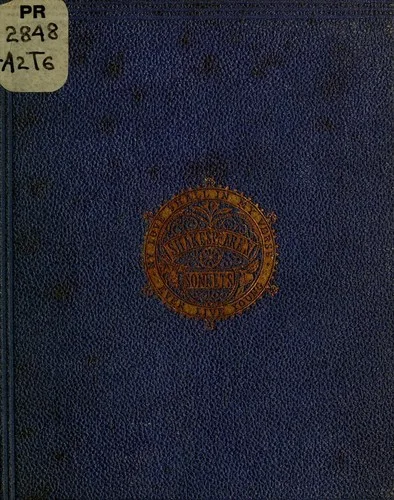
The Book of Quinte Essence or the Fifth Being; That Is to Say, Man's Heaven

 75
75

The Book of Quinte Essence or the Fifth Being; That Is to Say, Man's Heaven
The Book of Quinte Essence offers a glimpse into the esoteric understanding of human nature as a divine microcosm. Its strength lies in its direct articulation of the Fifth Being concept, presenting man as more than just elemental matter. The text’s philosophical clarity on the macrocosm-microcosm relationship is commendable, echoing principles found in earlier Hermetic writings. However, the Furnivall edition, while scholarly, can feel somewhat detached from practical application, focusing more on the theoretical framework. A passage discussing the soul's ascent through planetary spheres serves as a potent reminder of the archaic cosmological models that informed these spiritual disciplines. The book provides a solid, if dense, theoretical foundation for understanding man's spiritual constitution. It serves as a valuable, albeit academic, resource for those immersed in historical Hermetic studies.
📝 Description
75
Frederick James Furnivall published 'The Book of Quinte Essence' in 1825, focusing on humanity's divine spark.
This text, attributed to Hermes Trismegistus, discusses the 'Quinte Essence,' or Fifth Being, which it identifies as the divine element within humanity, setting humans apart from the four material elements. The work discusses spiritual alchemy, presenting the human being as a microcosm that can achieve a celestial union. It details the principles of this process, aligning with Hermetic philosophy and comparative mysticism.
The book speaks to individuals interested in the concept of the divine human, the relationship between the macrocosm and the microcosm, and the spiritual potential found within material existence. Readers will find its core ideas relevant to understanding the historical development of Western esotericism. The specific version Furnivall published draws from historical scholarship, placing it within the context of Renaissance Hermeticism, an era marked by renewed study of classical esoteric writings.
This work belongs to the Hermetic tradition, a philosophical and religious system originating in the Hellenistic period, attributed to the legendary Hermes Trismegistus. It aligns with Renaissance Hermeticism, a period of significant revival for these ancient texts. The book engages with concepts such as the macrocosm-microcosm correspondence, a central tenet in Hermetic thought, and frames spiritual development as an alchemical process akin to the Magnum Opus. It also touches upon ideas that resonated with Neoplatonism and early Kabbalistic thought.
💡 Why Read This Book?
• Gain insight into the concept of the 'Quinte Essence,' understanding humanity's spiritual composition beyond elemental theory, as discussed in the book's core exposition. • Explore the macrocosm-microcosm principle, learning how ancient thinkers viewed the interconnectedness of the human being and the universe, a central theme in Hermeticism. • Appreciate the alchemical perspective on human development, recognizing the spiritual potential for ascension framed as a process of purification, as detailed in the work's philosophical underpinnings.
⭐ Reader Reviews
Honest opinions from readers who have explored this book.
❓ Frequently Asked Questions
What is the 'Quinte Essence' as described in the book?
The 'Quinte Essence,' or Fifth Being, refers to the divine, spiritual element inherent in humanity, elevating humans beyond the four gross elements (earth, air, fire, water) and representing their celestial potential.
Who is Hermes Trismegistus?
Hermes Trismegistus is a legendary, syncretic figure, a fusion of the Greek god Hermes and the Egyptian god Thoth, credited with a body of esoteric wisdom texts known as Hermetica.
When was this specific edition of The Book of Quinte Essence first published?
The edition compiled and published by Frederick James Furnivall, which is the basis for modern access, was first made available in 2018, though it draws from much older traditions.
What is the relationship between man and the cosmos in this text?
The book posits a strong macrocosm-microcosm relationship, suggesting that the structure and principles of the greater universe are mirrored within the human being, making man a 'little world.'
Does the book offer practical alchemical instructions?
While it discusses spiritual alchemy and human transformation, the focus is primarily philosophical and theoretical rather than a direct guide to practical laboratory procedures.
What philosophical traditions influenced this work?
The work is deeply rooted in Hermetic philosophy, Neoplatonism, and the broader esoteric currents of the Renaissance, emphasizing the divine nature and potential of the human soul.
🔮 Key Themes & Symbolism
The Divine Microcosm
The text elaborates on the concept of man as a microcosm, reflecting the entirety of the macrocosm. This divine spark, the 'Quinte Essence,' is presented as the animating principle that connects the human being to the celestial realms. It's not merely a philosophical notion but an intrinsic aspect of human potential, suggesting that by understanding oneself, one understands the universe. This perspective positions human existence as intrinsically sacred and capable of cosmic communion.
Spiritual Alchemy of Man
Central to the book is the idea that human life is a process akin to the Great Work of alchemy. The Quinte Essence is not just present but can be refined and elevated. This involves a purification of the soul, moving from the grosser, elemental aspects of existence towards a more subtle, spiritual state. The text implies that this internal transformation is the true alchemical pursuit, leading to a form of spiritual immortality or reunion with the divine.
The Celestial Man
The 'Fifth Being' is synonymous with the Celestial Man, an archetypal representation of humanity's highest spiritual form. This archetype is linked to the divine order and the cosmic intelligences. The book explores how the human soul, through understanding its own Quinte Essence, can align itself with these celestial principles. This alignment is crucial for spiritual realization and for fulfilling humanity's intended role within the divine plan.
Elemental vs. Spiritual Nature
A core distinction is drawn between man's terrestrial, elemental nature and his inherent spiritual nature, the Quinte Essence. The book argues that true understanding and spiritual progress come from recognizing and cultivating the latter, while transcending the limitations imposed by the former. This dualistic view underscores the spiritual journey as one of ascending from the material to the divine, guided by the inner Fifth Being.
💬 Memorable Quotes
Direct passages from the work, attributed to the author.
“Man is a second world, a little world, wherein God hath made his habitation.”
— This statement captures the core Hermetic principle of the microcosm. It suggests that the human being is not an insignificant part of creation but a complete, albeit smaller, reflection of the entire universe, imbued with divine presence.
“The Quinte Essence is the spiritual substance that animates and perfects.”
— This highlights the active, life-giving quality of the Fifth Being. It is presented not as a static attribute but as the very force that drives spiritual development and brings human potential to its ultimate realization.
“The soul ascends by shedding the four elements.”
— This points to the alchemical process of purification described in the book. The journey of the soul towards the divine involves transcending its material, elemental attachments and limitations.
“Man's heaven is within him, achieved through the Fifth Being.”
— This interpretation emphasizes that spiritual realization and union with the divine are internal achievements, facilitated by cultivating and recognizing the Quinte Essence within oneself.
💡 Key Ideas
Editorial paraphrase of the work's core concepts — not direct quotes.
To know thyself is to know the heavens.
This paraphrase emphasizes the Hermetic axiom that inner knowledge leads to cosmic understanding. By exploring the divine microcosm within, one gains insight into the workings of the macrocosm and the divine order.
🌙 Esoteric Significance
Tradition
This work is a central to Western Hermeticism, a tradition tracing its lineage back to the legendary Hermes Trismegistus. It fits within the broader Hermetic corpus, which deals with cosmology, astrology, alchemy, and the nature of divinity and humanity. The concept of the Quinte Essence aligns with Hermetic principles of divine immanence and the potential for human spiritual ascent, positioning man as a vital link between the material and spiritual planes.
Symbolism
The 'Quinte Essence' itself is the primary symbol, representing the fifth element (aether or spirit) that animates and perfects. Other implicit symbols relate to the four gross elements (earth, air, fire, water) from which the Quinte Essence distinguishes humanity. The text also invokes the macrocosm-microcosm symbolism, where the human body and soul are seen as a miniature representation of the entire universe, with celestial correspondences.
Modern Relevance
Contemporary practitioners of Western esoteric traditions, including Hermetic orders and students of comparative mysticism, continue to draw upon the foundational concepts presented. Thinkers in fields exploring consciousness studies and the perennial philosophy often reference the Hermetic view of man's divine nature. The book's ideas about inner potential and cosmic connection remain relevant for those seeking spiritual self-understanding outside conventional religious frameworks.
👥 Who Should Read This Book
• Students of Hermeticism: Gain foundational knowledge of the 'Quinte Essence' concept, crucial for understanding man's spiritual constitution within Hermetic cosmology. • Comparative Mysticism Scholars: Explore historical views on the divine human and the macrocosm-microcosm relationship, comparing them with other esoteric traditions. • Seekers of Inner Philosophy: Discover ancient perspectives on human potential, spiritual alchemy, and the inherent divine spark within, offering a unique framework for self-contemplation.
📜 Historical Context
The Book of Quinte Essence emerges from the fertile ground of Renaissance Hermeticism, a period (roughly 15th-17th centuries) marked by a fervent rediscovery and translation of ancient texts, including the Hermetica. Scholars like Marsilio Ficino, working in Florence under Medici patronage, were instrumental in popularizing these ideas, interpreting them within a Neoplatonic framework. This intellectual current stood in contrast to the dominant Aristotelian scholasticism, offering an alternative cosmology that emphasized the divine potential within humanity and the interconnectedness of all things. The concept of man as a microcosm, a mirror of the macrocosm, was central. While this specific compilation's direct lineage can be traced through later esoteric revivals, its roots are firmly planted in this era of revived classical wisdom, a time when figures like Giordano Bruno explored similar themes of universal spirit and human divinity, often facing significant challenges from established religious and philosophical authorities.
📔 Journal Prompts
The Quinte Essence as the divine spark within your own being.
Reflect on the macrocosm-microcosm correspondence in your daily life.
How does the concept of spiritual alchemy apply to personal growth?
The elemental nature versus the spiritual potential of humanity.
Mapping the celestial spheres to inner states of consciousness.
🗂️ Glossary
Quinte Essence
The Fifth Being; the divine, spiritual substance or element that animates and perfects humanity, distinguishing it from the four gross elements and representing its celestial nature.
Fifth Being
Synonymous with Quinte Essence, referring to the divine, spiritual aspect of man that connects him to the cosmos and represents his ultimate potential for perfection and union with the divine.
Macrocosm
The universe or the greater world, considered as a complete and ordered system. In Hermetic thought, it is mirrored by the microcosm.
Microcosm
The human being, considered as a miniature representation or reflection of the macrocosm. The principles and structure of the universe are seen as being contained within man.
Spiritual Alchemy
The process of purifying and perfecting the soul and spirit, analogous to the alchemical transformation of base metals into gold. It involves internal spiritual development rather than laboratory work.
Elemental Nature
Referring to the physical, material aspect of a being, composed of the four gross elements (earth, air, fire, water), as opposed to the refined, spiritual Quinte Essence.
Celestial Union
The ultimate state of spiritual realization where the individual soul achieves harmony or oneness with the divine and the cosmic order.
🔮 Readers Also Liked
Browse all →









More Free Alchemy & Hermeticism Books
View all →